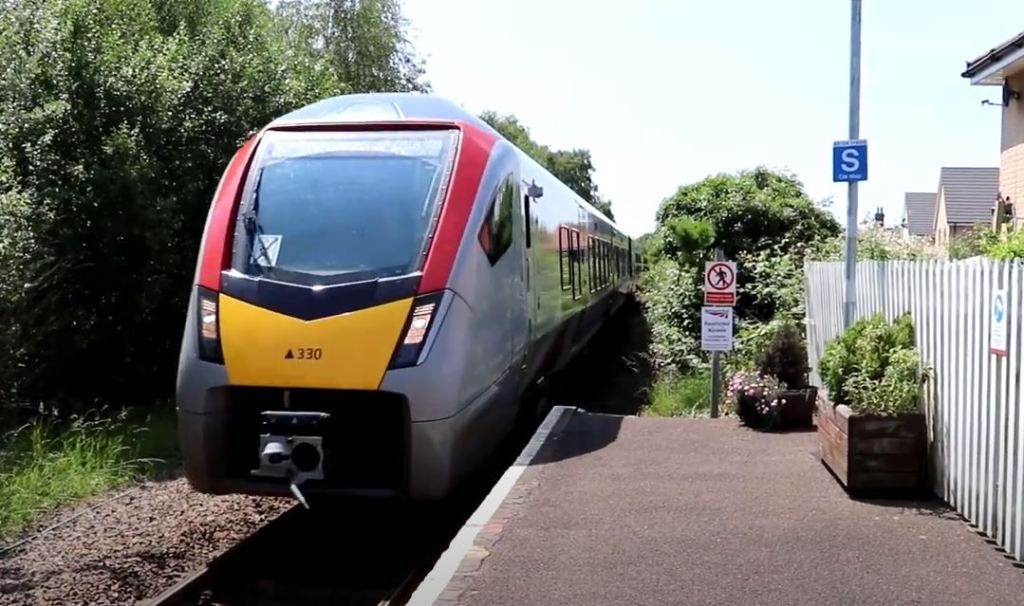
Top Ten Least Used Railway Stations in Suffolk | 5 – Trimley

Trimley was opened in 1891 by the Great Eastern Railway.  Its primary purpose was to fill the gap between the station at Orwell and Felixstowe beach, both of which were substantially far away from the village.

A few freight lines were here, but were withdrawn in 1964, and in 1967 the station building was closed.  This meant that together with the rest of the branch line, the station became a “pay train” station, with the guards collecting fares.  This left only the signalmen at the station, whose purpose was to operate the level crossing and signalling away from the station.

A direct line to the docks at Felixstowe was opened in 1970, and 17 years later in 1987, the spur down to the north freightliner terminal was opened to the south of the station.
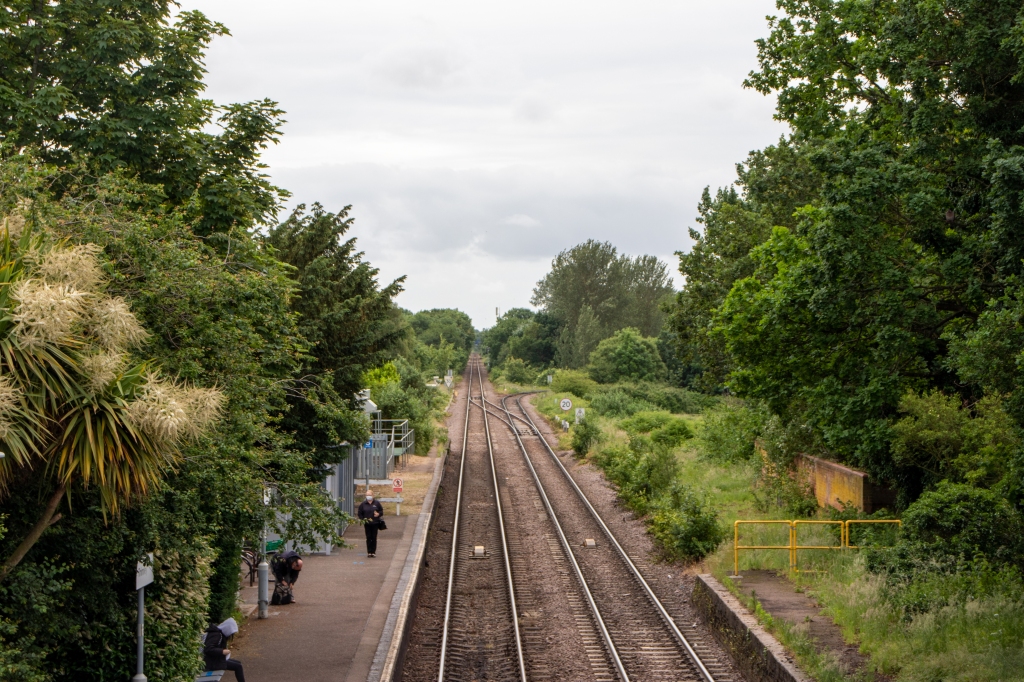
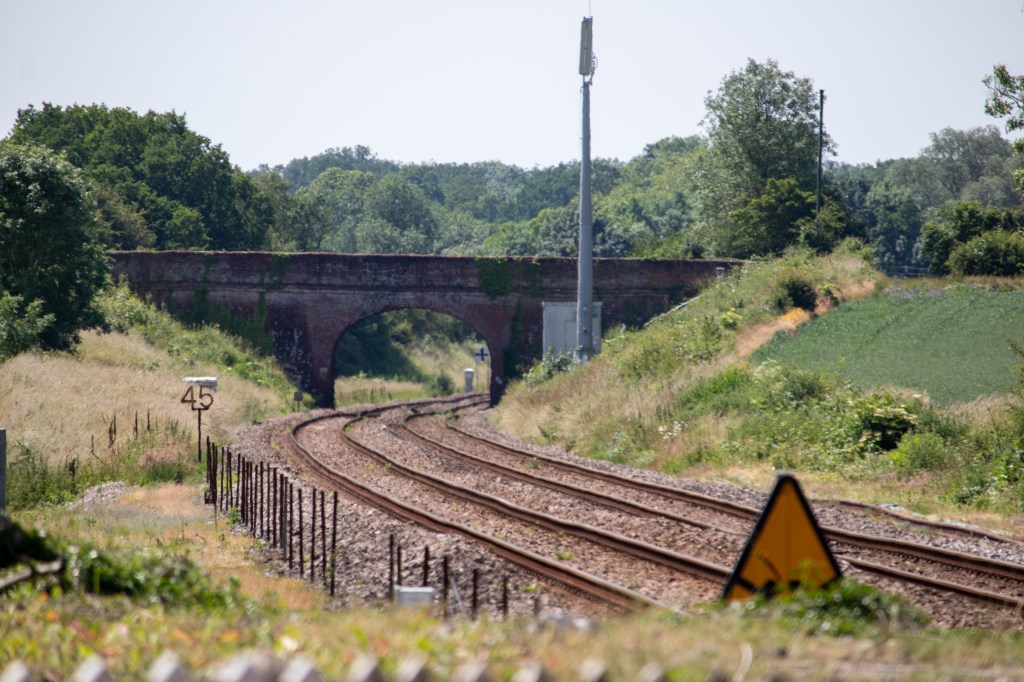
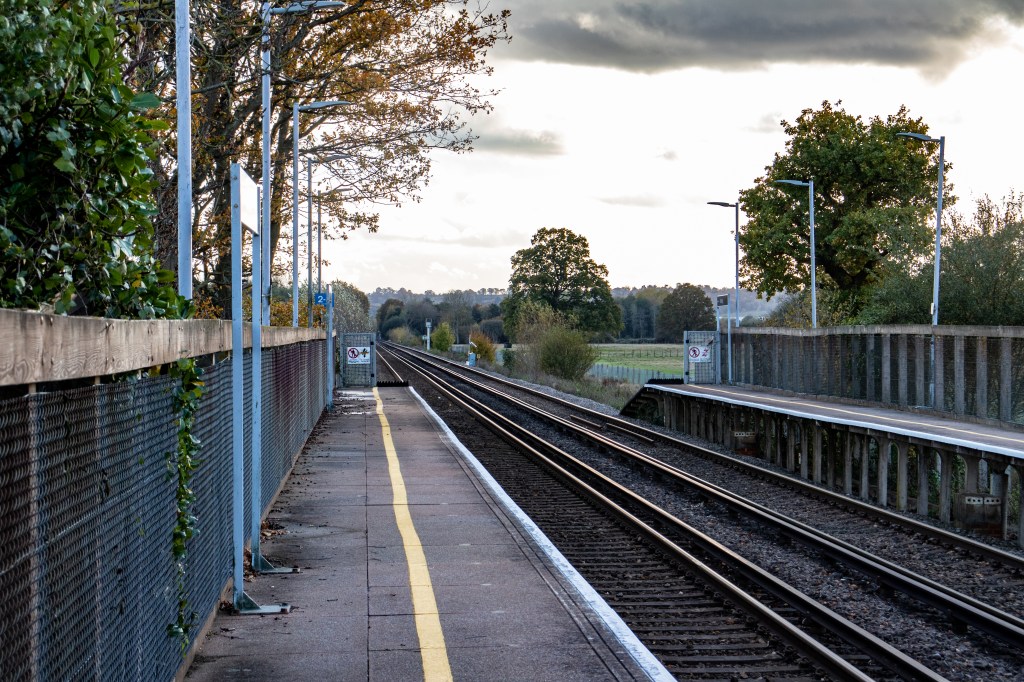
The spur to the North terminal is clear to see on the right

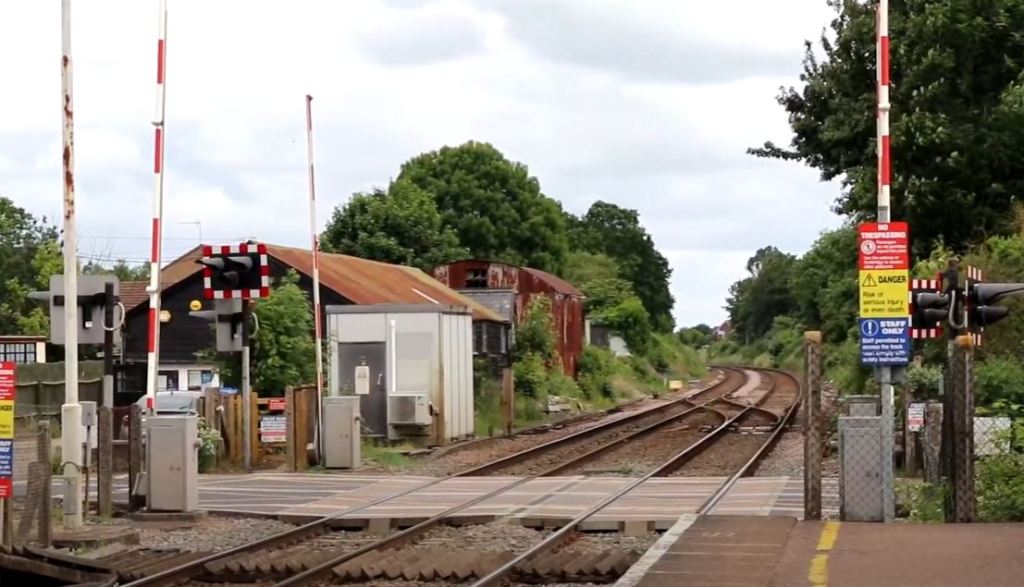
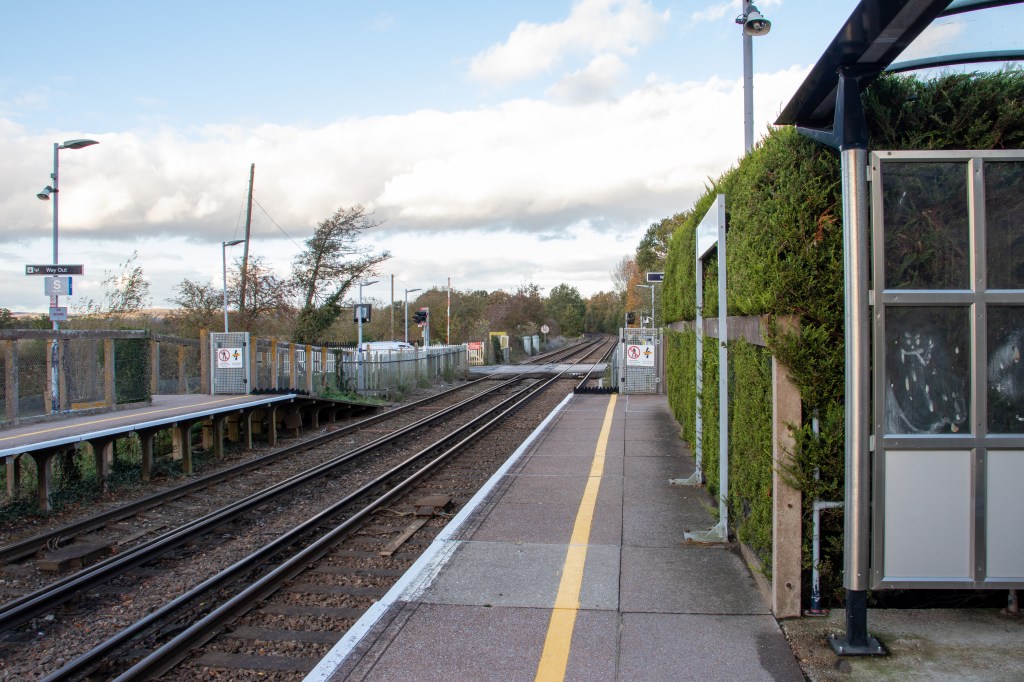
The removal of the signal box in 1997 meant the installation of the automatic barriers, and control of these and the points was now undertaken by the Colchester panel signal box.

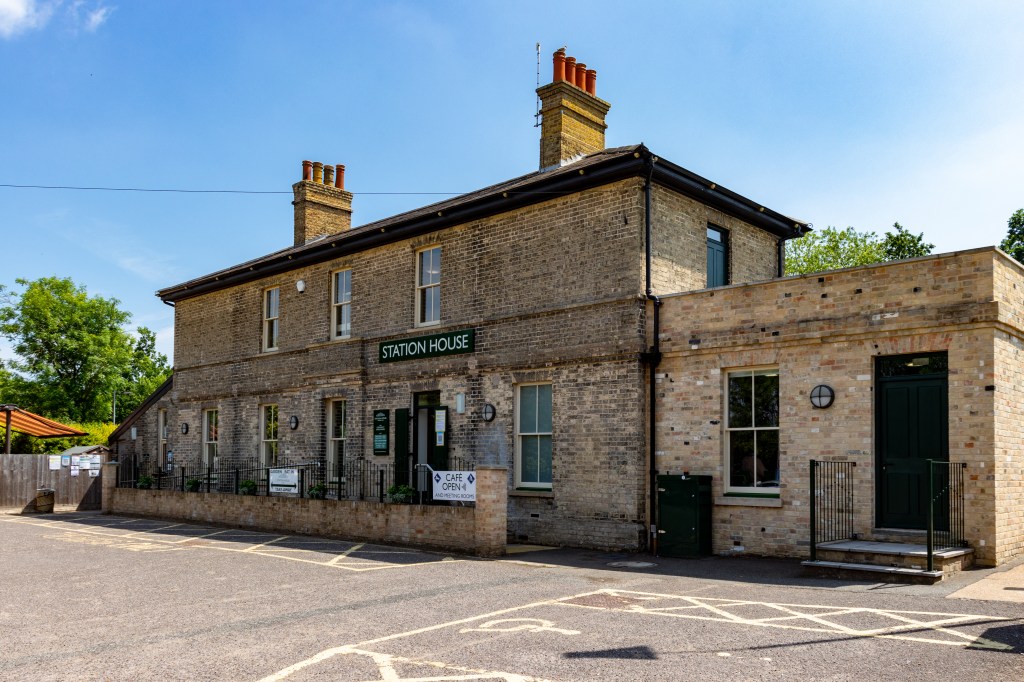
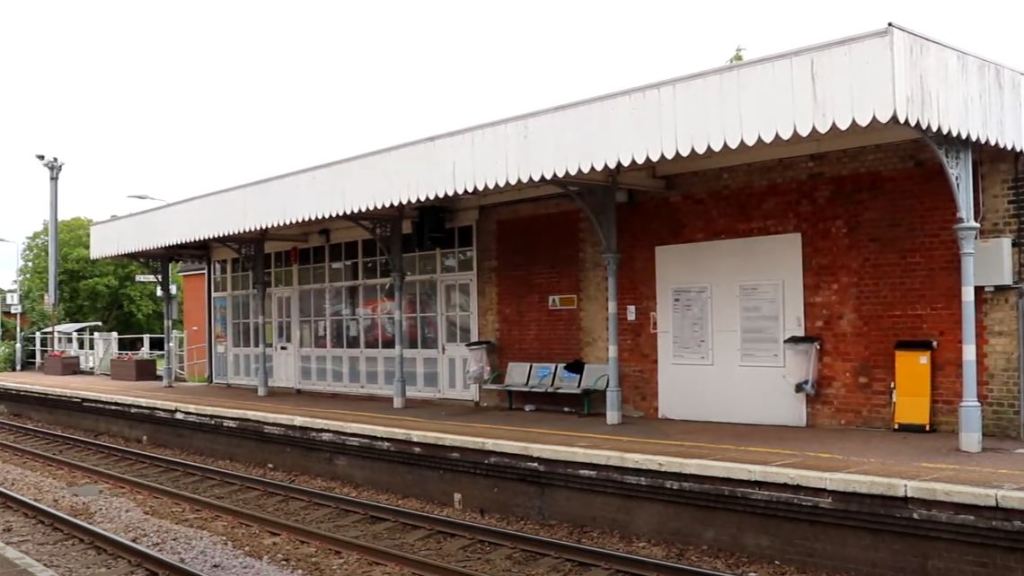
The station building was a version of a new Essex style, one of only two to be built outside Essex.  Its interior would have included a first class waiting room, porters lodge, booking office and combined booking hall and waiting room.  A ladies room with toilet completed the facilities.

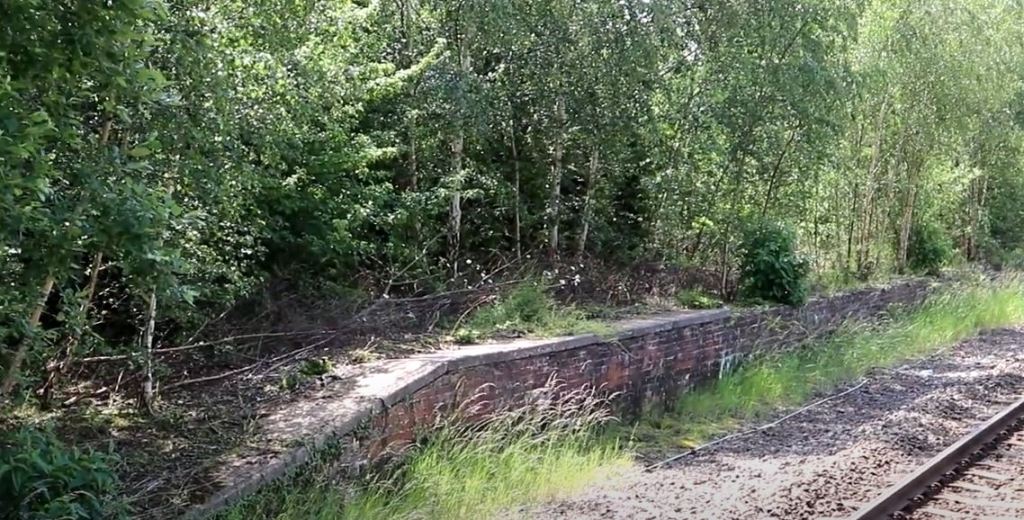
There was also a small building on the other platform, but this was demolished a long time ago.

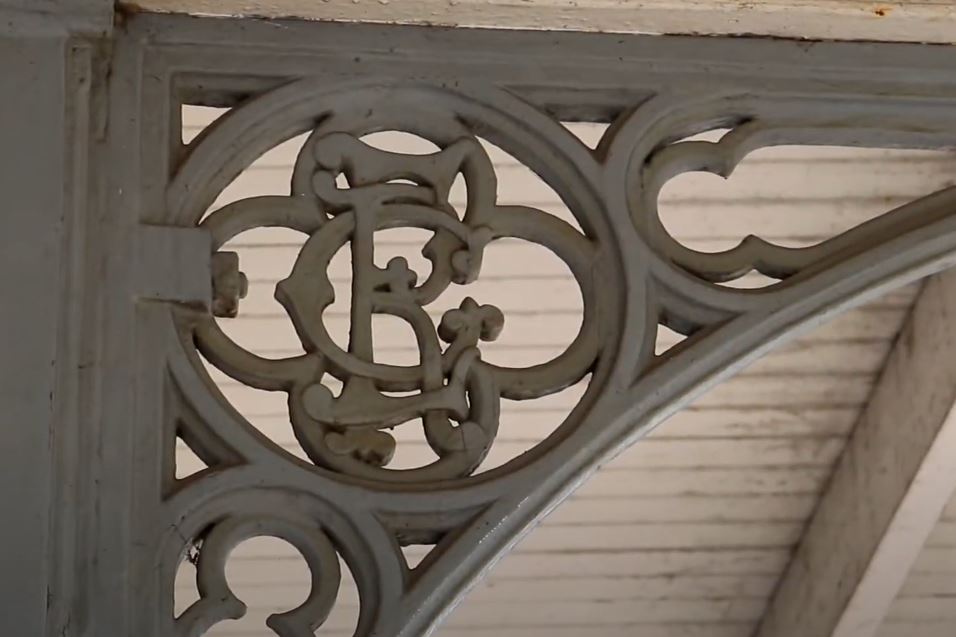
Although at time of filming it is in a very bad state, it is still standing, and is now under control of the Trimly station community trust.  They gained control of a long term lease in 2011.  Their ambition is similar to that of the station at Wickham Market, to transform the station into a café and meeting room whilst preserving the station fabric.
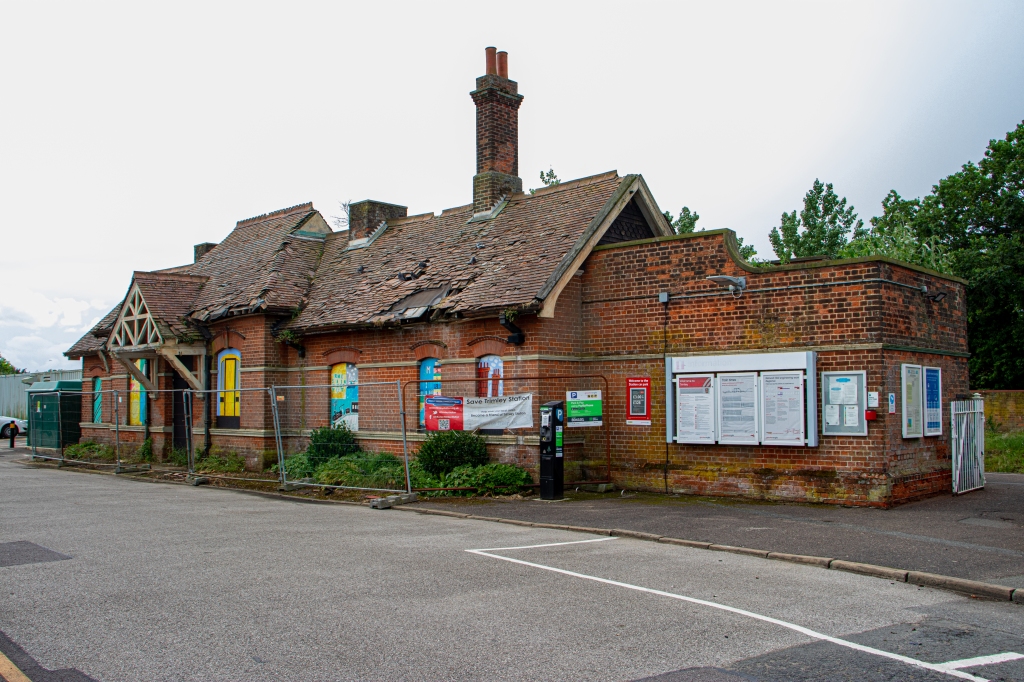
They have a long way to go, and recent months (2021/2022) have seen Greater Anglia seek improvements to the station which ‘may’ involve the demolition of the building, but nothing has been set in concrete. Hopefully in the coming months both fundraising and grants may become available, however multiple applications to the national lottery heritage trust have not borne fruit.  I do hope this situation changes for the better, as it would be a shame to lose such a quaint and historically important station.  If you wish to know more, I have provided a link in the video description below.

Facilities include a waiting shelter, help point, electronic ticketing machine and new style service information boards.

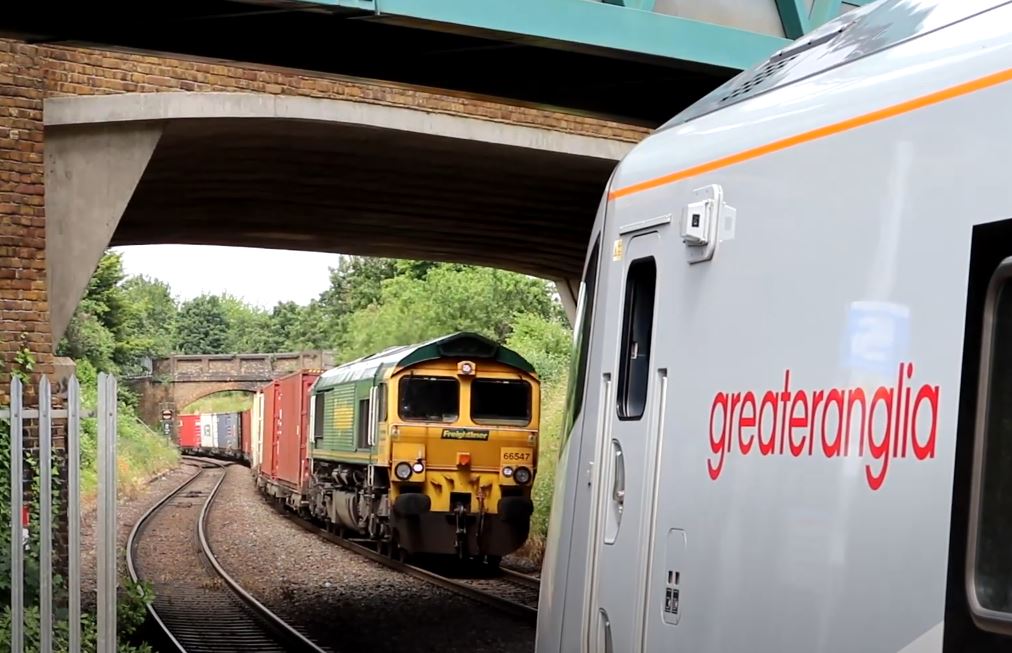
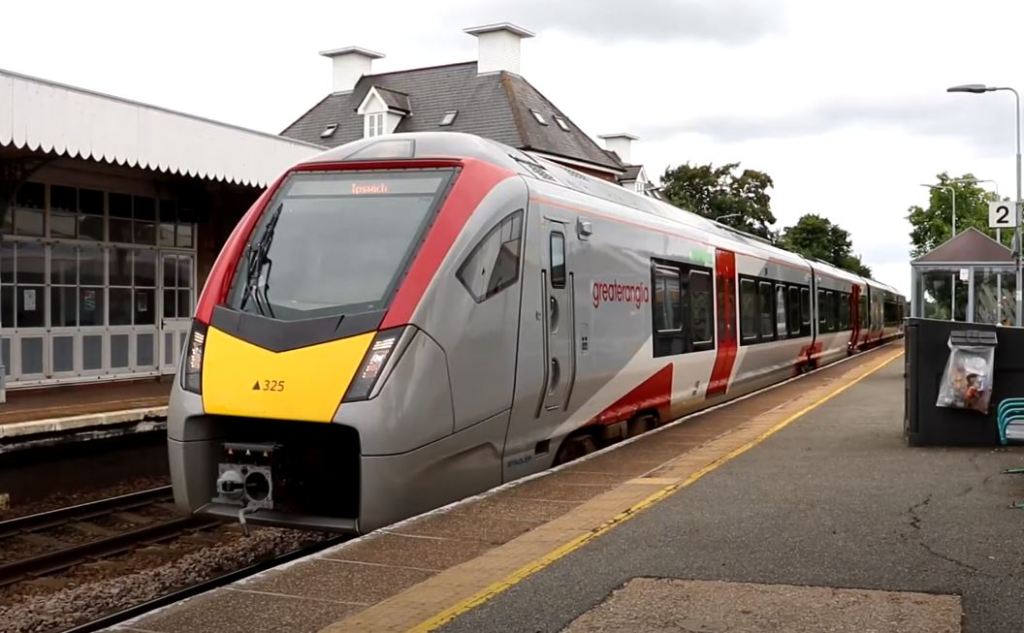
Passenger traffic at time of writing is provided by class 755 Bi-Mode units, and almost all freight is hauled by class 66 Locomotives.
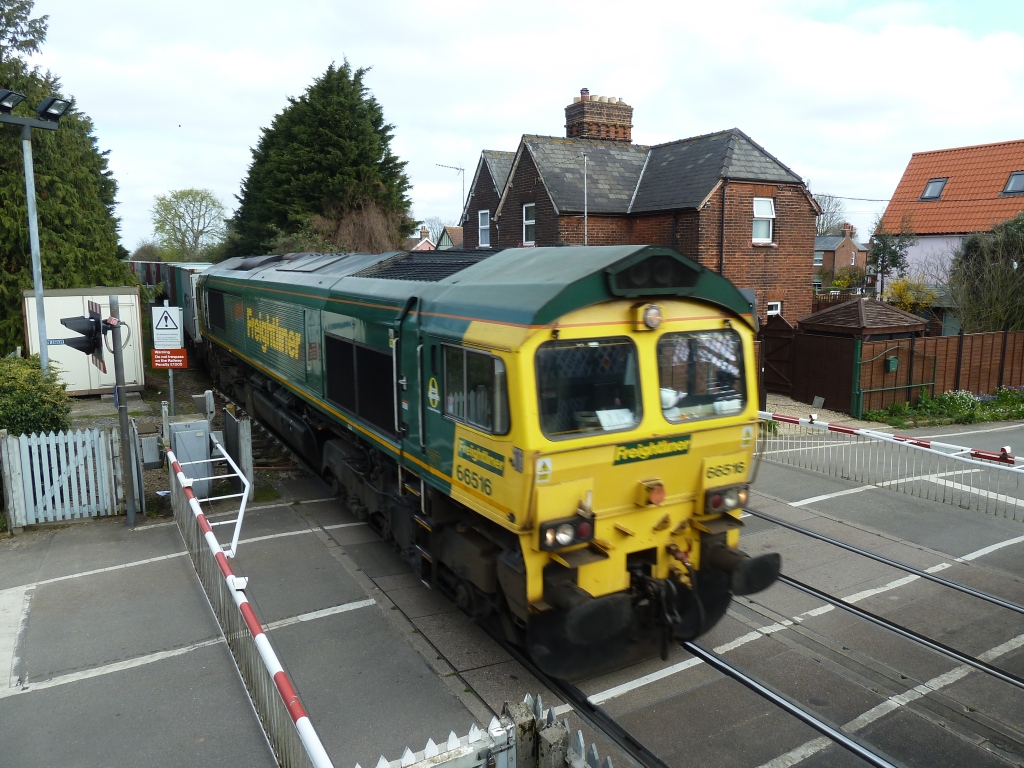
A class 66 heads towards Felixstowe

The entry and exit figures for 2019 / 2020 were 31, 122. These figures are used as the figures for 2020 / 2021 are unreliable due to being very skewed by the pandemic.

Still a functioning station for the village, Trimley could be so much more.  I hope that the building gets funding and finally gives the village a focal point it deserves.

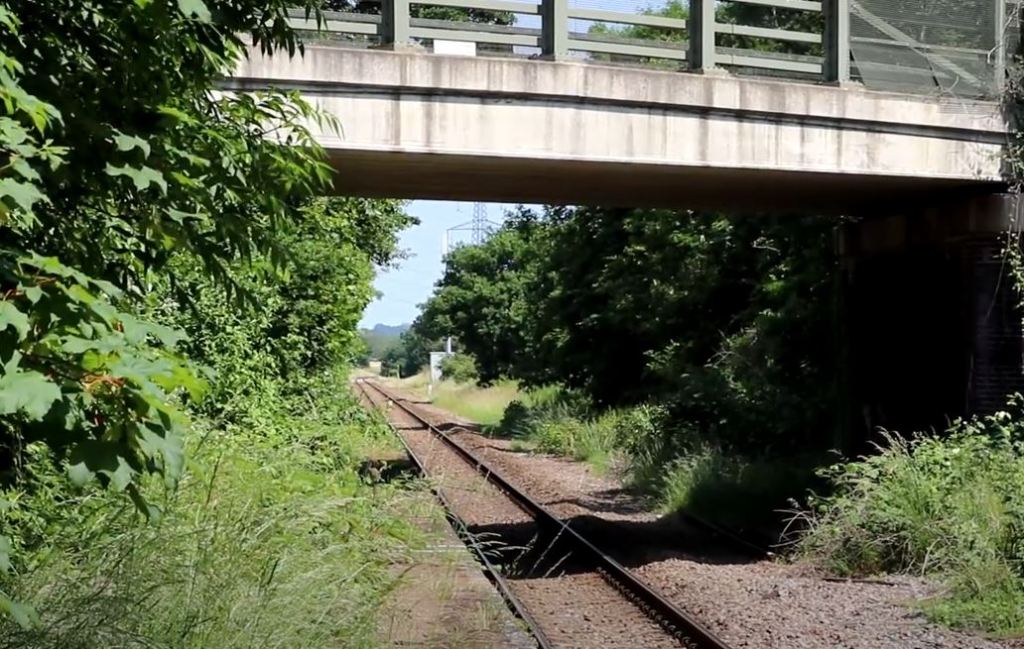
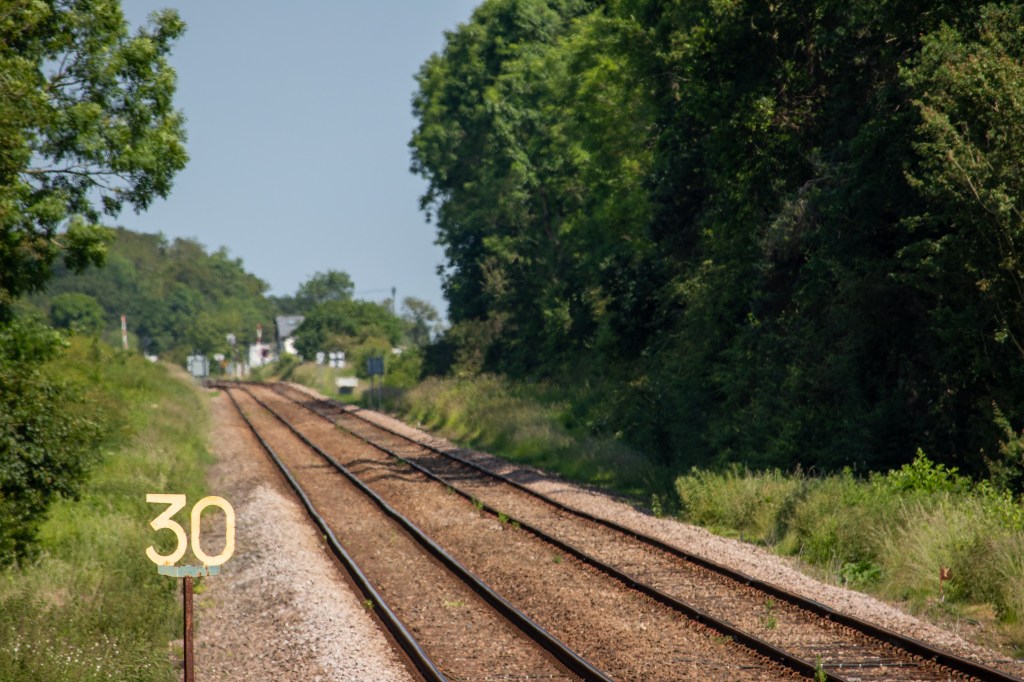
For the enthusiasts, obviously the abundance of freight (albeit only intermodal) plus excellent sightlines, gives plenty of video and photo opportunities.

I recorded a video for this station in 2021, and you can view it below :

Links to the Trimley station community trust :
http://www.trimleystation.org/

https://www.facebook.com/TrimleyStation/

Top Ten Least Used Railway Stations in Suffolk | 6 – Oulton Broad South

Opened in 1859 by the East Suffolk Railway, it was originally named Carlton Colville.  The line like most in Suffolk was amalgamated with the Great Eastern Railway shortly after.  The station wasn’t renamed to Oulton Broad South until 1927

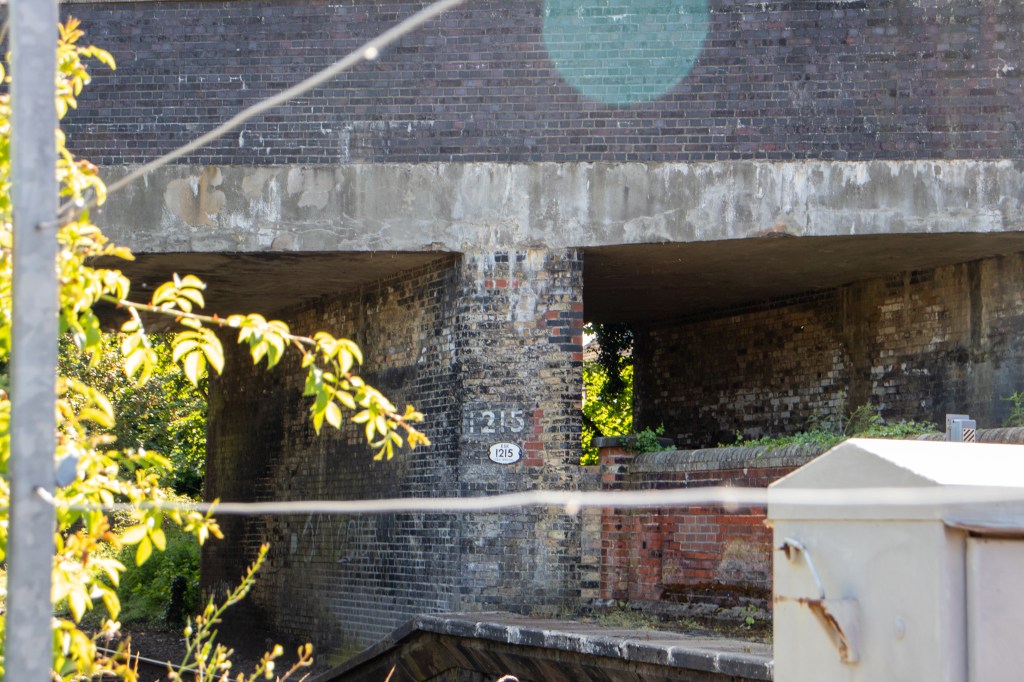
Just to the east of the station under the road bridge, the line split to the Kirkley branch, with services to sites on Lake Lothing.

These included sidings into Kirkley goods depot.  Companies using these would include Boulton and Pauls canning products, and confectionery from Mortons and the co-op group.  This line was fully closed in 1972, and no real trace of it remains.

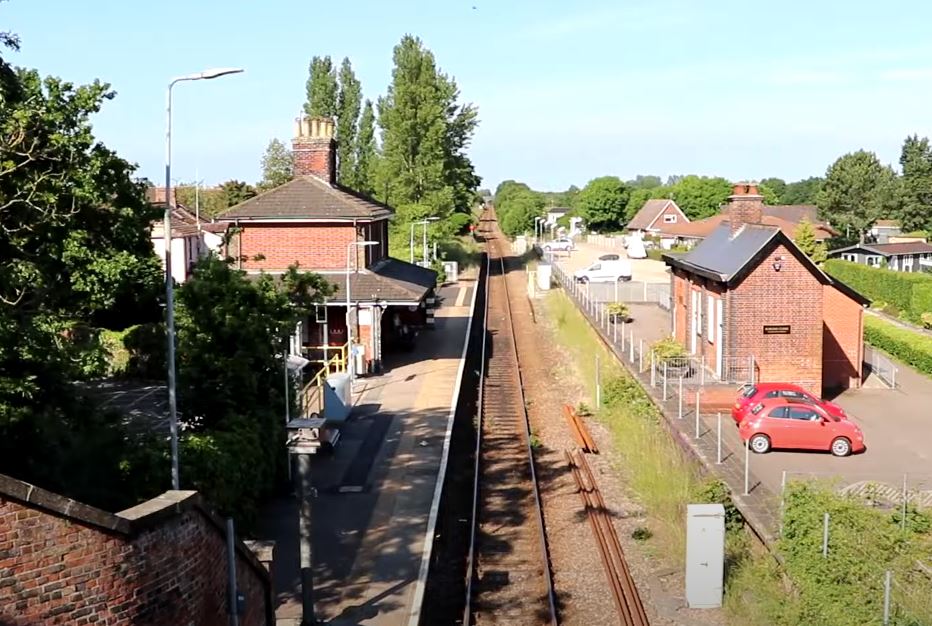
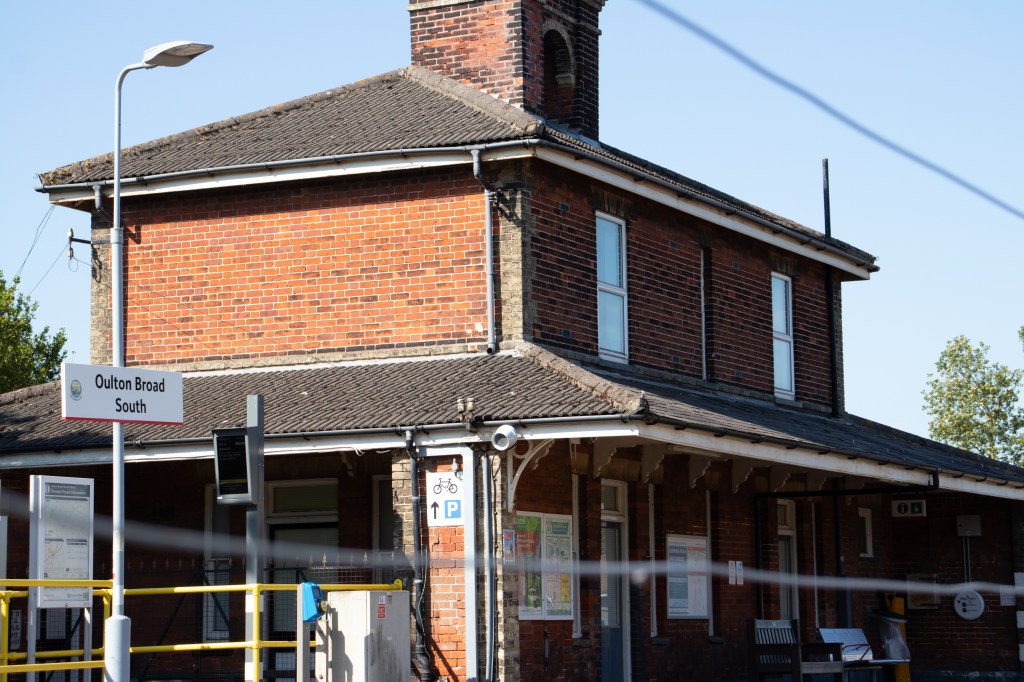
A station building remains on the working platform, the line here being single running at this point since the late 1980’s.  However the other platform remains with a building which is used for small businesses.  The small goods yard which was adjacent to that platform is now a car park, but its history contains the fact that pullman camping coaches were positioned here between 1952 and the late 1960’s

This view from the road bridge shows clearly that the line used to be double tracked at this point.

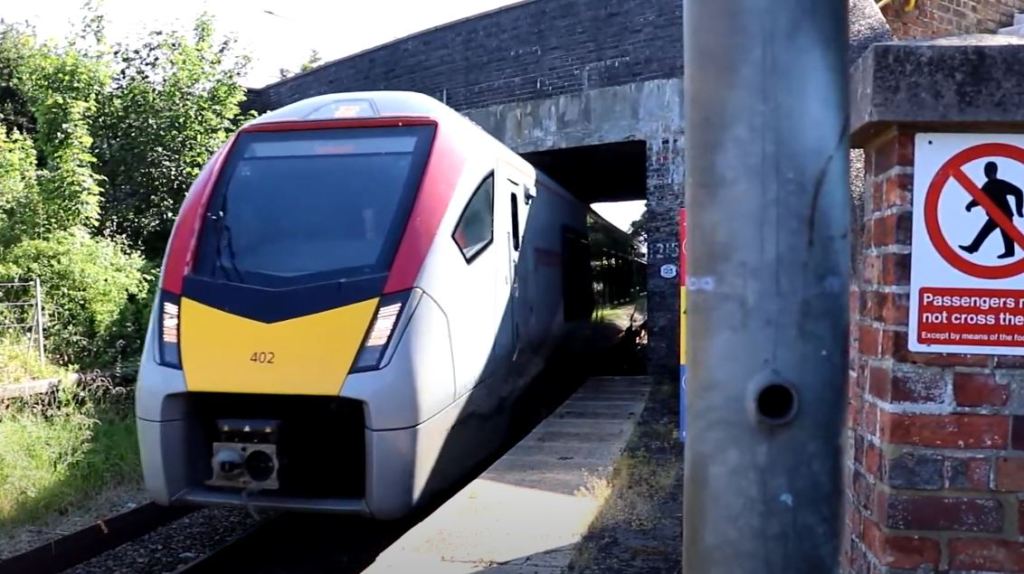
Passenger services at time of writing are provided by class 755 bi mode units.

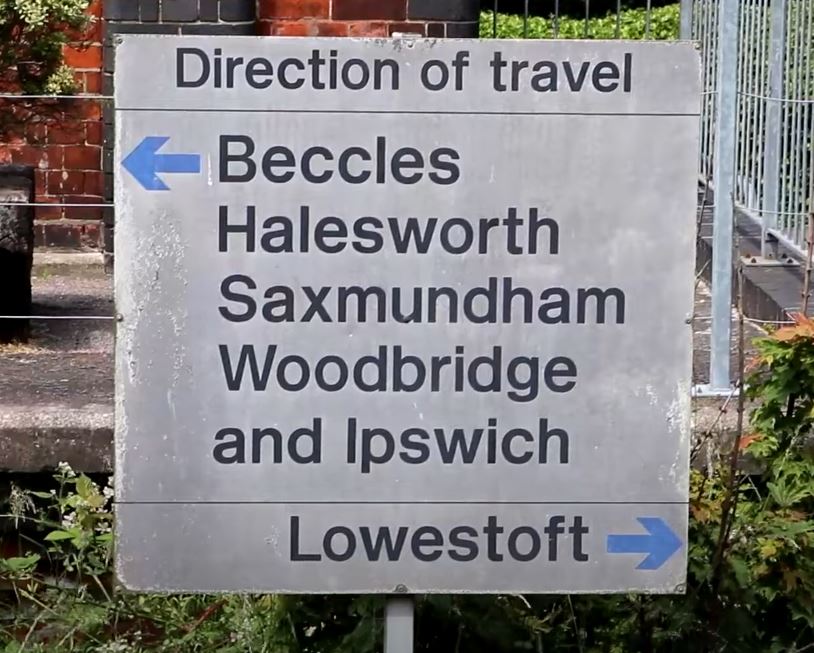
As far as facilities go, the station has an electronic ticketing machine, help points and posters not only for the regional rail network, but also information about the area. There is also this old style ‘direction of travel’ board, which is great to see.

The passenger entry and exit figures for 2019/2020 were 43, 518

Oulton broad south is a quiet station, but is still used fairly frequently.  The fact that both platforms remain is great, and the station buildings, although not being used for their original purpose, are still in situ.  For the enthusiast, although sight lines are good, the absence of freight means that traffic is very light indeed.

My 2021 Vlog from the station can be viewed below.

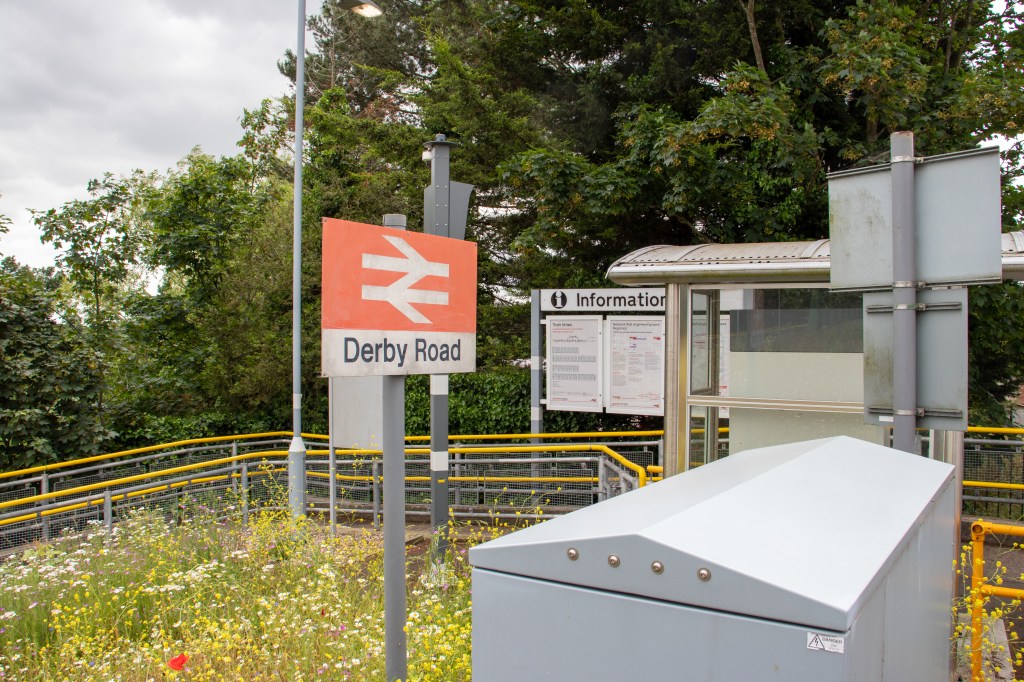
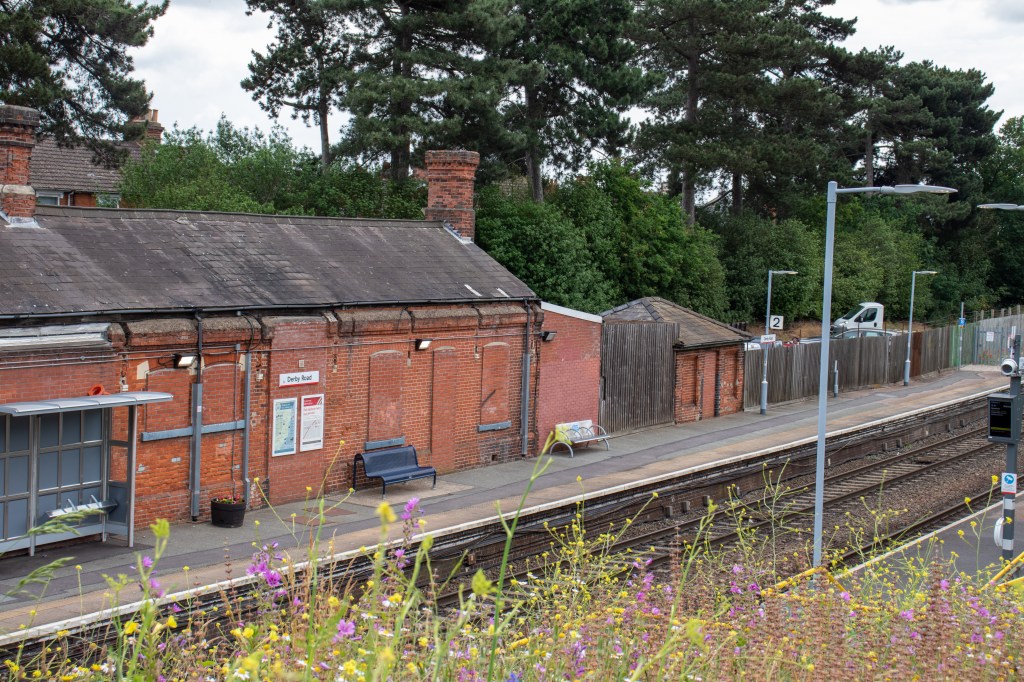
Top Ten Least Used Railway Stations in Suffolk | 7 – Derby Road (Ipswich)

Derby Road was opened in 1877 by the Felixstowe railway, and was amalgamated into the Great Eastern Railway in 1879.  It only had one platform originally, but due to popularity gained a second one in 1891

This popularity was due to the Ipswich tramway terminating at this point.  Passengers going to Felixstowe for the day would get the tram from Ipswich and get the train from Derby Road.  In fact, during the summer many trains would terminate at Derby Road from Felixstowe, instead of going though to Ipswich

The trams continued until 1926 when they were replaced by trolleybuses, but these too were fully phased out by 1962.  Some of these can still be seen at the Ipswich transport museum, a link to which is at the end of this blog.

Getting back to the station, it also had two sidings, which were increased during the early 20th century, but like most in the country were phased out by the late 1960’s

The station building still stands, although not used today.  Originally it had a fine canopy and a similar structure was to be seen on the other platform.  This other building no longer survives, as well as the canopy on the main building.  The other notable absentee is the signal box which was on the Felixstowe side of the station.

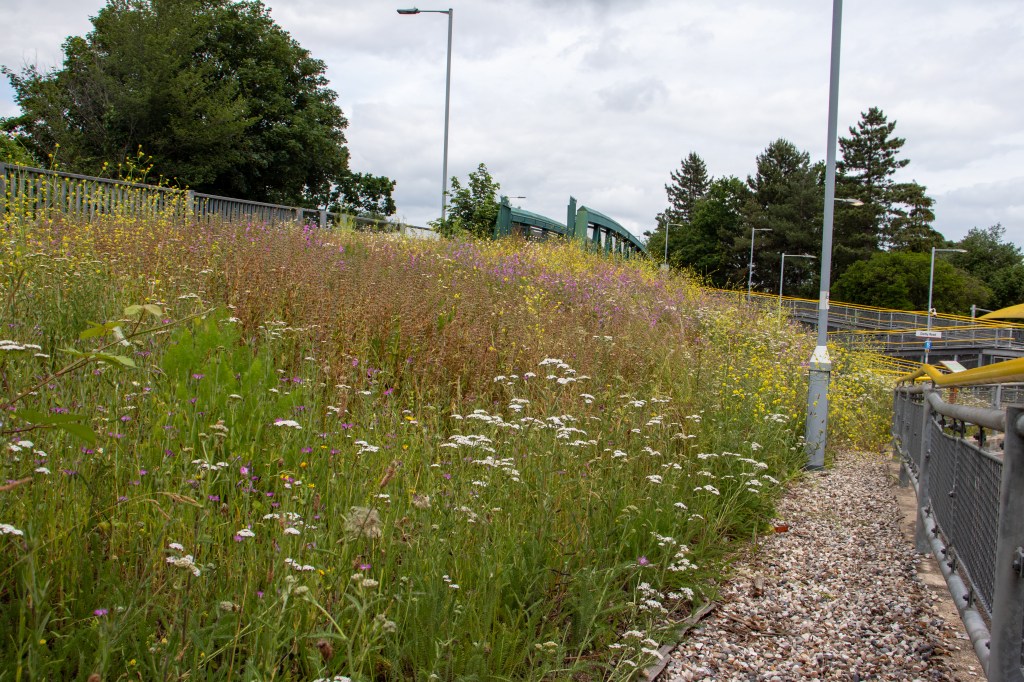
However, this does not mean the station has been left unkept.  In fact in late 2020, work was started to create a wildflower garden on the entrance to platform one.  Supported by the East Suffolk Community Rail Partnership, Greater Anglia Railway, Ipswich Friends of the Earth and Ipswich Council, it really adds colour to the station and makes it feel very well looked after.

An additional poppy patch is situated on the Felixstowe end of platform two.

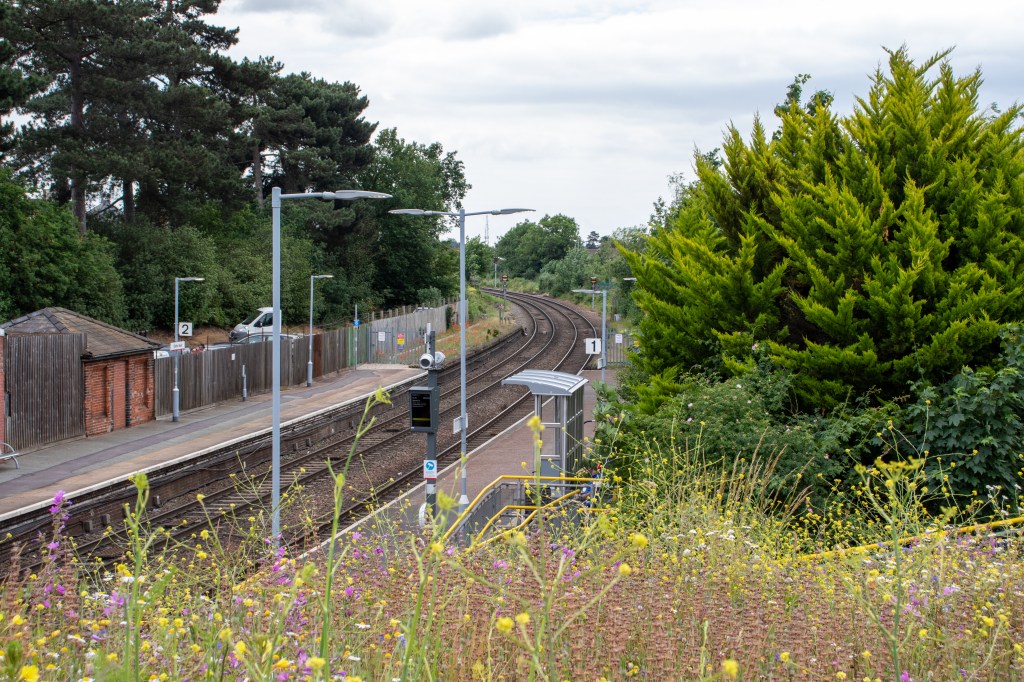
Many of the freight headed towards Felixstowe will stop here, as the line after the station becomes single line running for a few miles. These are at time of writing mostly hauled by class 66 locomotives, and passenger traffic is provided by class 755 Bi-Mode units.

The entry and exit figures for 2019 / 2020 were 46, 808.

In conclusion, Derby road was once an important interchange for the passengers from Ipswich to the coastal town of Felixstowe.  However after the 1960’s, most passenger traffic would be confined to the local area.  The expansion of Felixstowe port has brought many more freight trains through the station, these quite often stop in the loop.  Great views can be had of both freight and passenger traffic, especially through the curves towards Ipswich.  The station benefits from the new wildflower garden, and generally speaking is a good place for the intermodal freight enthusiast.

My Vlog, taken in 2021, can be seen below

The Ipswich Transport Museum can be found here:

https://www.ipswichtransportmuseum.co.uk/index.html

Top Ten Least Used Railway Stations in Suffolk | 8 – Wickham Market

The station was opened in 1859 by the East Suffolk railway, although this would be almost immediately amalgamated into the eastern counties railway the same year.  Eventually like all along the line it would become part of the Great Eastern railway in 1862.

A branch line to Framlingham carried freight and passengers from Wickham Market station, up until 1952 when it was closed to passenger traffic, and the line was fully closed in 1965. However the branch line platform can still be seen at the far end of the current platform towards Ipswich.

The station was quite popular right up until the late 1950’s, it even boasted a WH Smith bookstore.  A level crossing went over the tracks at the north end of the platform, but was replaced by road bridge in 1902, and the current bridge was erected in 2005.

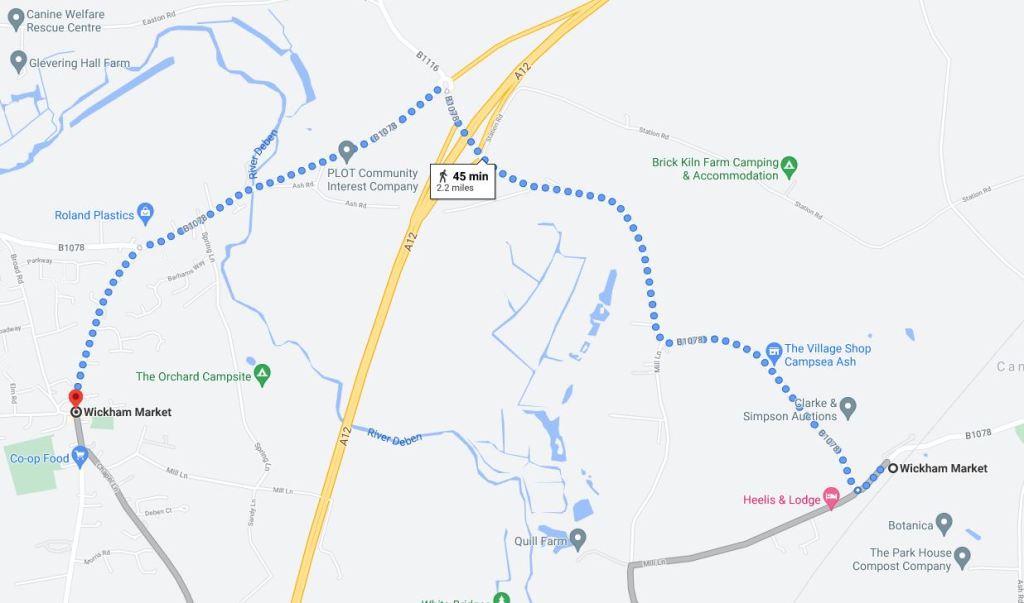
The most important thing about the station however is that it not actually in Wickham Market, but in a small village called Campsea Ashe.  The reason for this placement was all due to the river Deben, which had a tendency to flood around the village.  Also the village was also on a gradient, so the decision was made to build it on this current site.

It does however take around 45 minutes to walk to Wickham Market from here. As there are no direct paths over the river.  A taxi will take 10 minutes.

The station building has had a chequered history.  Designed by Francis Thompson, it is very striking and quite large for a station of this size.

It had largely laid dormant since 2005, but in 2013 a charitable community benefits society was set up to regenerate the building.  Called “Station House Community Connection LTD” its aim was to refurbish the station and bring it back to life as a community hub.

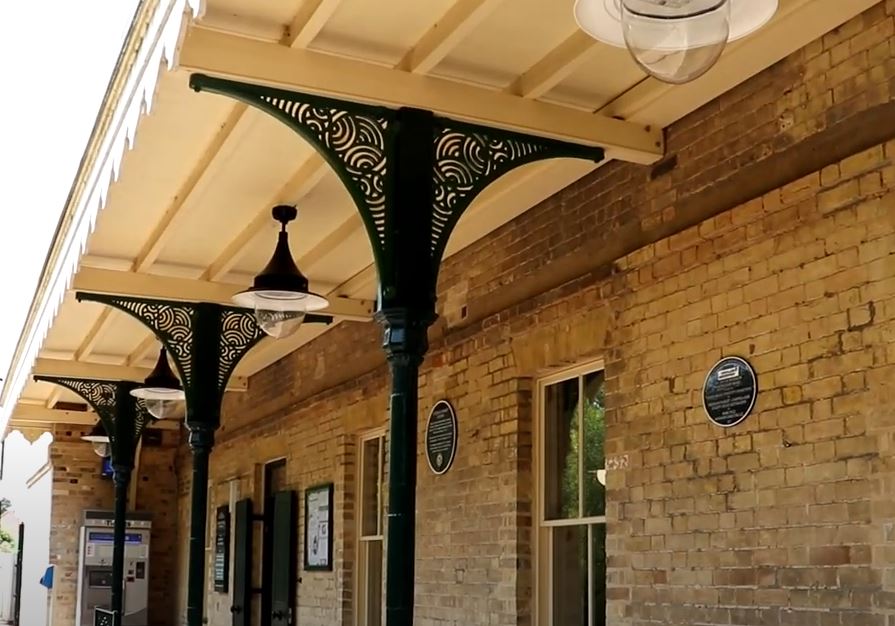
After a lot of fundraising efforts and a lot of dedication, the fully refurbished building re-opened in 2017.  It shows off not only the buildings history, but combining it with a community function.  The very impressive canopy on the platform was re-instated, with a complete recasting of the colonnades, based on the original 1880 design.  This was carried out by Hargreaves foundry in Halifax.

Benches on the platform still contain the Great Eastern Railway insignia, and are also lovingly restored.  On the walls can be seen two plaques commemorating the regeneration of this fine building.

Entering the building you will see an electronic information board, as well as interactive screens telling you about the history of the station.  A small lending library is near the doors, and disabled lift is also here to get you up to the second floor meeting areas.

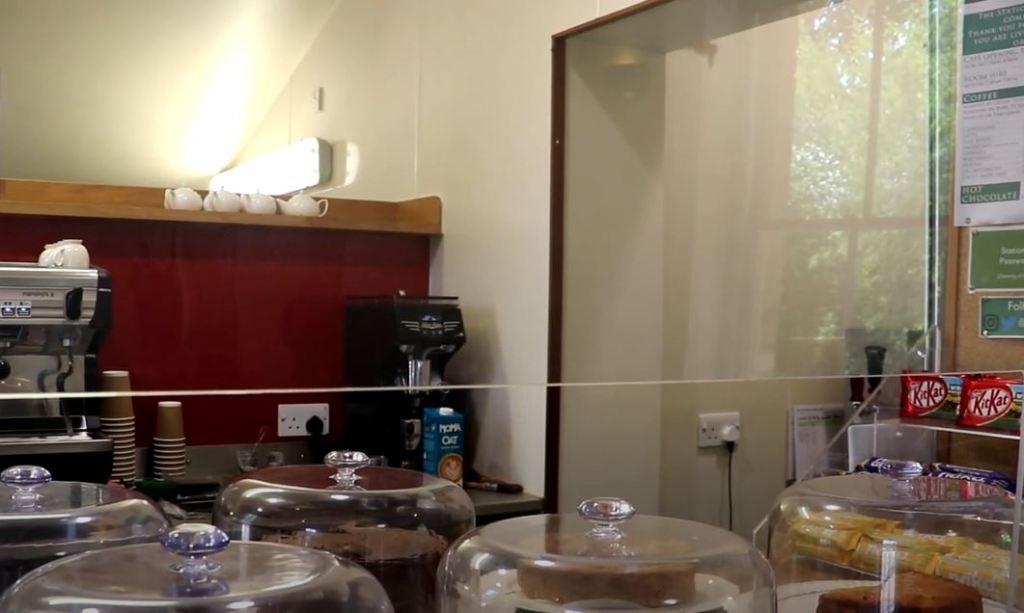
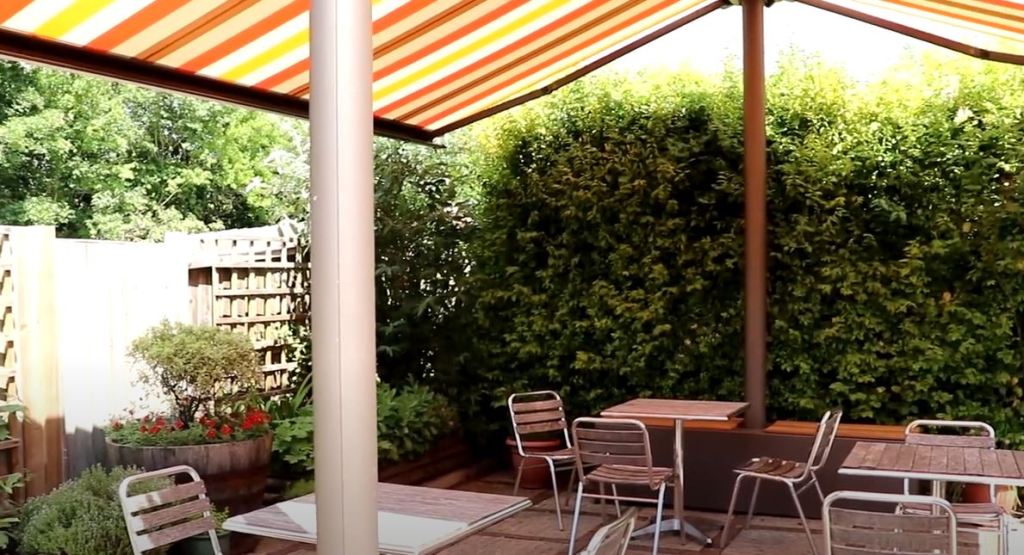
To the rear is a fantastic café, with both indoor and outdoor seating.  A good variety of drinks, cakes and sandwiches are on offer, and it is a very pleasant place to spend a while whist waiting for your train.

On the walls are pictures about the stations history, with a few dedicated to the refurbishment.  Various rooms are available for hire and the whole project is a testament to all involved.  It just goes to show what can be achieved if everyone pulls together.

The station building does not have a booking desk though, so buying a ticket must be done via the electronic machine on the platform.  Other facilities include information boards, timetables and a small bike rack on the platform.

At time of writing, one hourly passenger services (in each direction) are provided by Class 755 Bi-Mode units.

I really enjoyed this station, the staff were very helpful in telling me the history of the station, and the care and attention to detail is to be commended.  A good place to visit for a drink and snack and a must to see the platform with the excellent restored details in place.

A link to a Vlog I filmed in 2020 is here :

A link is here to the station building :

Station House Campsea Ashe for Community and Business

And also to a video showing the colonnades casting :

Casting the colonnades (stationhousecampseaashe.co.uk)

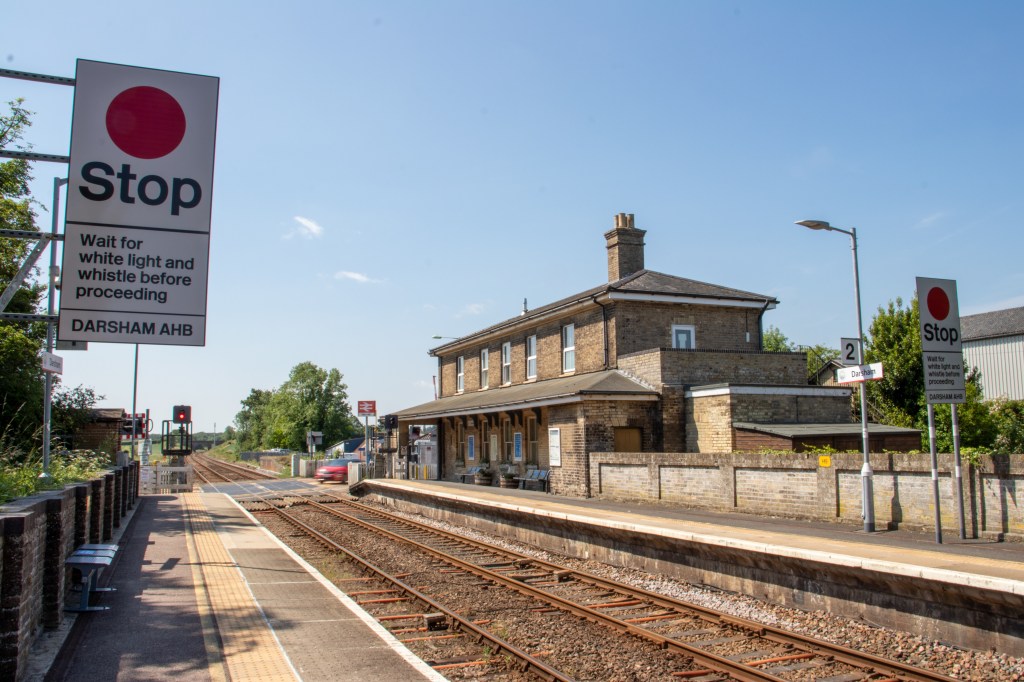
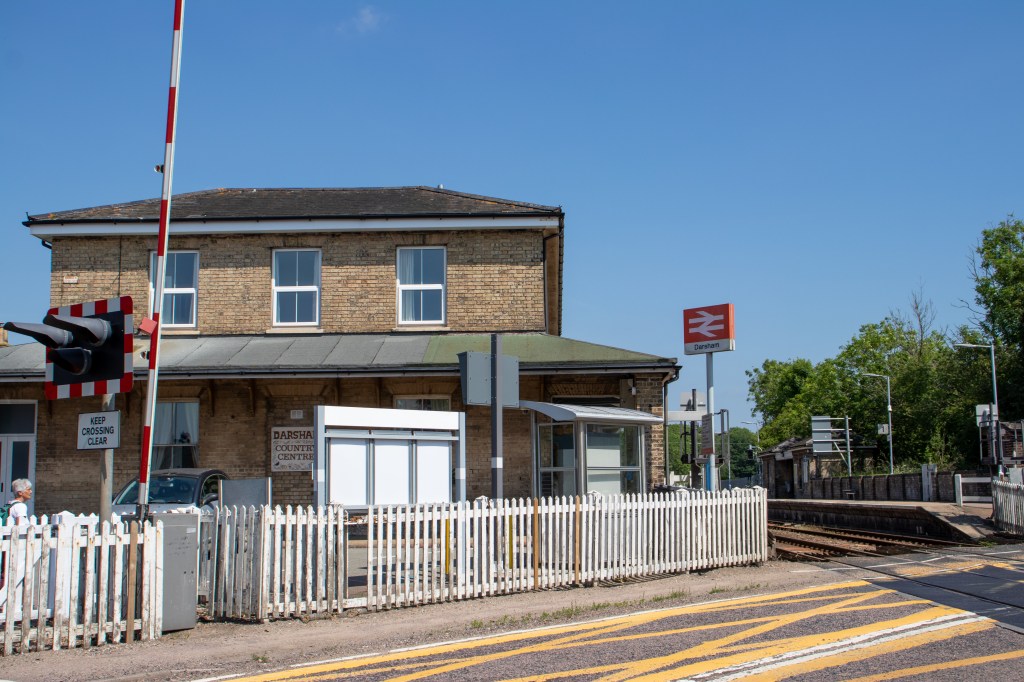
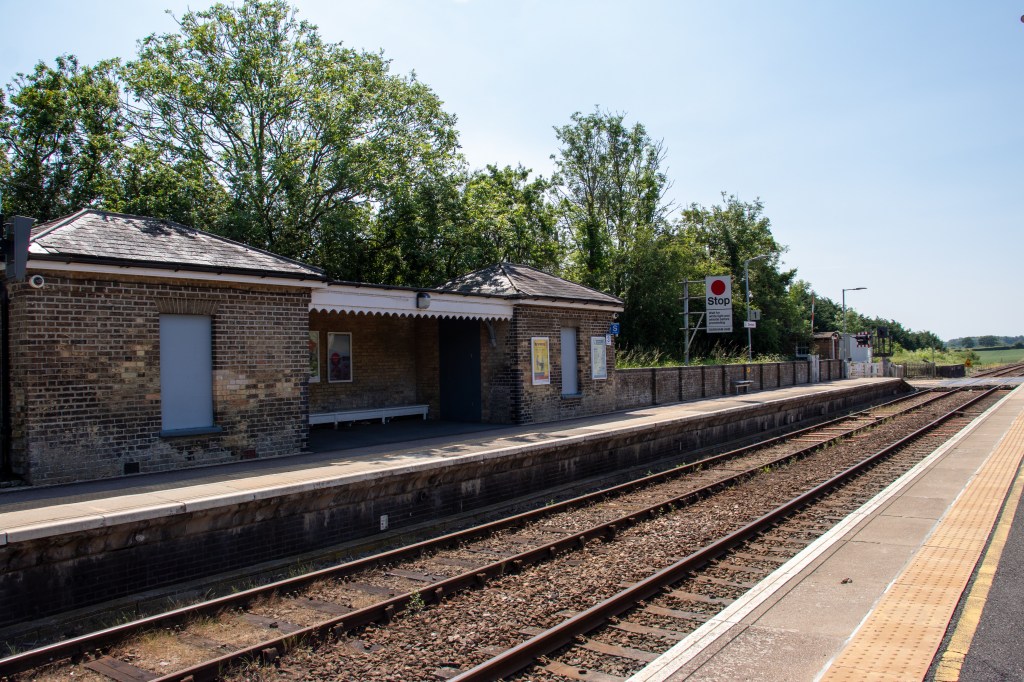
Top Ten Least Used Railway Stations in Suffolk | 9 – Darsham

Darsham was opened in 1859 by the East Suffolk Railway Company, which was soon taken over by the Great Eastern Railway.

It boasted several sidings in its time, and these remained until 1966 when they were closed due to lack of traffic.  It was also at this time that the station became unmanned, like most adopting the ‘Pay-Train’ system.

Luckily however the station building still stands today.  It is not however in use as a booking office, but is used by the Darsham Country centre, a subsidiary of the Woodcraft folk.  It is let out to groups, and has accommodation available. It is however great to see the building still being used, and hopefully this will continue for many years to come. 

Next to this is the only remaining level crossing on the A12 between London and Great Yarmouth.

Of interest on platform one is what seems to be either an original or at least early 20th century shelter.  It is quite a structure, and as the main station building great to see it still intact, and not demolished for a more modern design.

The station has help points, new electric information displays and an electronic ticketing machine. There are no booking office or toilet facilities.

A view here gives us a look at the line as it goes towards Lowestoft.

And here is the view of the line as it curves away in the direction of Ipswich.

Passenger entry and exit figures for 2019 / 2020 were 61, 534 .

Darsham, although not that well used, still retains a lot of the charm of a rural station.  Both the main station building and the shelter on platform one are in very good condition, and I do hope this remains the case as it gives this station a lot of character.  The sight lines are excellent for the enthusiast, however the noise from the A12 does impair sound for video recording, but if its photography you are after it’s a great setting.

Top Ten Least Used Railway Stations in Suffolk | 10 – Elmswell

A large village between Stowmarket and Bury St Edmonds, Elmswell is certainly deserving of a station with a rich history of manufacture.

The line was opened by the Ipswich and Bury railway company in 1846, serving the towns of Bury St Edmonds and Ipswich. A lavish station building on the Ipswich side was built and opened at the same time.

The station passed onto the newly formed Great Eastern Railway in 1862, who added a waiting room and toilets on the Bury St Edmonds side of the station.

In the early 1900’s, a line ran from the sidings to the west of the station to the Woolpit Brick Company, which famously produced white bricks. It used three steam locomotives. Other companies which used siding space during the 1900’s were a bacon factory, Beer & Sons and St Edmundsbury Co-op. Due to lack of traffic, the yard closed in 1964.

Elmswell became an unstaffed halt in 1967, and ‘Pay-Train’ working was to be introduced on the line. Unfortunately the main station buildings on the north platform were demolished in 1974 and the signal box succumbed to the same fate in 1986.

However, the buildings on the other platform remain. These still retain the Great Eastern Railway marking on the canopy steel works, and look to have been freshly painted when I visited in 2021.

The actual building is being let out as business space, and I was pleased to see them being used.

Behind these buildings is a very small car park, perhaps for only 3 or 4 cars. The level crossing has for some time been fully automatic. The rest of the station has small waiting shelters, help points, regional and local maps. There is even an amazon pick up point on platform one. Flower boxes enhance this little station, and it is clean and tidy throughout.

Passenger traffic at time of writing is provided by class 755 Bi-Mode Units. There is quite a lot of freight based traffic to and from Felixstowe also, mainly hauled by class 66 Locomotives.

Entry and exit figures for 2019 / 2020 were 71, 050.

Elmswell is a functional station, and even if the main station building has gone, the other smaller building complete with its nods back to the past helps keep the history alive

Below is the vlog I shot for this series, there is a link at the end to the playlist for the whole series, I hope you enjoy watching it.

2022 on Rainham Rail Enthusiast

Well, here we go again, let us hope for a better year out on the railway. Signs are that as we go through this year, more may be achievable.

I am hoping to continue with my along the railway line series on my YouTube channel, as well as importing ones I have already done to this Blog at some point. This will be a time consuming job, but it would be nice to have both a print and video version of these station looks. So what’s in store for 2022?


ALONG THE RAILWAY LINE SERIES (YouTube series)

Regarding this series, the lines I am aiming to do are :

Medway Valley Line – looking at the stations which were not visited in the Least Used railway stations in Kent series.

Ashford to Ramsgate Line

Kent Downs Line (Maidstone East Line)

Stations of the Darent Valley CRP

Worth noting that I will still be using 2019 / 2020 ORR statistics for the passenger numbers. This is because they are the most recent accurate figures available. Because of the pandemic, later figures are very skewed, and so I will use these until the situation becomes (fairly) normal again.

Doing those would almost complete the lesser used stations in Kent, the rest I will probably ‘mop up’ in 2023.


TOP TEN LEAST USED STATIONS IN….. (YouTube Series)

Another instalment in my Top Ten Least Used Station series will take me up north, to Merseyside!! Looking forward to really getting out of Kent, and seeing some Northern Stock.

Worth noting that I will still be using 2019 / 2020 ORR statistics for the passenger numbers. This is because they are the most recent accurate figures available. Because of the pandemic, later figures are very skewed, and so I will use these until the situation becomes (fairly) normal again.


OTHER SPECIALS

The most obvious railway line to visit will be (if it opens!!) the core section of the Elizabeth Line, from Abbey Wood to Paddington. I would love to be on the first train, but nevertheless I will showcase all the stations on this central core of the line.

These are the main points of the year, other surprises may pop up, you never know!! I am also trying very hard to keep this Blog site up to date, and hopefully push the YouTube channel up to that magical 1000, so that I can monetize and help fund my trips out and about.

So may I wish all that read and follow me both here and on YouTube a very Happy new year!! And If you are new to the blog and channel, please enjoy my content, and a happy new year to you too.

Just leaves me with my tagline:

If you can, get out there, get on the railway, and see where it takes you

Top Ten Least Used Railway Stations In Kent : 3 | Beltring

Beltring was opened in 1909 by the South Eastern and Chatham Railway as Beltring and Banbridge halt. These small stations were put along the line mainly to serve small rural locations, which would only be served otherwise by local trams.

railway station

Station buildings on such halts did not exist, but they did provide waiting shelters on both platforms, and their modern equivalents are still provided today.

railway station

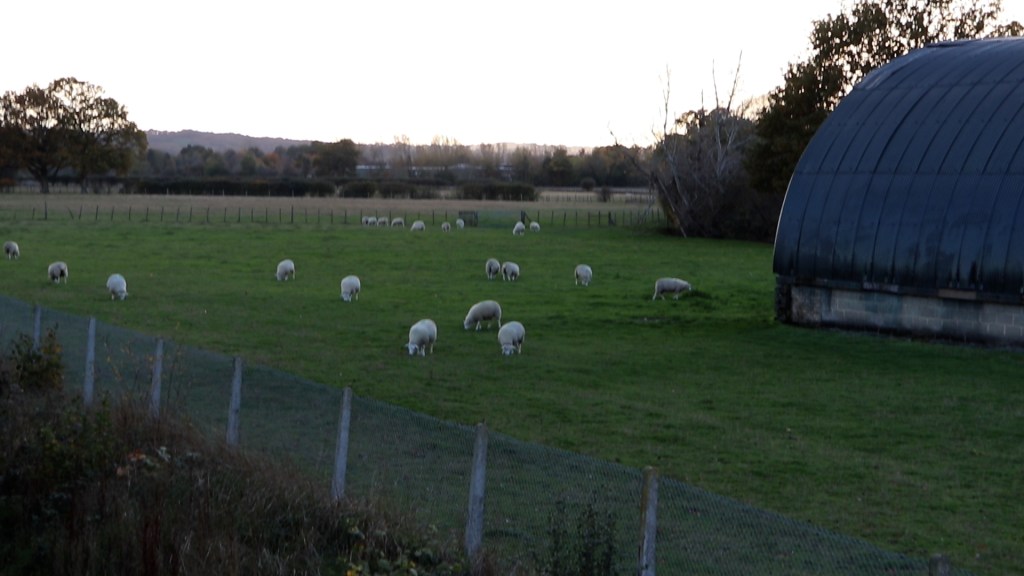
A small siding for local goods produced by farmers was placed behind the London bound platform, and existed right up until 1961 when the line was electrified. Where the siding once stood, a farm exists today.

sheep in fields

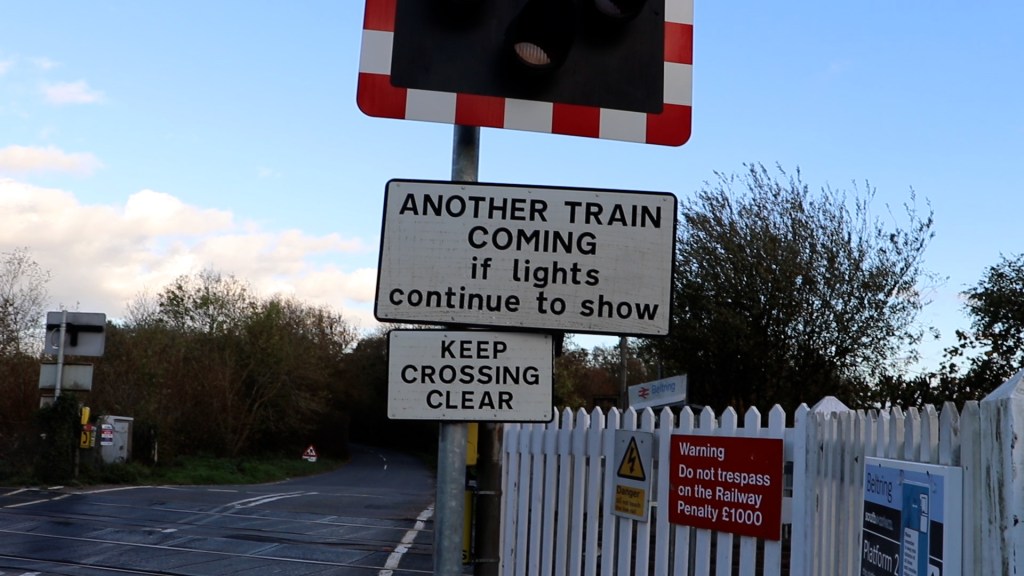
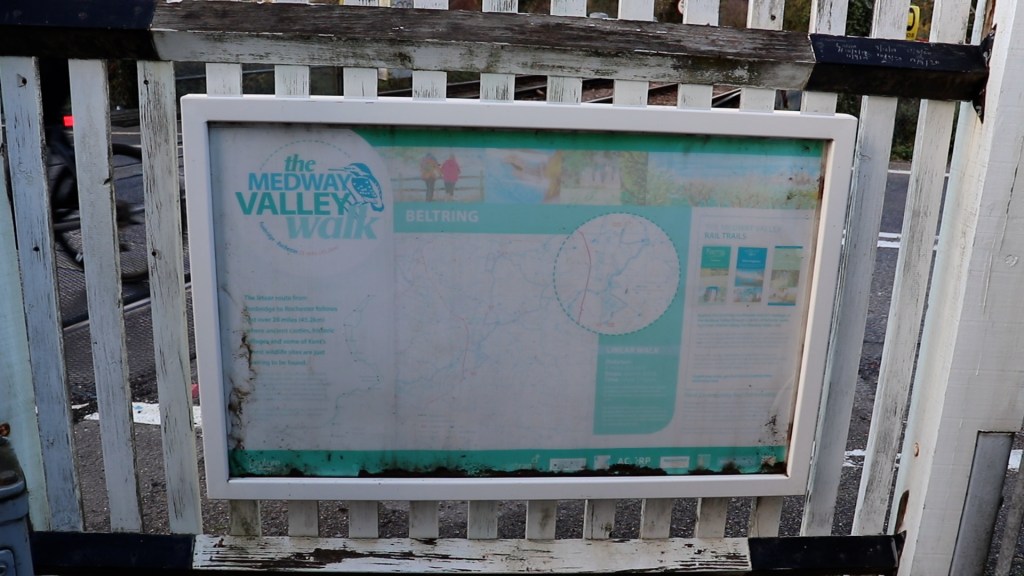
The only way to cross to either platform is by the road level crossing. Along the platforms, many posters can be seen and some detail the Kent Rail Partnership and walks which can be taken from this station.

level crossing
notice board railway

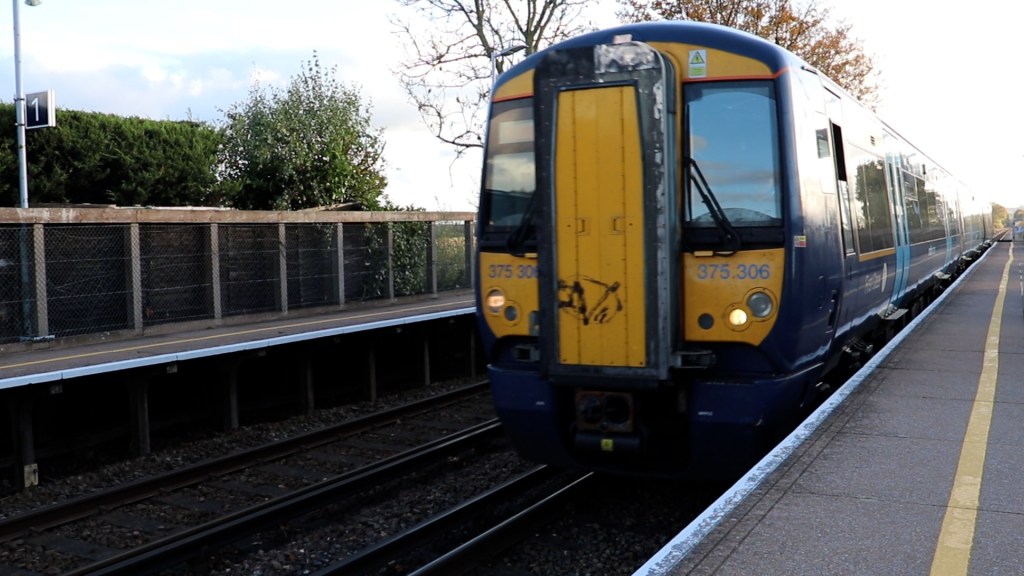
Being one of the most rural stations on this list, the nearest housing estate being 20 minutes away, Beltring is certainly a niche station. However, it does provide fantastic straight line views both up and down the line, allowing enthusiasts good photographic opportunities of both passenger and freight services which frequent the line. Just remember that as with the majority of these smaller stations, there are no toilet facilities.

uk train

Here is a video of Beltring, made as part of the “Least used stations in Kent” series I produced on my YouTube channel.

Many thanks for reading, and if this has interested you, please feel free to view other sections of my Blog, or even give my YouTube channel a visit. Thank You.

Top Ten Least Used Railway Stations In Kent : 6 | Dumpton Park

Opened in 1926, the station was opened to facilitate a reduction in lines between Ramsgate and Margate. The station was quite a lavish affair, identical to that at Broadstairs. The station platforms were reached by use of a covered walkway, which lead to a lift down to the platforms. The space for the lift can still be seen in this photograph:

In 1936, close to the station, the line down to Ramsgate harbour was re-opened. This was commonly known as the ‘Tunnel Railway’, and helped boost passenger numbers to Dumpton Park. However with its demise in 1965, the fate of Dumpton Park seemed to be sealed. I will cover the tunnel railway hopefully later this year (2021).

Once the Tunnel Railway closed, passenger numbers steadily dwindled at Dumpton Park. The station building was un-ceremonially demolished in the early 1970’s, and soon after the lift shaft and canopy roof over the bridge disappeared.

What is left today is a pretty sad mono-platform, only accessible by the steps off the footbridge. It does have an electronic ticket machine, posters and a help point, but all of the charm has gone. A housing estate now surrounds the entrance, which is easy to miss if you don’t know where to look.

Towards Ramsgate

Towards Broadstairs

Stopping passenger traffic is (at time of writing) class 375 Electric Multiple Units. There are various through trains throughout the day (mainly Class 395 ‘Javelin’s’). Freight is mostly non existent, with some engineering trains mainly during the weekend, if work is going on in the area.

A video from my YouTube channel is below, if you wish to view.

Many thanks for reading. Please visit and subscribe to my sister Vlog channel on YouTube by searching for rainhamrailenthusiast.

Top Ten Least Used Railway Stations In Kent : 7 | Adisham

Adisham was opened in 1861 by the London, Chatham and Dover railway. The station building was a virtual replica to that found at Sole Street, with an all over white paint finish. Situated on Dover “Down” side of the line, it still sports its original and unusual Chimney vents, as can be seen below.

There was a small shelter put onto the London bound side. A goods shed was put to the south of the main building on the “Down” side, a structure which still stands today (in the middle to the right in the picture below), although it is now used as business premises.

A signal box of grand design was put on the “Up” side around 1878. Being of a timber construction, it was higher than the main building, and was quite an unusual design. Unfortunately it was removed in the early 2000’s, a casualty of the re-signalling of all the line.

The station used to be quite busy, being on the line which served many of the Kent Collieries. But with the closure of these in the late 1980’s, passenger traffic has substantially declined, but it still regularly commands passenger entry and exit numbers of between 25 and 27 thousand per year.

Saying that, here are the figures for Adisham. The station at time of writing gets 2 trains per hour in peak hours, and 1 train per hour off peak and at weekends. Freight or engineering trains are rarely seen. According to the ORR figures of 2018/2019 it had 27,600 exit and entry’s. Stopping services are provided by class 375 Electric Multiple Units.

A video about Adisham can be found on my YouTube channel, which you can view by clicking on the link below :

Many thanks for reading. Please visit and subscribe to my sister Vlog channel on YouTube by searching for rainhamrailenthusiast.