The station is situated on the Medway Valley Line, and was opened in 1844, with the current layout of two staggerd platforms, separated by a level crossing.
The goods shed once stood on the Maidstone “up” side of the station, opposite the Paddock Wood “down” side platform. The current car park being where this brick built shed once stood.
Access to both platforms can be made via the original South Eastern railway footbridge, which is still here and can be seen above.
A station building was opened on the Paddock Wood side in 1846, it being the first timber building built by the South Eastern Railway. The signal box arrived in 1892 next to the station building, and both at time of writing are still here.
Traffic on the line is both passenger and freight, the passenger traffic being formed of 3 car class 375 electric multiple units (at time of writing).
If you exit the station and go a short way down the hill, you will come to a bridge across the river Medway. Constructed around the 14th century, it is grade one listed and well worth a look.
The station at time of writing gets 2 trains per hour in the peak, and 1 train per hour off peak and at weekends. Freight is seen quite often, mainly on weekdays however. According to the ORR figures of 2018/2019 it had 35,742 exit and entry’s.
A video of this station is on my YouTube Channel, and is below if you wish to view.
Many thanks for reading. Please visit and subscribe to my sister Vlog channel on YouTube by searching for rainhamrailenthusiast.
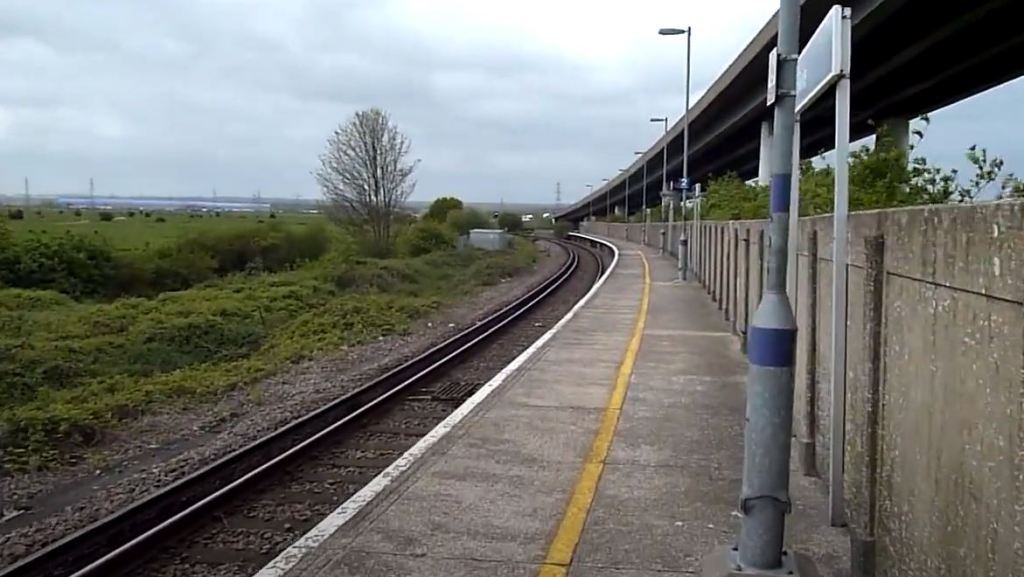
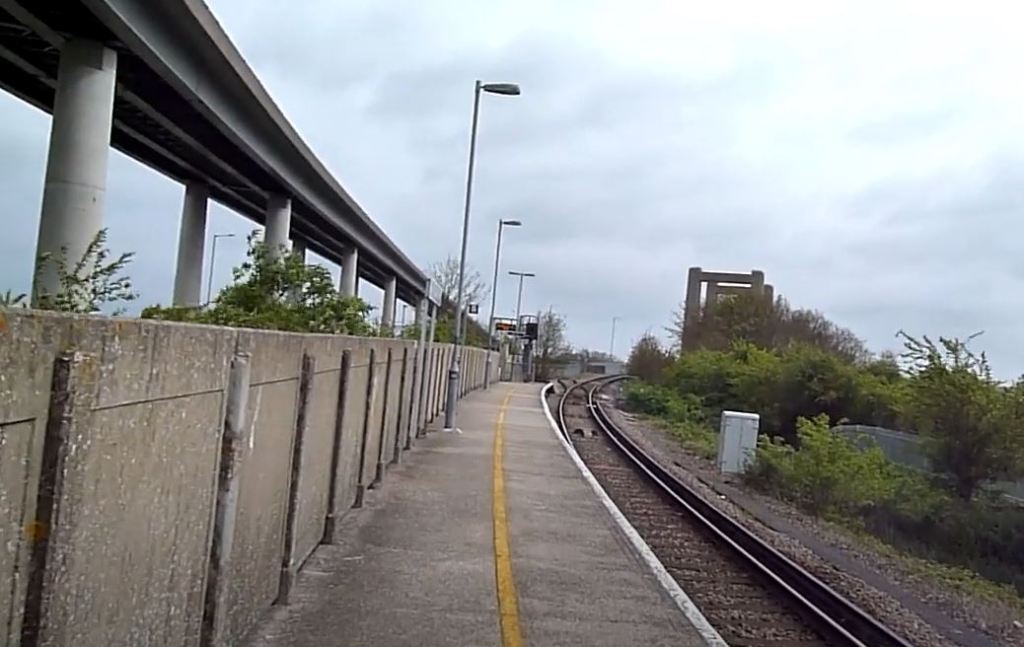
Swale really is remote, no real housing or commercial buildings are nearby, and it is amazing it is still used. However it does have an interesting and important part to play in the history of the line.
The station was opened in 1913 as Kings ferry bridge halt, and as such had no station building, just a couple of small huts for shelter. It traversed the River Medway over a bridge, but after a ship collided with the bridge in 1922, it was deemed unfit for railway traffic.
This meant that passengers were required to exit this station and walk over a temporary bridge to another station which had been provided to continue their journey. This change meant the renaming of the station to Kings ferry bridge south halt.
It was renamed again in 1929 to Swale Halt when the railway bridge reopened after repairs, and continued with this name until a new bridge was opened in 1960, when it became known just as Swale station. The station is very remote, the nearest village being Iwade, which is a 25 min walk away.
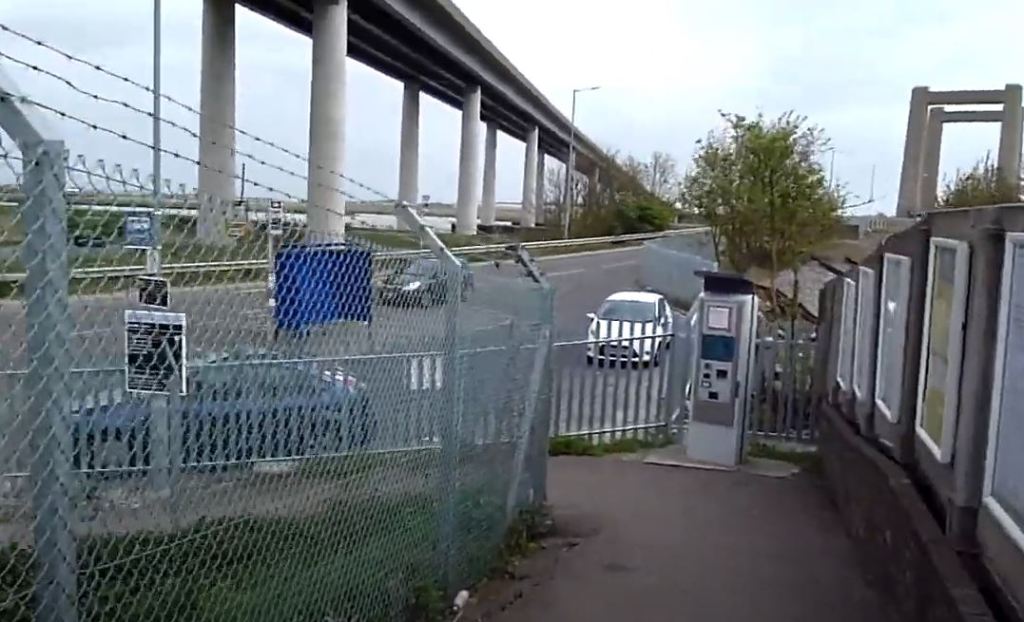
There is one dot matrix display, positioned at the top of the ramp which from the very small car park (which is in fact where the replacement bus service would pick up and set down. At the bottom of this ramp is an electronic ticketing machine. Turning back to walk up the ramp, on your left are various poster boards.
These include timetables, service information, a board for the Kent community rail partnership and of course an onward travel information board. Like others on this list, there are no other facilities here. Trains at time of writing are class 375 electric multiple units.
Passenger entry and exits for 2019 / 2020 were 8, 044. I am using these figures as the figures for 2020 / 2021 are skewed due to the pandemic, and so are unreliable.
The video for Swale, recorded before the Class 375’s took over the line can be seen below.
Well, it is finally out of the bag, so to speak. My first book is now available to order on Amazon. I decided to self publish, and that was an eye opener let me tell you! I have learnt so much in the last year and three quarters since I started it, and I hope the finished result is going to be enjoyed by a few people at least.
But what is it about? Well here is the title:
‘This Train Terminates Here : London Railway Termini Up To 2020’
The book not only gives brief histories of the 14 London termini, but also gives a walkthrough of each one, highlighting the many statues, sculptures and plaques along the way.
I hope that anyone who reads the book will come away with better knowledge of these fantastic stations, and maybe will be tempted to visit one or more of them to see the articles themselves. I see the book as a snapshot of the current termini, as many may not be the same in the future (especially Euston).
Below is a link to the book, as well as a few photgraphs of the book, just to give you an idea.
Many thanks for reading. If you enjoyed this, please search for Rainham Rail Enthusiast on YouTube, Facebook and Instagram, Thank You.
On sunday 29th September 2019, I visited the LTM Depot open day. The museum is in Acton, and can be reached on the Underground network via the Picadilly and District lines. The museum itself is a 5 minute walk across the road from the station.
The first thing to note as you approach the entrance was a small miniature railway which runs on event days such as this. Entrance to the site was very fluid, a quick check of my printed ticket and I was in.
You will see various large equipment from the underground network either side of you as you enter, and straight ahead there are rows of shelving stacked high to the roof with boxes. Stairs to the right of you take you up to a mezzanine level where on this day an interactive area was laid on for children. Great views can be had over the museum here, especially the tube stock.
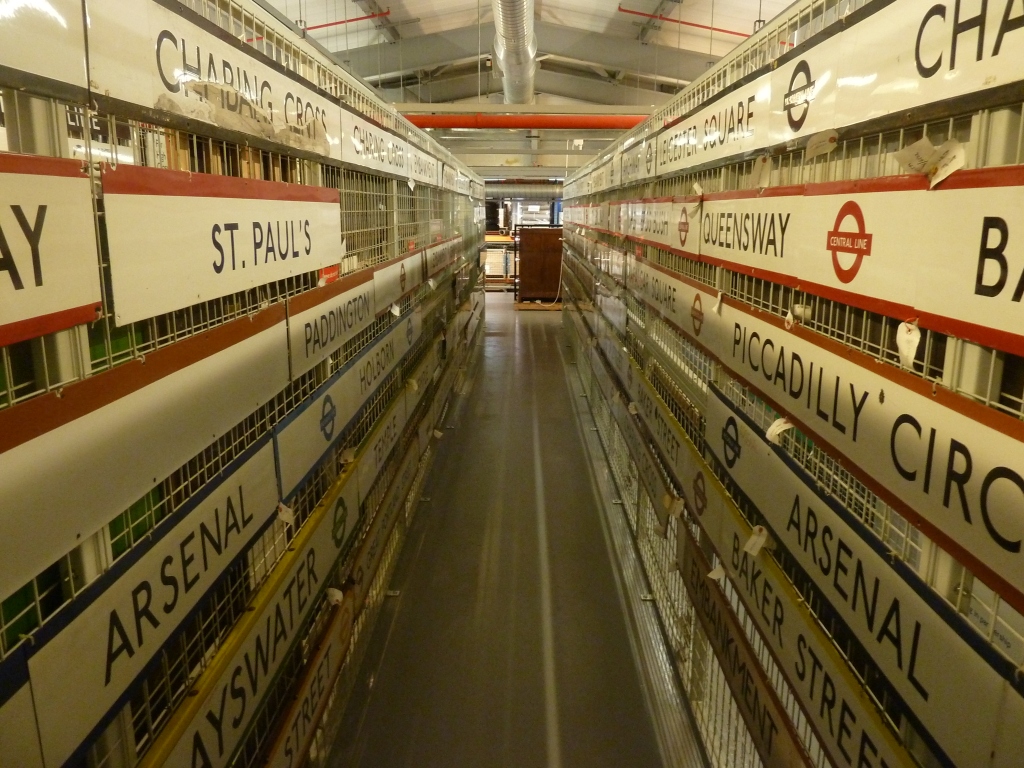
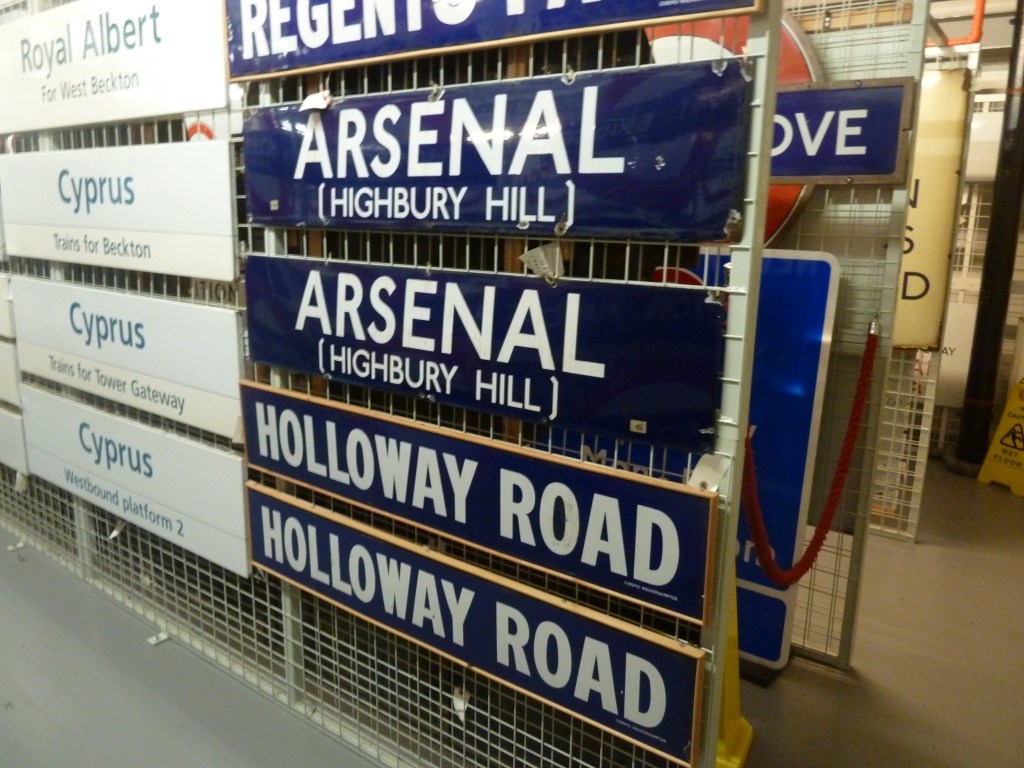
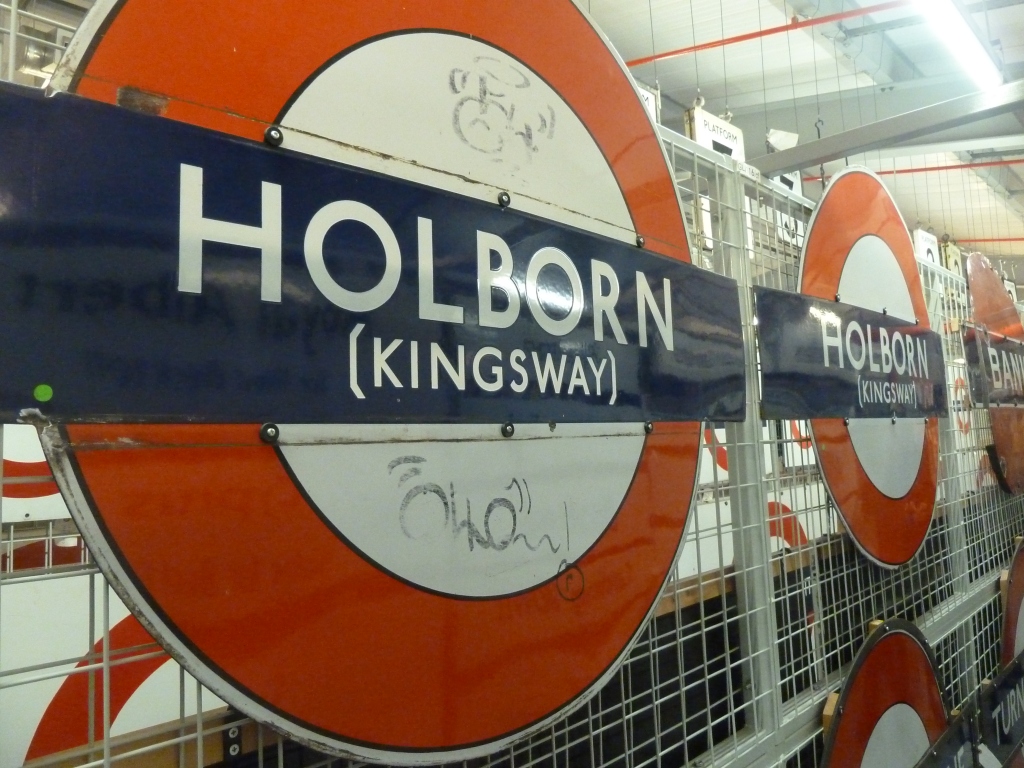
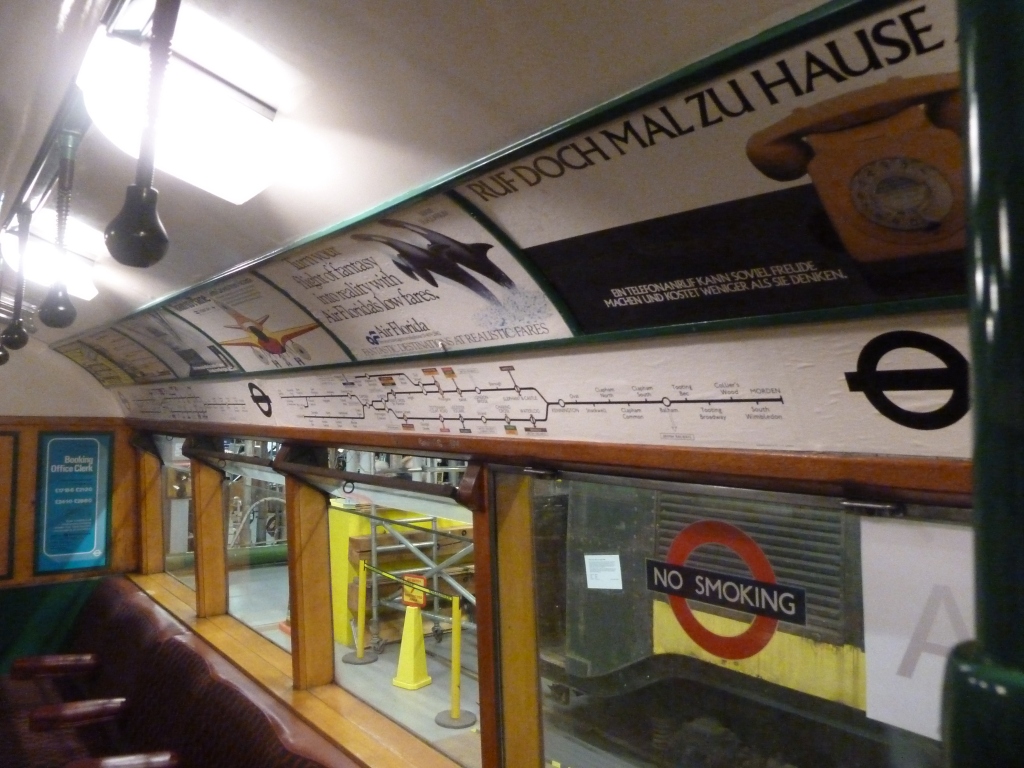
Before you get to the actual tube trains, go up the stairs to your left. This will take you to an area which contains a fantastic amount of old signage, and various models used in planning. As seen in these photos, you can easily spend 15 minutes + up here.
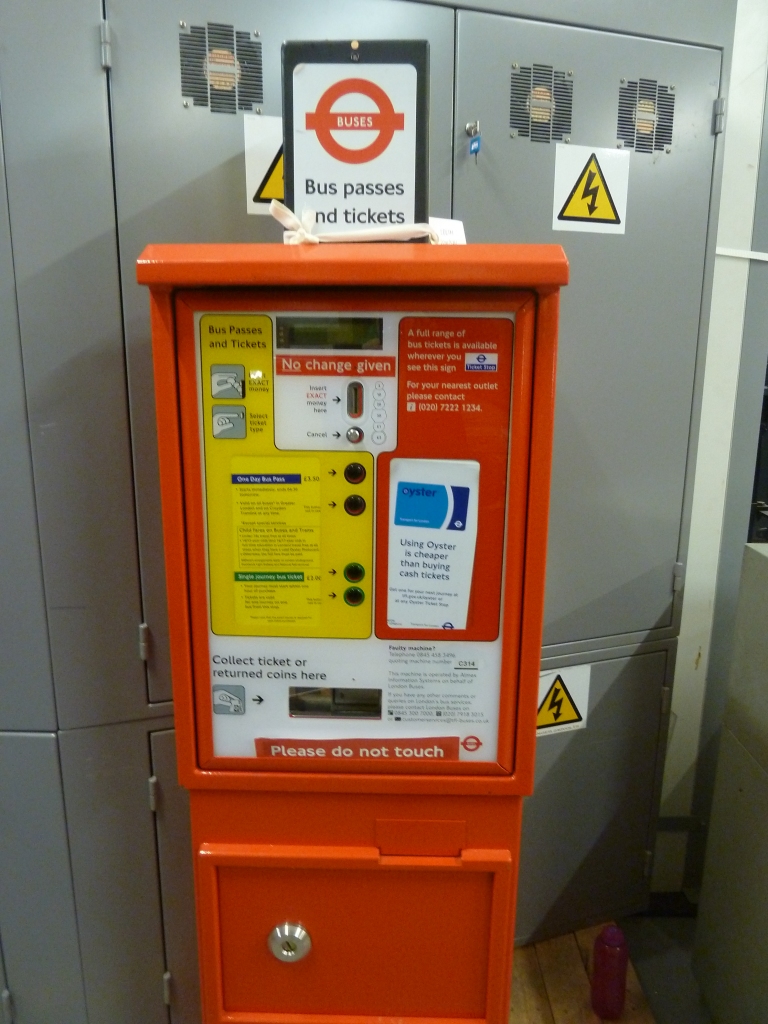
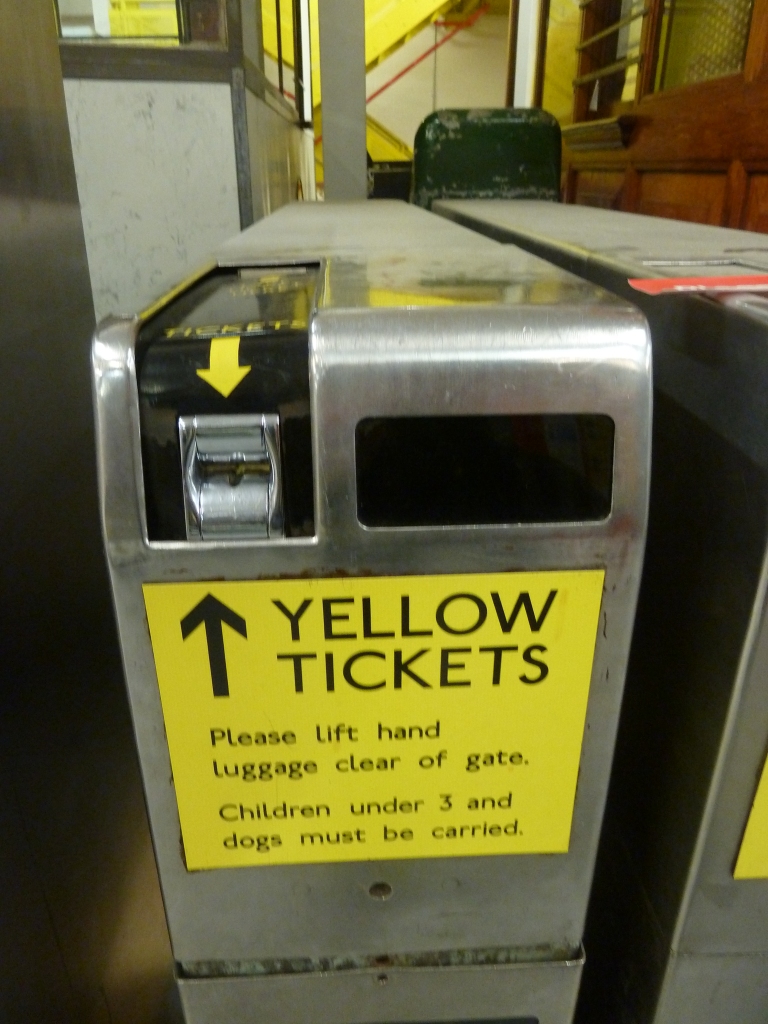
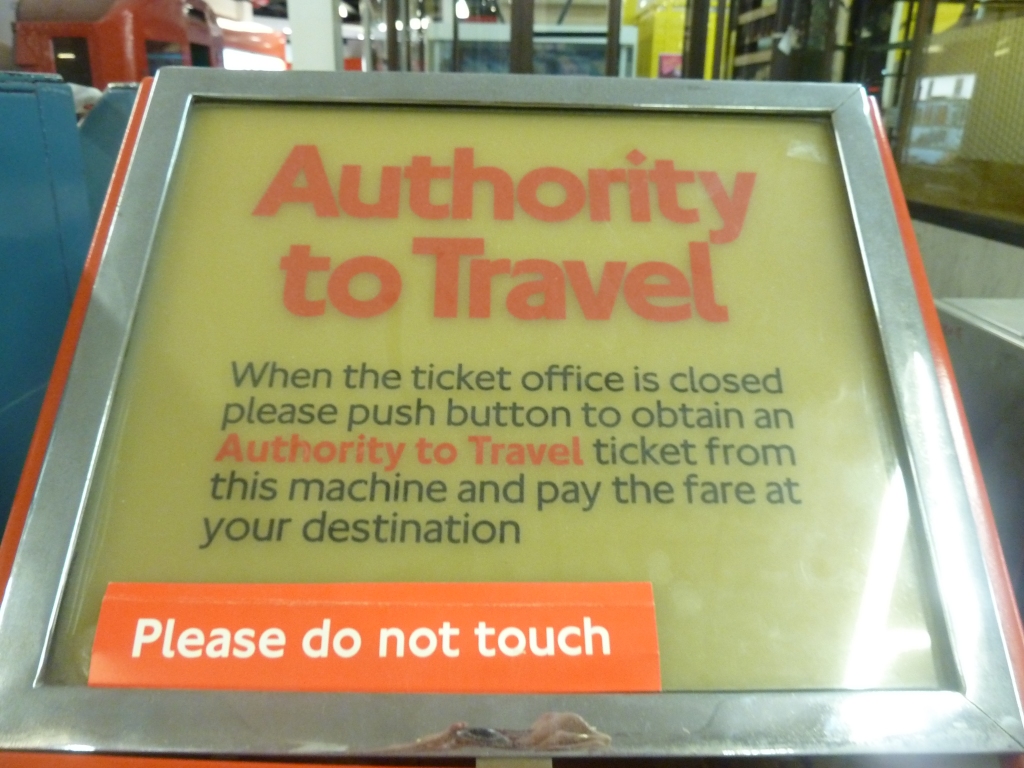
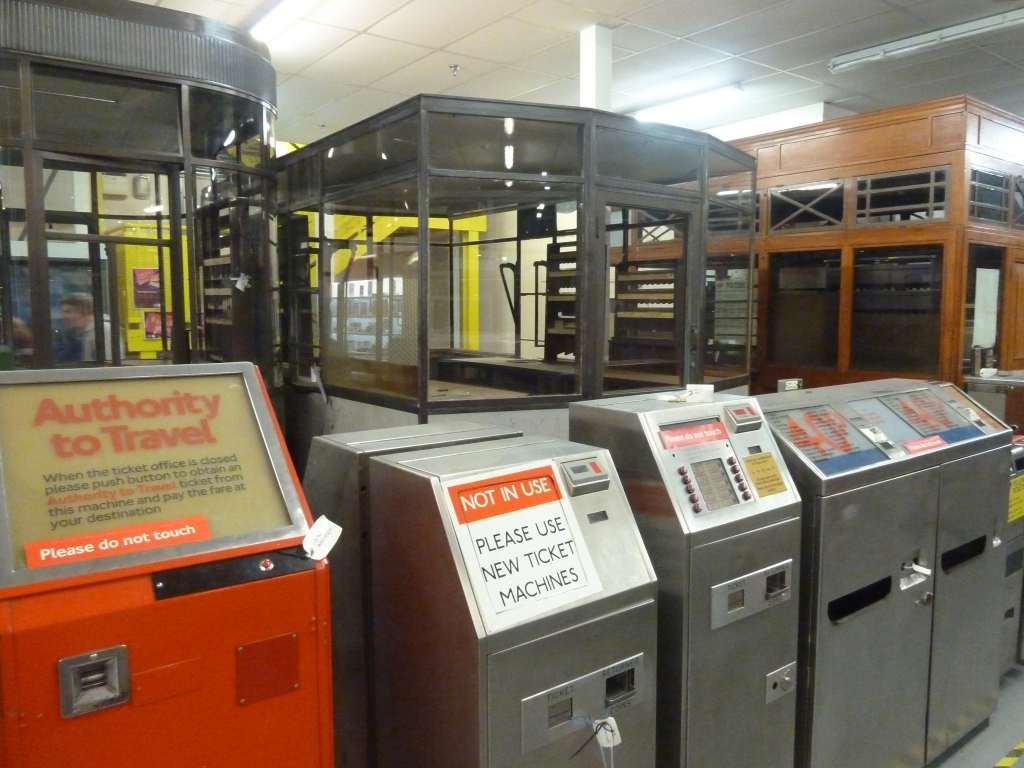
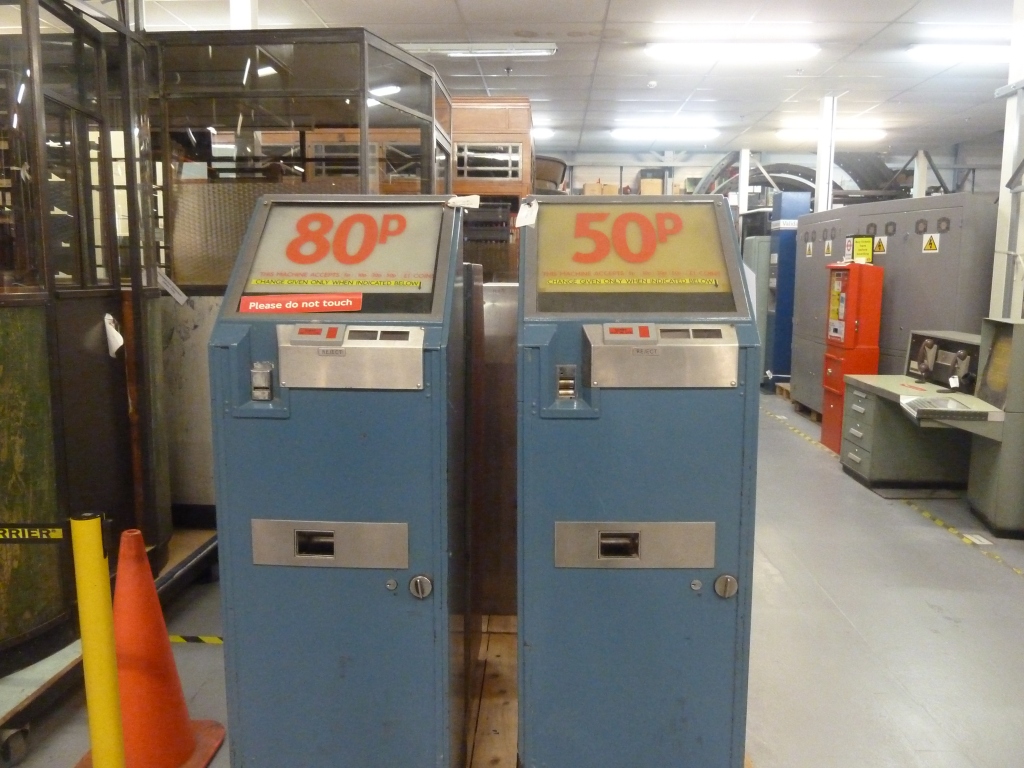
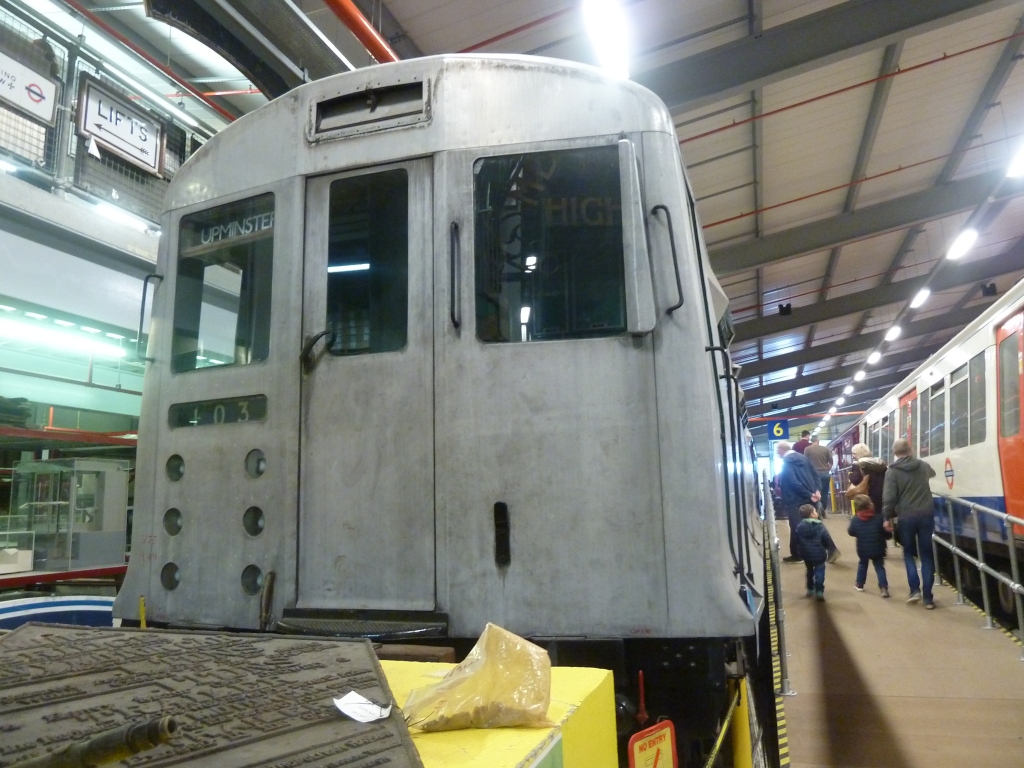
Before you view the tube stock, have a look at the old equipment in front of them, old ticket machines and barriers, and signalling equipment.
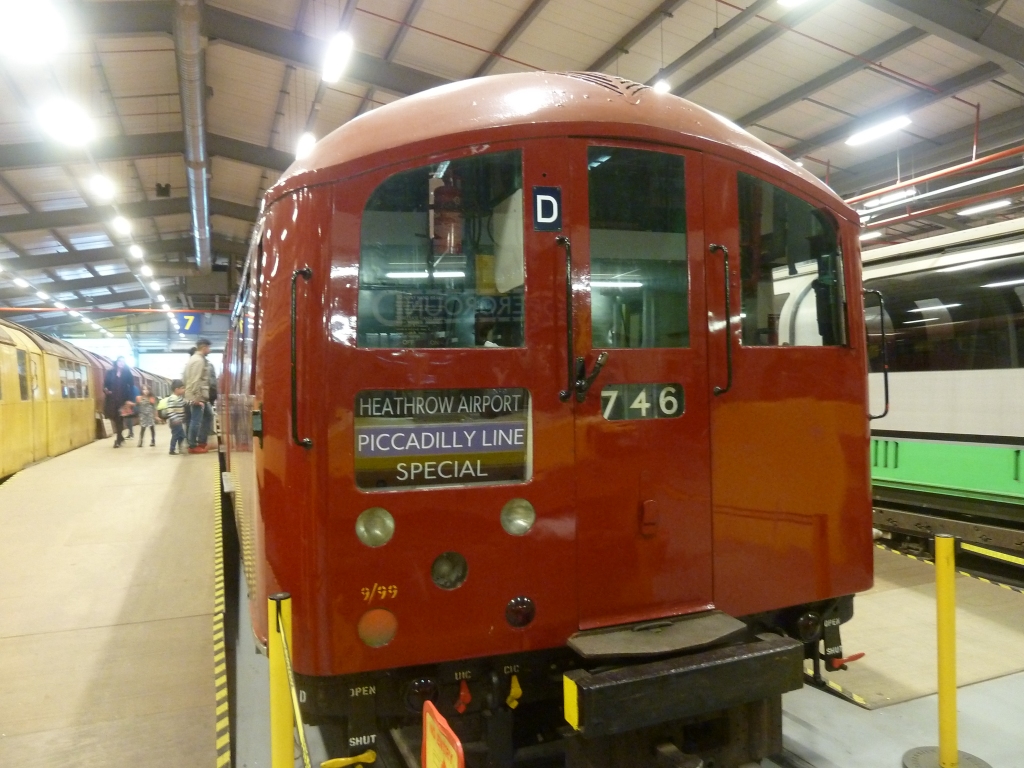
The variety of tube stock here is amazing. Everything is well laid out, and you can even enter some of the old trains. The level of refurbishment is exceptional, and has quite a nostalgic feel.
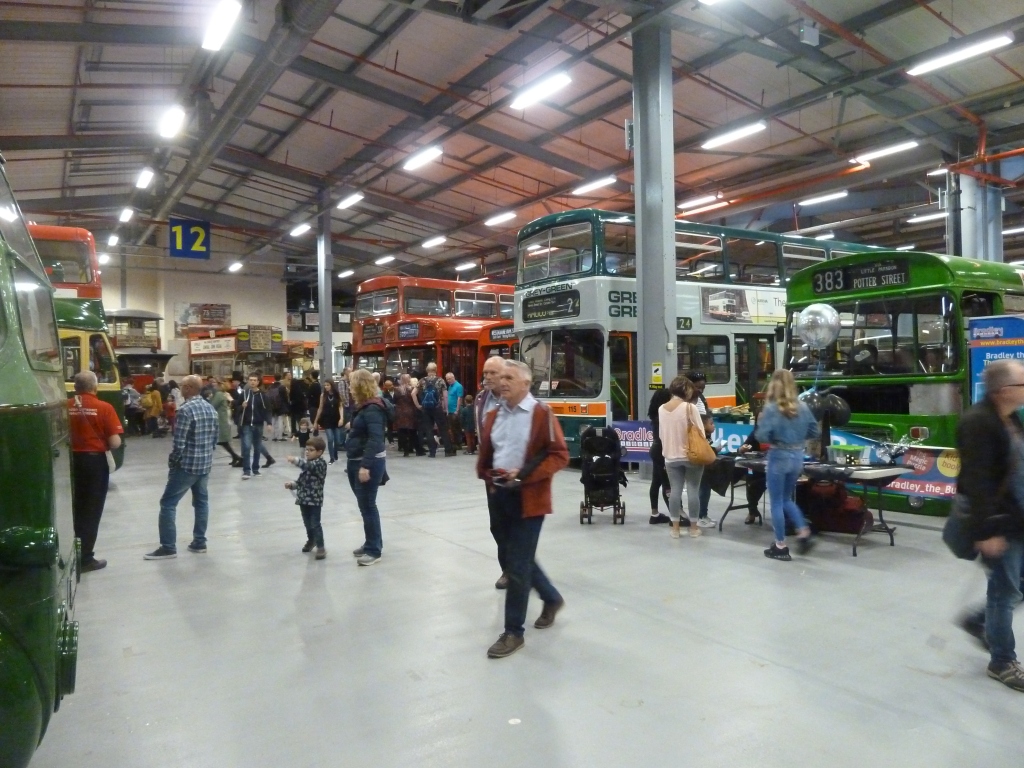
To the extreme right of the tube stock is an area dedicated to buses. Again the level of care in refurbishing these is exceptional.
Outside there was an area to buy various food and drink, and a place to sit down. No food and drink is allowed in the museum for obvious reasons.
I came on a day which was all about the London Termini, and the lectures provided were excellent. I also went on an included tour of the small item store, which was fantastic and lasted around 20 minutes. You have to sign up for this on the day, but they were quite regular.
Overall I would recommend going to visit this museum during its open days, the amount of heritage equipment, stock and signage on display is astounding. They only open it on select dates, and more specific tours are held on Saturdays throughout the year. Follow the link below the video to see if anything interests you.
Below is a video which i shot on the day, which gives an overall view of the museum.
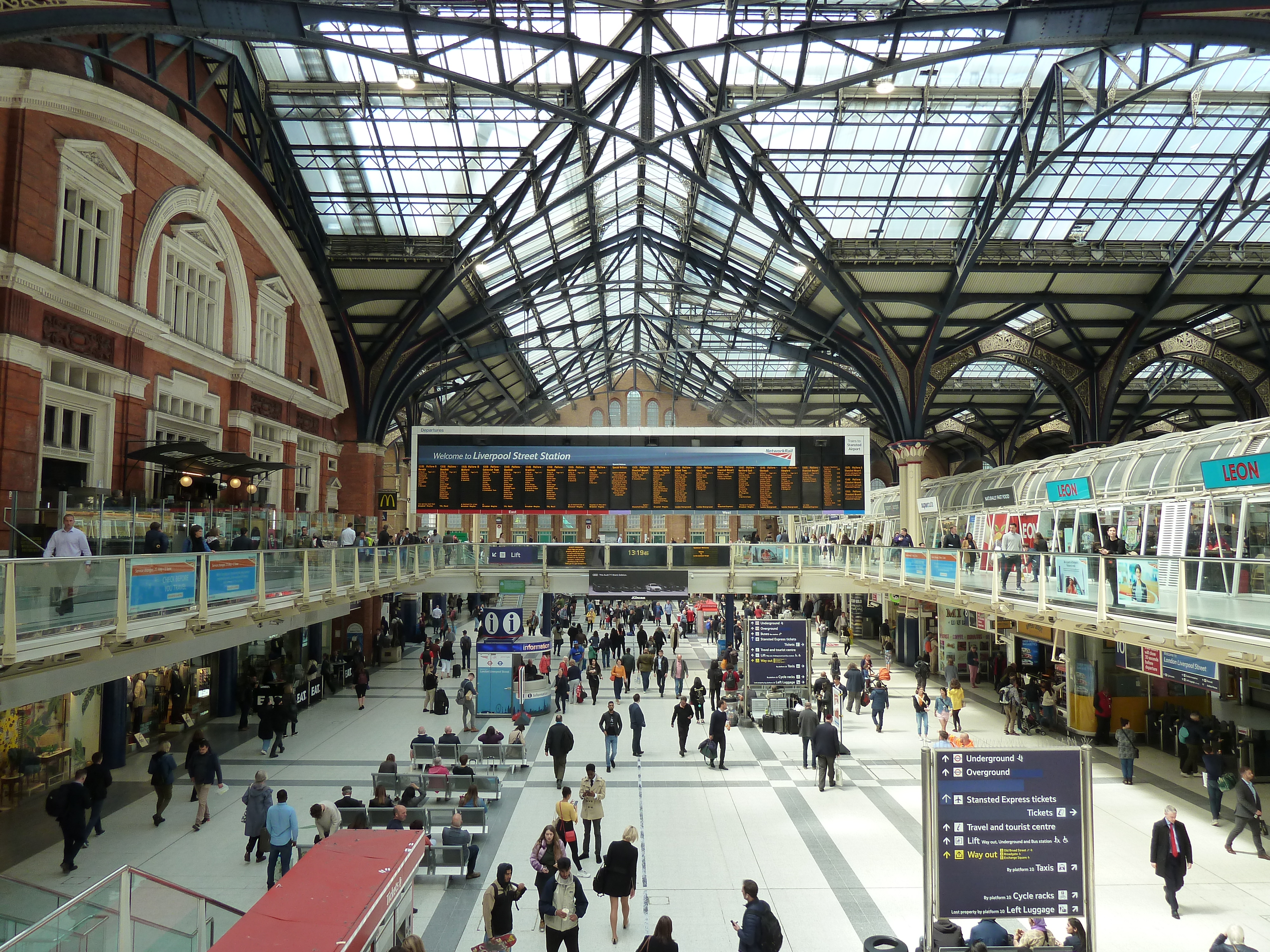
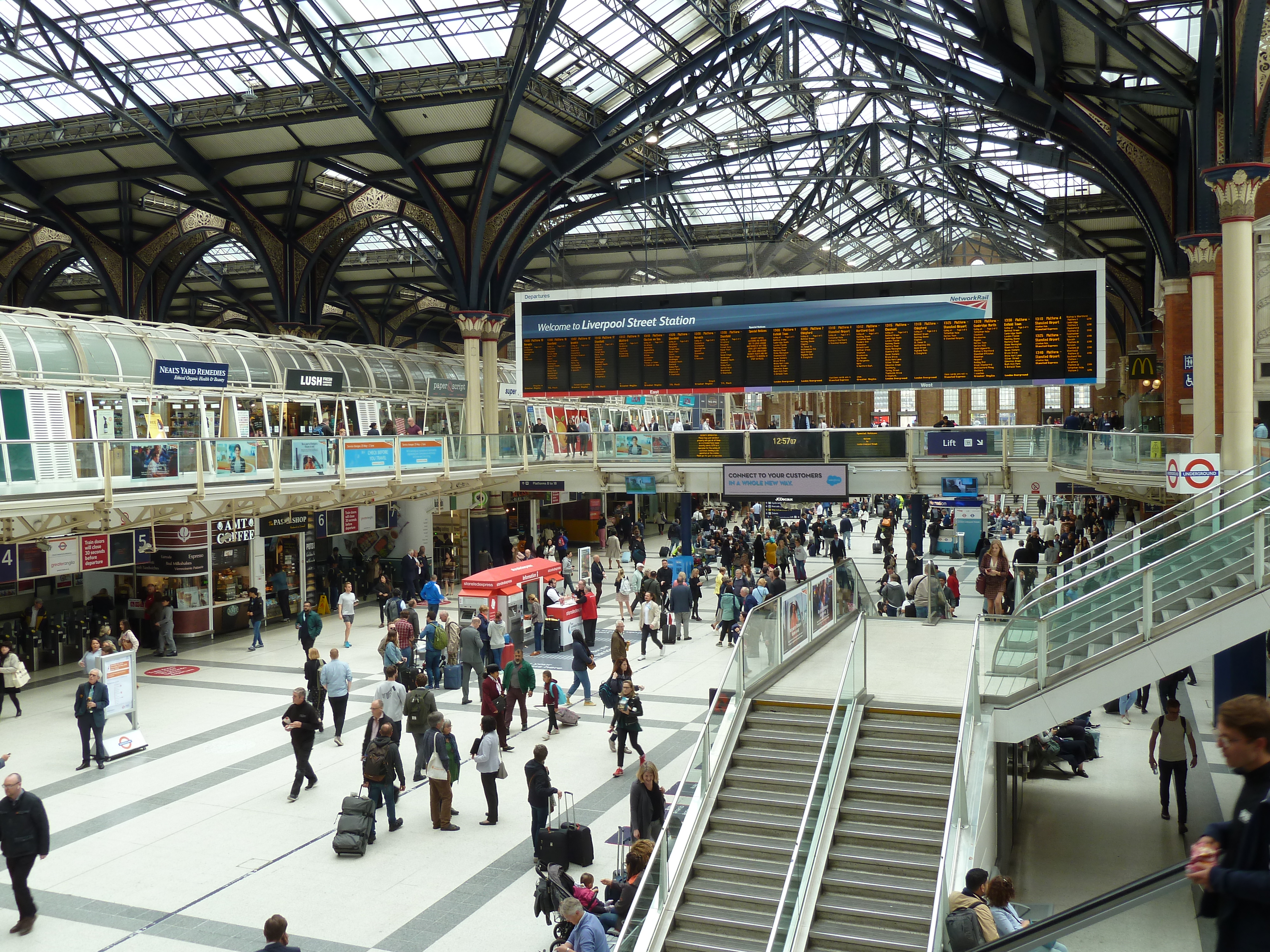
Once one of the busiest stations in London, Liverpool street has a very ornate interior much overlooked by its passengers. Having undergone many refurbishments in the years, the concourse now fills with natural light from the vast roof which spans it. Although now not as busy, the soon addition of the Elizabeth line may make this station a true hive of activity again.
A Brief History
London Liverpool Street was built to be the London terminus of the Eastern Counties Railway. Opened in 1874 with 10 platforms, two of which extended under the station forming a junction with the Metropolitan Railway.
Originally the buildings were 90ft high, with a spired clock tower. A hotel named “The Great Eastern” was built down the entire length of the new frontage. Many expansions came in the early years, which unfortunately created a myriad of entrance and exits. As well as this, the bridge used across the station was not wide enough and on two levels, which caused congestion and confusion for passengers wondering which part of the bridge they should be on.
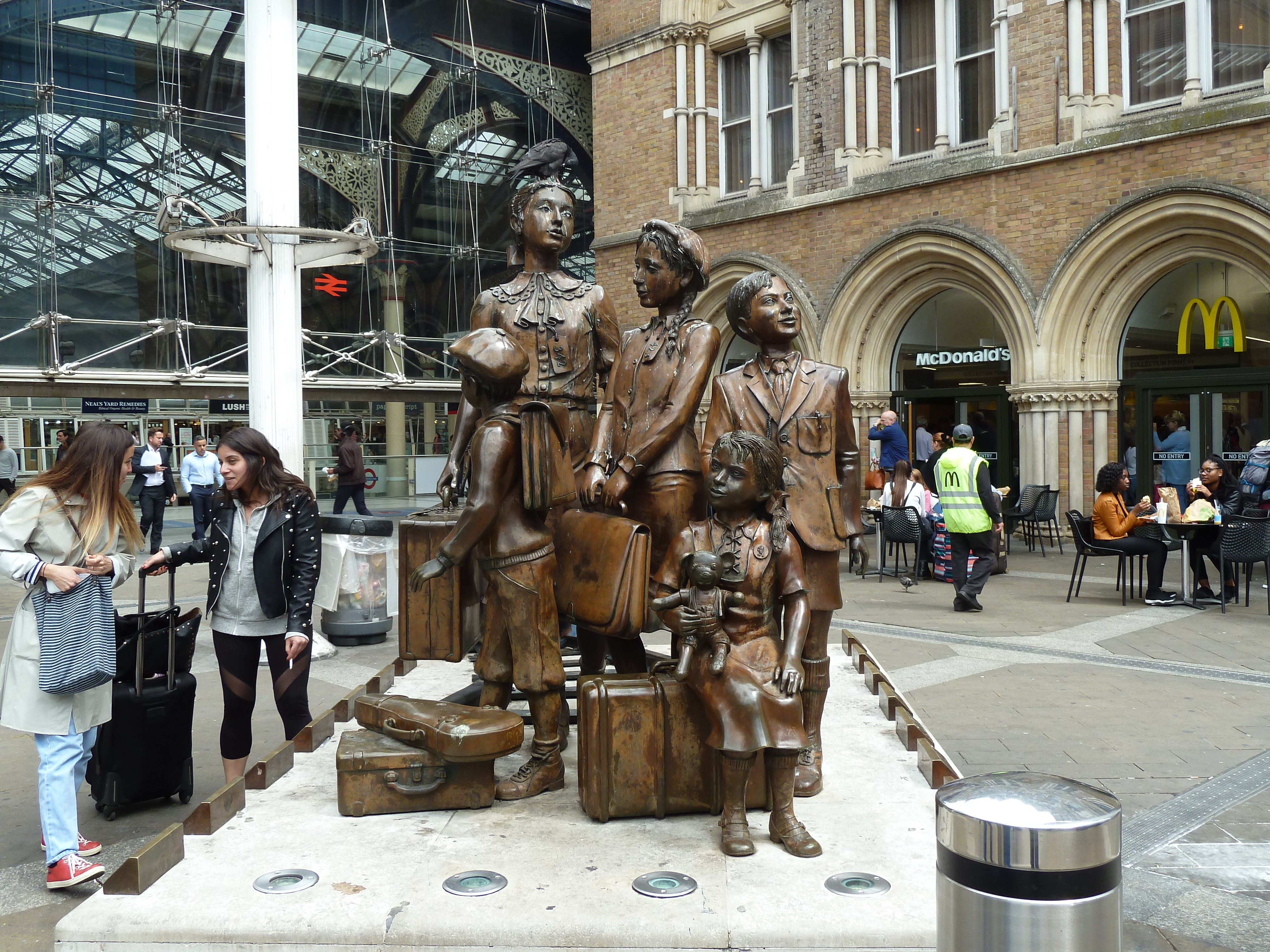
The station is probably most famous for its role in welcoming children of the “Kindertransport”, an operation started in 1938 to bring children from the ever expanding Nazi Germany. The first children arrived on December 2nd 1938, and by September of the following year, almost 10,000 children would arrive into Liverpool Street, many of which landed at Harwich.
After being damaged in the Second World War, the station remained in a poor state until the 1960’s, when British Rail rebuilt and refurbished the station, giving it a new clock tower.
It was therefore a surprise that in 1974, British Rail would earmark the Liverpool Street station building to be demolished, and an underground terminus put in it’s place. Many campaigns were launched by eminent figures of the day, including the comedian Spike Milligan, to stop the bulldozers from destroying such a beautiful example of a London Terminus. Eventually after a few years, the tireless campaigning worked and Liverpool Street was saved.
A full refurbishment was again undertaken in the 1980s, with the train shed roof being fully repaired and restored. The main roof would follow in 1987. At this time a link would be established to the Cambridge line, enabling trains to terminate at Liverpool Street instead of Broad street. The entire work was finished in 1991, and the station was officially re-opened by the Queen.
Since 2013, the site has had many excavations in preparation for the Elizabeth Line. During one of these, a mass grave was found on the site of the “Bedlam” burial ground, dating back to the 17th Century. This lead to a full excavation of the area, recovering what is believed to be 3,000 bodies.
A quick view of the station today
Due to its complex nature, you could start anywhere at Liverpool street and still get great views. Howver for the sake of this quick walkthrough, we will start at the entrance at Hope Square in Liverpool Street.
Going through the gates, you will be greeted by the ‘Kindertransport’ statue in front of the glass fronted entrance. Take time at this statue to read the plaques and appreciate this significant event in history.
The ‘New’ Kindertransport Statue in Hope Square
If we now go through the entrance, you will gain the first look at the roof, with the concourse opening out below you. You are on the mezzanine level at this point, so take some time to look around you, admiring the columns which hold up the glass roof which is allowing natural light to flood in.
Looking left, you will see some arched windows, move toward these and then turn towards the concourse, so that you are looking straight down it. It is one of the best views of any London Terminus in my opinion, and a great photo if you can get it.
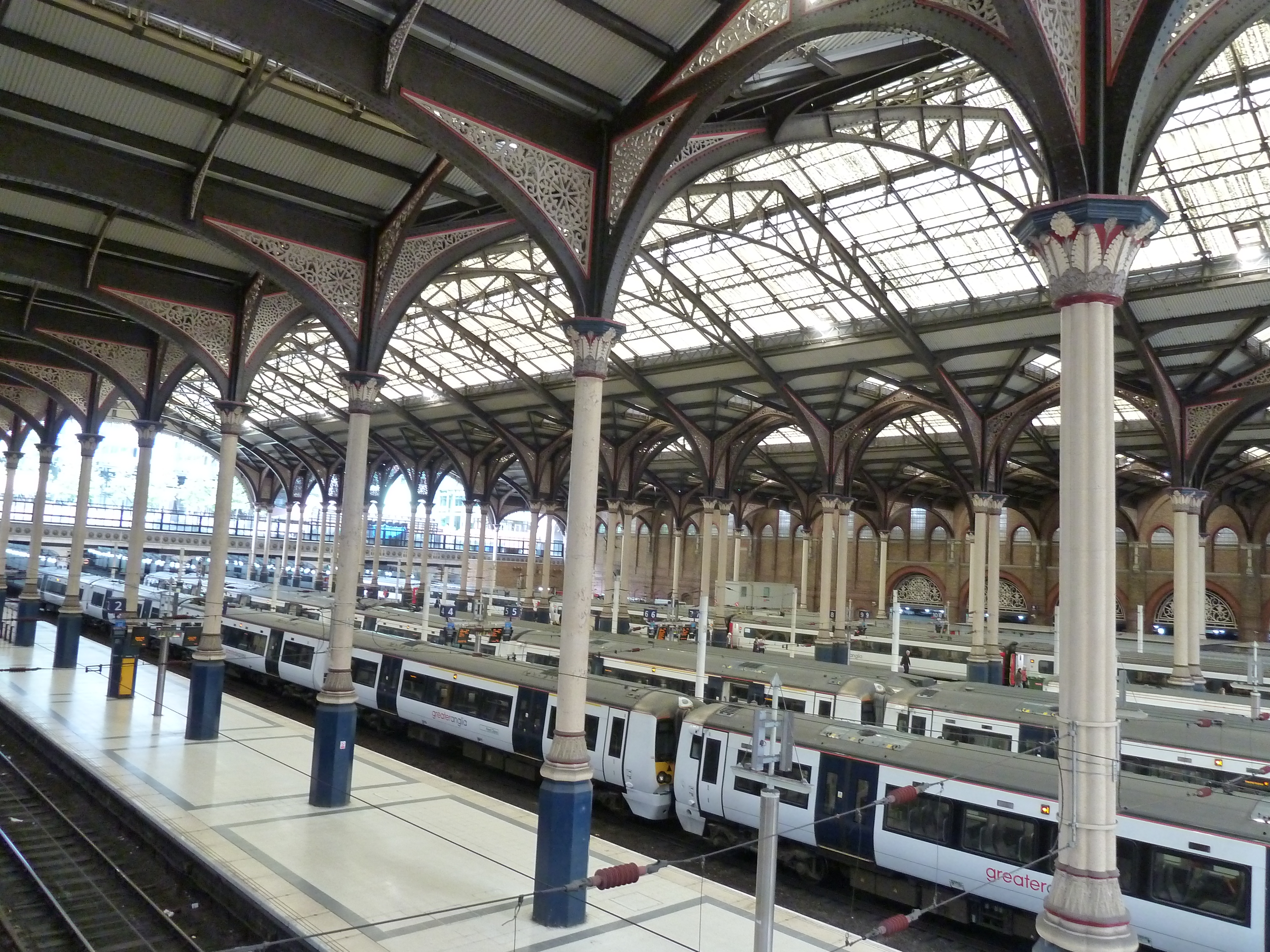
Move back along the mezzanine, a row of retail is ahead and to your right, but if you carry on down into a corridor, the exit to the bus station will eventally be on your left. Keep going down here for a very good view across the platforms.
A view across the platforms, note the abundance of highly decorated columns.
Once, you have seen the the platforms, with the fantastic train shed above, head back to the mezzanine level and turn left, so that you can see the arrival and departure board ahead of you, hanging above the concourse.
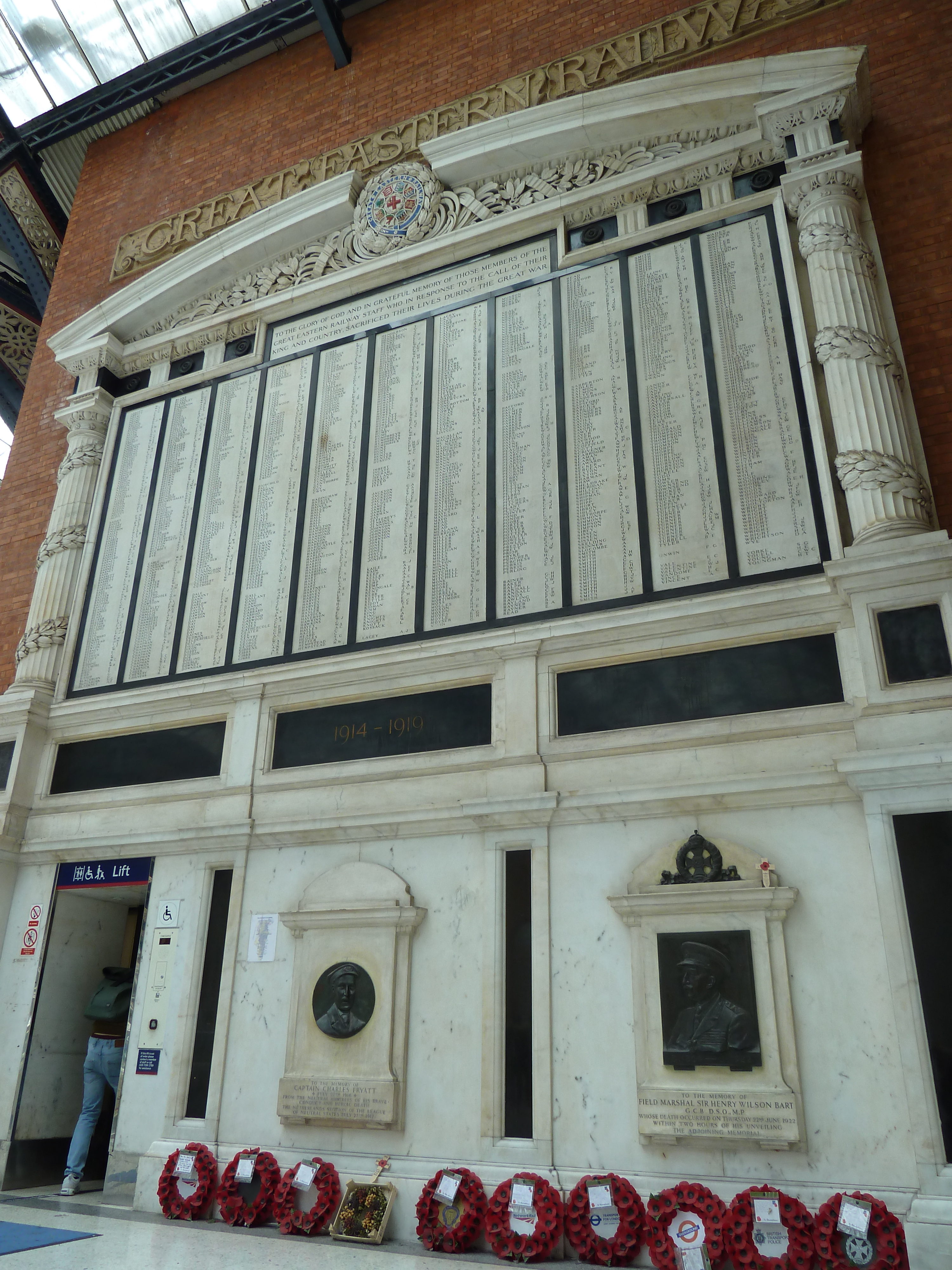
Once you get to the board, turn right and go underneath it, good views can be had of the concourse left and right here. At the other side, turn right and then left, you should see a rather large marble mural which reaches up toward the roof. This great marble structure is one of the best dedications to those who lost their lives during the First World War at any railway station. Below it are dedications to Captain Charles Fryatt and Sir Henry Wilson, both of whom were decorated in the Great War. Many other dedications and wreaths are normally to be found under these.
The First World War Memorial
Go back past the memorial and then past the departure board, and you should find on your right three brick reliefs. These depict a steam train, a ship and a scene involving coal being put into a firebox.
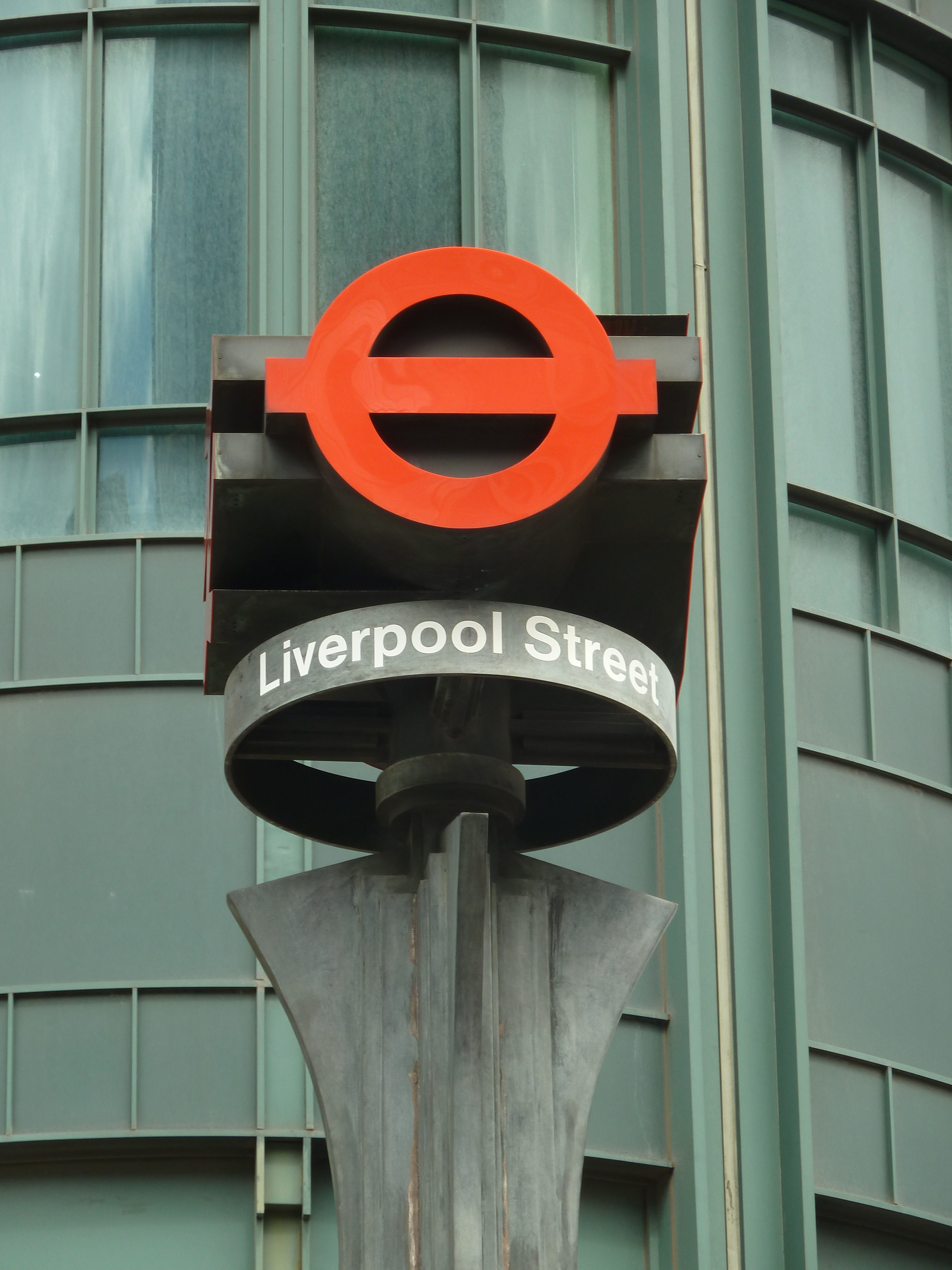
You will now see an exit which takes you out onto Bishopsgate. The former Great Eastern Hotel is to your left, and the original ballroom ceiling can be seen if you enter this building (which is now a major chain pub). Looking back towards the station you will see a glass canopy with escalators down to concourse level. This is framed with two brick columns, one with a clock tower. Also to be found here to your right is a very unusual metal totem with a London Underground roundel and the Liverpool Street name underneath.
Totem in Bishopsgate
Take the escalators down to the main concourse. Walk forward here and again admire the roof structure. Keep to your left here as you walk along. There are lots of places to sit here, and a set of escalators will take you down to the toilets. Go past these, keeping left until you almost reach the entrance to the Underground station.
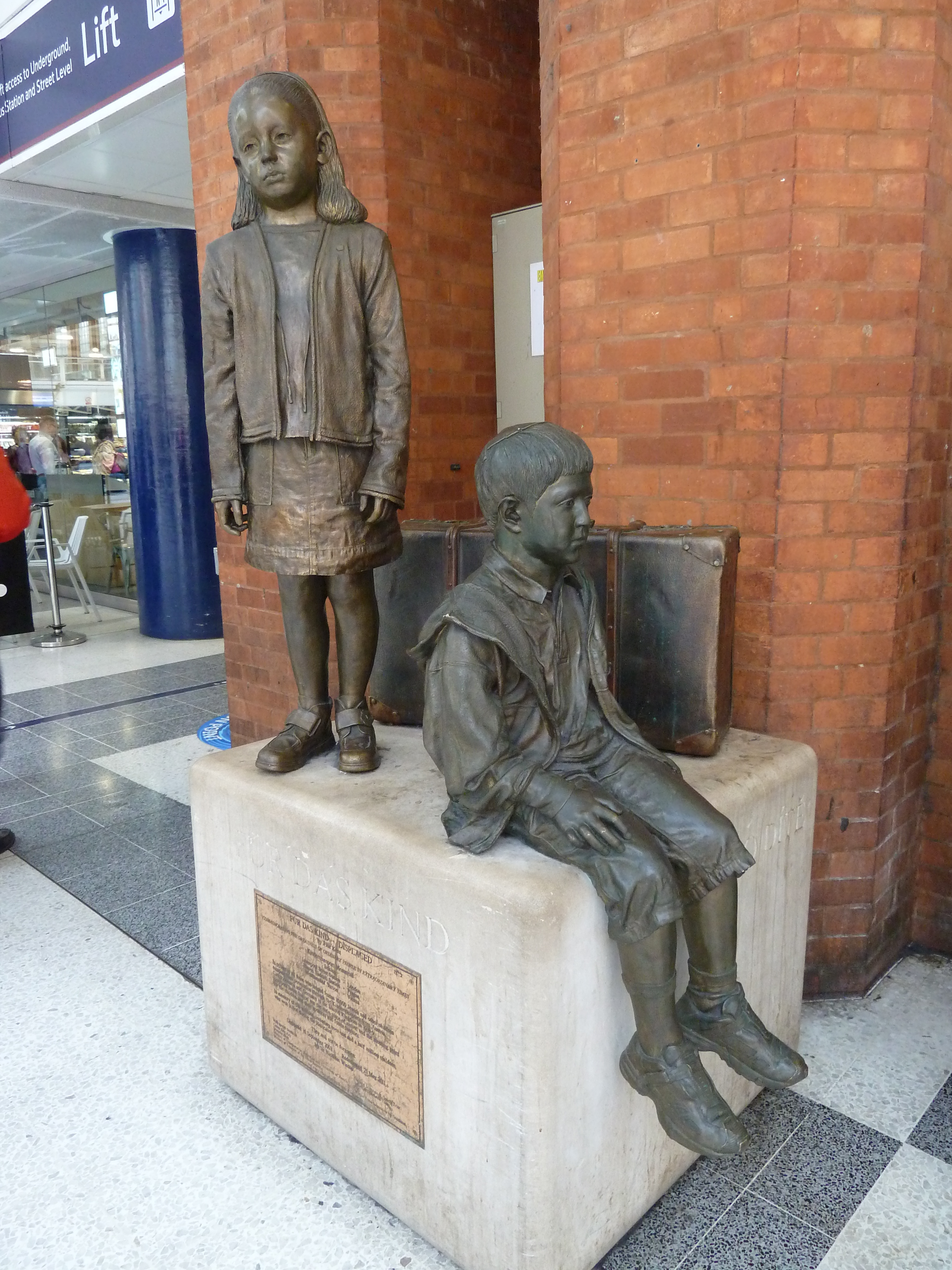
You will then see another statue dedicated to the Kindertransport. This was the original one dedicated in 2003, and used to sit in Hope Square. When it was there it contained a glass box with actual artifacts from some of the children, with the standing girl only. When it was relocated however, a sitting boy was added and the glass box removed.
Kindertransport statue near Underground entrance
Moving past the Underground entrance, there is another exit ahead of you which takes you to an area with a low veiling and retail outlets. Eventually it leads to the Bus station.
London Liverpool Street is not the largest London Terminus, but this and Marylebone do keep the charm of the old railway, and although I have detailed a few hidden gems, but there are more (but that’s for another time…)
A view from the Liverpool Street end
You can see a short video of the trains at Liverpool Street on my YouTube channel below:
The essence of a true commuter station, very quiet during the day but in the morning and evening a hive of activity. Served only by the SouthEastern Railway and serving only Kent and Sussex, this central London hub has a varied but solid history.
A Brief History
The South Eastern Railway Company started construction in 1863, from a design by Sir John Hawkshaw. The railway entered via a 706ft bridge which at this stage only carried 5 lines. This was increased to 10 during the late 1800’s. The engine shed roof was an impressive 190ft wide and more than 680ft long, with a central lantern section which ran almost the entire length.
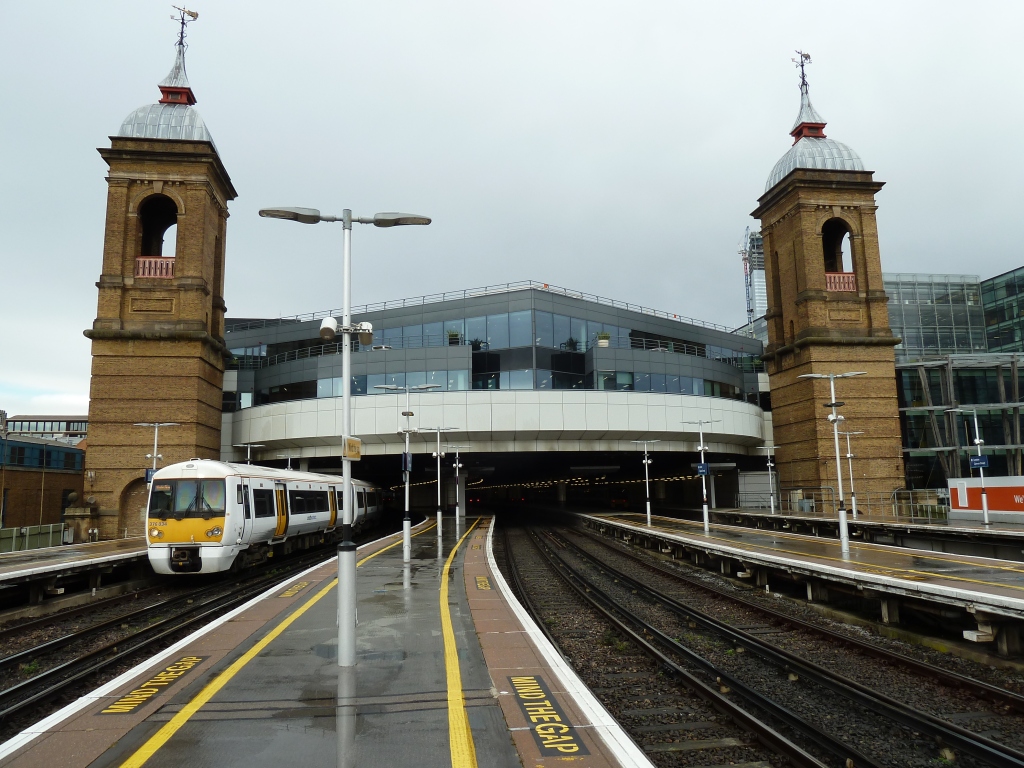
On the bridge side, two towers sit either side of the bridge, each adorned with a square domed roof and spire. It was found during restoration in 1986, that the east tower contained a water tank, either for replenishing the locomotives or for use in powering the stations hydraulic lift systems.
A hotel was built on the front entrance of the station. At only 5 stories it was one of the smallest station hotels, but had turrets mirroring those of the main towers. Like most railway hotels however, the popularity waned in the early 1900’s and it closed to customers in 1931.
The station officially opened in September 1866, and provided additional services to and from Charing Cross via a 7 minute shuttle, considerably quicker than the 35 minute walk. However, the advent of the district railway a few years later would render these shuttles almost useless.
The trainshed roof was extensively damaged during an air raid in 1941, and engineers deemed that replacing the glass would not be possible. The structure stood in skeleton form until 1958, when it was demolished in the first re-model of the station.
The new office complex which replaced the hotel was derided by critics, and certainly wasn’t as grand as the original Hotel. It was followed in the 1980’s by a ‘floating’ office block above the station platforms, held up by a 6000 ton metal frame. The block nearest the river has a roof garden, and slightly protrudes the two towers.
A quick view of the station today
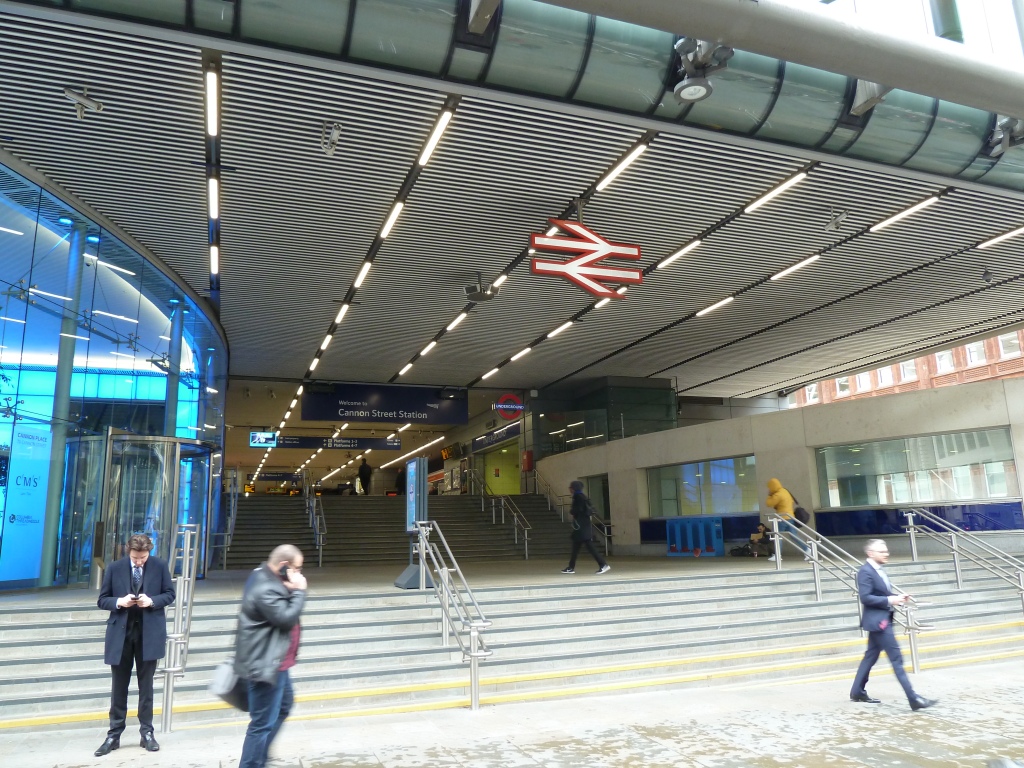
Going in via the right hand steps on Cannon Street itself, you are greeted by a British Rail Sign hanging from the roof and a blue “Welcome to Cannon Street Station” sign. Immediately at the top of the two flights of stairs to your right is the entrance to the Underground station.
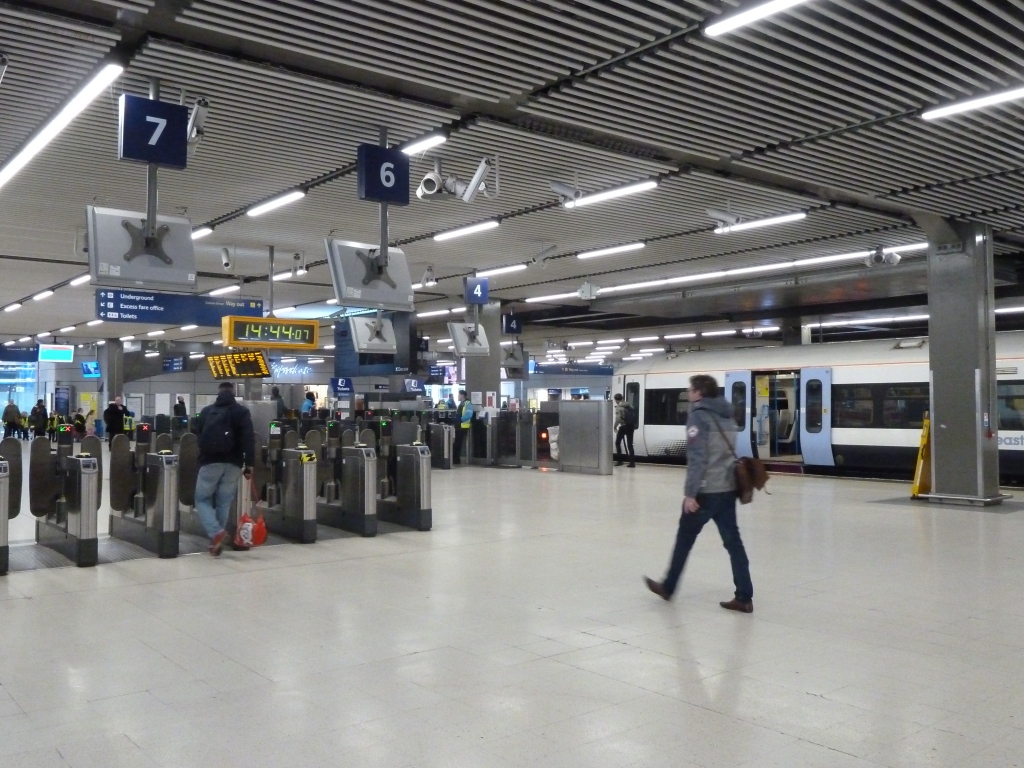
The low ceiling, clad in silver stripes with bright lighting makes you feel penned in. The floor, a cream tile with grey borders almost makes it feel like a department store. This aside, you remember that this is just a “people mover” station, so modern clean almost clinical lines wont be noticed by the thousands using it each day.
View to the station entrance from platform 7
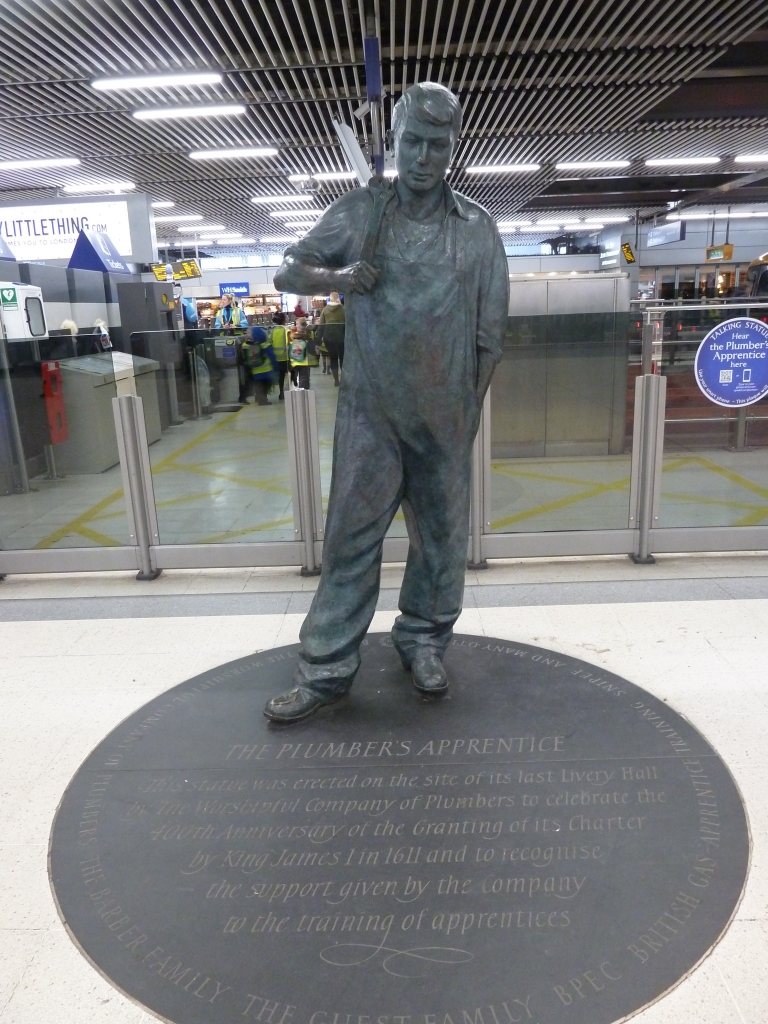
To the right is a coffee shop, then the ticketing office and finally the toilets. Straight ahead are the gatelines to platforms 4-7. Look to your left here and a statue called “The Plumbers Apprentice”, which commemorates 400 years of the Worshipful Company of Plumbers. Their hall was once on the ground of the station.
The Plumbers Apprentice
Carry on past the statue and on your right will be ticketing machines and the gatelines to platforms 1-3. Directly ahead is a retail outlet and a pub/restaurant. Turning back towards the street and by the steps on your right is the lift down to the Underground Station.
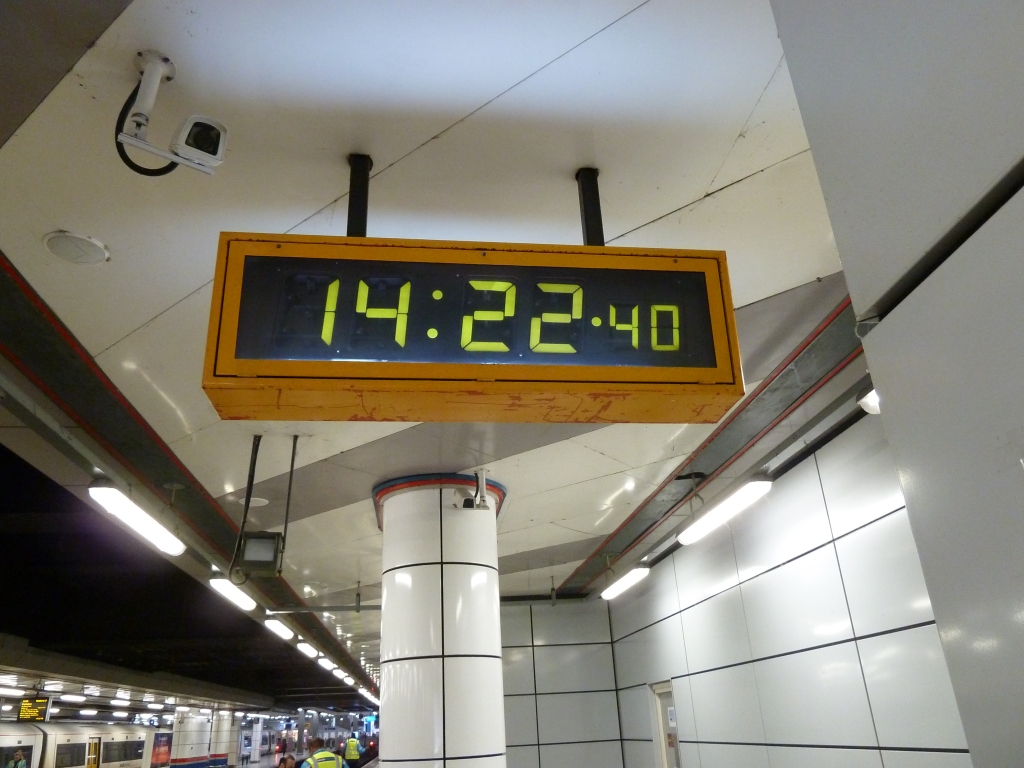
Moving onto the platforms, ex Network South East overhead clocks continue to click away, and the pillars in the centre of the platform still contain the Network South East colour banding at the base.
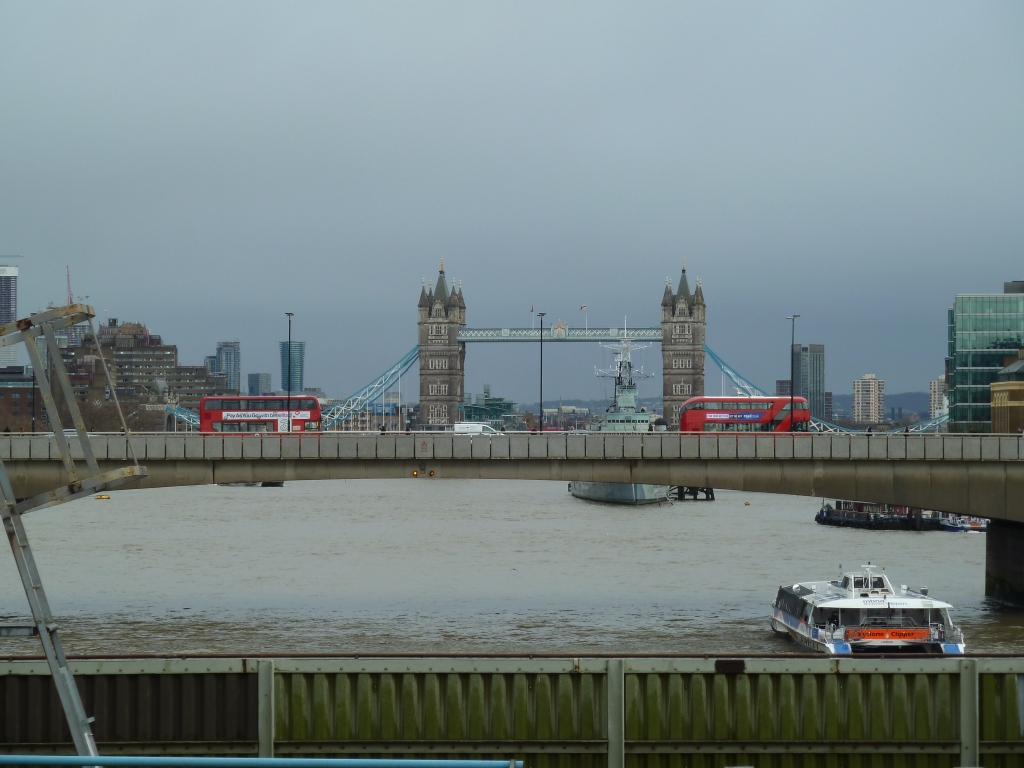
As you move outside, to the left is a view over the River Thames to Tower Bridge, HMS Belfast and The Shard. To the Right you will see both Southwark and Blackfriars bridges, as well as the Tate Modern.
But look back towards the station and the full glory of the two original towers rise before you. A very impressive site, and totally at odds with the office block in the middle, yet somehow it does fit together. In my view it only goes to enhance the old structure.
The two towers of Cannon Street
Cannon Street with all its stark modern looks deceives you, and the small things like the Statue, Network South East reminders and of course the towers are reasons to just spend a little more time looking around you, rather than rushing to get that train home.
A gateway to Europe, the finest of stations, but nearly demolished in the 1960’s. An amazing station, with plenty of history, a huge trainshed and a 5 star Hotel attached. The story of St Pancras is long and full of near disaster moments, but now it stands proud as the main Termini of Eurostar, and with it the first station many overseas travellers will see.
A Brief History
The Midland Railway was desperate to get away from sharing Kings Cross with the Great Northern Railway. So when a bill was passed in 1863 for a railway between London and Bedford, they jumped at the chance to construct a new station between Kings Cross and Euston. It would be known as St Pancras, after the local Parish.
William Barlow designed a radical trainshed for the station, 245ft wide, 689ft long and 100ft high, it was the biggest single span roof in the world for a time.
The void left by excavation works was used to store beer and other goods, and was known as ‘the vaults’. This is now a superb shopping arcade linking the station down its spine underneath the trainshed.
The hotel was built to rival the one next door at Kings Cross, and was a highly flamboyant affair, the architecture lending itself to Italian and Belgian influences. It is often seen as the face of St Pancras. However it never seemed to make a profit and was closed in 1935, only to later be used as crew sleeping quarters and offices for British Rail Catering Division.
A concerted effort by many historians and railway enthusiasts (including Sir John Betjeman) stopped the bulldozers destroying the station in the late 1960’s. This however didn’t stop the station from falling into dis-repair.
Amazingly though, a major lifeline was given when in 1994 the government approved St Pancras as the Terminus for the new Eurostar service. A major renovation project started in 2001, and by 2007 after restoration and modernisation (including a modern extension to the trainshed, if not in keeping with the original), St Pancras re opened fully.
A quick view of the current station
As you enter via Pancras Road, through a huge glass façade, the concourse opens out in front of you. To the left, escalators take you down to the underground station, while a lift to your right either takes you down also, but will take you up to the SouthEastern High Speed platforms.
Moving forward slightly, turning right past a coffee shop, ahead is a new pub restaurant and also 3 sets of escalators. Two sets take you up to the HighSpeed platforms, the middle set taking you down to the Underground.
Turning past the pub, moving forward past a retail outlet on your right and food to your left, another retail unit is in front of you. Turning right here will take you to lost property, toilets and the station office. Turning left and carrying down the corridor you will come back to the main concourse, where a departure and arrival board sits above other retail outlets.
Now turn right and go down towards another exit, this is the Midland Road entrance. To your right as you walk down is a ticketing centre, and at the end on your right, access to the Thameslink platforms, seen below.
Thameslink underground platforms, labelled platform A and B
Back up from Thameslink, go straight on into the old Vaults, which is now a great arcade full of mainly high end retailers, with a few pianos in the centre aisles for the public to use! This area also gives you the first real glimpse of the original trainshed, a glance upwards reveals its vast nature. A quarter of the way down on the left is the entrance to the Eurostar terminal.
A view down into the arcade from the Grand Terrace
Going up a set of stairs brings you to the Grand Terrace, and a statue of Sir John Betjeman. He is looking up, almost encouraging you to do so. The massive trainshed extends out from here and is a superb sight. Looking towards the back, the Hotel can be seen, as well as a clock and an art installation by Tracey Emin. This is part of a series of artworks commissioned by The Royal Academy.
Moving toward the Hotel, another statue is very prominent. This is called “The Meeting Place” and stands at 30ft high. Along its base are castings of various railway events.
Turn 180 degrees and the Eurostar platforms and trainshed are before you.
If you go to the other end of the trainshed on this level, you will come to the platforms for East Midland Trains. Going back downstairs, head back to the back of the arcade and through into the Underground station. Here you will find information, ticketing and entrance to the Circle, Hammersmith and City and Metropolitan lines.
Carry on down this corridor and on your right, you will see a dedication to the Kings Cross fire in 1987.
Following this corridor to the left will take you down to the entrances for the Victoria, Northern and Piccadilly lines. There is also a piano here, if you feel so inclined!
Carry on down the corridor and you will have come full circle if you take the escalators up to the main concourse.
A great station, made better by design, yet old charm can be found if you look for it. Speaking of which, as a little challenge to those who don’t know, try to find this gem in the Underground Stations network of entrances and exits!
A small blog on railway pricing in the UK, which as of today (18th February 2019) is in the spotlight again. The Rail Delivery Group, which represents the train operators in the UK, would like to see an end of the peak and off peak price differential.
In the UK, broadly speaking, a peak time train is one which leaves from a station from around 0530 until 0900. This varies wildly from station to station, as stations close to main cities can have peak prices up to 0930, whilst stations away from cities can have their main peak finish as early as 0845.
Peak times can operate in the evening too in some places. In Edinburgh, I experienced this while on holiday as my off peak ticket couldn’t be used between 1600 and 1745 (in 2016). Cost of peak time trains throughout the UK are vastly higher than off peak.
The Rail Delivery Group proposes therefore that this price difference be narrowed. They claim that this will help reduce over crowding. My main concern is that this narrowing will not benefit the off peak user, as the cost for an off peak ticket would rise to counteract the lowering of the peak price.
Although the smoothing out of fares is a good thing, if it makes overall journeys dearer, then I cannot really see a benefit.
One of the other proposals is an extension of “tap-in tap-out” ticketing. In London, Oyster cards and credit/debit cards have been able to be used for this purpose within the Tfl area. The advantage is only paying for the journey you make, which is especially beneficial to tourists who find it an easier way to pay for their journey.
I would welcome this idea, but could it be countrywide? It would be no good tapping in at Rainham, only to find that I could only complete my journey within the Network South East area map. I can see however that countrywide tapping in and out could be flawed, as many rail journeys on inter-city routes need to be seat allocated.
It is true that the whole ticketing system needs an overhaul, but with so many train operating companies, getting a true common ground could be difficult. Not that I’m advocating re-nationalising (I think now the cost of doing so would be prohibitive), but all companies need to work closer together to get a simpler ticketing system and pricing that works. Not simple, but with clever planning and willingness of all concerned, it could become a reality.
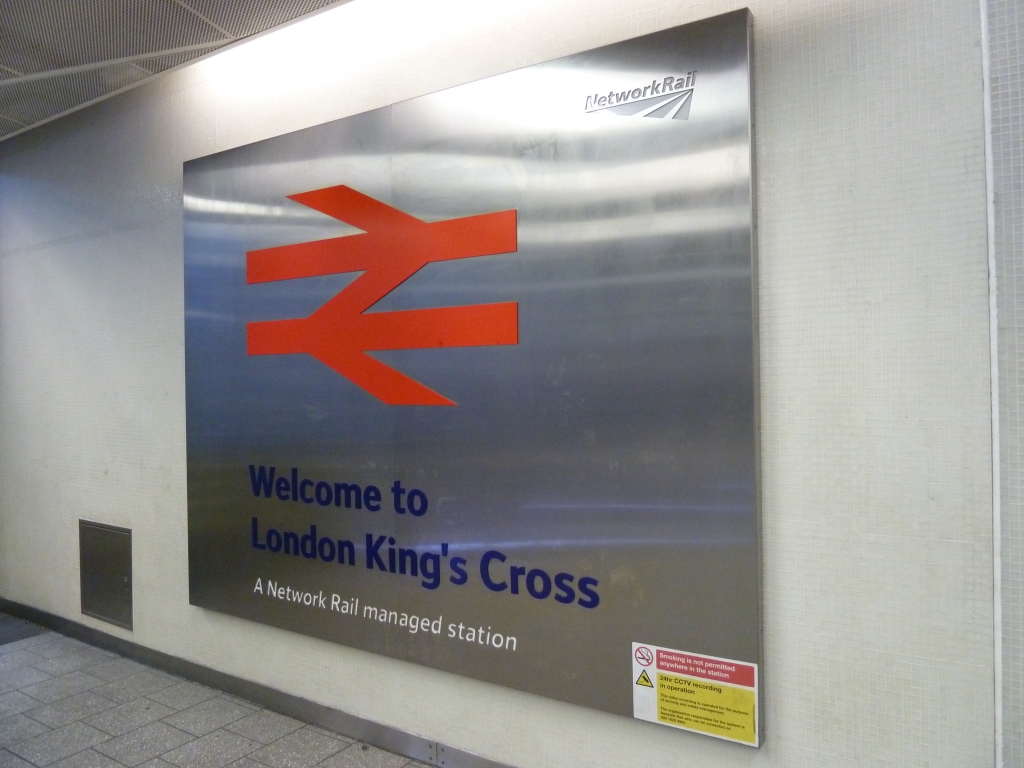
King’s Cross; for a lot of people the station symbolises two very different train services. One steeped in history – The Flying Scotsman – the other pure fantasy – The Hogwarts Express. Whilst one is real and the other fictitious, it is fair to say that if you mention Kings Cross to many of the public, they will utter either or both of them.
A brief history
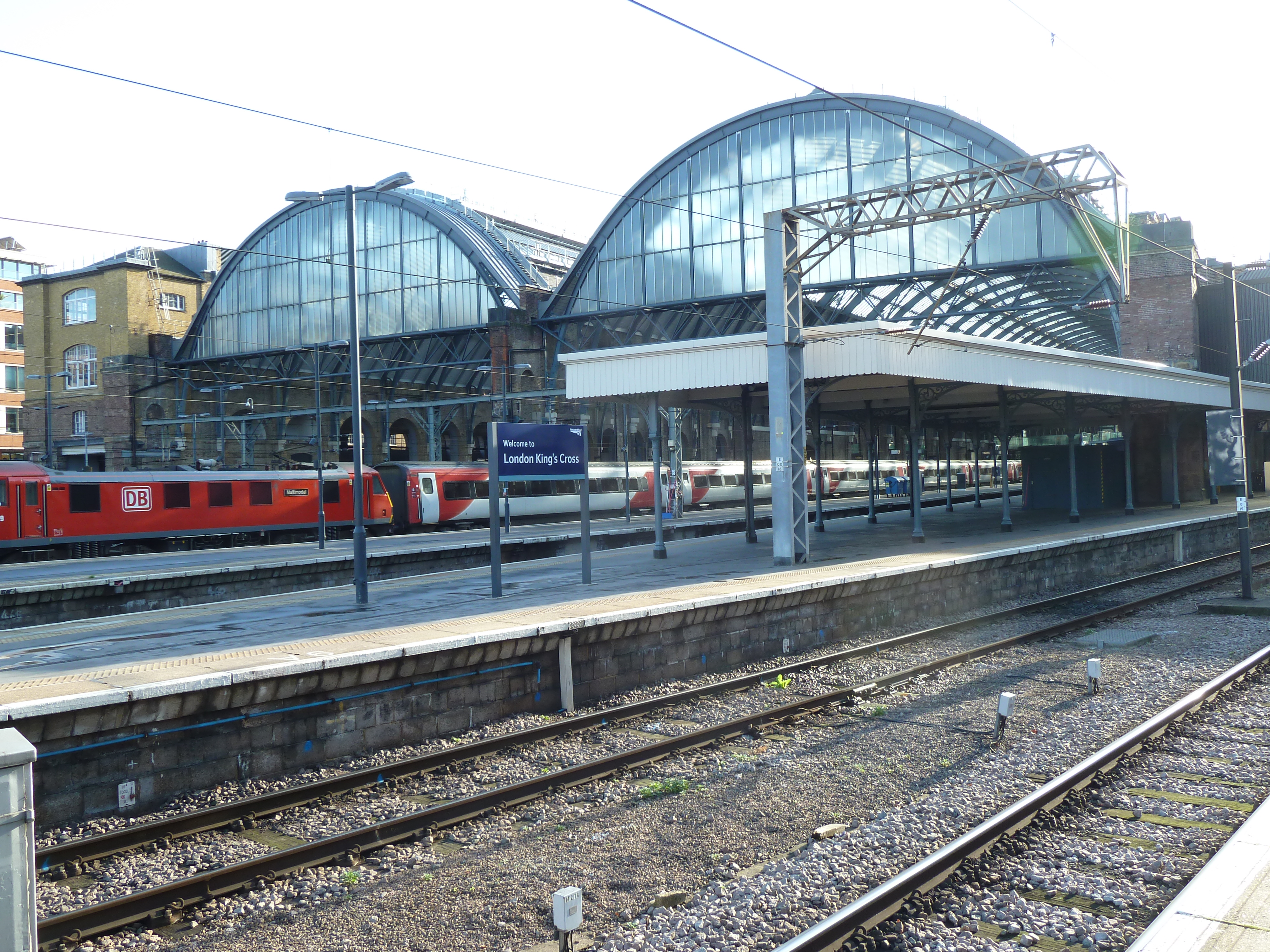
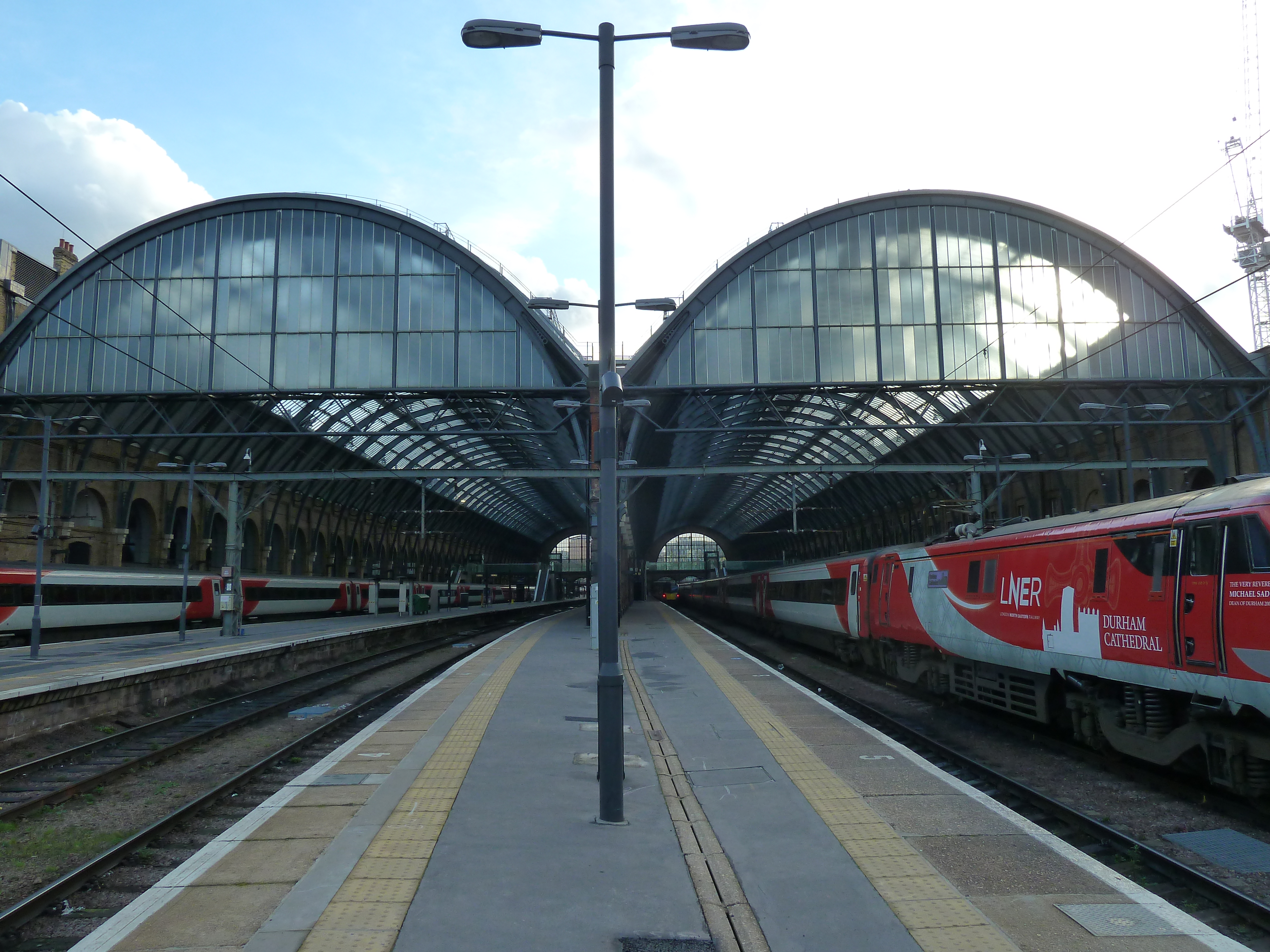
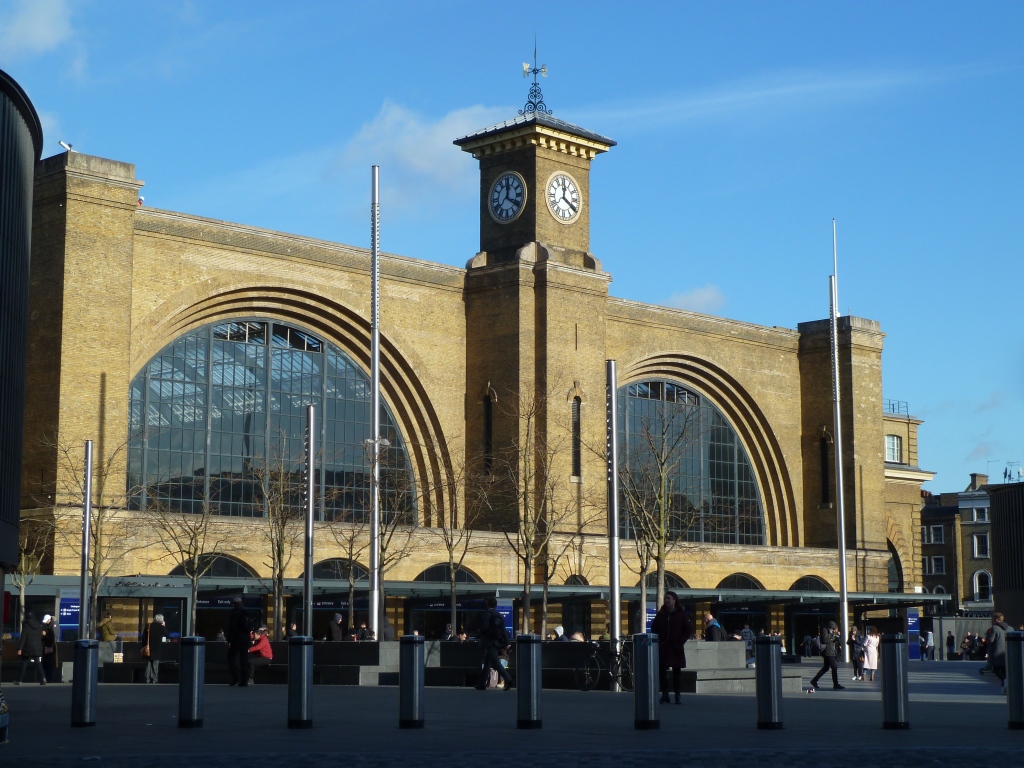
A practical station for a practical railway. That is how the Great Northern Railway saw it when they opened it in 1852. A station with a modest frontage, made from yellow London bricks and a wooden roof, complimented with two 100ft roof spans over the platforms. These roofs being supported by brick pillars, today in the centre of island platform 4 and 5.
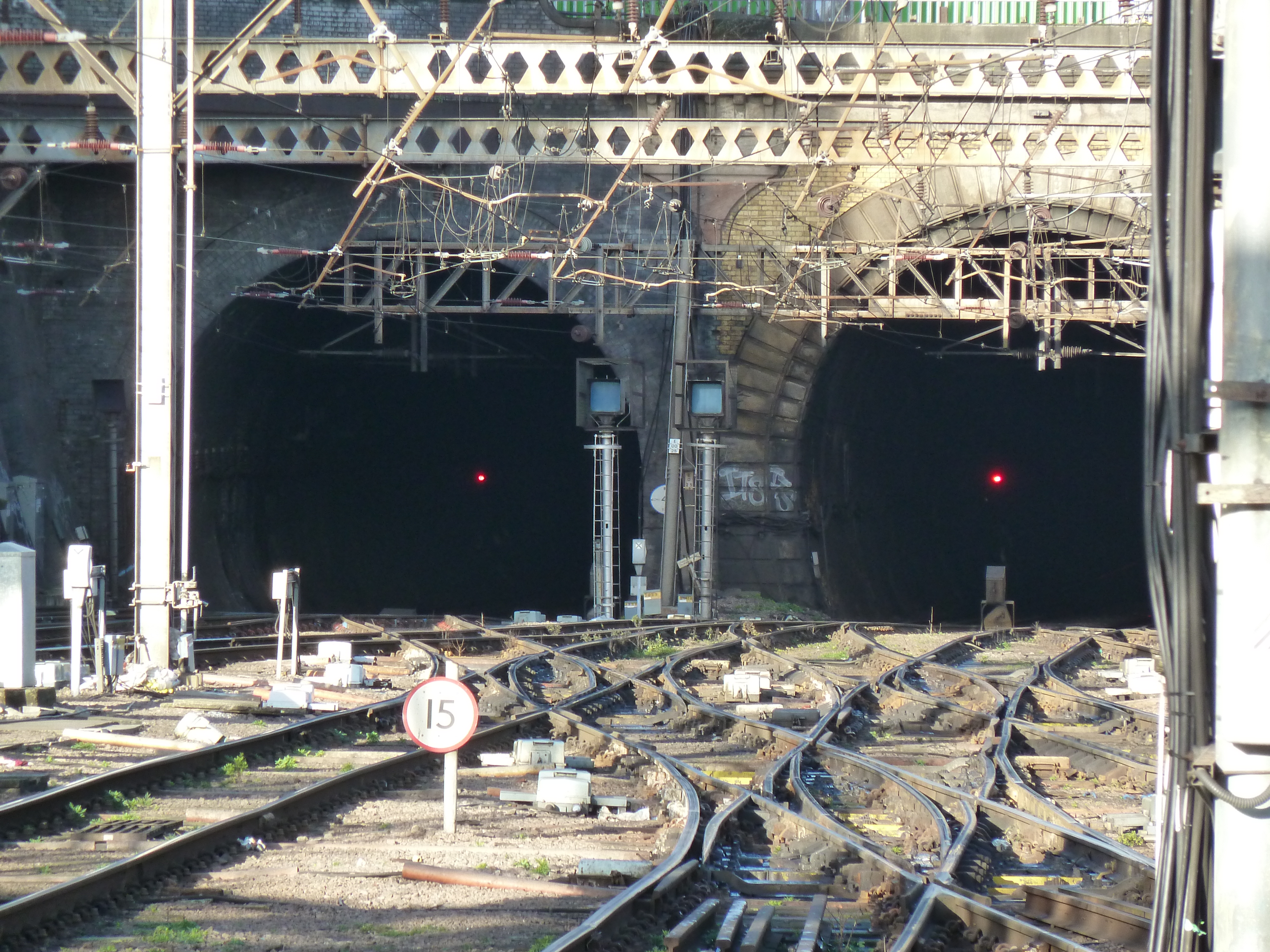
Trains enter and leave the station via the Gas Works tunnel, which passes under the Regent’s Canal. A major goods yard for coal was also contained within the station, although this does not remain.
It looked totally at odds with St Pancras next door; that station when opened 16 years later was oozing with grandeur. A clock adorned the front of the building, and quirkily was rumoured to never have the same time showing as that of its neighbour at St Pancras. King’s Cross as a railway station, however, would for the majority of the next 150 years be the more successful of the two.
For all the footfall though, the station remained unloved for a long time. Indeed in the 1960’s, the square out front was partially covered with a new travel centre for British Rail. This however obscured the lower half of the original frontage, and looked at odds with it.
A quick view of the current station
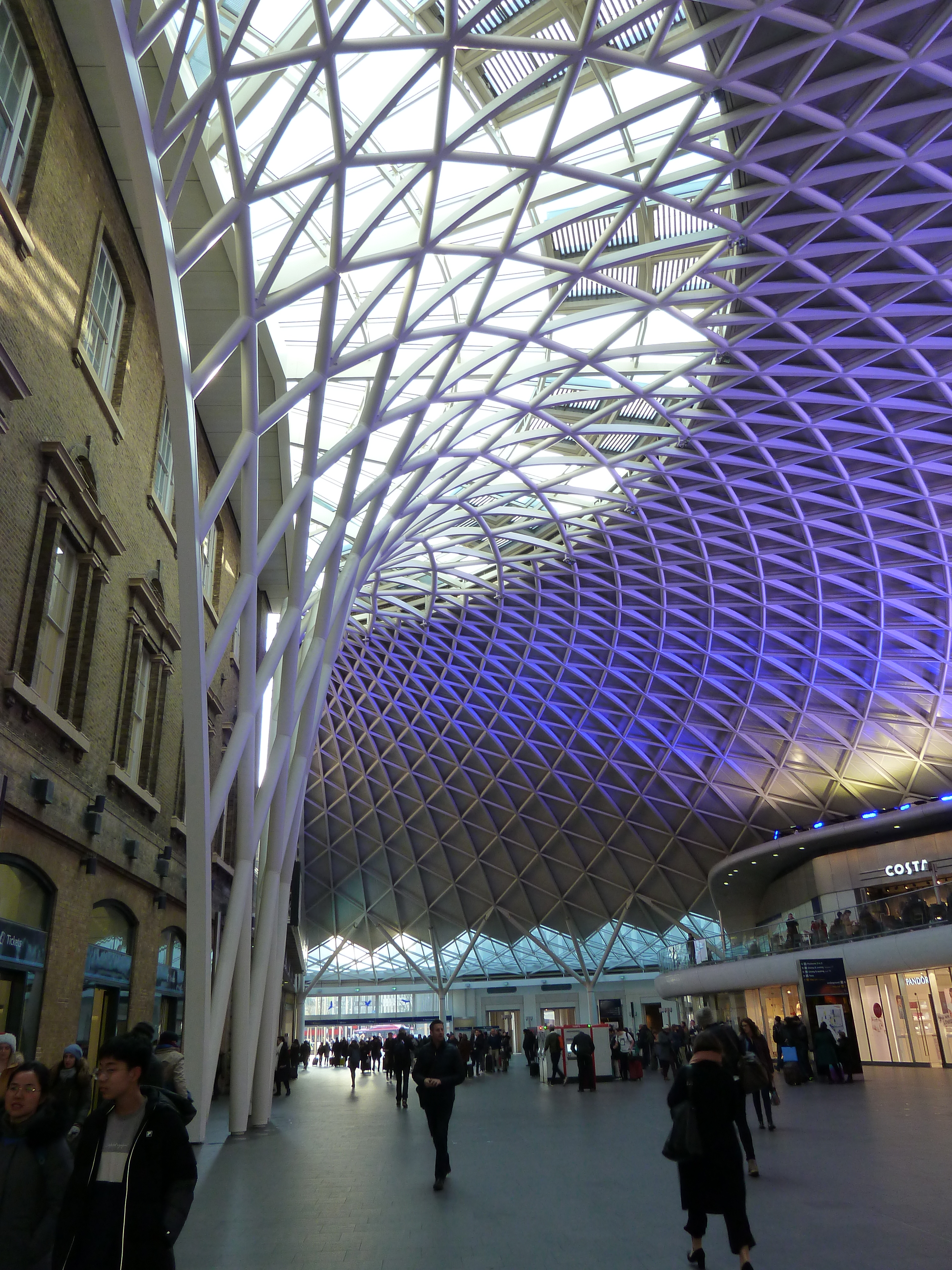
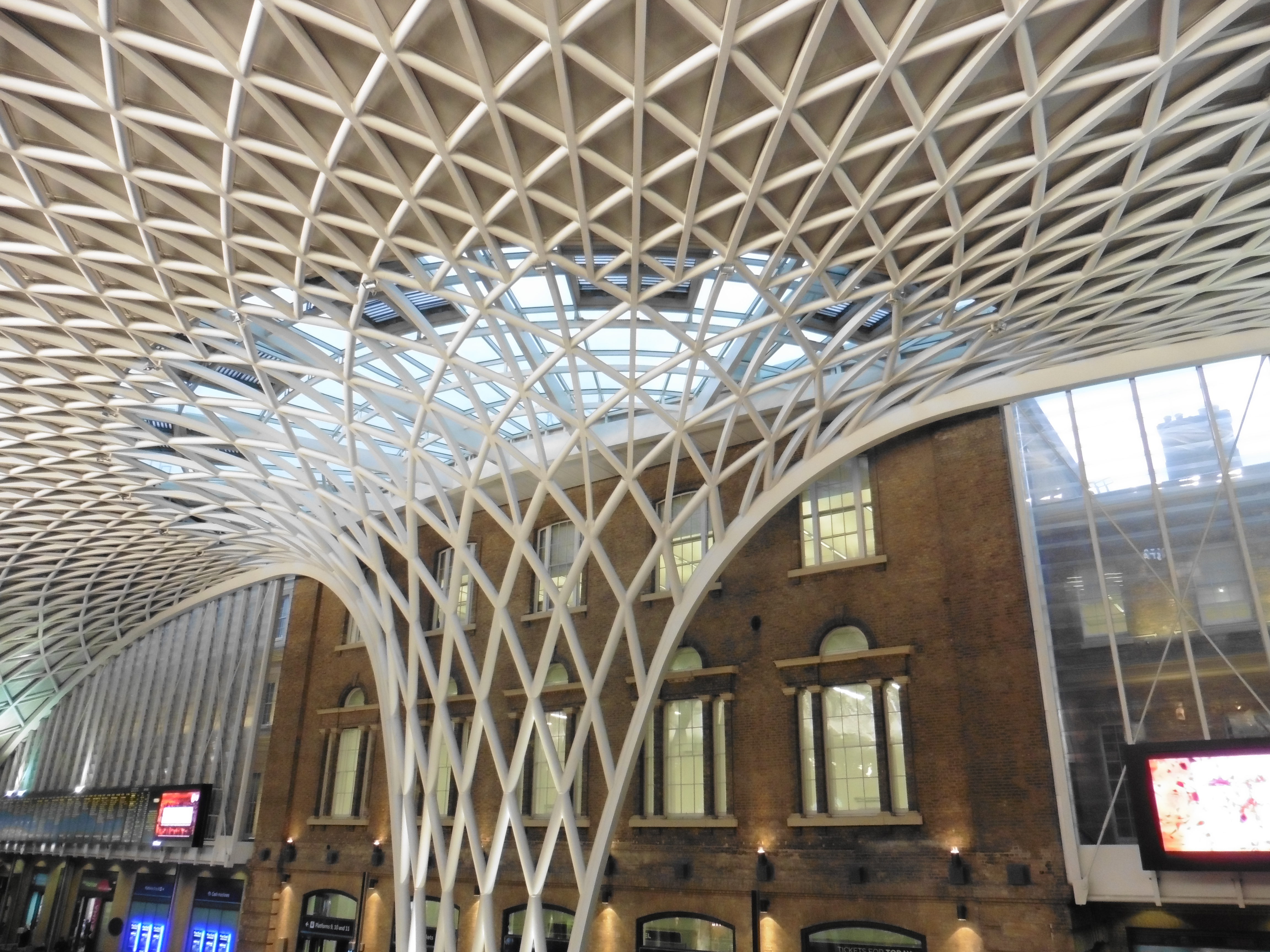
In 2007, work started on a new concourse, and what a unique structure it is. A single rising 150ft “Diagrid” roof, underpinned at its base down 50ft. It spreads out like a metal web, encapsulating the new concourse with its shops and bars. The feeling of space even during the busy periods is amazing, and differing colours are sometimes projected upon it.
The travel centre was removed, enabling the square to be reinstated and the full frontage to again be seen. To the left side of said frontage, an entrance to the new concourse can be seen. Going through this, the superb new roof opens up in all its splendour. Immediately to your right are entrance gates to the platforms, to your left are escalators up to a mezzanine level This contains a seating area and eating and drinking places.
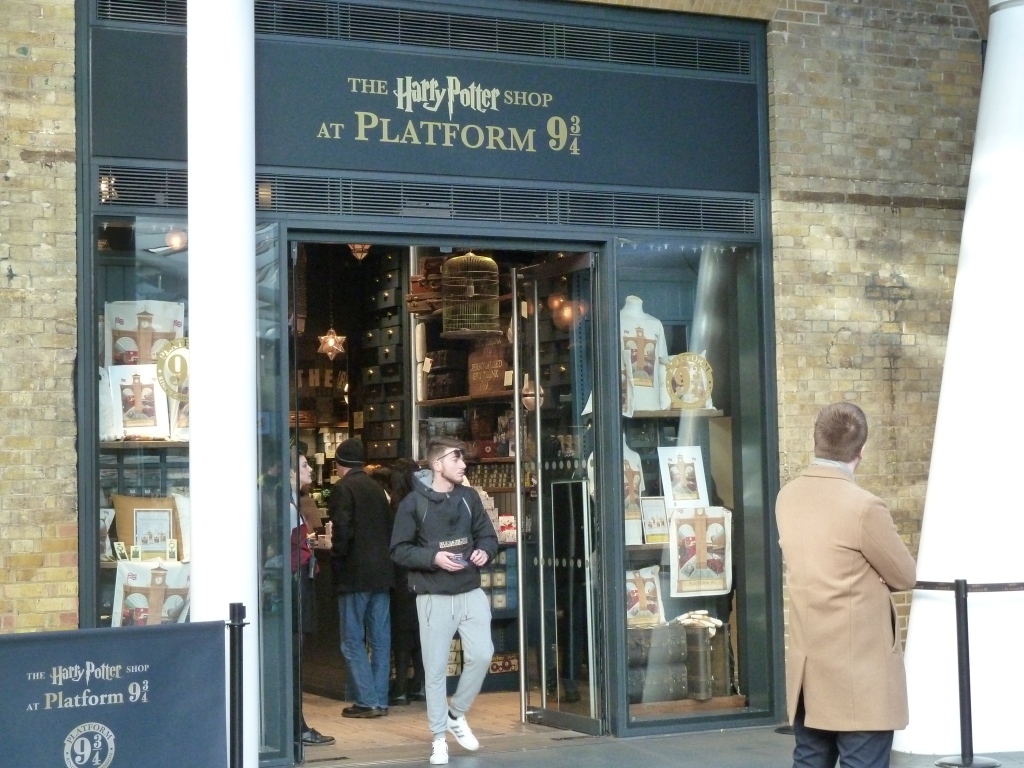
Going back down to floor level via the escalators on the other side of the mezzanine, if you turn right, you will see arrivals and departure boards, and underneath the new travel centre. To the left of the travel centre is the Harry Potter shop, with a photo opportunity platform 9 3/4 area.
Going under the mezzanine, more shops on both sides as you are then greeted with a glazed front, from which you can see St Pancras International. Stairs down to the Underground are also here, one of many access points to the labyrinth of tunnels which form King’s Cross St Pancras underground Station.
Pictures below were taken on 22nd January 2019, and thanks goes to the station manager and Network Rail for enabling me to photograph extensively on that date:
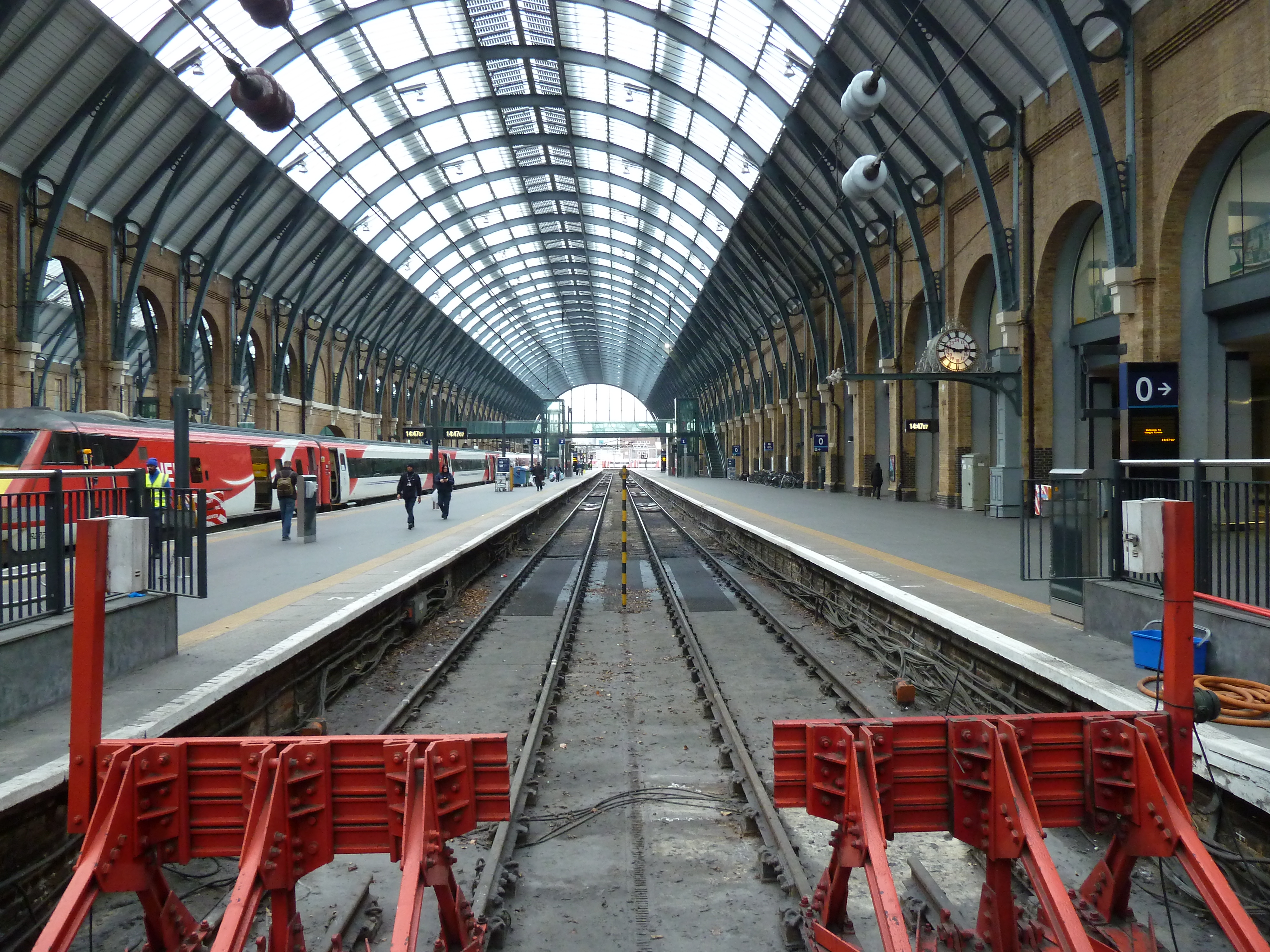
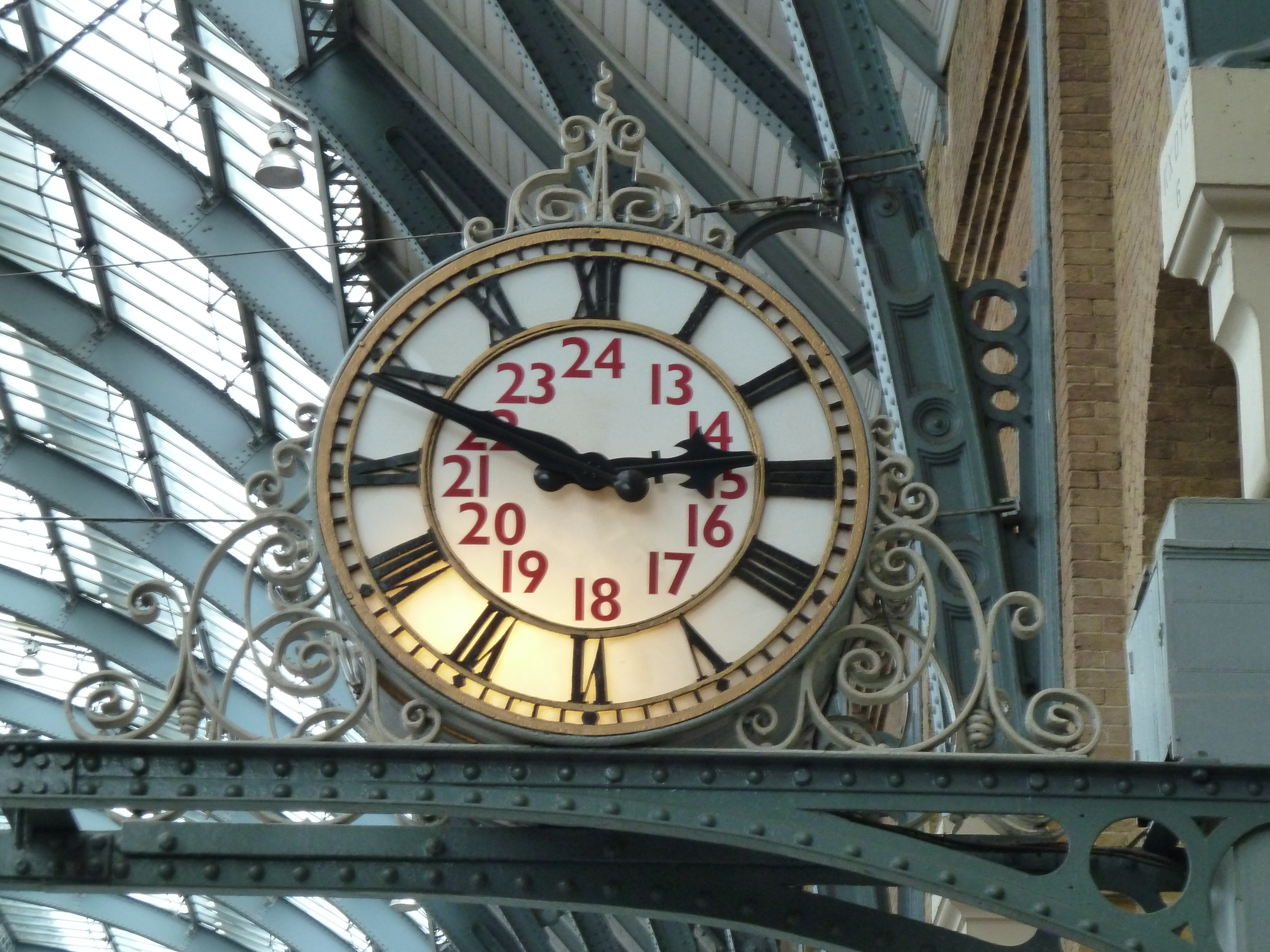
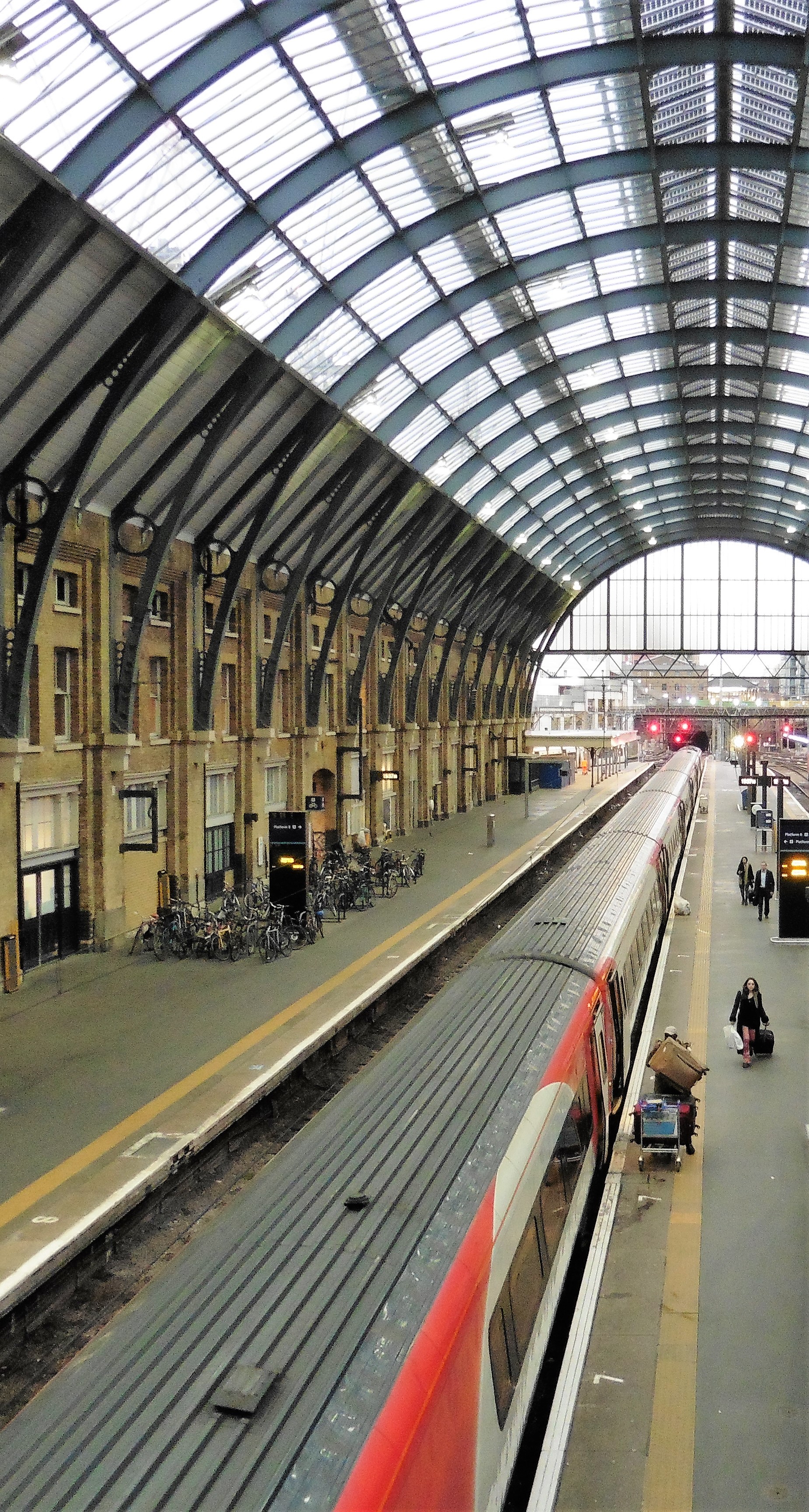
A view to the train sheds from the end of platform 10The view from island platform 4 and 5, showing the train shed, the centre brick column being obscured by the light fixture.The gasworks tunnels.A view down roads 1 and 2, notice platform 0 to the left.Clock situated on platform 1A view down to platform 6The fantastic canopy over the new concourseThe canopy. Note original station building behind.The Harry Potter shop – the photo opportunity “Platform 9 3/4” is immediately right of this, and is always busyThe fantastic exterior, with the square in the foreground
Here is a video, also taken on the day, from my YouTube site :
Please also visit Rainham Rail Enthusiast on my Facebook page.
Please also visit Rainham Rail Enthusiast on my Instagram Page.






 Rainham Rail Enthusiast