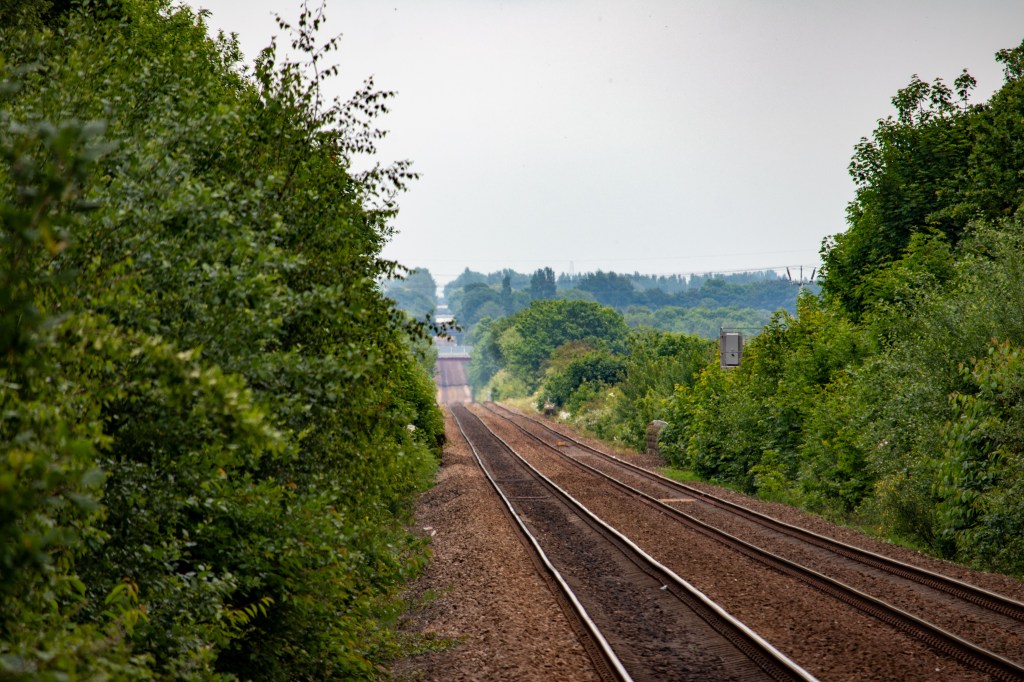
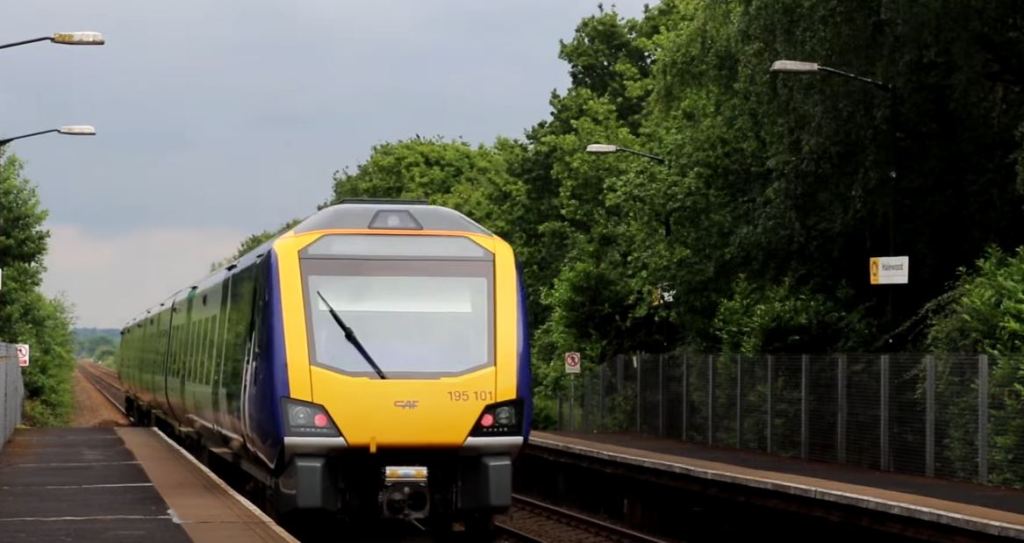
Located on the Liverpool to Manchester line, the station is very close to Liverpool South Parkway to the west, and lies on the line which serves Warrington central. This is more commonly known as the Southern route or Cheshire line.
Halewood is a relatively new station, having been only opened in 1988. Another station was situated to slightly west, which was closed in 1951. That station utilised a triangle junction where goods trains operated. Despite being on a popular line, services at that station decreased significantly after the war, and so a decision was made to close it.
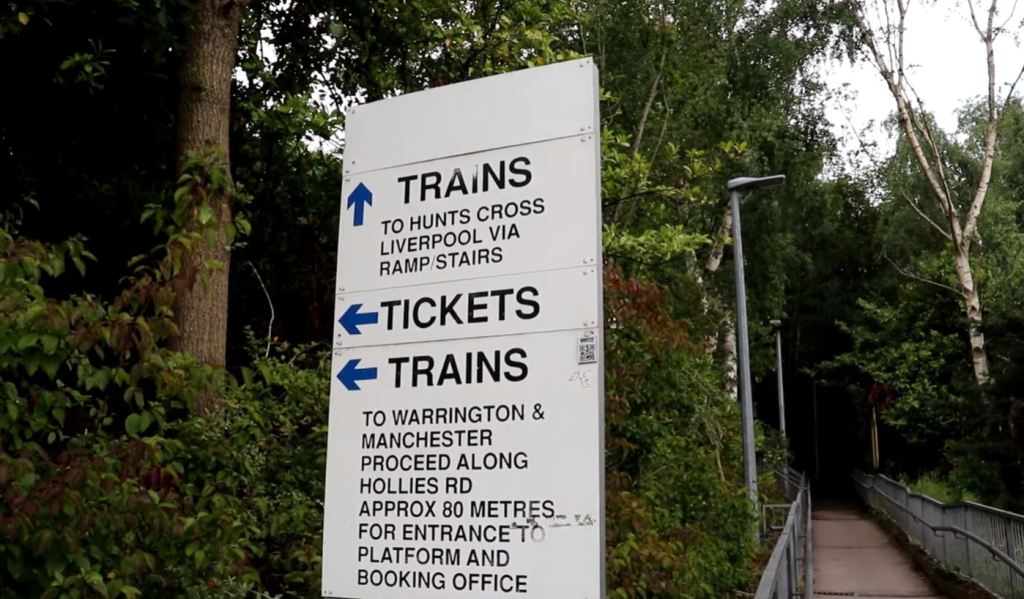
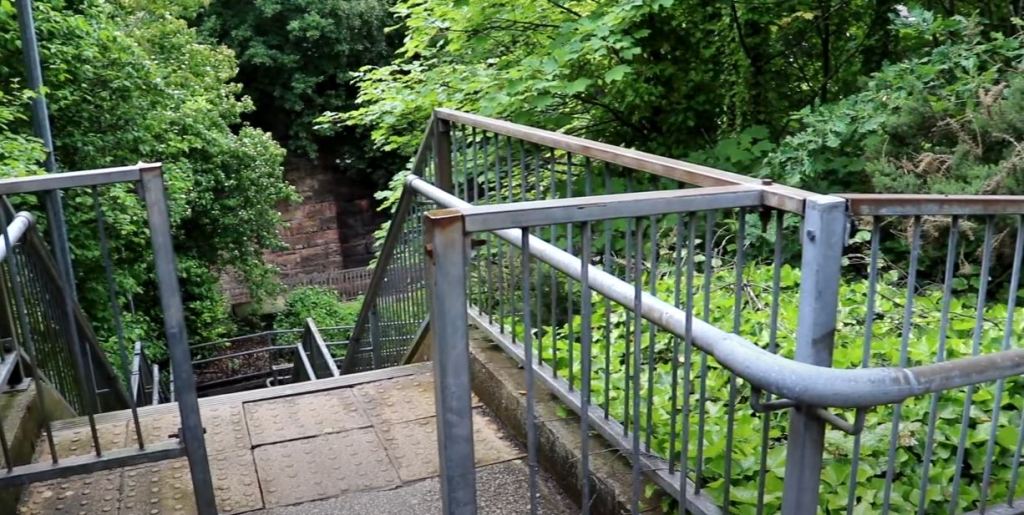
This current station is perched above an embankment, and is reached by a combination of winding ramps and steps, ,more on these later. I cannot find any press cuttings or web pages relating to the opening of this station, so yet again if you know any further detail, please write in the comments below.
Access to the Manchester bound platform is by a series of four ramps. The first two are 25 metres, then 15 metres, then 25 metres with a rest platform between each or, via the first slope and then up two separate flights of steps with 25 steps in total.
Access to the Liverpool bound platform is off Hollies Road via three slopes each 50 metres long with rest platforms. Or by two flights of stairs with 18 steps with an intermediate rest platform.
There is a small ticket office at road level, at time of writing staffed during morning peak hours.
A video featuring the station when I visited in 2022 is below :
The station was opened in 1891 by the London and North Western railway, and unfortunately after research this is the only thing of note I have found about the station. If you know any more please write a comment, I am sure that myself and other readers would be interested to know.
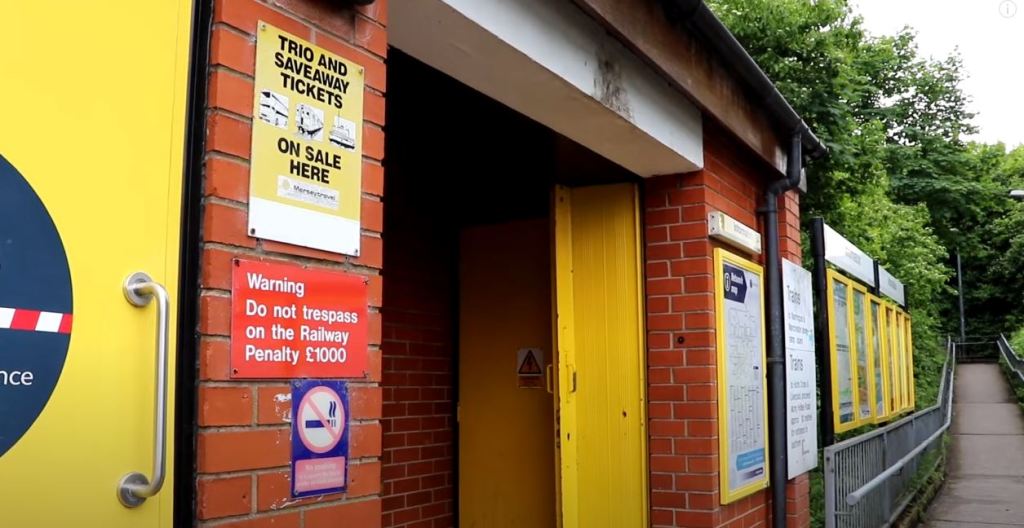
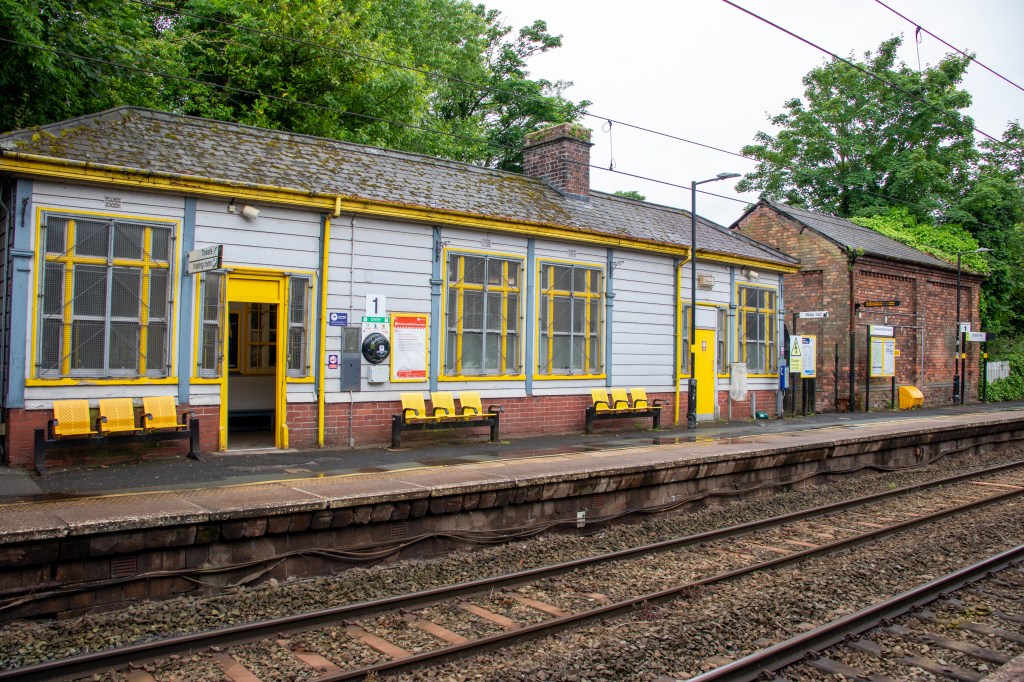
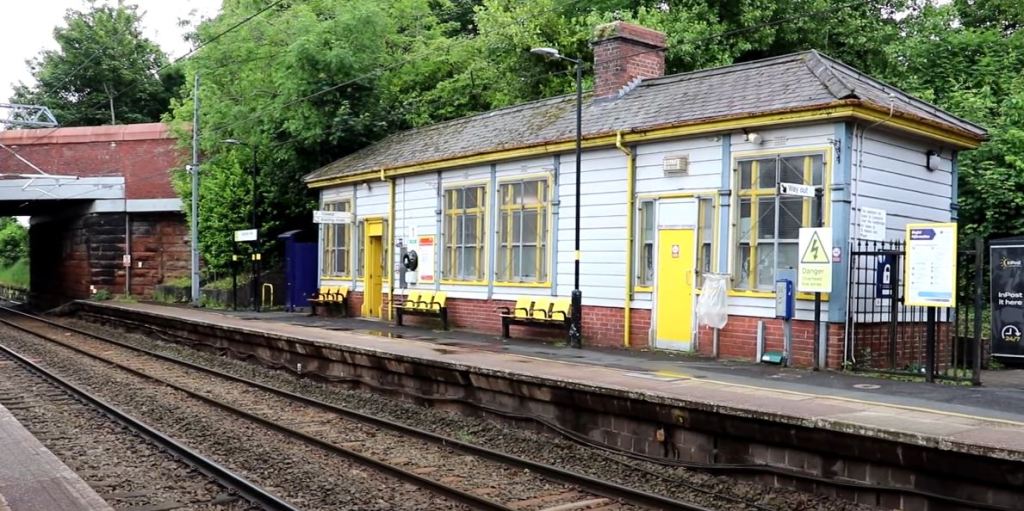
The station lies on a slight curve and has a one story station building. Access is either a side road or ramp, the crossing of the line being done via the road bridge. Looking at the building, although old, I have a feeling that it may not be original.
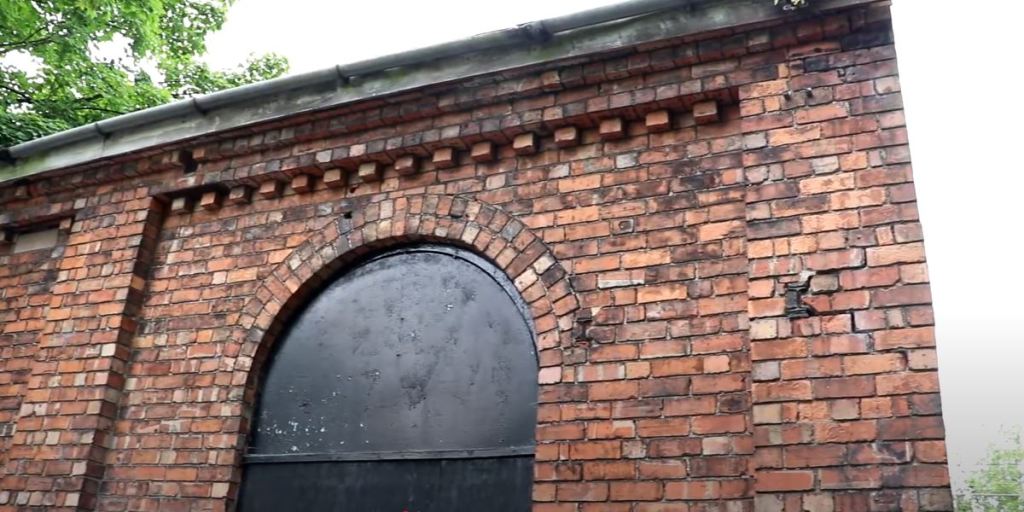
There is however an older building next door, however this seems to be a pumping station.
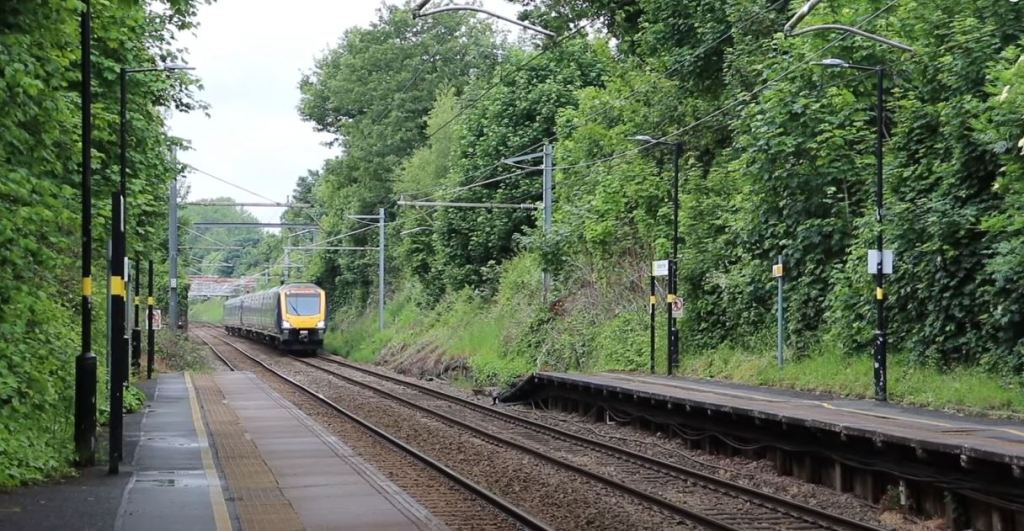
At time of writing, passenger traffic is provided by class 331 electric multiple units, although older class 319’s may still also be seen
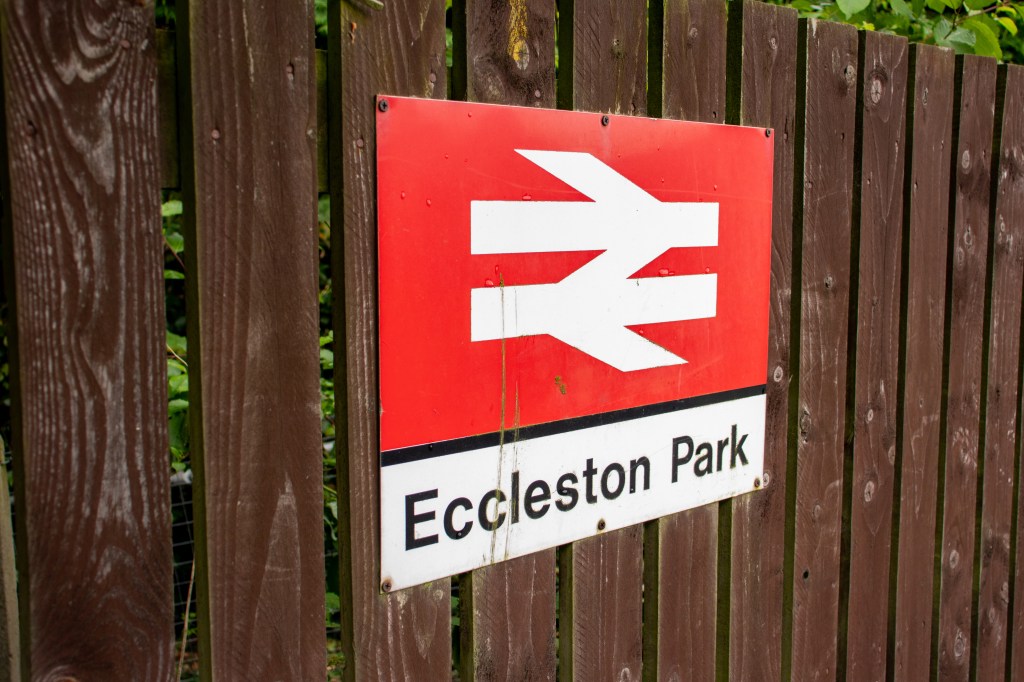
A quiet station with some interesting buildings is the best way to describe Eccleston Park. It a shame that there is no facts about history to be found, but I am sure someone will help us out on that. For the enthusiast sight lines are good, but there isn’t much in the way of services through the station.
I have produced a video for this railway station, which can be viewed below :
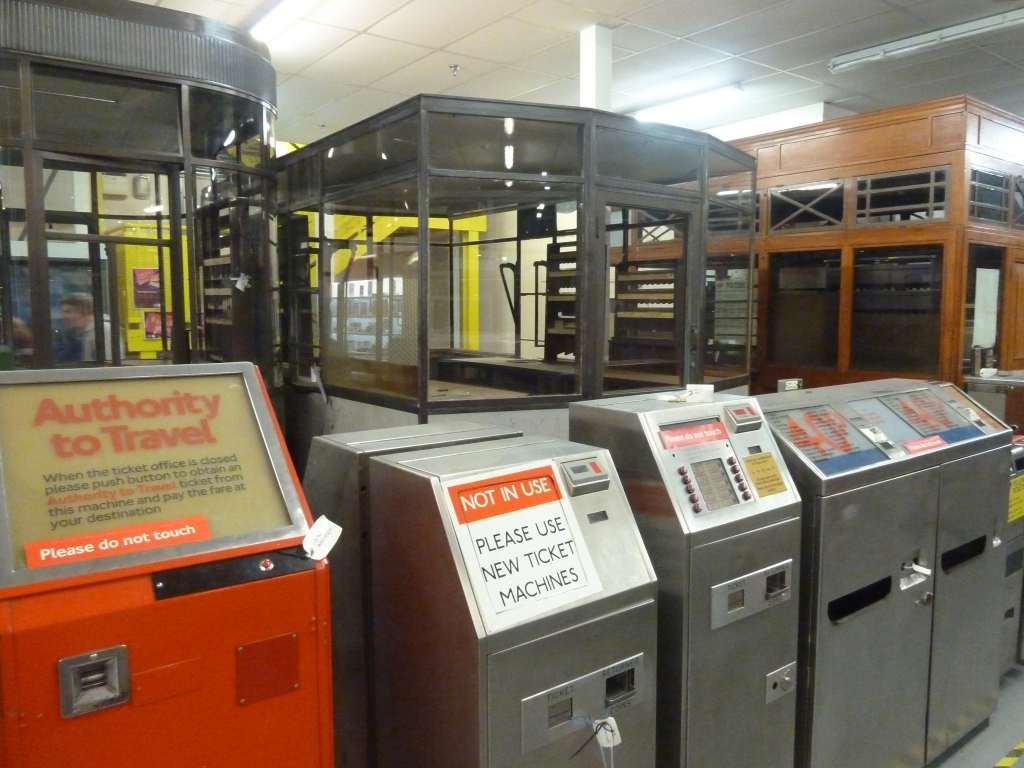
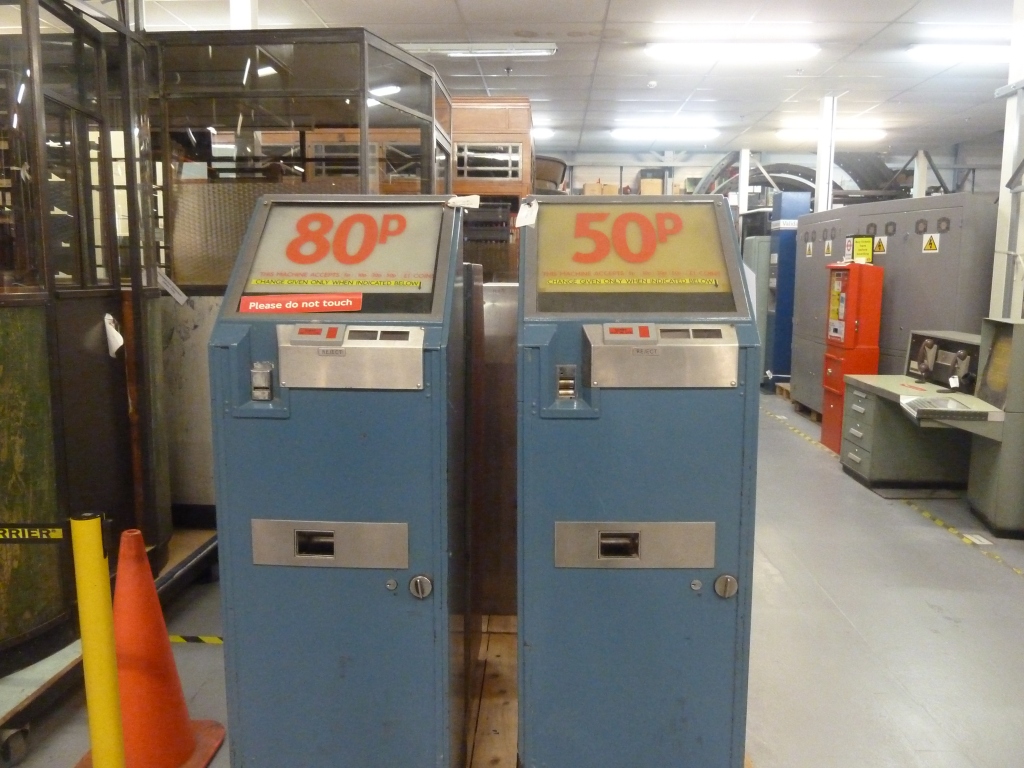
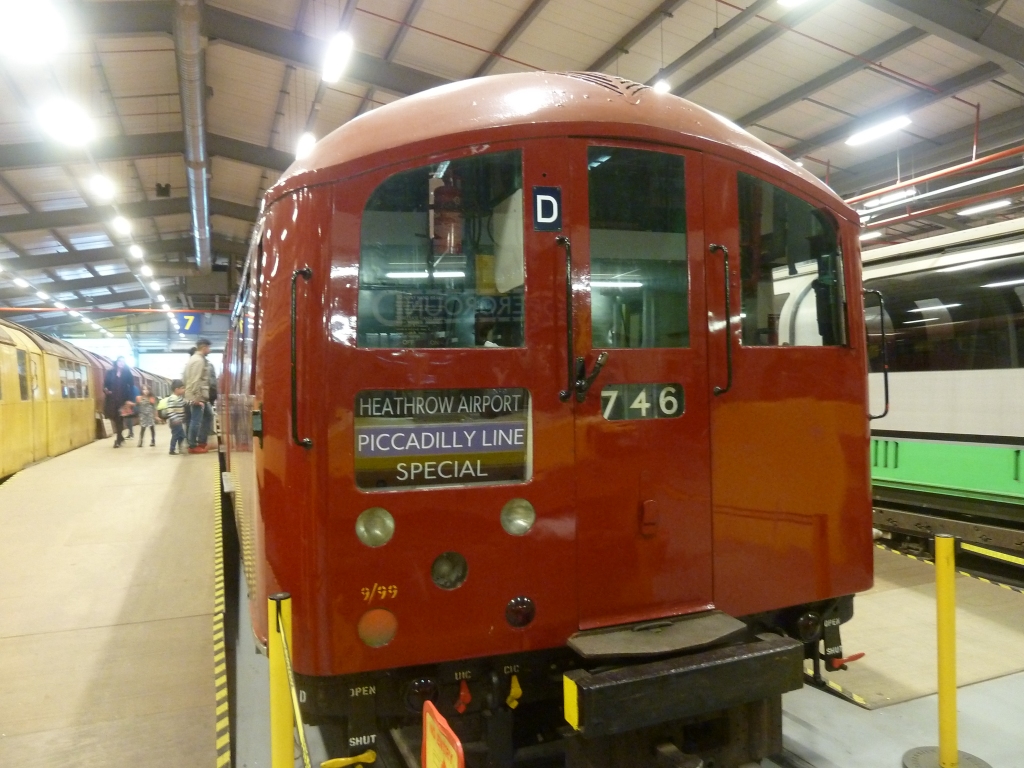
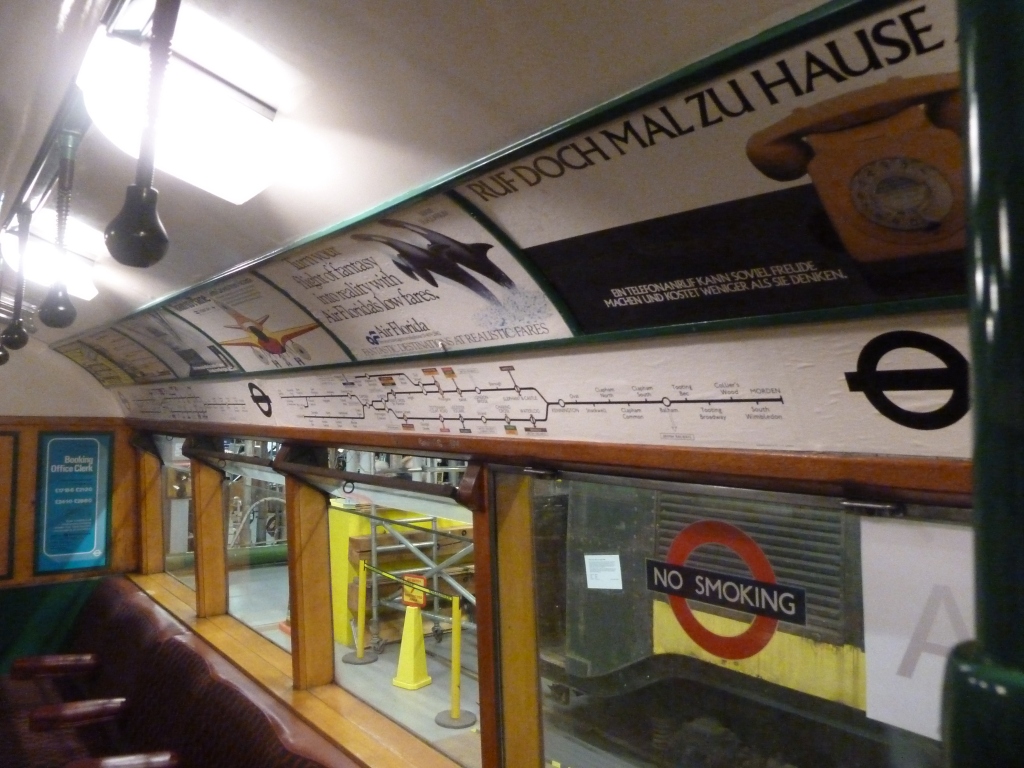
On sunday 29th September 2019, I visited the LTM Depot open day. The museum is in Acton, and can be reached on the Underground network via the Picadilly and District lines. The museum itself is a 5 minute walk across the road from the station.
The first thing to note as you approach the entrance was a small miniature railway which runs on event days such as this. Entrance to the site was very fluid, a quick check of my printed ticket and I was in.
You will see various large equipment from the underground network either side of you as you enter, and straight ahead there are rows of shelving stacked high to the roof with boxes. Stairs to the right of you take you up to a mezzanine level where on this day an interactive area was laid on for children. Great views can be had over the museum here, especially the tube stock.
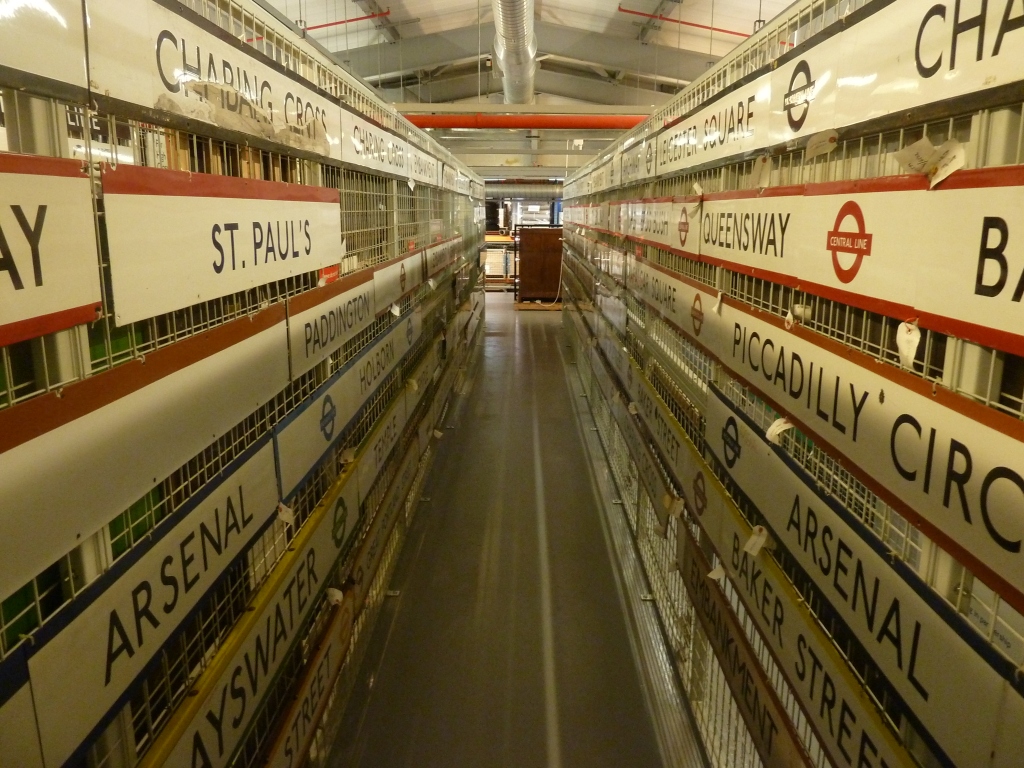
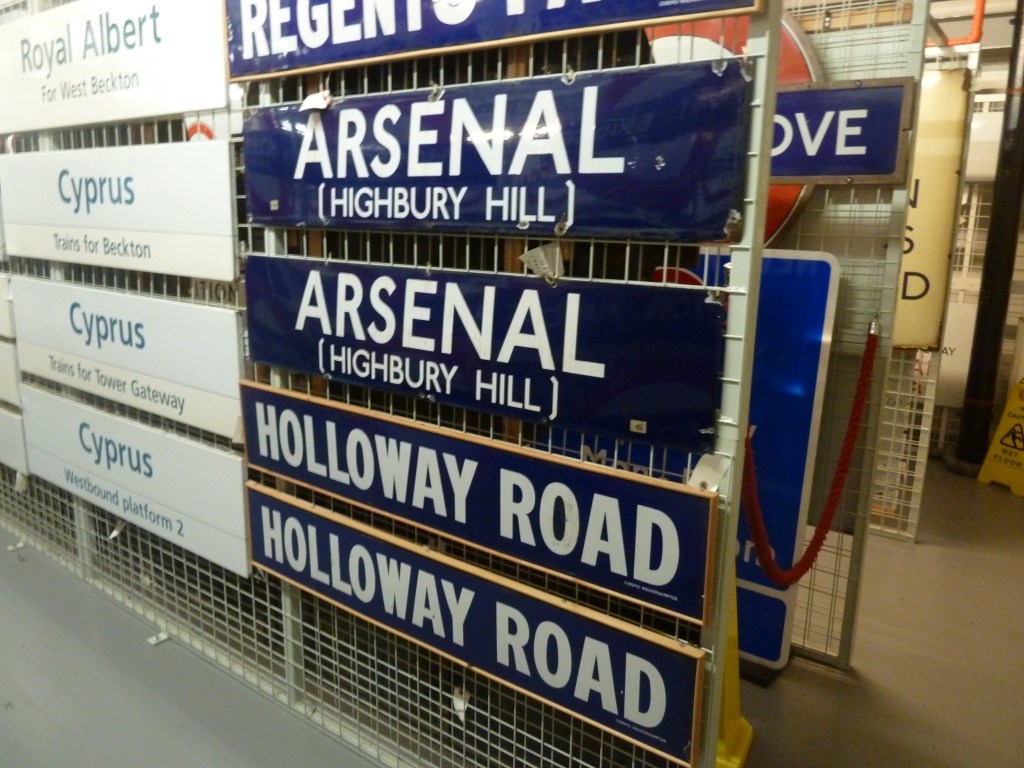
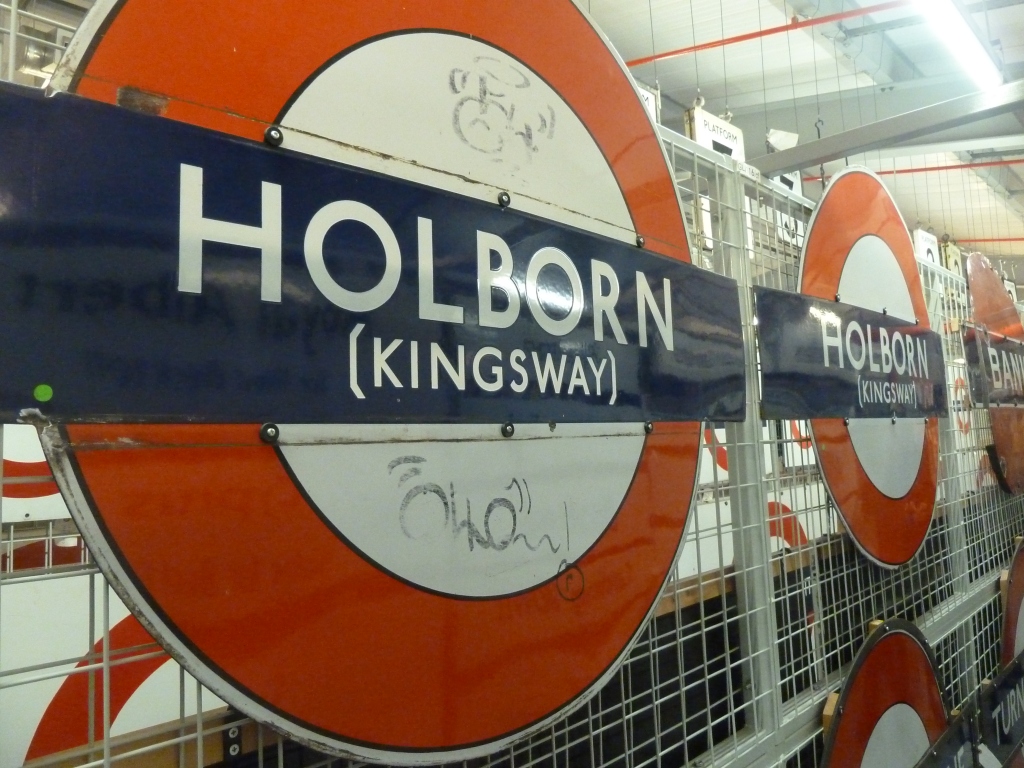
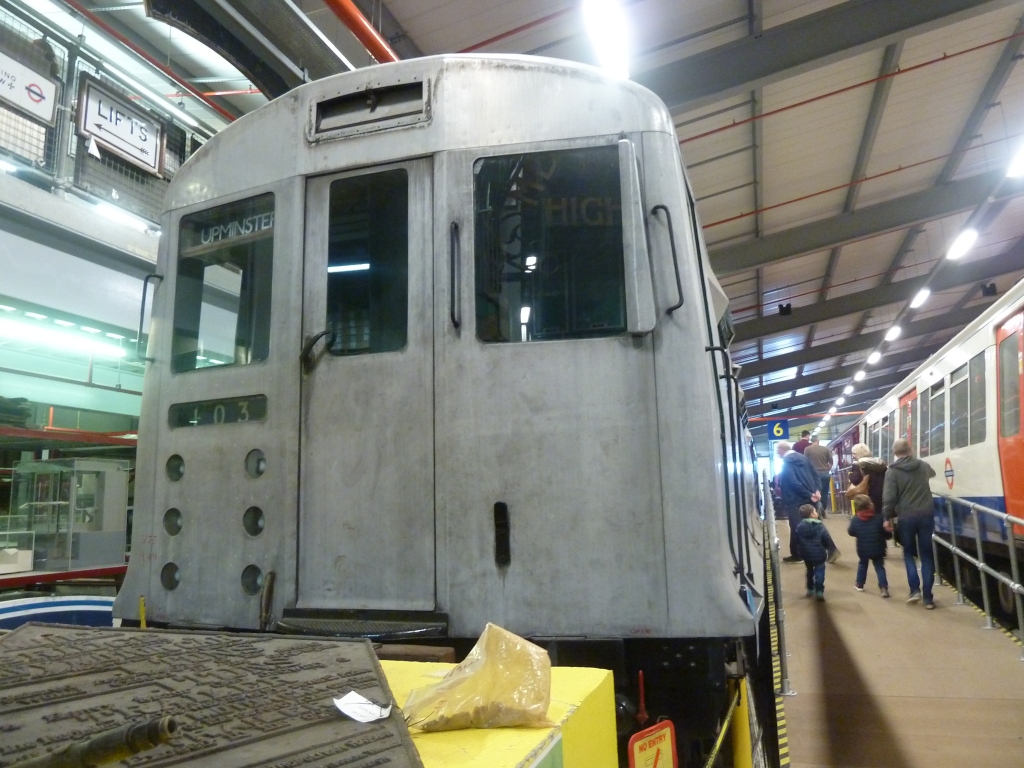
Before you get to the actual tube trains, go up the stairs to your left. This will take you to an area which contains a fantastic amount of old signage, and various models used in planning. As seen in these photos, you can easily spend 15 minutes + up here.
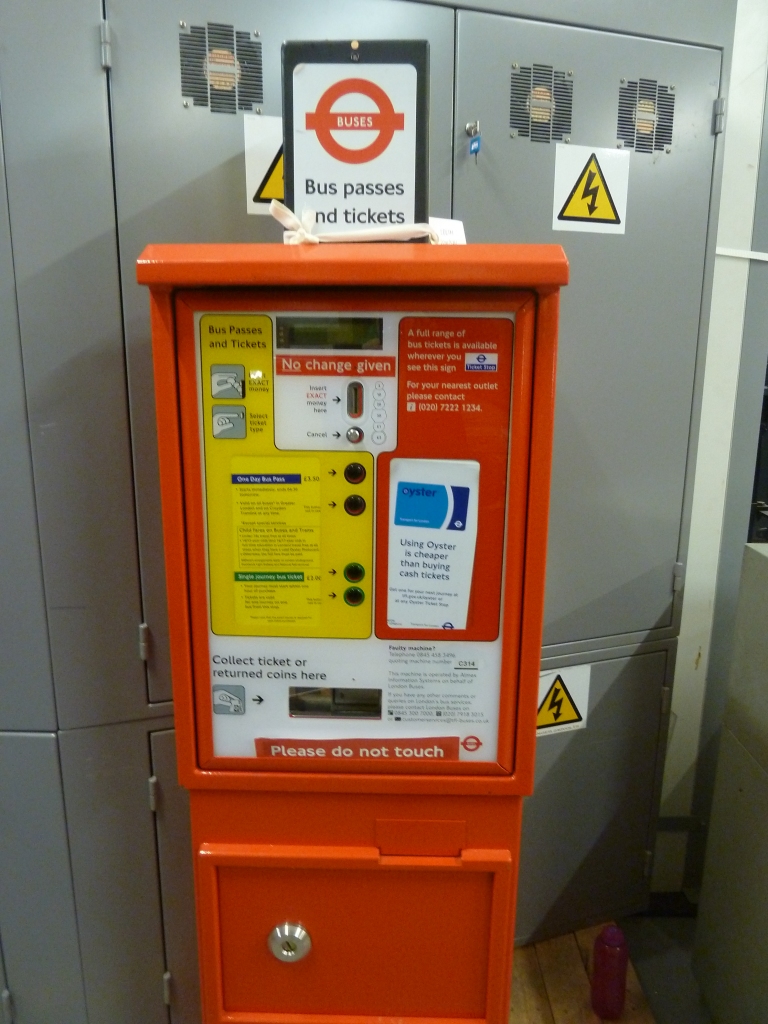
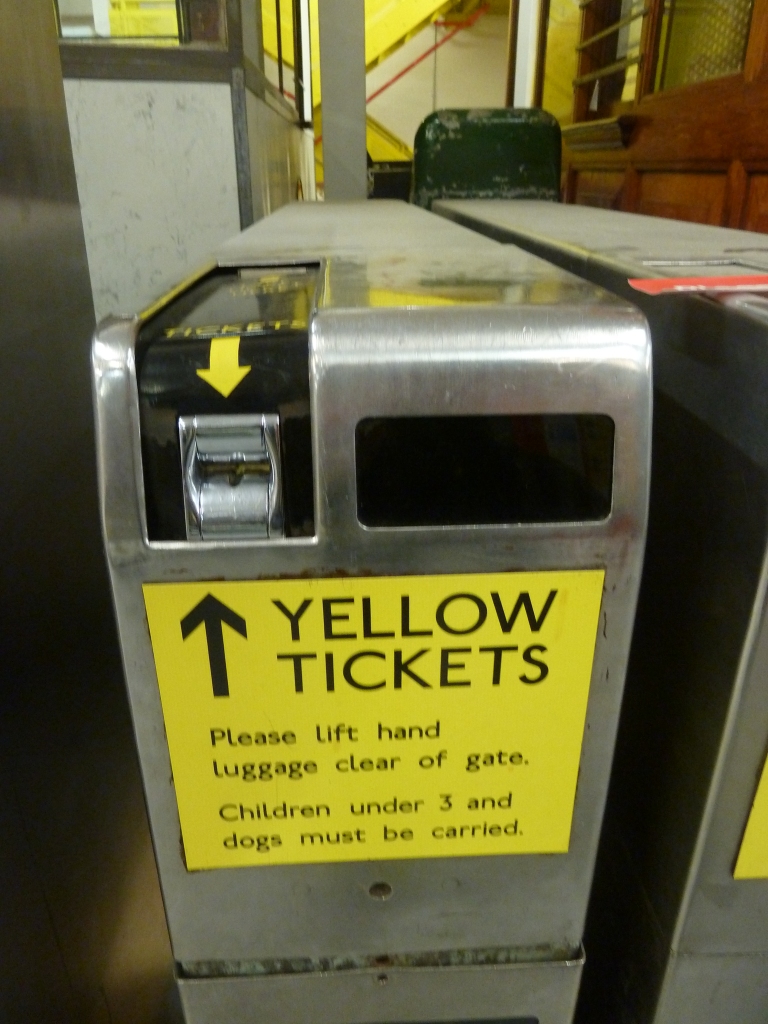
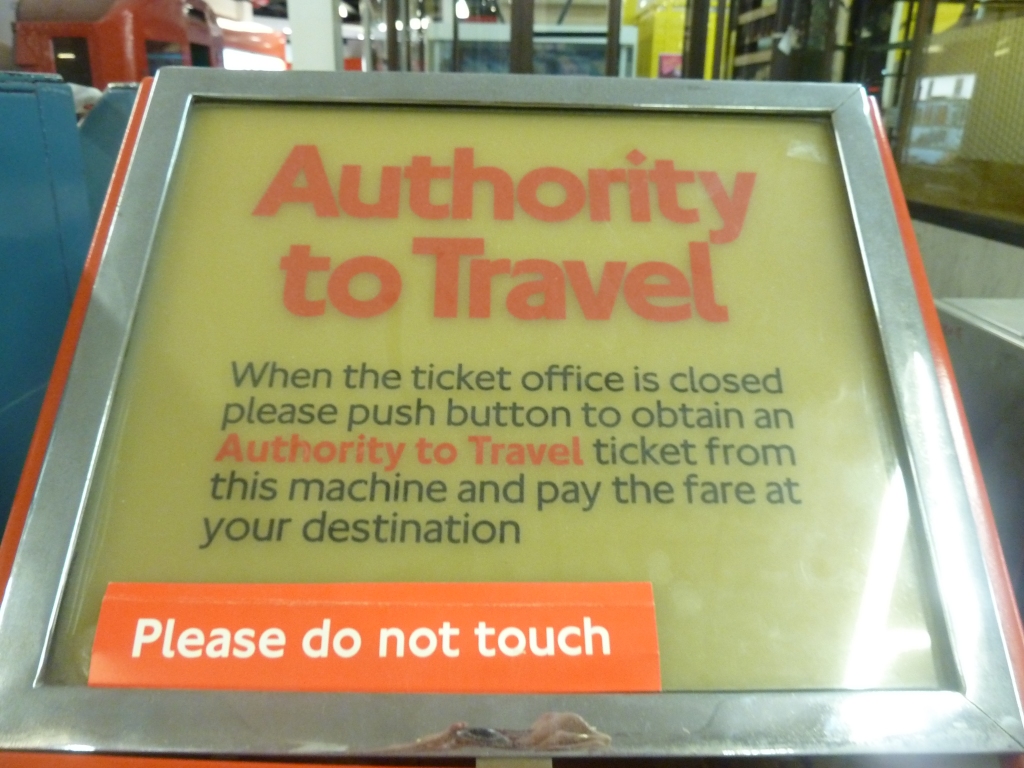
Before you view the tube stock, have a look at the old equipment in front of them, old ticket machines and barriers, and signalling equipment.
The variety of tube stock here is amazing. Everything is well laid out, and you can even enter some of the old trains. The level of refurbishment is exceptional, and has quite a nostalgic feel.
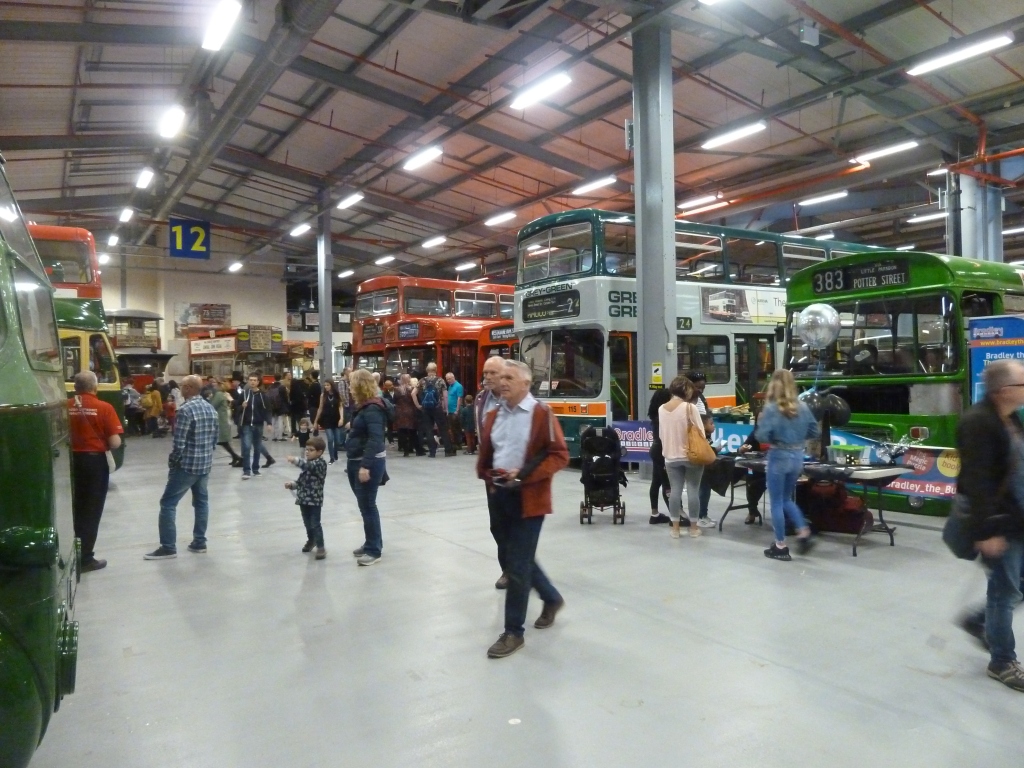
To the extreme right of the tube stock is an area dedicated to buses. Again the level of care in refurbishing these is exceptional.
Outside there was an area to buy various food and drink, and a place to sit down. No food and drink is allowed in the museum for obvious reasons.
I came on a day which was all about the London Termini, and the lectures provided were excellent. I also went on an included tour of the small item store, which was fantastic and lasted around 20 minutes. You have to sign up for this on the day, but they were quite regular.
Overall I would recommend going to visit this museum during its open days, the amount of heritage equipment, stock and signage on display is astounding. They only open it on select dates, and more specific tours are held on Saturdays throughout the year. Follow the link below the video to see if anything interests you.
Below is a video which i shot on the day, which gives an overall view of the museum.
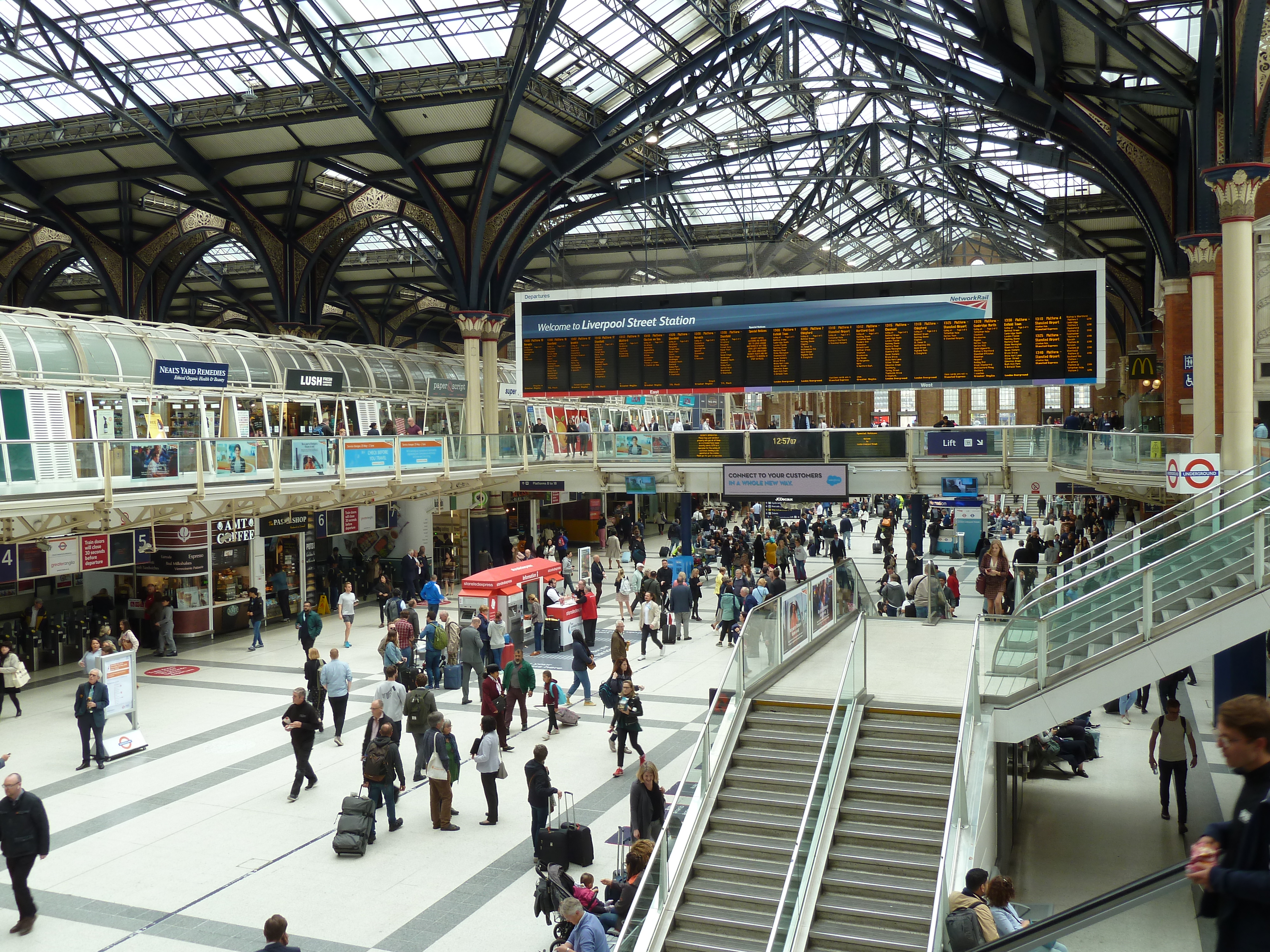
Once one of the busiest stations in London, Liverpool street has a very ornate interior much overlooked by its passengers. Having undergone many refurbishments in the years, the concourse now fills with natural light from the vast roof which spans it. Although now not as busy, the soon addition of the Elizabeth line may make this station a true hive of activity again.
A Brief History
London Liverpool Street was built to be the London terminus of the Eastern Counties Railway. Opened in 1874 with 10 platforms, two of which extended under the station forming a junction with the Metropolitan Railway.
Originally the buildings were 90ft high, with a spired clock tower. A hotel named “The Great Eastern” was built down the entire length of the new frontage. Many expansions came in the early years, which unfortunately created a myriad of entrance and exits. As well as this, the bridge used across the station was not wide enough and on two levels, which caused congestion and confusion for passengers wondering which part of the bridge they should be on.
The station is probably most famous for its role in welcoming children of the “Kindertransport”, an operation started in 1938 to bring children from the ever expanding Nazi Germany. The first children arrived on December 2nd 1938, and by September of the following year, almost 10,000 children would arrive into Liverpool Street, many of which landed at Harwich.
After being damaged in the Second World War, the station remained in a poor state until the 1960’s, when British Rail rebuilt and refurbished the station, giving it a new clock tower.
It was therefore a surprise that in 1974, British Rail would earmark the Liverpool Street station building to be demolished, and an underground terminus put in it’s place. Many campaigns were launched by eminent figures of the day, including the comedian Spike Milligan, to stop the bulldozers from destroying such a beautiful example of a London Terminus. Eventually after a few years, the tireless campaigning worked and Liverpool Street was saved.
A full refurbishment was again undertaken in the 1980s, with the train shed roof being fully repaired and restored. The main roof would follow in 1987. At this time a link would be established to the Cambridge line, enabling trains to terminate at Liverpool Street instead of Broad street. The entire work was finished in 1991, and the station was officially re-opened by the Queen.
Since 2013, the site has had many excavations in preparation for the Elizabeth Line. During one of these, a mass grave was found on the site of the “Bedlam” burial ground, dating back to the 17th Century. This lead to a full excavation of the area, recovering what is believed to be 3,000 bodies.
A quick view of the station today
Due to its complex nature, you could start anywhere at Liverpool street and still get great views. Howver for the sake of this quick walkthrough, we will start at the entrance at Hope Square in Liverpool Street.
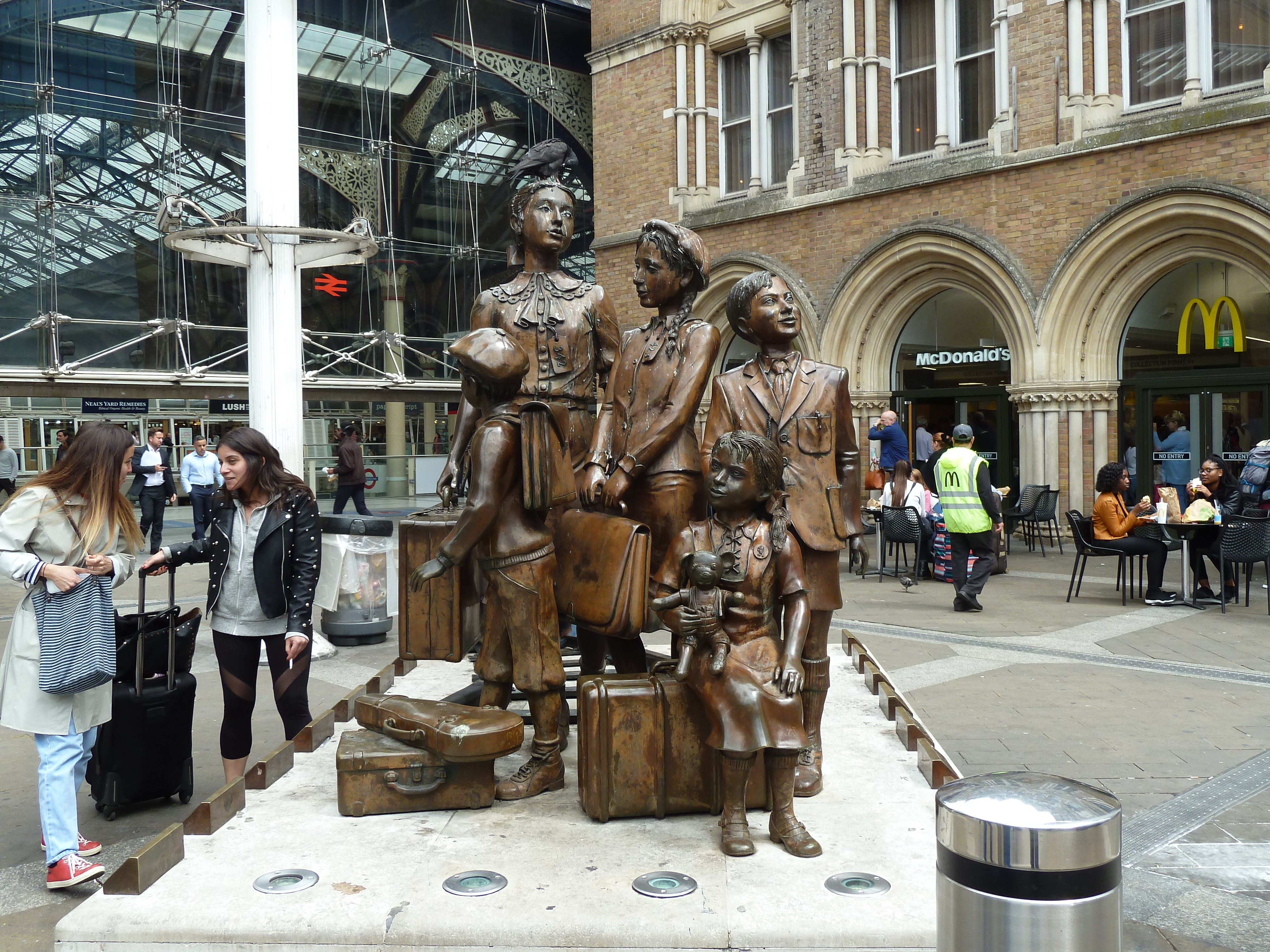
Going through the gates, you will be greeted by the ‘Kindertransport’ statue in front of the glass fronted entrance. Take time at this statue to read the plaques and appreciate this significant event in history.
The ‘New’ Kindertransport Statue in Hope Square
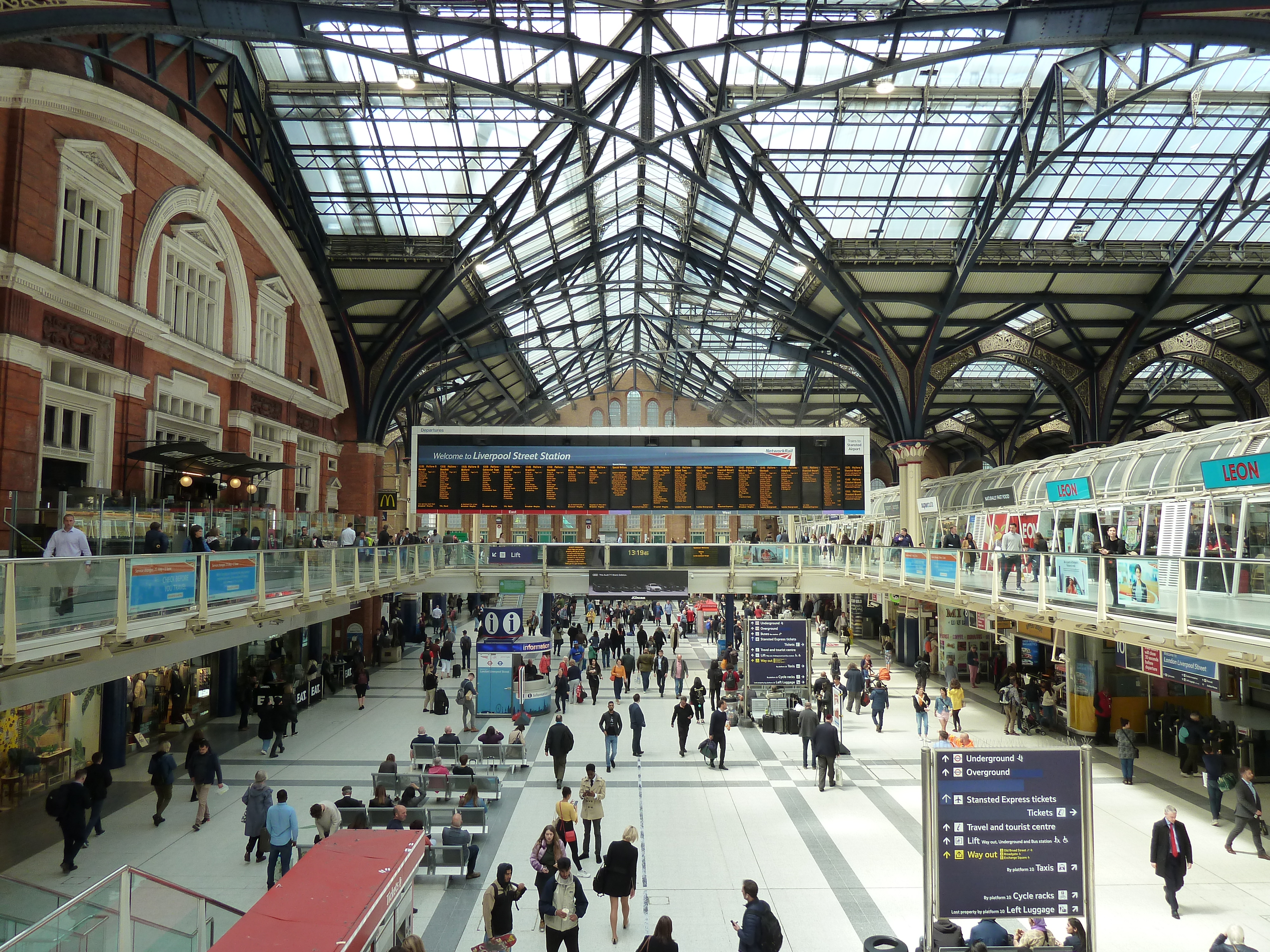
If we now go through the entrance, you will gain the first look at the roof, with the concourse opening out below you. You are on the mezzanine level at this point, so take some time to look around you, admiring the columns which hold up the glass roof which is allowing natural light to flood in.
Looking left, you will see some arched windows, move toward these and then turn towards the concourse, so that you are looking straight down it. It is one of the best views of any London Terminus in my opinion, and a great photo if you can get it.
Move back along the mezzanine, a row of retail is ahead and to your right, but if you carry on down into a corridor, the exit to the bus station will eventally be on your left. Keep going down here for a very good view across the platforms.
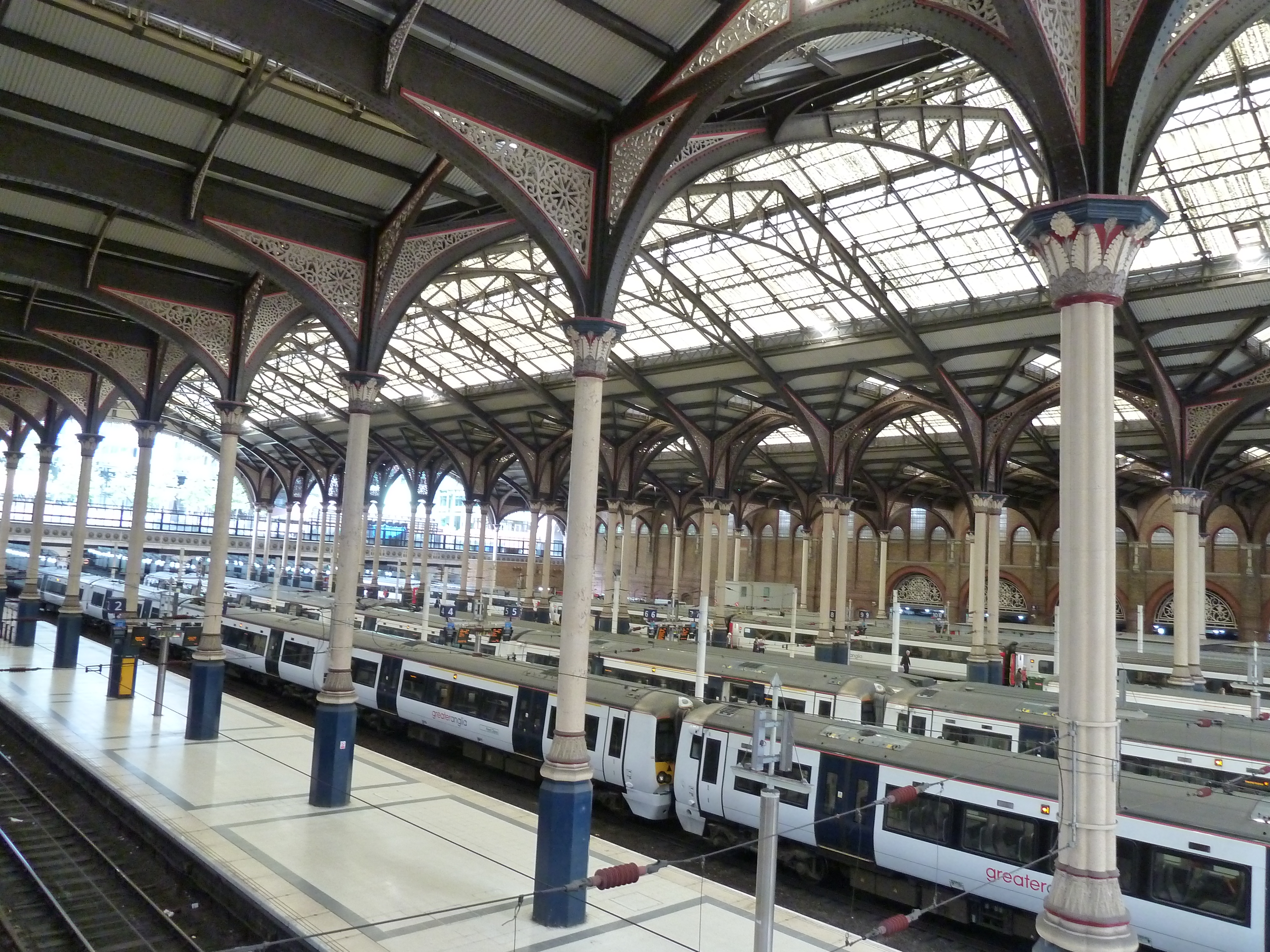
A view across the platforms, note the abundance of highly decorated columns.
Once, you have seen the the platforms, with the fantastic train shed above, head back to the mezzanine level and turn left, so that you can see the arrival and departure board ahead of you, hanging above the concourse.
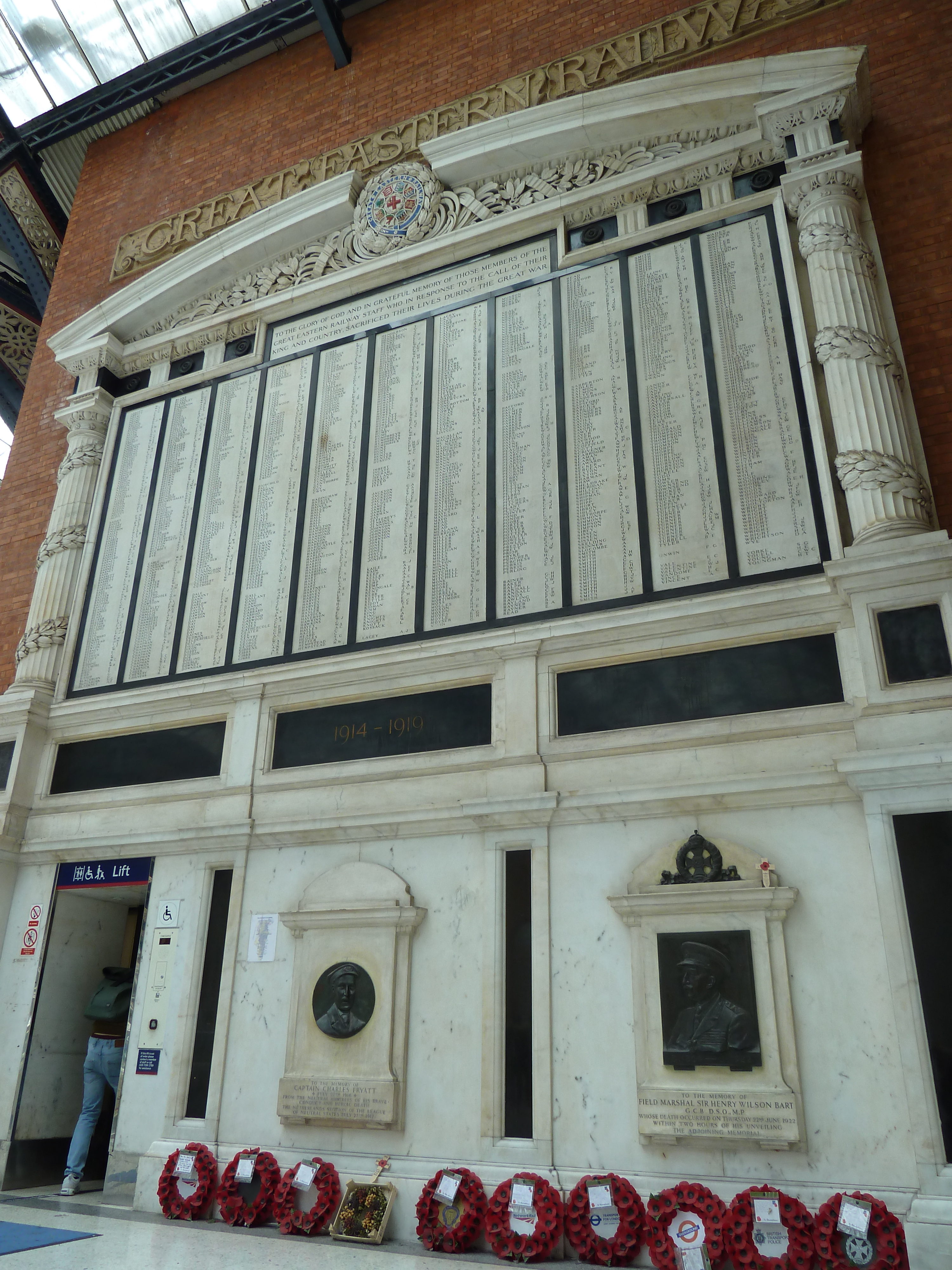
Once you get to the board, turn right and go underneath it, good views can be had of the concourse left and right here. At the other side, turn right and then left, you should see a rather large marble mural which reaches up toward the roof. This great marble structure is one of the best dedications to those who lost their lives during the First World War at any railway station. Below it are dedications to Captain Charles Fryatt and Sir Henry Wilson, both of whom were decorated in the Great War. Many other dedications and wreaths are normally to be found under these.
The First World War Memorial
Go back past the memorial and then past the departure board, and you should find on your right three brick reliefs. These depict a steam train, a ship and a scene involving coal being put into a firebox.
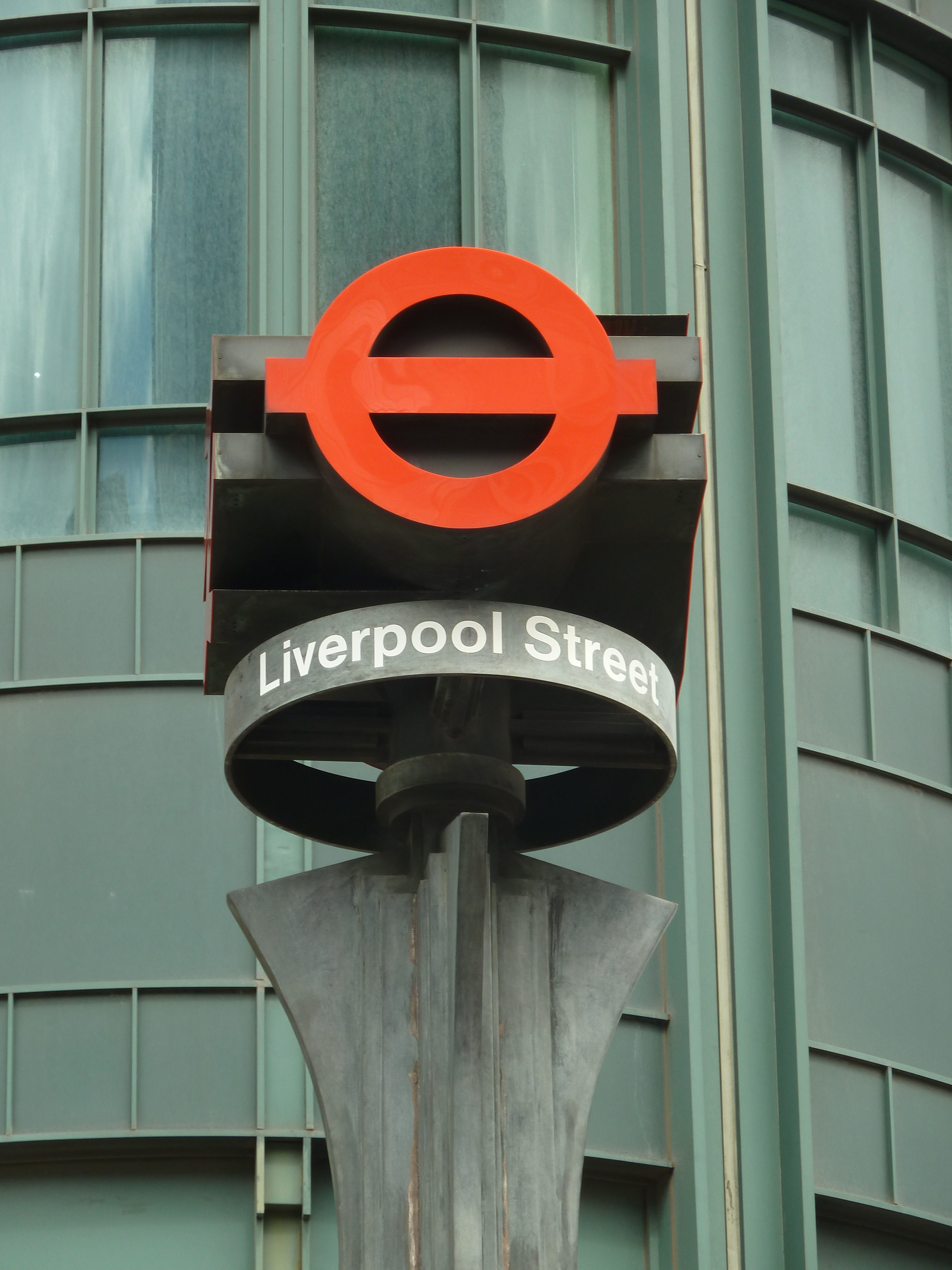
You will now see an exit which takes you out onto Bishopsgate. The former Great Eastern Hotel is to your left, and the original ballroom ceiling can be seen if you enter this building (which is now a major chain pub). Looking back towards the station you will see a glass canopy with escalators down to concourse level. This is framed with two brick columns, one with a clock tower. Also to be found here to your right is a very unusual metal totem with a London Underground roundel and the Liverpool Street name underneath.
Totem in Bishopsgate
Take the escalators down to the main concourse. Walk forward here and again admire the roof structure. Keep to your left here as you walk along. There are lots of places to sit here, and a set of escalators will take you down to the toilets. Go past these, keeping left until you almost reach the entrance to the Underground station.
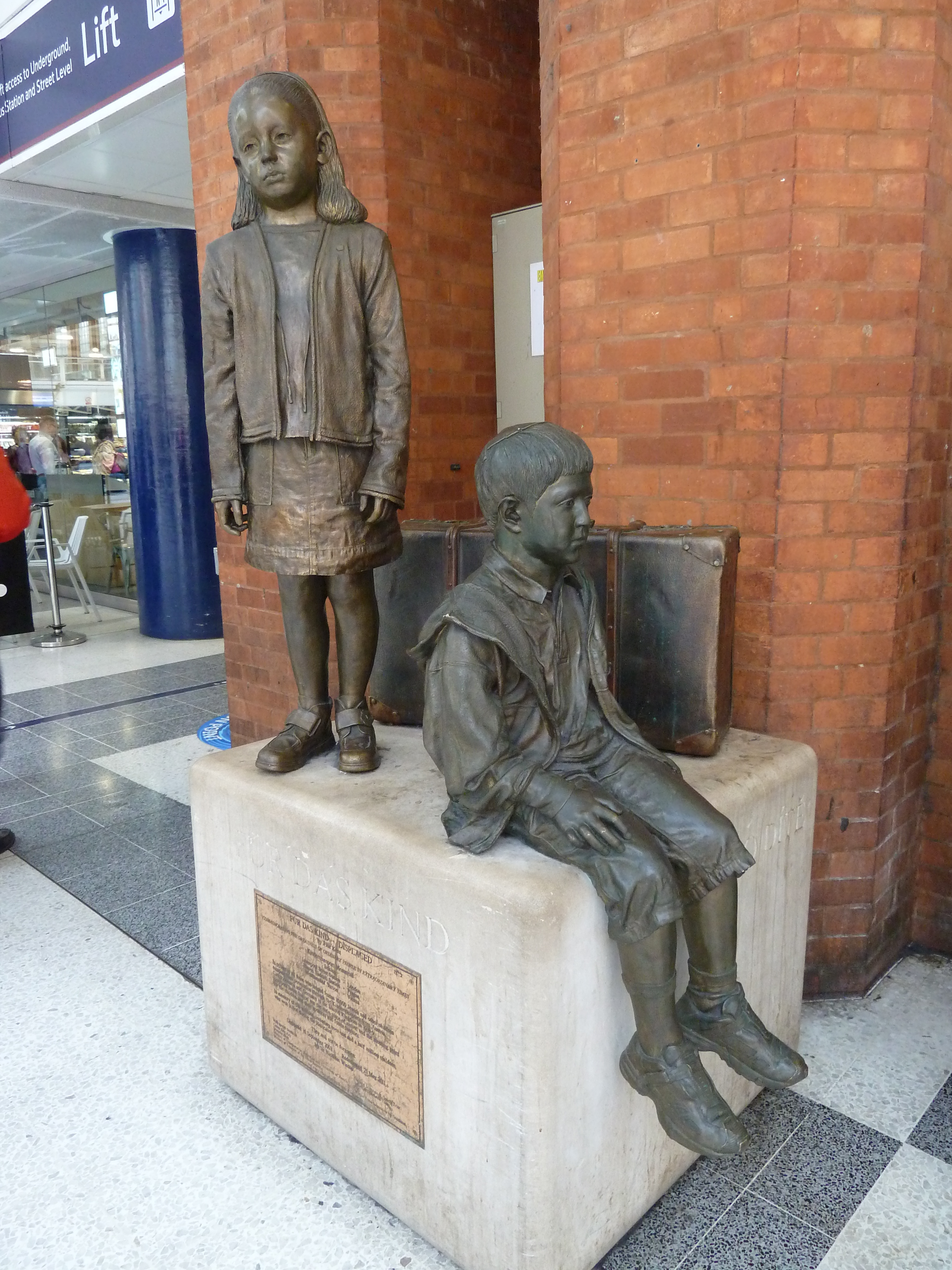
You will then see another statue dedicated to the Kindertransport. This was the original one dedicated in 2003, and used to sit in Hope Square. When it was there it contained a glass box with actual artifacts from some of the children, with the standing girl only. When it was relocated however, a sitting boy was added and the glass box removed.
Kindertransport statue near Underground entrance
Moving past the Underground entrance, there is another exit ahead of you which takes you to an area with a low veiling and retail outlets. Eventually it leads to the Bus station.
London Liverpool Street is not the largest London Terminus, but this and Marylebone do keep the charm of the old railway, and although I have detailed a few hidden gems, but there are more (but that’s for another time…)
A view from the Liverpool Street end
You can see a short video of the trains at Liverpool Street on my YouTube channel below:
One stop down east from Rainham (Kent) is the small station of Newington. Opened in 1862 by the London, Chatham and Dover railway. At this time, only a double track went through the station. Serviced by a small one storey station building, which was located on the “up” side, the station was created mainly to service the many agricultural premises in the village.
Three sidings were put in, controlled by a signal box on the “up” side. Goods traffic was supplied by the local farmers in the early years, and later when some of this land was used more industriously, coal was brought in to sustain the new industries.
This continued for many years, but it was the advent of electrification along the Chatham main line which would see significant developments. The track was quadrupled between Rainham and Newington, ending at the east of the station. This involved demolishing existing platforms, and replacing them with concrete structures. A metal bridge now spanned the platforms across the four tracks. Around 1962, the original station building was replaced by a prefab construction, which still remains today.
The following are two photographs. The first facing west, showing a DB class 66 with an engineers working coming on the “down” from Rainham.
Next, facing east, a 395 “Javelin” is passing through at speed on the inner express lines.
If you want to read more on the history of Newington Railway Station, please visit the excellent Kent Rail website.
In September 2018, I visitied the Didcot Railway Centre, located adjacent to Didcot Parkway Railway Station. Access is via the railway station, just tell the barrier personnel if you are visiting the centre and they will let you through. A wristband will be provided by the museum enabling you to get out. However if you arrive by train, you can just walk down the stairs from the platform, turn right and the entrance is at the end of the passageway.
There is a very reasonably priced entrance fee (£6.50 per adult on a non running day, rising to £11 – £15 on running days (September 2018)), which has a family ticket option as well as the usual reductions for senior citizens. One thing of note that on non running days, admission is paid inside the museum.
The walk down to the first set of buildings takes you past an old coal stage, an impressive sight at track level. Then you arrive at a collection of buildings, comprising a shop, cafe and a G Gauge model railway. Next to the cafe is a museum, this contains many GWR artifacts, and although it seems small, quite a lot is packed in here. Here are a few photos on some of the items on display. Note that this is just a fraction of what is here, it is quite an impressive collection.
Next to here is the new signalling centre exhibit. Its main attraction is the Swindon Panel, and was still being worked on when I visited. It was still fascinating to see the exhibits in here, and nice to see preservation of a different kind for a change, not just with locomovtives and rolling stock.
Moving further up towards the Carriage display, views of the mainline to Oxford can be seen on the right. There is also a running track which is used on running days, with two stations at either end. A picnic area and play park is also here. The carriage display is very comprehensive, and includes a Traverser.
Various wagons and a signal box are at this location too, all very well cared for. Further up still is a section which has some broad gauge engines, an unusual sight.
I decided to end my day at the engine shed, which is opposide the cafe. I good array of Great Western steam locomotives are found in here, and I would imagine would be a great sight on a running day. A quick trip into the shop and then I left.
Overall I was very impressed and will try to get back here on a running day. I spent a good 2 and a half hours here, which included a very nice lunch in the cafe! I highly recommend a visit, especially if you are an enthusiast who plans to stay a while at the main station, which I did (more on that in a later blog).
I have made a short video of the centre, uploaded to my YouTube channel, which you can view below :
I make no apologies for this blog. These are the trains from my area of the country (North Kent) when I was growing up in the 1970’s and 1980’s. The familiar sound of these “Slam Door” trains were the soundtrack to the rush hour, with the sound of said doors ringing through the major London Termini of Charing Cross and Victoria. So here is a short history of these workhorses of the North Kent and Chatham Main Line.
The 411 unit, also known as the 4Cep, were built for British Rail between 1956 and 1963, mainly ran on the Chatham/North Kent lines. A total of 133 units were made, mainly just passenger based, although around 22 had buffet cars installed, these were re-categorised as 4 Bep units. The 4 referred to the 4 car formation, two driving cars which also had standard seating, the middle two cars having a mix of 1st class corridor and standard class corridor coaches. They had a maximum speed of 90 Mph.
Each area of seating contained a door, which was inherently dangerous as it could be opened at any time. This lead to many doors being opened way before stopping, and people would literally jump from a moving train onto the platform. You really had to stand away from the platform edge when a slam door was coming in, otherwise you may have had a door in the head!
If you had ever ridden in one, or heard one you would not forget it. They were dangerous, accidents such as the Clapham Rail Crash of 1988 with Vep and Rep variants would prove to be catastrophic. Replacements such as the Networker and Electrostar would follow, with their automatic doors and safer designs. But they never quite recaptured the feel and seating comfort of these trains.
In the second of this series, I look at Higham Railway Station on the North Kent Line. The station was 28 miles Down from its previous terminus at Charing Cross, however the Thameslink service no longer goes to Charing Cross, instead stopping at London Bridge before going though the London Core on its way to the its new end at Luton.
The first thing of note here is Higham Tunnel, at 1531 yards in length.It originally was constructed in 1801 to serve the Thames and Medway canal, which acted as a passage for military traffic from Woolwich through Gravesend and Higham to the dockside at Chatham. When traffic on the canal didn’t reach expected levels, the newly formed Gravesend and Rochester railway company acquired the canal and tunnel, putting a single track rail line alongside the canal. This lead to the opening of Higham Station in 1845.
There are actually 2 tunnels, separated by what is locally known as ” the bomb hole”. This was an area for the barges to cross. The second tunnel is the “Strood” tunnel and at 2329 yards in length is the longest of the two. The tunnels received extensive refurbishment in 2004 due to rock falls, and are now strengthened by steel and concrete.
A year later, the Gravesend and Rochester railway company was itself absorbed into the South Eastern Railway. It is at this point the canal was drained fully, and a second rail line put in. At this time the railway did not divert to the Medway towns, instead carrying on to Maidstone via the Medway Valley. It was not until 1939 that a spur from Strood would carry trains onto the Chatham Main Line to Gillingham.
Higham would have a couple of sidings, both on the Up and Down lines, although both had been removed by the mid 1960s. The most unusual piece freight unloaded by the station was a Swiss chalet in 1864 as a gift for Charles Dickens, who lived at nearby Gad’s Hill.
Although initially accessed by a foot crossing, platforms are reached via a lattice footbridge, a common sight throughout the Southern Region in the 20th Century. The station building still survives, and was still heated by the original fireplace as late at the 1980’s.
The ticket office is open for only part of the day, at other times a permit to travel ticket must be purchased from a PERTIS machine, located by the bridge on the Up side. The station was served by SouthEastern until May 2018, when the new Thameslink Class 700 service to Luton/Rainham commenced and took over the 2 tph (each way) Stopping service. Class 395 SouthEastern “Javelin” trains pass though, as well as various freight though the day, some heading for the nearby “Hoo Junction” Yard, around 2 miles further on the Up line.
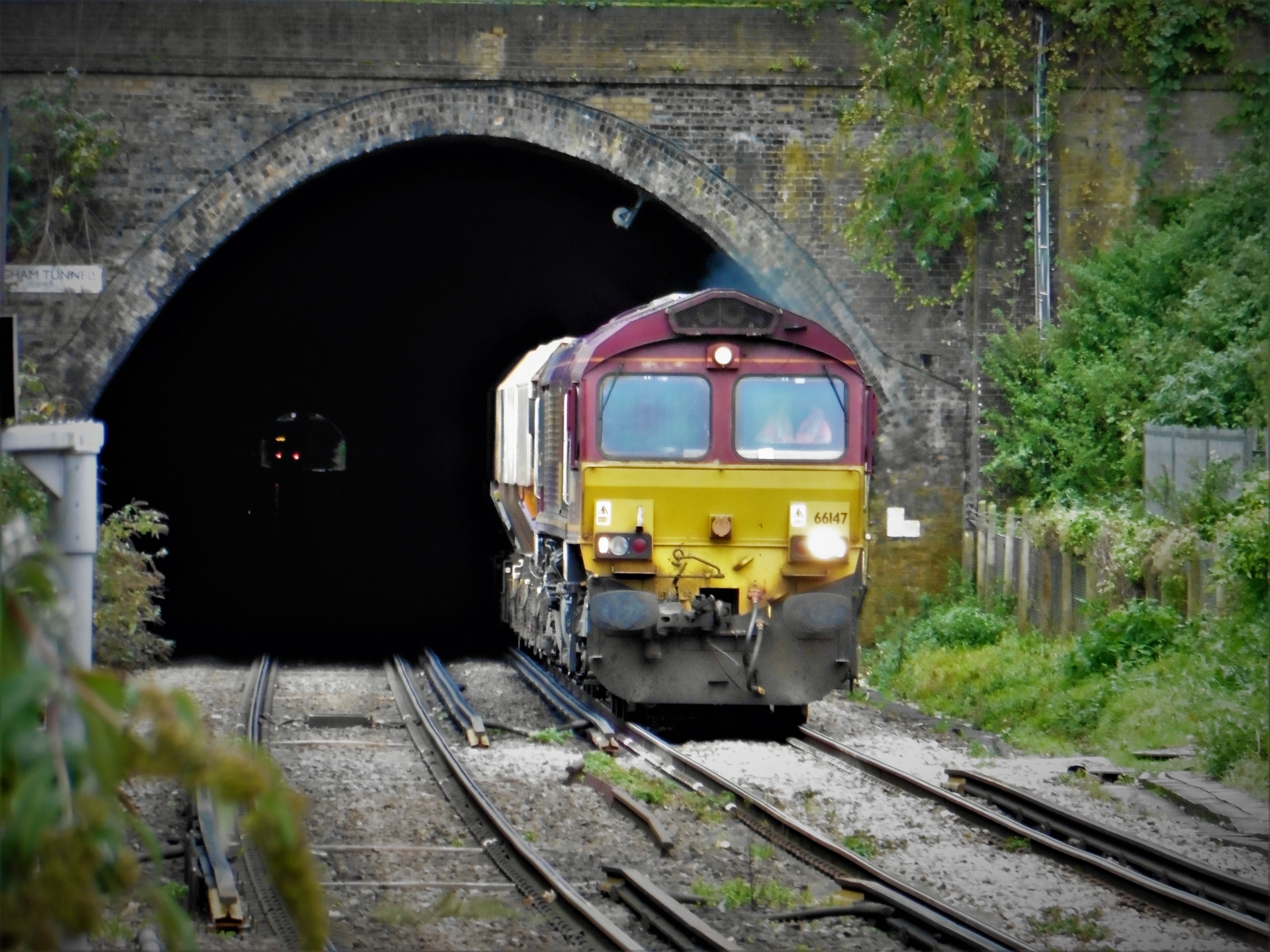
Two pictures follow. The first by me, shows a Class 66 hauling stone wagons exiting the Higham Tunnel on the Up line. A train can also be seen passing through “The Bomb Hole” on the Down line heading towards Gillingham.
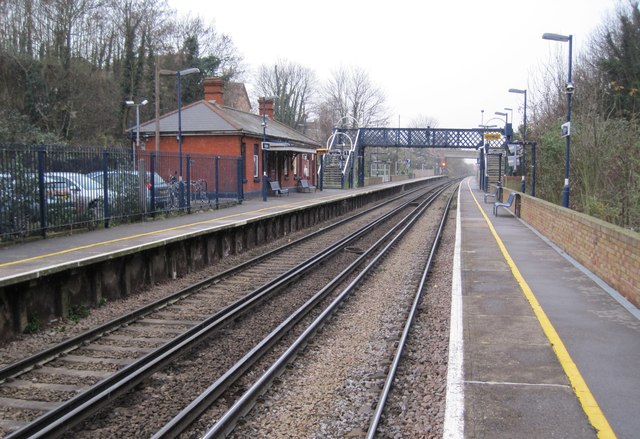
The second is a view towards the station building, taken from the Down platform. This photo by Nigel Thompson (credit under photo)
Continuing my look at stations in the Medway area, this time I shall look at a small station on the Medway Valley line – Cuxton.
Cuxton Station was opened in 1856, and from the outset had two lines. Two platforms served by an level crossing at the south end of the station allowed passengers to travel to Maidstone to the south, and Strood to the North. In 1862, a signal box was erected adjacent to this level crossing, and is still there today (2018)
In 1931 a small siding was opened to the south of the station, trailing off the “down” line, which served a national business (Besto Co.) making fruit baskets. This was followed in 1939 with a goods loop installed to the north of the station. Unfortunately, none of these sidings survive today, both having been removed by the end of 1990.
A footbridge was installed at the south end of the station in 1961, adjacent to the level crossing and the Signal box. A note about the level crossing, as it is still manually closed by the signalman at the time of this Blog (2018). A really rare sight, and (unfortunately) I will assume this will become automated at some time in the future.
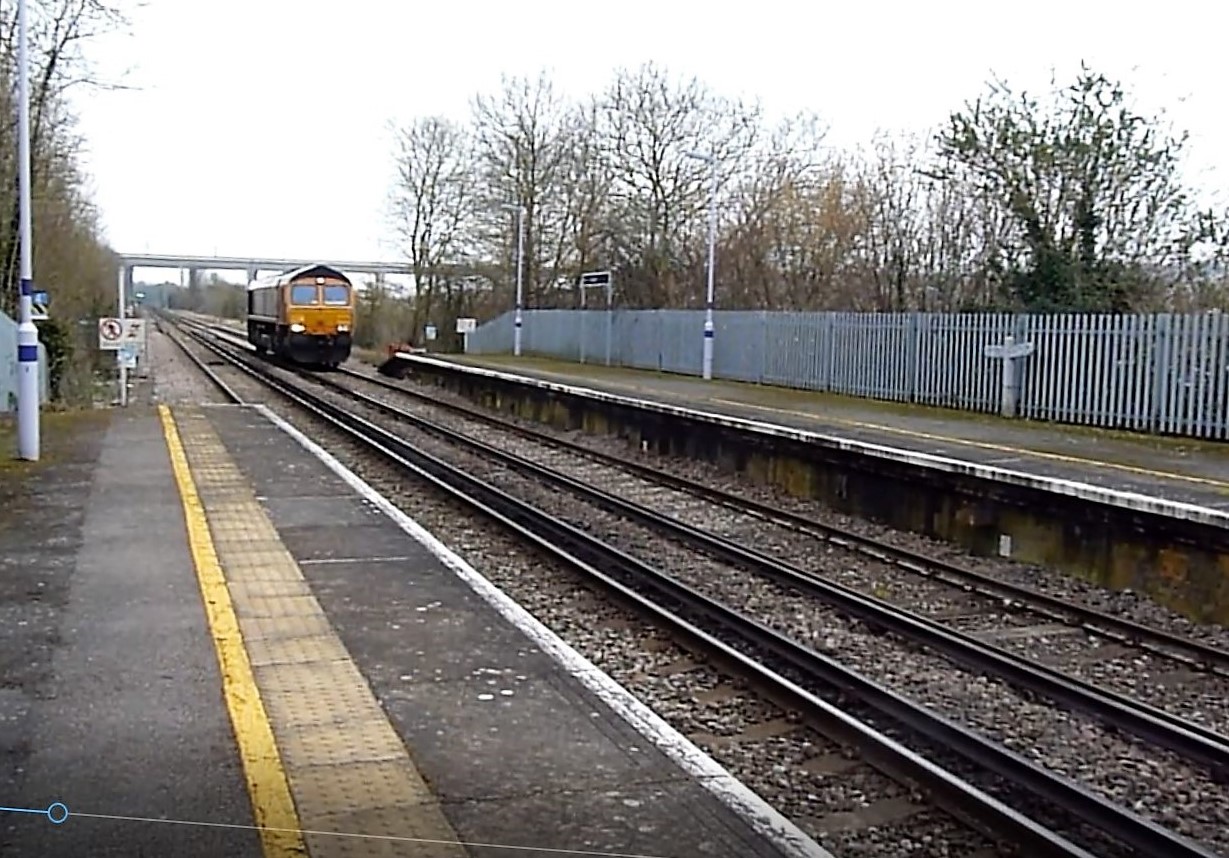
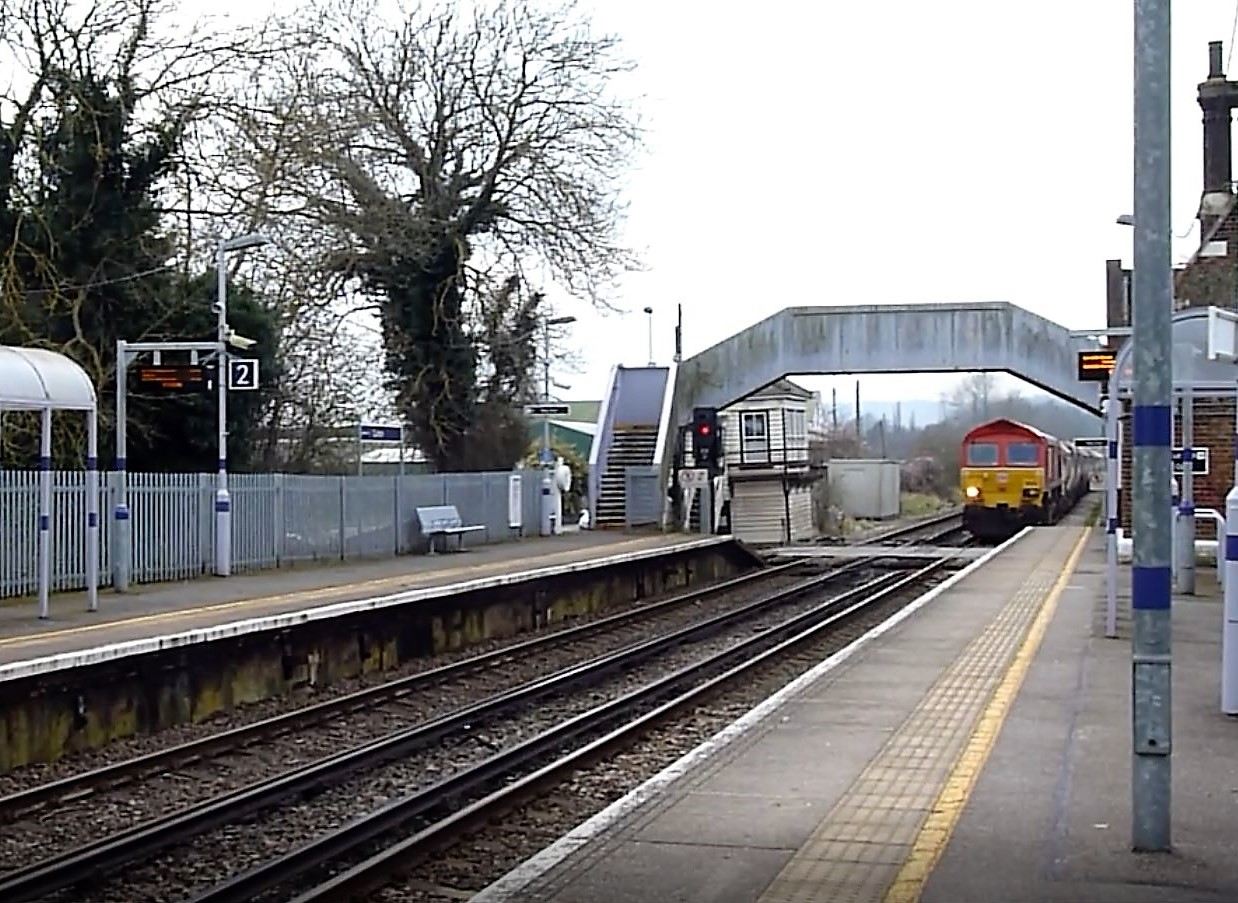
Two views from Cuxton in 2016 follow. The first shows a light engine class 66, travelling on the “down” line towards Maidstone. This view is to the north, and the bridges across the M2 can be seen, the nearest one being the HS1 line.
The second view is to the south, showing the signal box, overbridge and level crossing, as well as a stone train travelling on the “up” towards Strood.
Currently at Cuxton, there is only a PERTIS (permit to travel) machine installed here, the majority of the station buildings being disused for many years. The station is served at this time by Southeastern, with 2 trains per hour (northbound “up” to Strood, southbound “down” to Maidstone (1 Tph continues to Paddock Wood, the other to Tonbridge). (correct as of June 2018)
A few freight trains run though the day, to or via Hoo Junction (to the north) or to the south, some of which come from or go to ARC sidings just outside Allington in Maidstone. Freight is mainly hauled by class 66 locomotives, although some class 70’s have also been seen on the line.



 Rainham Rail Enthusiast