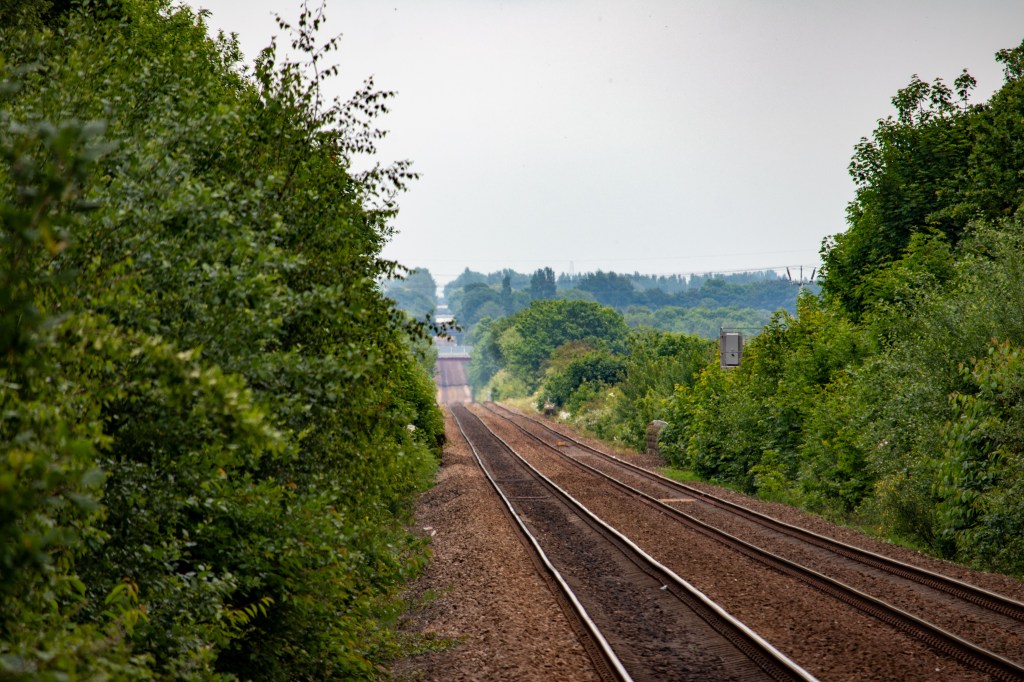
Located on the Liverpool to Manchester line, the station is very close to Liverpool South Parkway to the west, and lies on the line which serves Warrington central. This is more commonly known as the Southern route or Cheshire line.
Halewood is a relatively new station, having been only opened in 1988. Another station was situated to slightly west, which was closed in 1951. That station utilised a triangle junction where goods trains operated. Despite being on a popular line, services at that station decreased significantly after the war, and so a decision was made to close it.
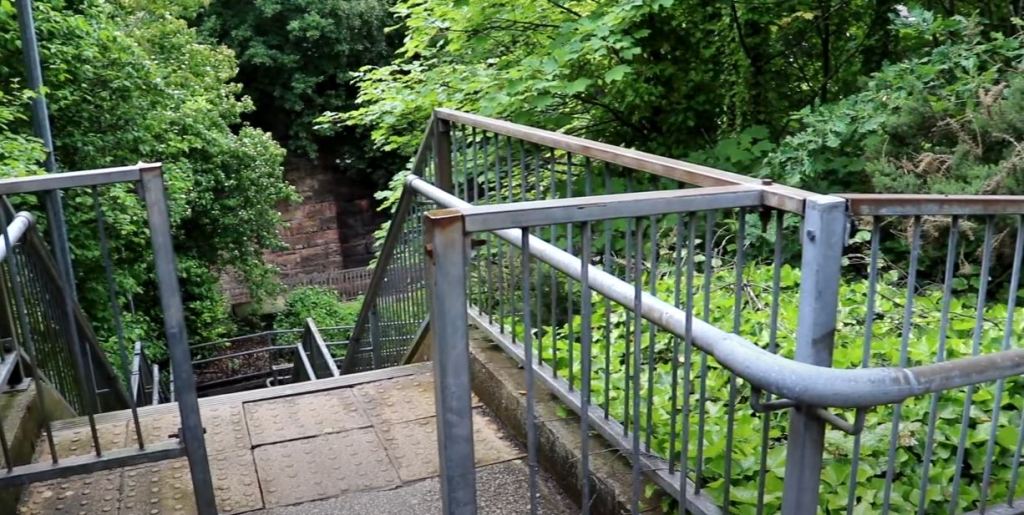
This current station is perched above an embankment, and is reached by a combination of winding ramps and steps, ,more on these later. I cannot find any press cuttings or web pages relating to the opening of this station, so yet again if you know any further detail, please write in the comments below.
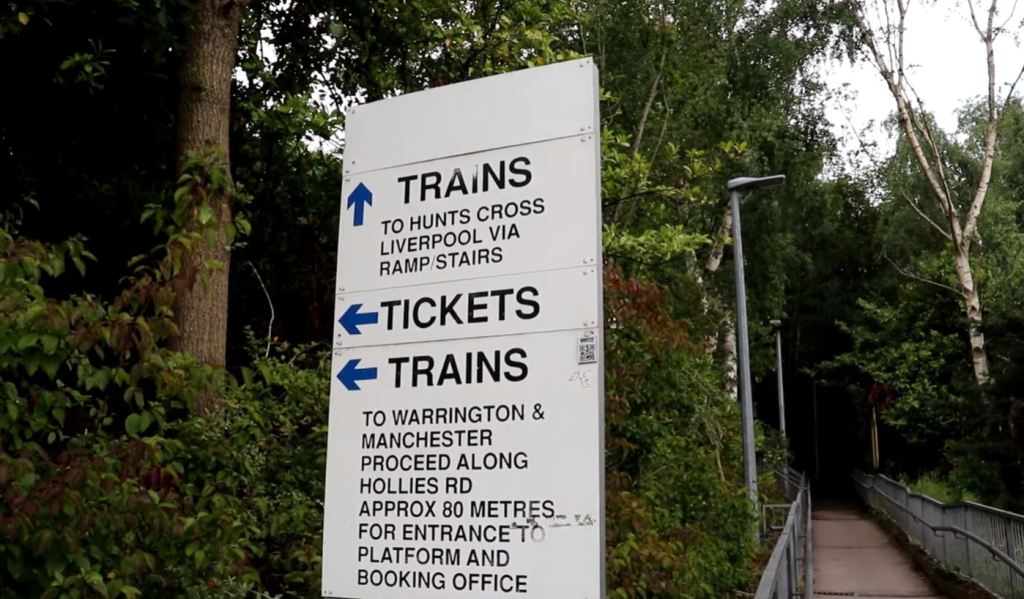
Access to the Manchester bound platform is by a series of four ramps. The first two are 25 metres, then 15 metres, then 25 metres with a rest platform between each or, via the first slope and then up two separate flights of steps with 25 steps in total.
Access to the Liverpool bound platform is off Hollies Road via three slopes each 50 metres long with rest platforms. Or by two flights of stairs with 18 steps with an intermediate rest platform.
There is a small ticket office at road level, at time of writing staffed during morning peak hours.
A video featuring the station when I visited in 2022 is below :
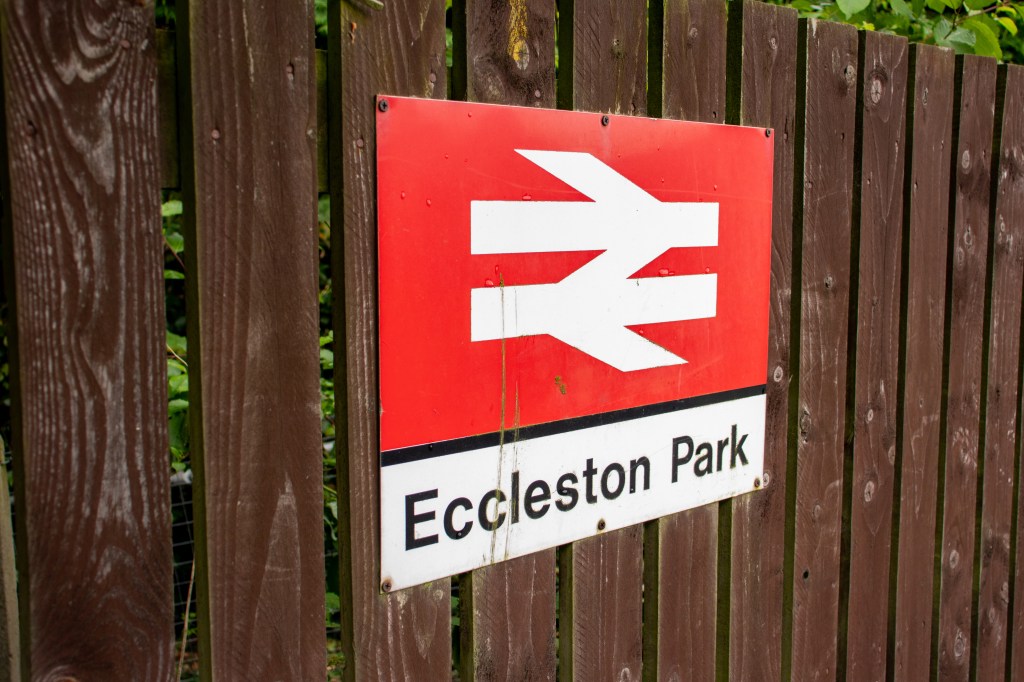
The station was opened in 1891 by the London and North Western railway, and unfortunately after research this is the only thing of note I have found about the station. If you know any more please write a comment, I am sure that myself and other readers would be interested to know.
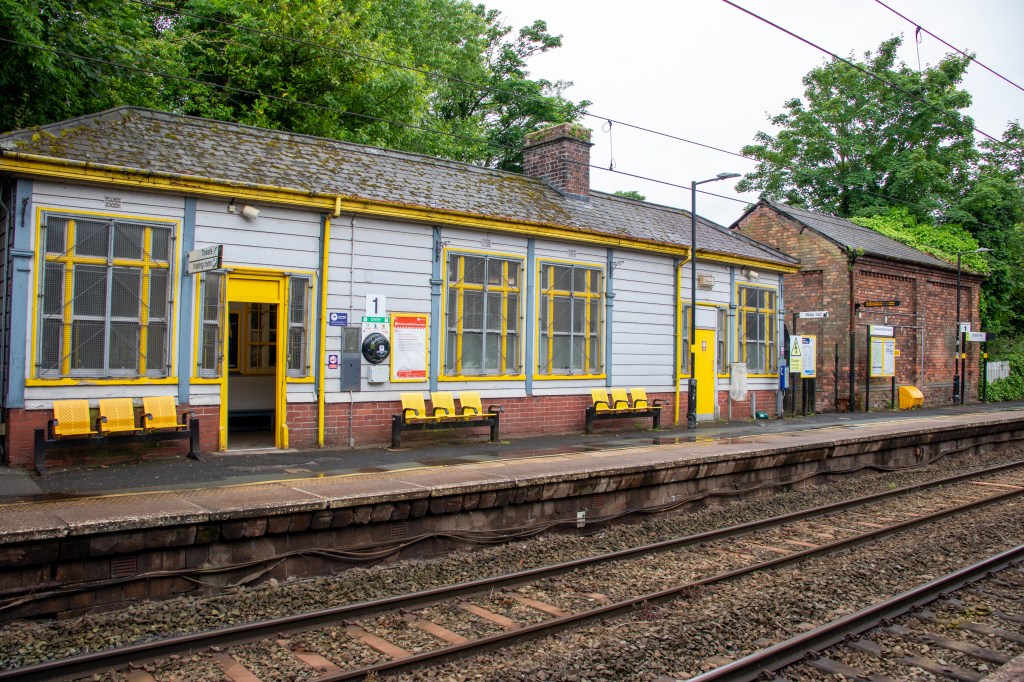
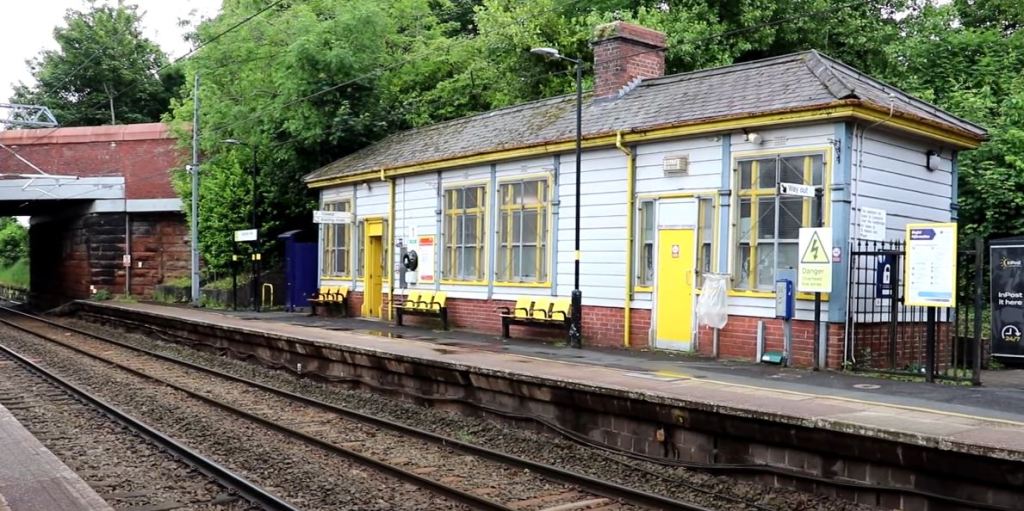
The station lies on a slight curve and has a one story station building. Access is either a side road or ramp, the crossing of the line being done via the road bridge. Looking at the building, although old, I have a feeling that it may not be original.
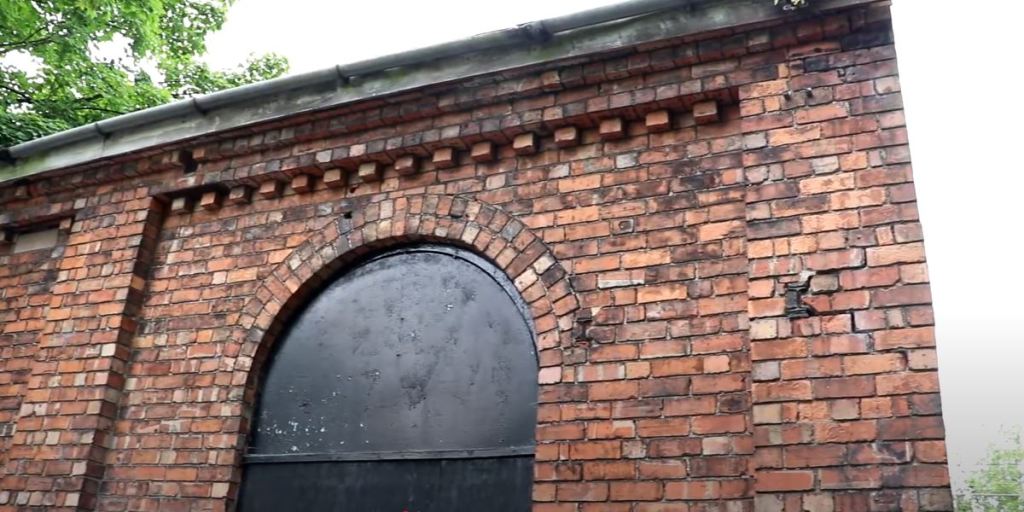
There is however an older building next door, however this seems to be a pumping station.
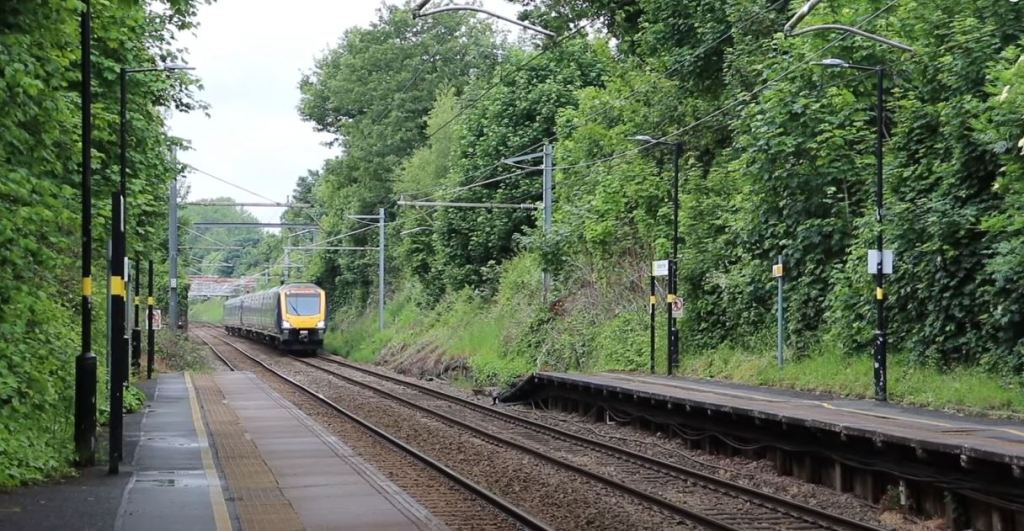
At time of writing, passenger traffic is provided by class 331 electric multiple units, although older class 319’s may still also be seen
A quiet station with some interesting buildings is the best way to describe Eccleston Park. It a shame that there is no facts about history to be found, but I am sure someone will help us out on that. For the enthusiast sight lines are good, but there isn’t much in the way of services through the station.
I have produced a video for this railway station, which can be viewed below :
The station was opened in 1887, as part of the Liverpool Southport and Preston junction railway. However this was integrated in to the Lancashire and Yorkshire railway in 1897 due to financial difficulties.
The line here was an early adopter of electrification in 1909, and in 1911 more train services were introduced when the Pool Hey Junction was opened, allowing services from Wigan to Southport.
Although no goods facilities were here, freight passed through the station until 1952.
Station buildings were in the form of a large timber building, situated on the island platform, which had canopies on either side. It was a large structure, being as it would be expected to serve a large number of passengers from the Southport suburbs. It contained not only a booking hall, but toilet facilities and a waiting room.
The line to Preston was earmarked for closure by the Beeching report of 1963, and so by 1964 that particular line closed. This lead to reduced services, and was the first decision that led to the decline of the station during the next thirty years.
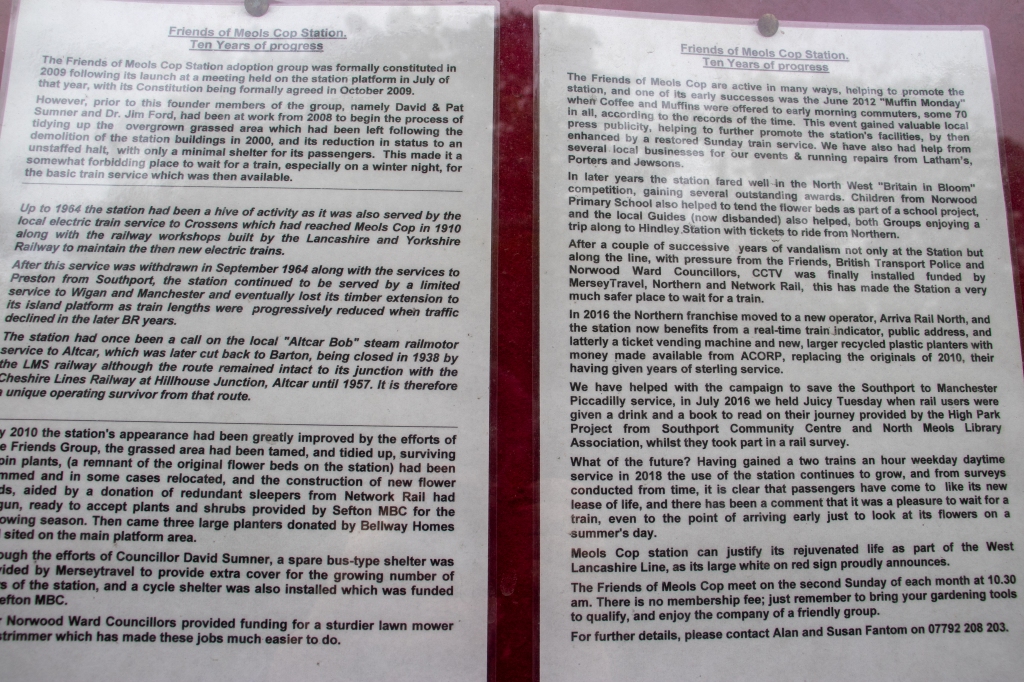
The station building was demolished in the year 2000, being replaced with simple shelters. However, the reintroduction of a Sunday timetable in 2009, gave the station a much needed upturn in passenger numbers. A ‘friends of Meols Cop station’ group formed in 2010, and led to the station gaining floral displays, and the general upkeep of the station has continued ever since.
Below are images taken in 2022 of the station notice board :
Meols cop is an interesting station. Certainly it is well looked after by the station group, and new shelters and information boards show that it has not been a forgotten station. The lack of lift however restricts its use, and so will never be busy. The curve makes it interesting for photography, however the lack of services make interest low for the enthusiast.
The station lies on the Liverpool to Manchester Line and is the first one after leaving Edge Hill. The Alstom railway depot is on the line to the north just after the spur from or to Edge Hill.
Mossley Hill opened in 1864 as Mossley Hill for Aigburth. It and Allerton were the only stations opened on the line when the St Helens Railway extension from Speke to Edge Hill opened. The entire station including platforms were replaced in July 1891, when the Edge Hill to Speke line was quadrupled.
The station was renamed from Mossley Hill for Aigburth to Mossley Hill on 6 May 1974
To the North of the station, on the route towards Edge Hill are the sites of two former stations, that of Sefton Park and Wavertree stations.
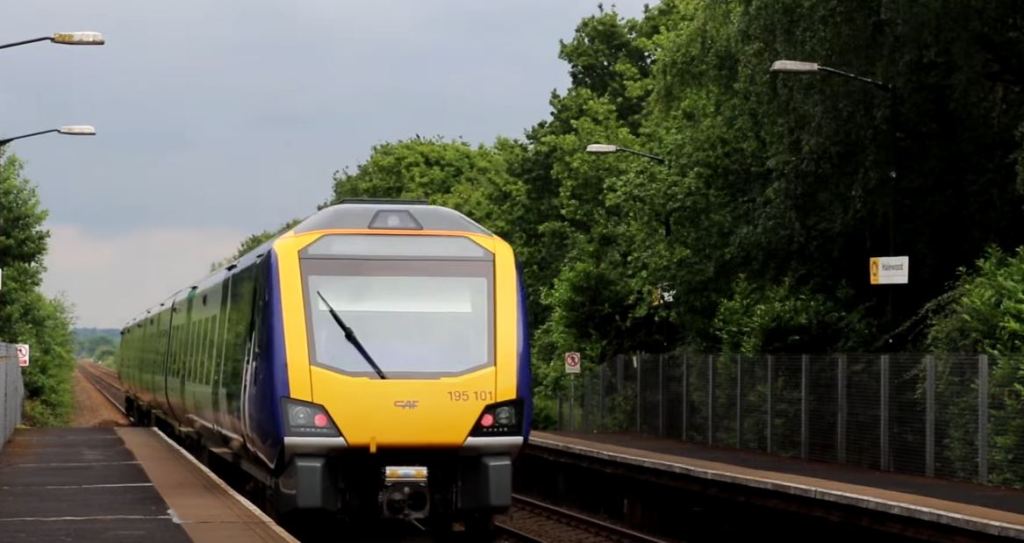
A wide variety or rolling stock can be seen from this location, and at time of writing this includes Class 150, 156 158 and 195, plus passing pendolinos. When I visited in 2022 occasional Transpennine class 68 hauled services also came through the station.
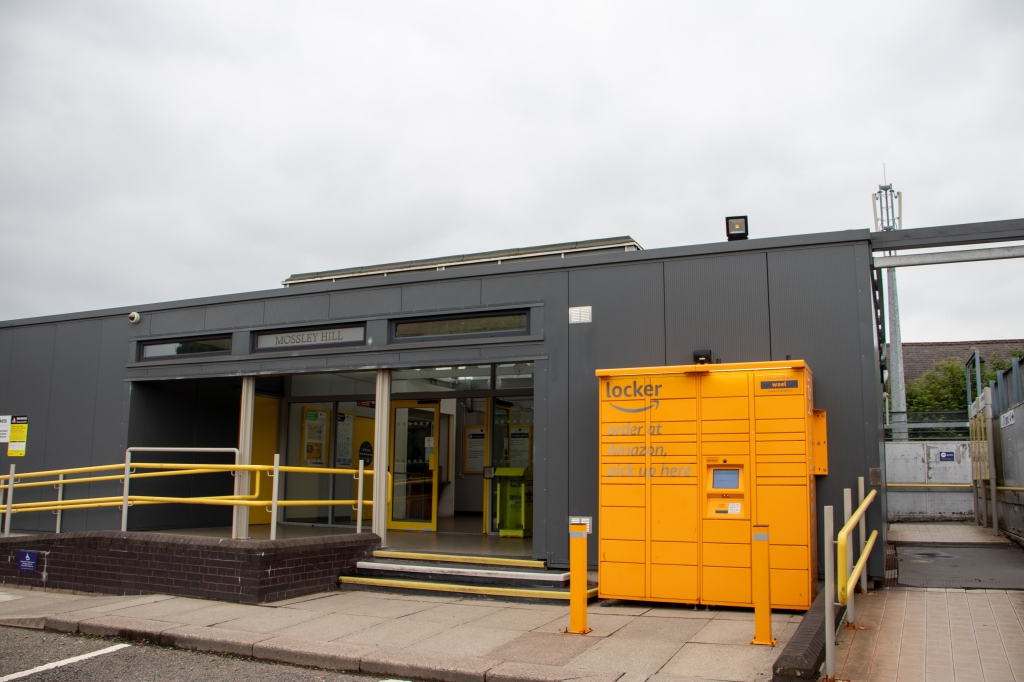
Mossley Hill has a very interesting station design. All platforms are of an island design, and even from the outset these seem to have been reached by ramped walkways, which is obviously a great idea. It would be nice however to see these refurbished, as the station building does look very well looked after.
For the enthusiast, plenty of traffic and good sight lines make for good photography and videography.
Below is a video taken in 2022 when I visited the station.
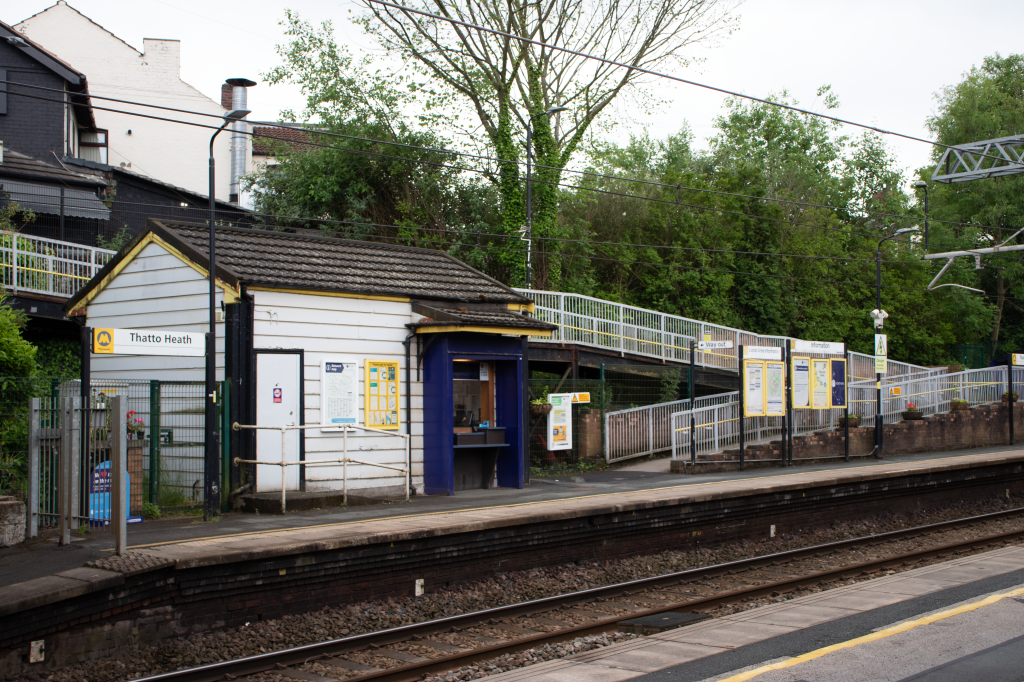
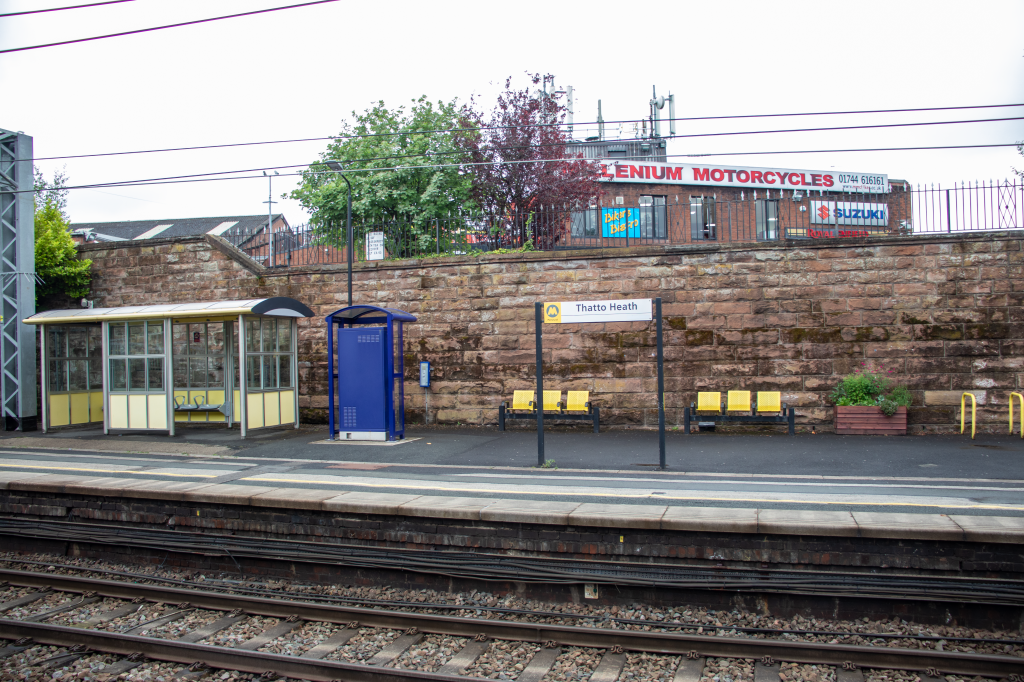
Thatto Heath is on the Liverpool to Wigan city line, the stations of St Helens Central and Eccleston Park being to the east and west respectively.
The station was opened in 1871, the same time as the line, and is set within a very slight cutting. Extensive research as as yet to yield no other significant history surrounding the station, so if you know any different please e-mail myself so that I can update this blog, I and others would be very interested to read about the history of the station.
It is located in the area of St Helens, and a notable claim to fame is that Thatto Heath is the birthplace of British comic actor Johnny Vegas. As far as the station is concerned you can see it is very picturesque, with stone walling which does seem to be very well looked after. A small ticket office exists, and this does seem quite old, but again I cannot find out whether this was the original location or not.
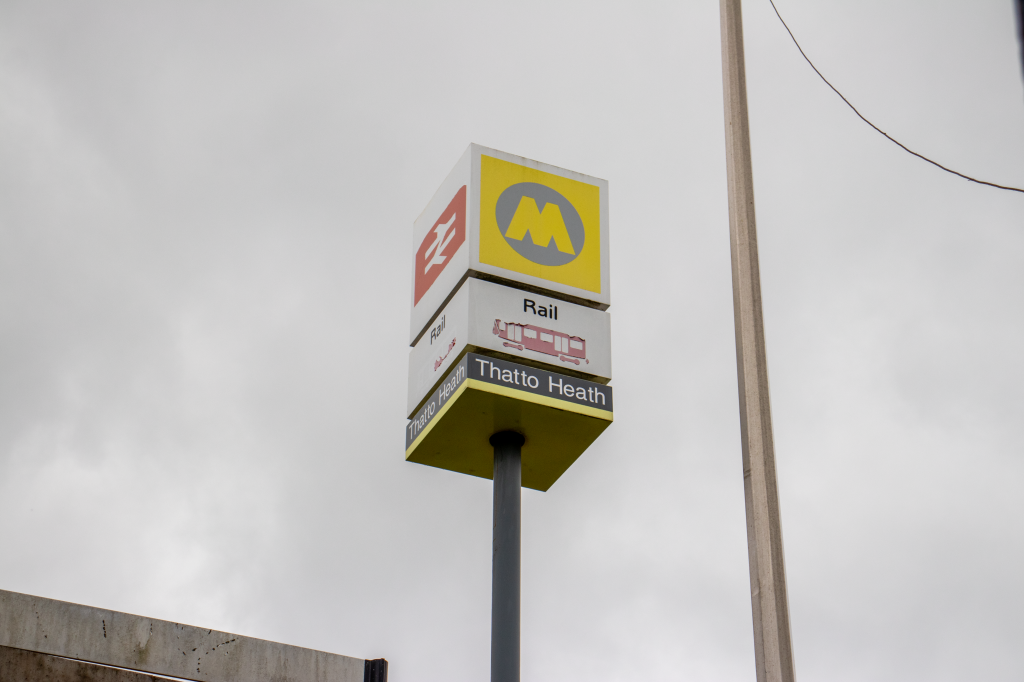
Although Northern supplies the passenger services, the station is significantly Merseyrail branded.
I visited the station in 2022 and below is a video of the visit.
Opened in 1904 as just Elmstead, the station was actually quite large considering that even from the outset not many stopping services would be provided. The four track section would enter two separate tunnels on the London bound direction at the end of the platforms.
The station building on the coastbound side is very good for a quiet station, with extensive canopies either side. There was a building on the London bound side also, but this was demolished sometime in the 1960s’
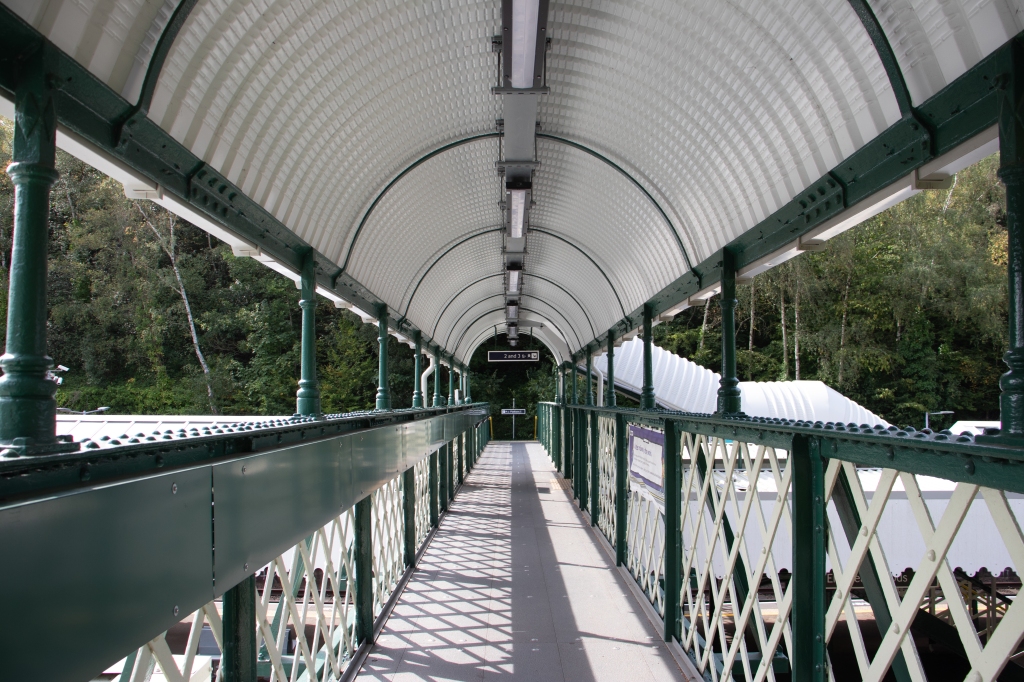
All the platforms are served by a long footbridge, originally fully covered, but part of that was removed in the renovations of the 1960’s. This remaining cover has been repaired and repainted in the last few years and looks great.
On thing of note is that the station never had any goods yard, the one at nearby Chislehurst being sufficient. It did however have its own signal box, positioned on the coastbound side of the London bound platform. However this became out of use in 1960 when a new power box was installed at Chislehurst.
The station only really uses platforms 3 and 4 as stopping platforms, the other two lines being used for through traffic, although their platforms still remain.
The Elmstead Wood gardening club look after the super green areas on platforms two and three. A recently added feature to these gardens are these fantastic bear carvings by Will Lee which were provided by the Chislehurst Society, and form part of a bear trail, the website details of which I will leave below.
It is a great area to walk through, and perhaps relax a little while you wait for your train. The gardening club is always keen for volunteers so please visit their site by following the link below if you wish to help out.
Main statistics:
Elmstead Woods opened in 1904
It has four trains in both directions off-peak, with additional trains during peak hours.
the entry and exit figures for 2019-2020 were 1, 033, 002
Elmstead woods is a great place to sit and relax whether you are a railway enthusiast or not. Its recent refurbishment is fantastic and the well-tended gardens make this a very pleasant station indeed.
I visited this railway station for the first time in March 2022, and at that time it seemed that the building was undergoing some demolition within. I subsequently found out that this was part of a regeneration project, which was to create a community hub.
Fast forward to January 2023, and I attended an open day at the Station which not only celebrated the opening of this community space, but also asked the local people what they would like to come from the rooms within the building.
A potted history
Opened in 1884, it was one of many which appeared on the Maidstone and Ashford railway. From the outset it had a crème brickwork building with icicle style valance, and this is pretty much the same today.
Hollingbourne is quite a rural station, but this did not stop it from having an extensive goods facility. All sidings were on the London bound side, one of which was a dock line. The others were around 500 ft in length, all of which connected with the London bound line.
A through brick goods shed was inbetween the dock and other sidings, however access to the building was only to be done by running in the opposite direction on the London bound line to join with the connection to the yard. A bit of an inconvenience, but space constraints were to blame.
A signal box, typical of the time was placed at the east of the Ashford bound platform. This not only controlled the yard, but a significant portion of the line to and from the station.
Nothing much changed until the 1960’s, when the goods yard closed, just before electrification came to the line in 1961. This electrification meant a concrete footbridge needed to be installed at the same time to remove the need of the foot crossing.
The signal box continued in use until 1984, when the Maidstone East panel took over block signalling duties, and the semaphore signals were replaced with 3 aspect colour ones. Also at this time the station building was cleaned and refurbished.
Around the 1990’s however the ticket office was closed, but thankfully the building was kept, and even had a re-roof at some point. Fast forward to 2021 and the Kent Community Rail Partnership in association with Sustrains put forward a plan to convert the majority of the building to community use. The plan was accepted in April 2021.
So here were are today with the help of Southeastern railway, Kent community rail partnership and of course the local community, especially Maria Domican who has worked tirelessly throughout to bring this building back to life.
The new community hub
Now lets take a look at the transformation that has occurred to the station building. The shutter and window work is excellent, but before we see more of the finished product, here are a few photographs taken during the extensive building work.
This final photo of the vaulted ceiling shows the extent of the roof.
Unfortunately due to the inevitability of how much the rooms would cost to heat if the ceiling remained this high, a decision was made to put in a false ceiling, although as you can see it is still of quite a height. The timbers can be accessed however through a hatch.
The area you see above is the main hall, which could be used for many events. Everyone attending the open day was asked to fill in a questionnaire, which asked the community what they would like to see within the building, and I am pleased to report that many were indeed filled in and handed back.
The area above is the kitchen, which when fully fitted, should be able to cater for commuters and school children in the morning. It will however require volunteers to be run, something which the organisers are looking for. Of course there is direct access to the main hall from here.
A book library seems to have already been set up in the main hall, which is great.
This smaller area above is to be found the other side of the hall, and could possibly be used as a small office space, perhaps for those working from home to come and sit quietly.
Off of this room is a fully accessible toilet, to which a baby changer may be installed in the near future.
The station at Hollingbourne has really been transformed into a fantastic community hub, and the interest from the community on the day was fantastic to see. I really hope that the space will be used regularly. I have some links below If you wish more information or to even volunteer.
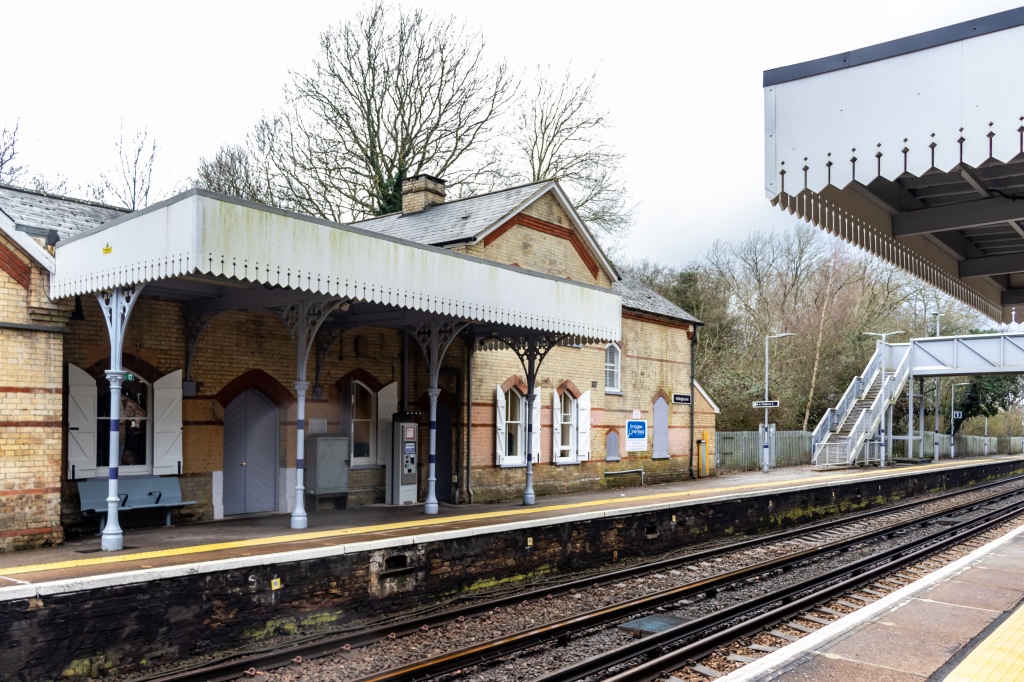
Dunton Green was opened in 1868 by the South Eastern Railway Company, and it had a familiar clapboard station building similar to that of the one at Hildenborough. It also had a single siding on the London bound side, and this was incorporated into a proper running line when a branch line to Westerham was opened in 1881.
This branch line had its own station building as well as a three-story high signal box. As this new branch line cut through access to the village, a subway was constructed to gain access, but more on this later.
Three new goods sidings were also constructed at this time on the branch line section. The signal box had a short life however, as a signal modernization scheme in the early 1900s had it demolished in favour of a two-story design. By 1934 the newly formed southern region began the electrification program and Dunton Green had its platforms lengthened, with the first electric train running through the station from 1935.
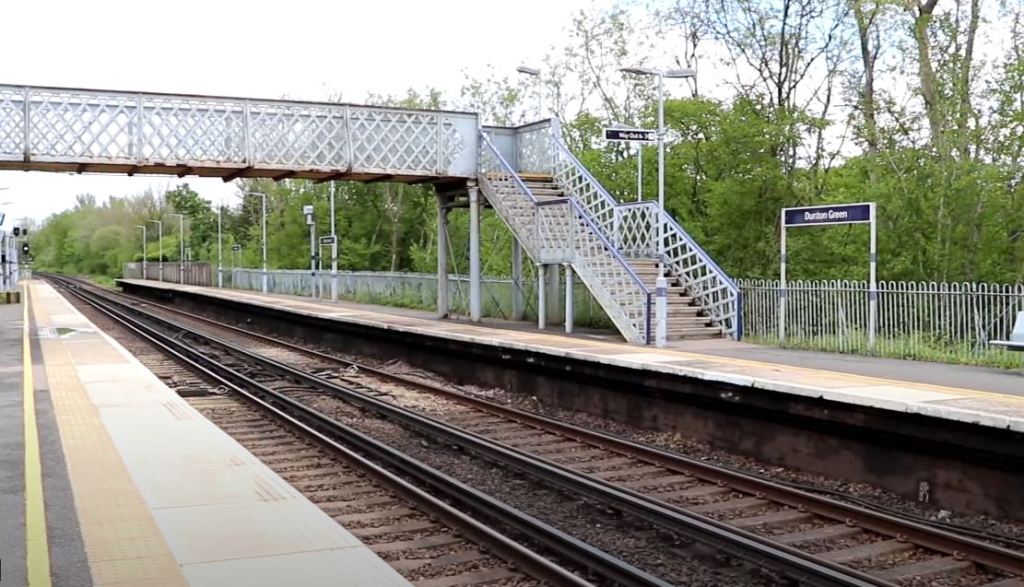
Dunton Green railway station
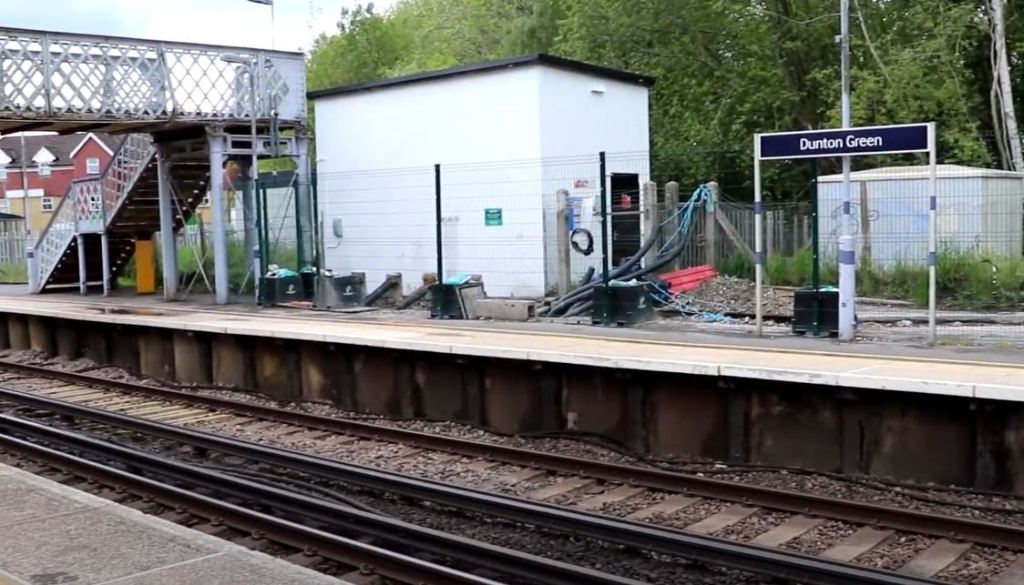
Unfortunately Dunton Green’s recent history is less illustrious. In 1961 the branch line closed, and over the next 35 years the station went into rapid decline, culminating in the complete removal of the station in the mid-1990s and at time of writing, a new station building has never been rebuilt at this location.
Dunton Green railway station
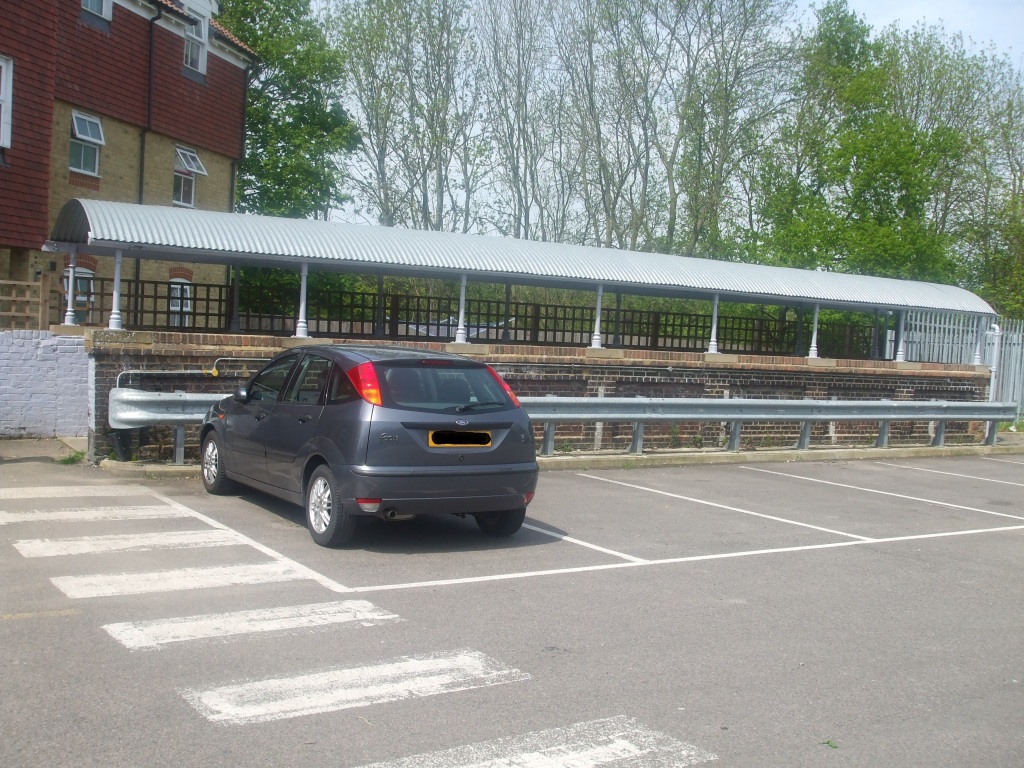
This picture is of the subway which still connects the station to Dunton Green village (credit for these are below as I was unable to photograph on the day of my visit)
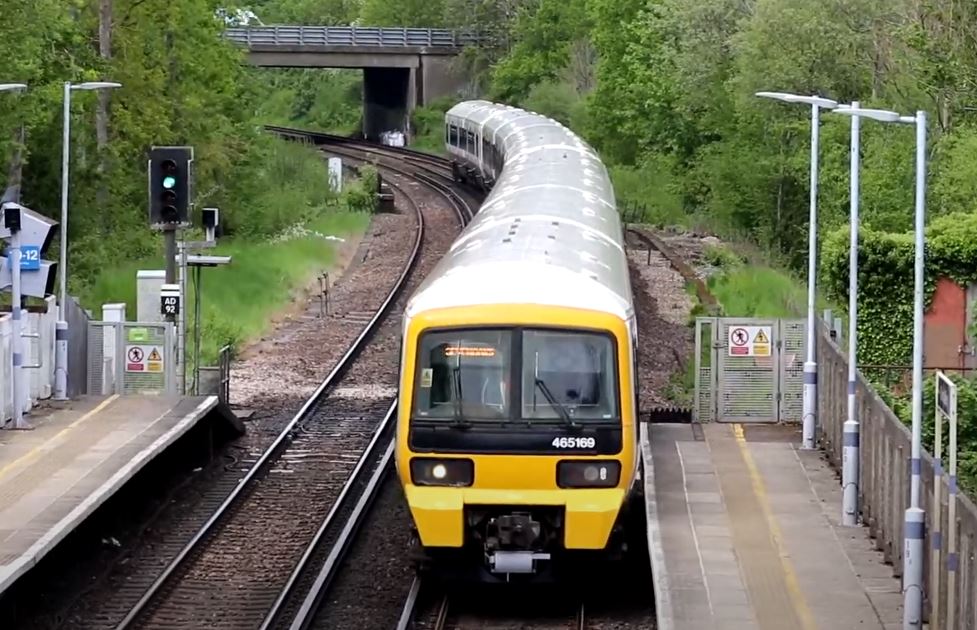
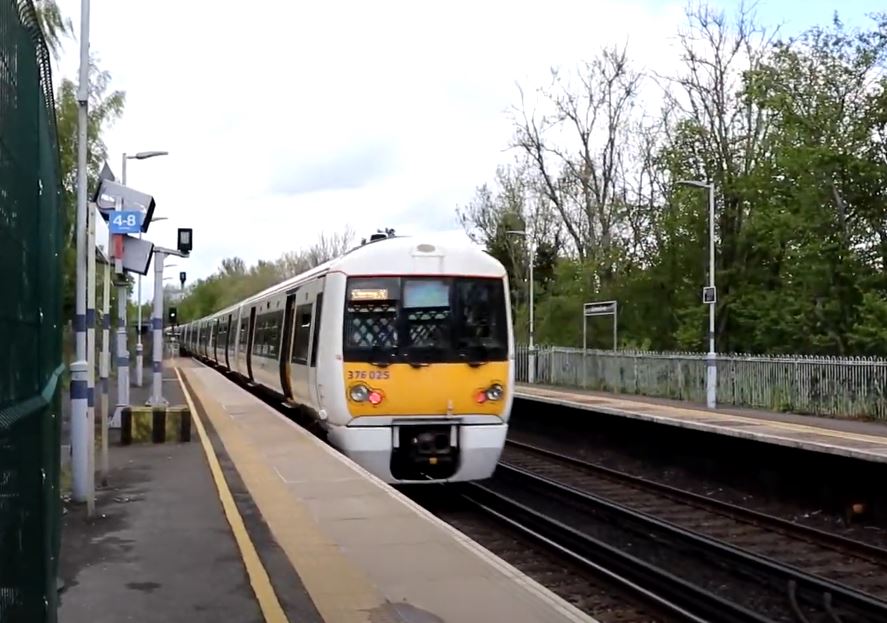
At time of writing passenger traffic is provided by class 465 or class 376 electric multiple units.
Class 465Class 376
The statistics for Dunton Green are that it opened in 1868, it has two trains per hour in both directions off-peak and Saturdays, with additional trains at peak times (this is reduced to only one train per hour in both directions on Sundays).
The entry and exit figures for 2019-2020 were 258 682.
The absence of a station building (at time of writing) really makes a visit to this station unappealing if you are a casual enthusiast. However, the location and relatively good frequency of service makes the stations survival a must. Photography and videography are ok, but I would advise that perhaps a visit to another railway station on the line nearby could wield better and more atmospheric results.
Below is a video filmed in 2021:
Thanks for reading, I’ll leave you with my tagline :
A very charming rural station set in the heart of Kent, which is more that meets the eye.
A railway station has been in the area since 1842, but this current station opened in 1844. As with most small stations in this area it has a staggered platform design. The building here is not the original, but a rebuild done in 1885 and is a superb example of a south east railway structure. In fact it is the oldest station building in the country still in regular use, albeit only on weekday mornings.
Pluckley had various sidings in its time, serving a coal yard and goods yard, the latter supplying horse manure. But the main purpose of the station yard was to supply the Pluckley tile and brickworks to the west of the station.
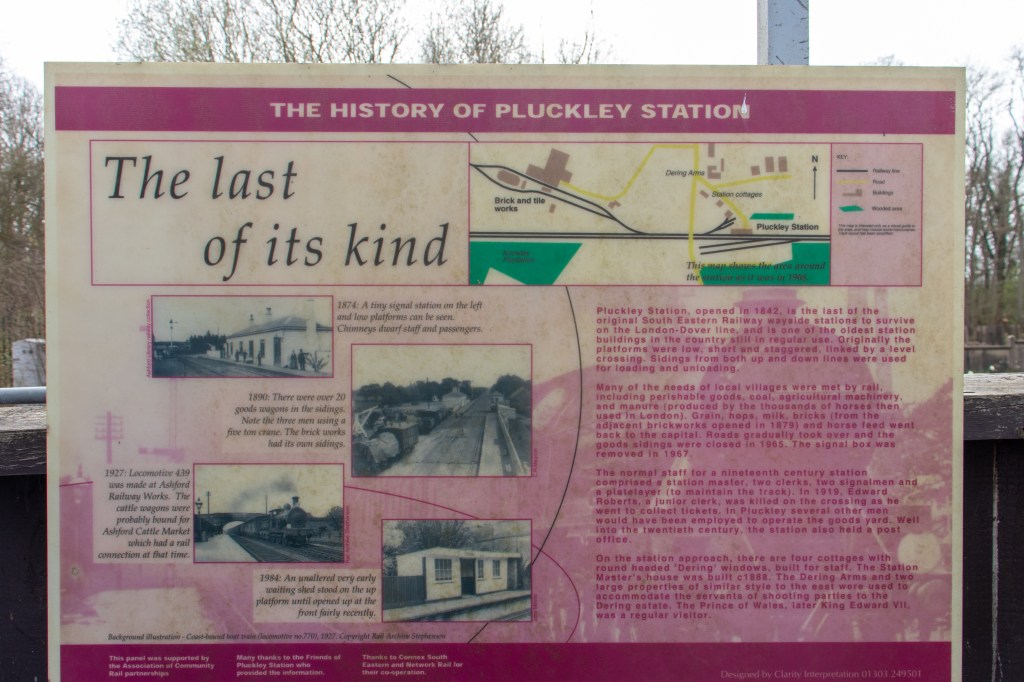
Many walks can be had from this station, and the areas rich history can be seen on an information board just outside the station building.
Entry and Exit figures for 2019 / 2020 were 122 696
Although very unassuming at first, Pluckley railway station has a charm which lends itself to further exploration. The area around the station is steeped with history and the overall feel is that the station is loved by the community. I hope this continues, as it would be a shame to lose the old station building and the history which surrounds it.
A video I took in 2021 takes you on a tour of this station.
Opened in 1926, the station was opened to facilitate a reduction in lines between Ramsgate and Margate. The station was quite a lavish affair, identical to that at Broadstairs. The station platforms were reached by use of a covered walkway, which lead to a lift down to the platforms. The space for the lift can still be seen in this photograph:
In 1936, close to the station, the line down to Ramsgate harbour was re-opened. This was commonly known as the ‘Tunnel Railway’, and helped boost passenger numbers to Dumpton Park. However with its demise in 1965, the fate of Dumpton Park seemed to be sealed. I will cover the tunnel railway hopefully later this year (2021).
Once the Tunnel Railway closed, passenger numbers steadily dwindled at Dumpton Park. The station building was un-ceremonially demolished in the early 1970’s, and soon after the lift shaft and canopy roof over the bridge disappeared.
What is left today is a pretty sad mono-platform, only accessible by the steps off the footbridge. It does have an electronic ticket machine, posters and a help point, but all of the charm has gone. A housing estate now surrounds the entrance, which is easy to miss if you don’t know where to look.
Towards RamsgateTowards Broadstairs
Stopping passenger traffic is (at time of writing) class 375 Electric Multiple Units. There are various through trains throughout the day (mainly Class 395 ‘Javelin’s’). Freight is mostly non existent, with some engineering trains mainly during the weekend, if work is going on in the area.
A video from my YouTube channel is below, if you wish to view.
Many thanks for reading. Please visit and subscribe to my sister Vlog channel on YouTube by searching for rainhamrailenthusiast.













 Rainham Rail Enthusiast