Westerfield was opened by the East Suffolk railway in 1859, but a few years later like the rest of the stations on the line, it was taken over by the Great Eastern Railway.
At this time the branch to Felixstowe was not here, but this was added in 1877.
Bay platforms were included for trains running to and from Felixstowe from the opening of the branch line. This continued until 1879, when most trains continued on towards Ipswich, the bays then being used for storage.
From the 1880’s, the station had sidings which served the Westerfield steam brewery, as well as a coal merchant. During the second world war, these would also be used for storing engines, including the Polish armour train.
After the war, they were used as stabling for the Pullman camping coaches during the winter, these being moved to Felixstowe for use during the summer months.
Unfortunately like most other stations, these sidings were closed un 1964, and the booking office closed soon after, the station becoming a “Pay-Train” station, where you bought your ticket from the guard on the train.
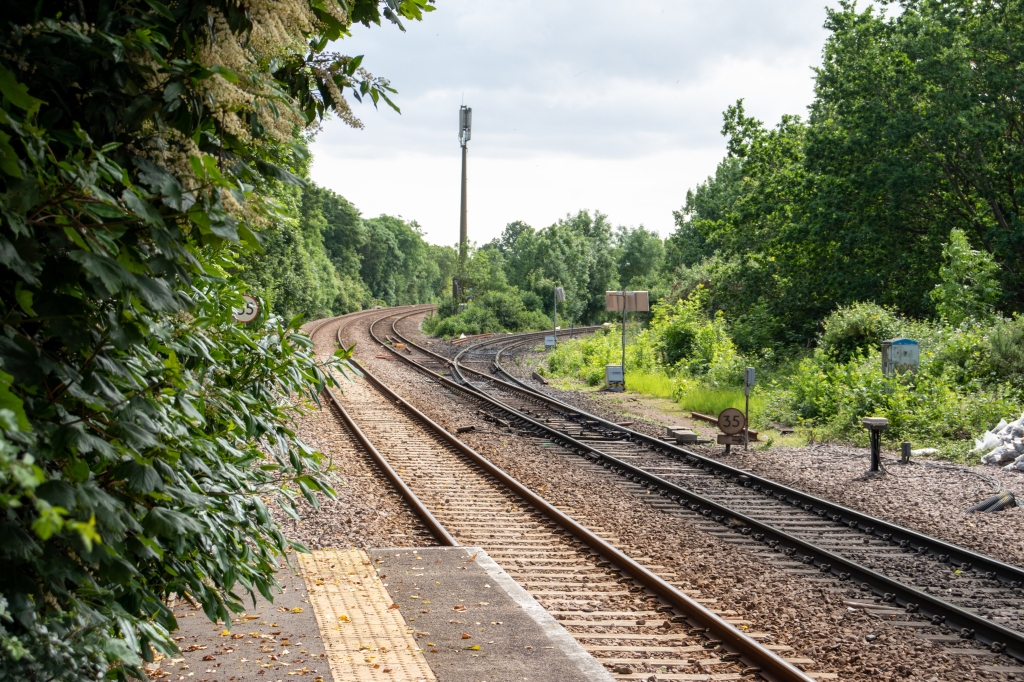
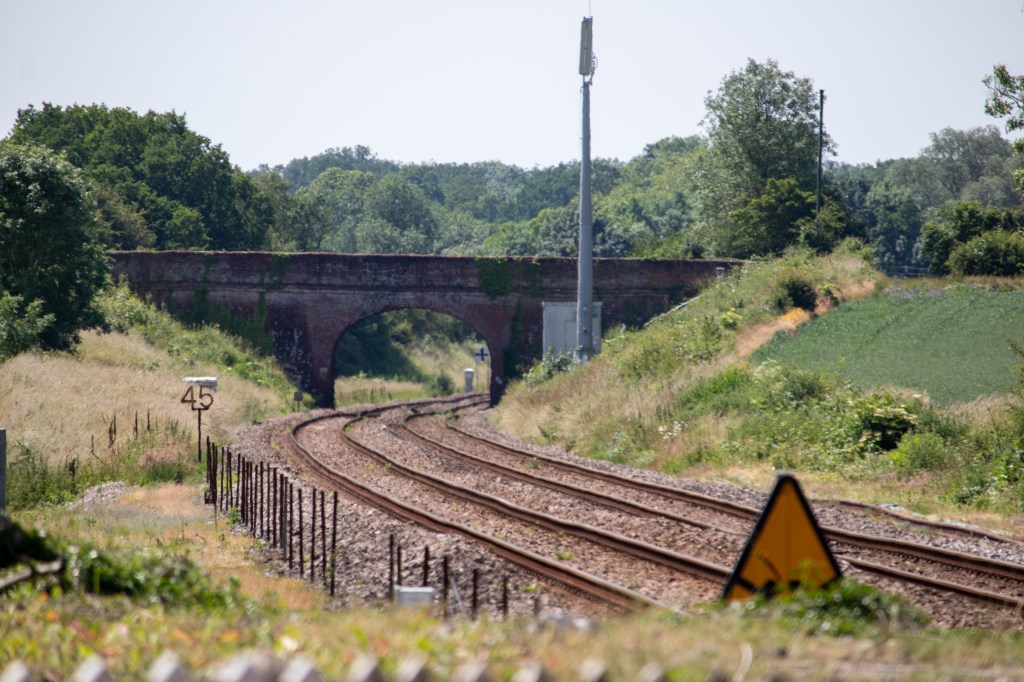
View towards Lowestoft, the spur to the Felixstowe branch is to the right. Freight from Ipswich crosses to the right line just before the level crossing.
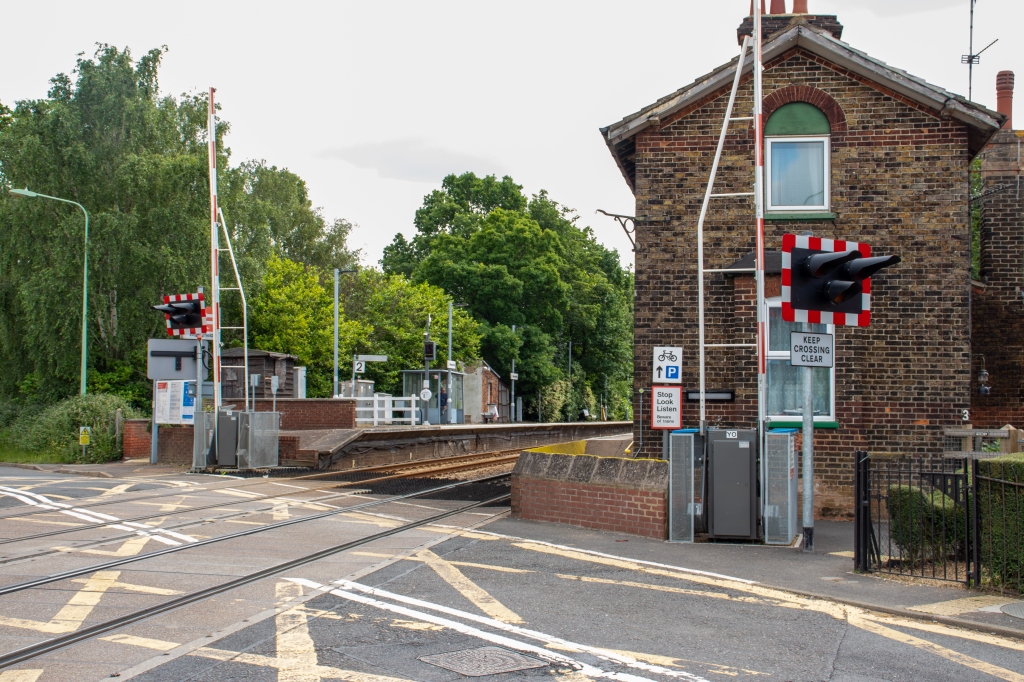
Modernisation of the track layout, including the addition of automatic barriers have taken place, and although not terribly busy with passengers, the line here sees much freight to and from the port, as well as the occasional nuclear flask train from Sizewell.
The original station building remains, although this is now a private residence.
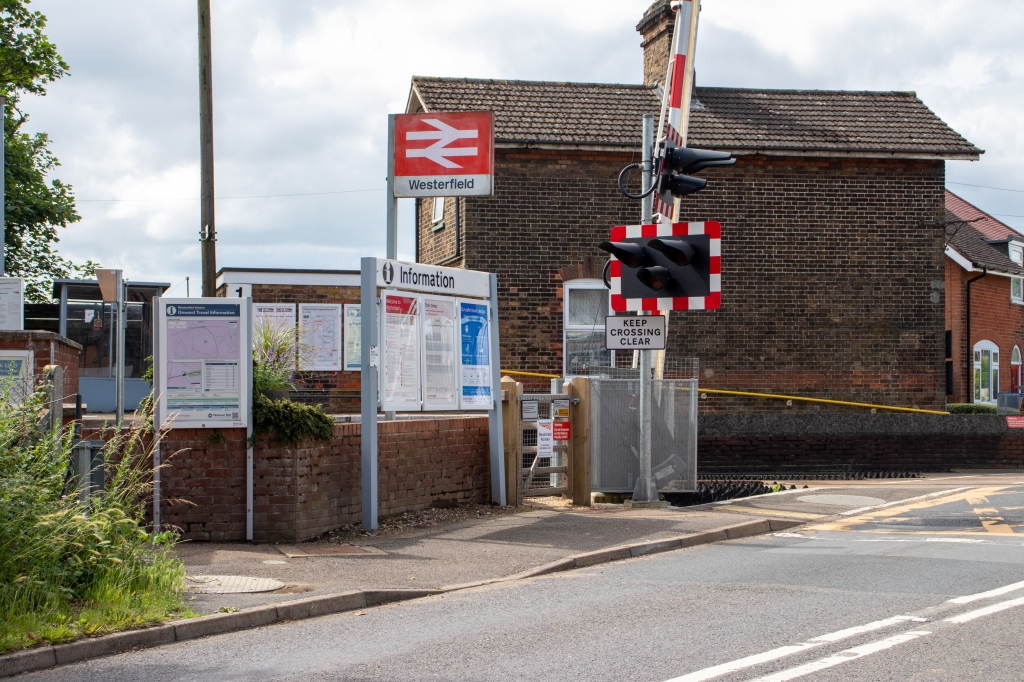
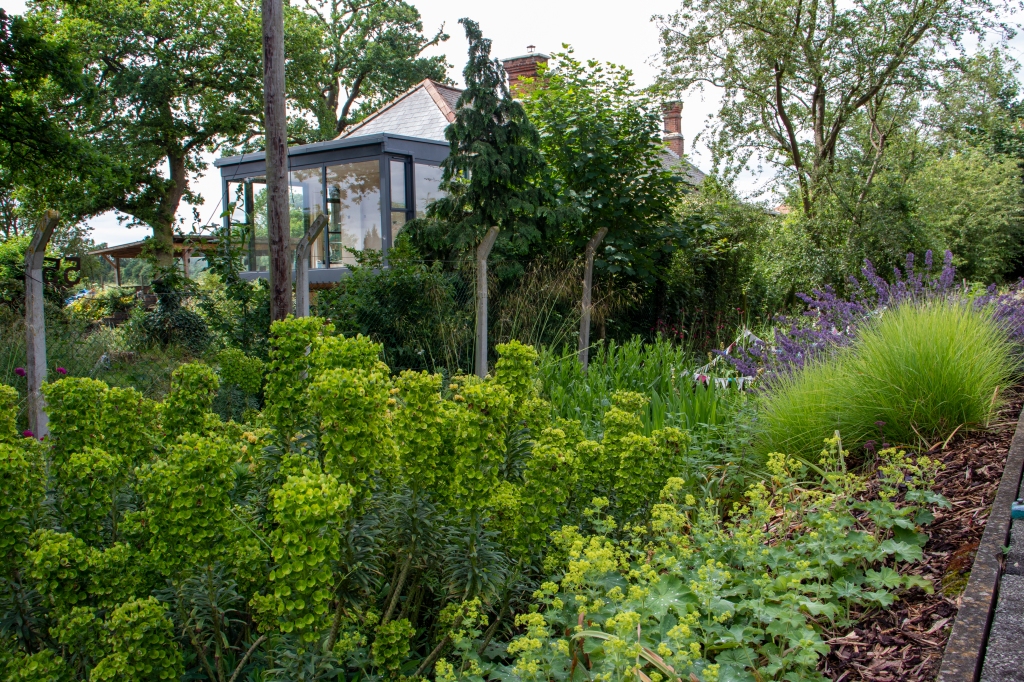
As well as an electronic ticket machine, posters, bike rack and new style service information boards, the station has recently been enhanced with an extensive wildflower garden on platform one. Created by East Suffolk Lines Community Rail Partnership, Suffolk Butterfly Conservation Trust, Friends of the Earth and Greater Anglia, it certainly brightens up the station.
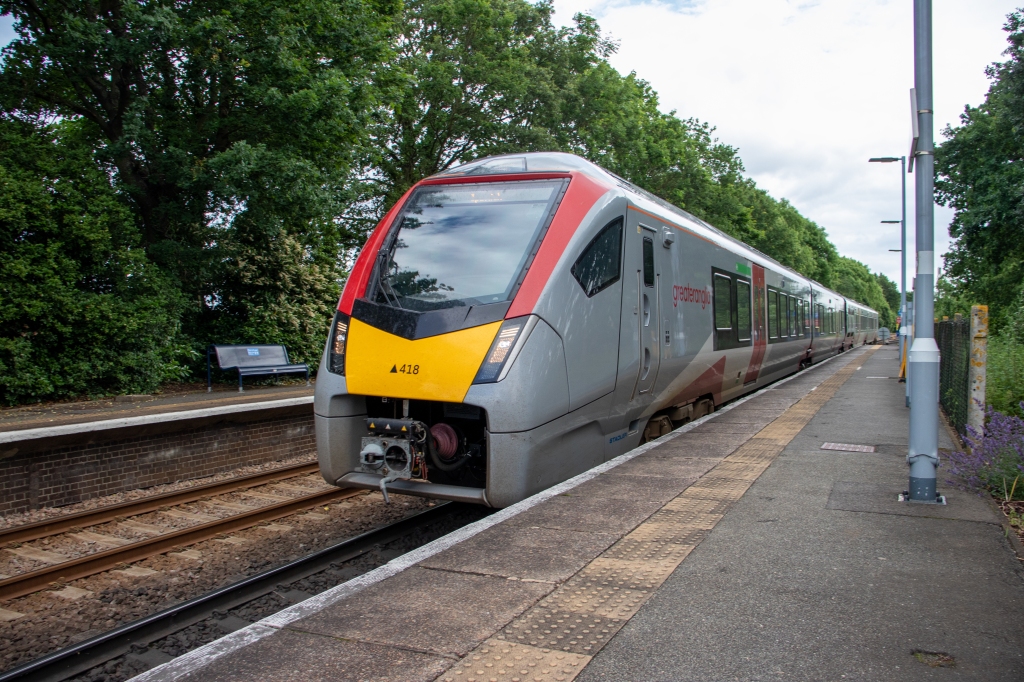
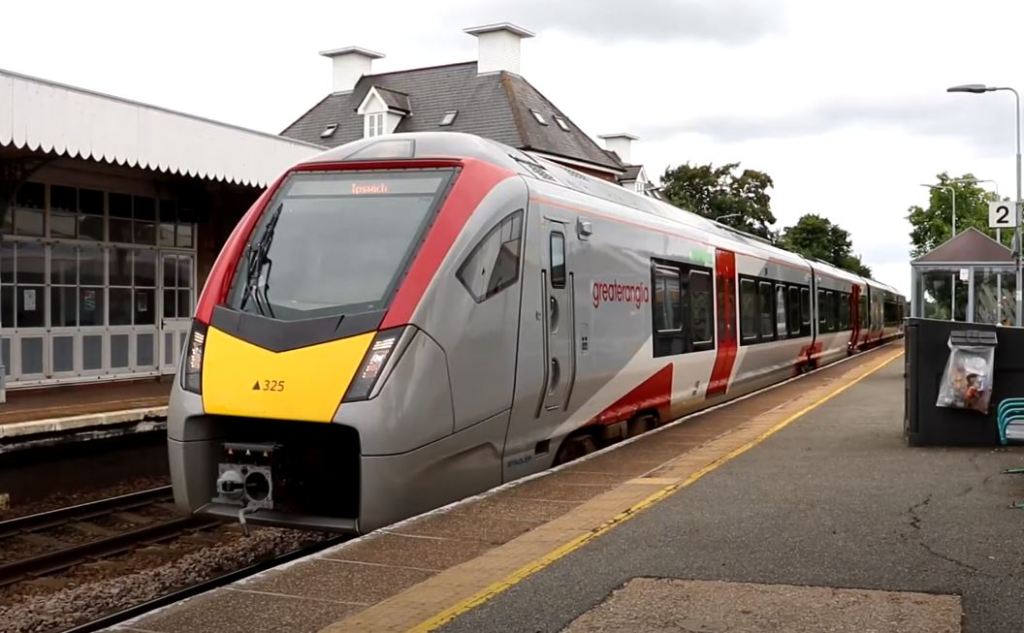
At time of writing, passenger traffic is provided by class 755 Bi-Mode units, with most of the passing freight hauled by class 66 locomotives.
A video is below, taken during a visit in 2021 :
Below is a link to the East Suffolk Lines Community Partnership :
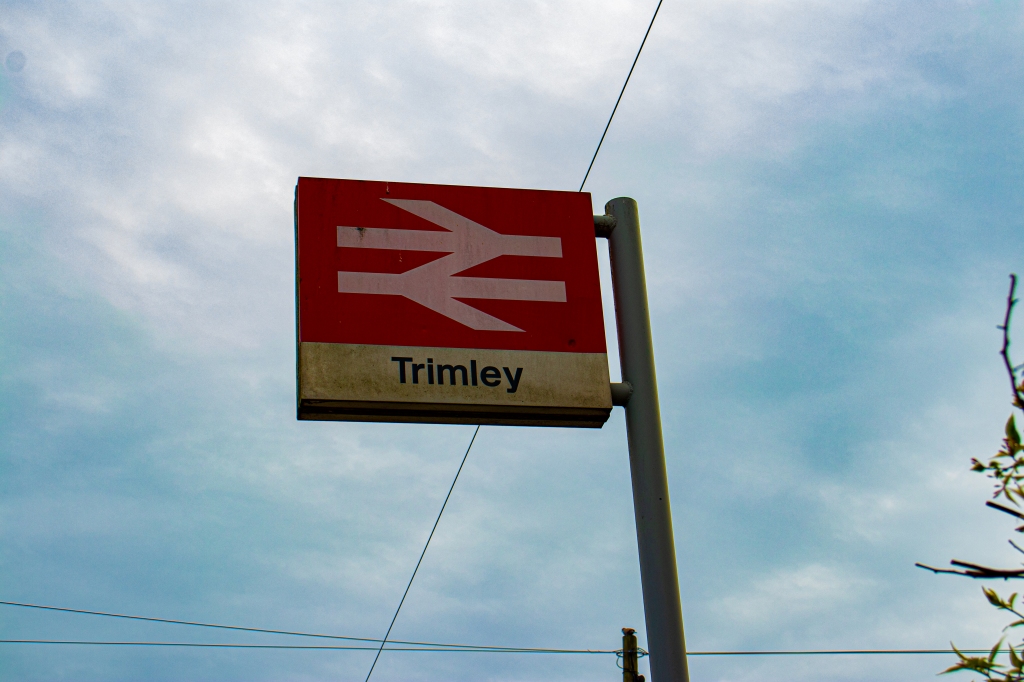
Trimley was opened in 1891 by the Great Eastern Railway. Its primary purpose was to fill the gap between the station at Orwell and Felixstowe beach, both of which were substantially far away from the village.
A few freight lines were here, but were withdrawn in 1964, and in 1967 the station building was closed. This meant that together with the rest of the branch line, the station became a “pay train” station, with the guards collecting fares. This left only the signalmen at the station, whose purpose was to operate the level crossing and signalling away from the station.
A direct line to the docks at Felixstowe was opened in 1970, and 17 years later in 1987, the spur down to the north freightliner terminal was opened to the south of the station.
The spur to the North terminal is clear to see on the right
The removal of the signal box in 1997 meant the installation of the automatic barriers, and control of these and the points was now undertaken by the Colchester panel signal box.
The station building was a version of a new Essex style, one of only two to be built outside Essex. Its interior would have included a first class waiting room, porters lodge, booking office and combined booking hall and waiting room. A ladies room with toilet completed the facilities.
There was also a small building on the other platform, but this was demolished a long time ago.
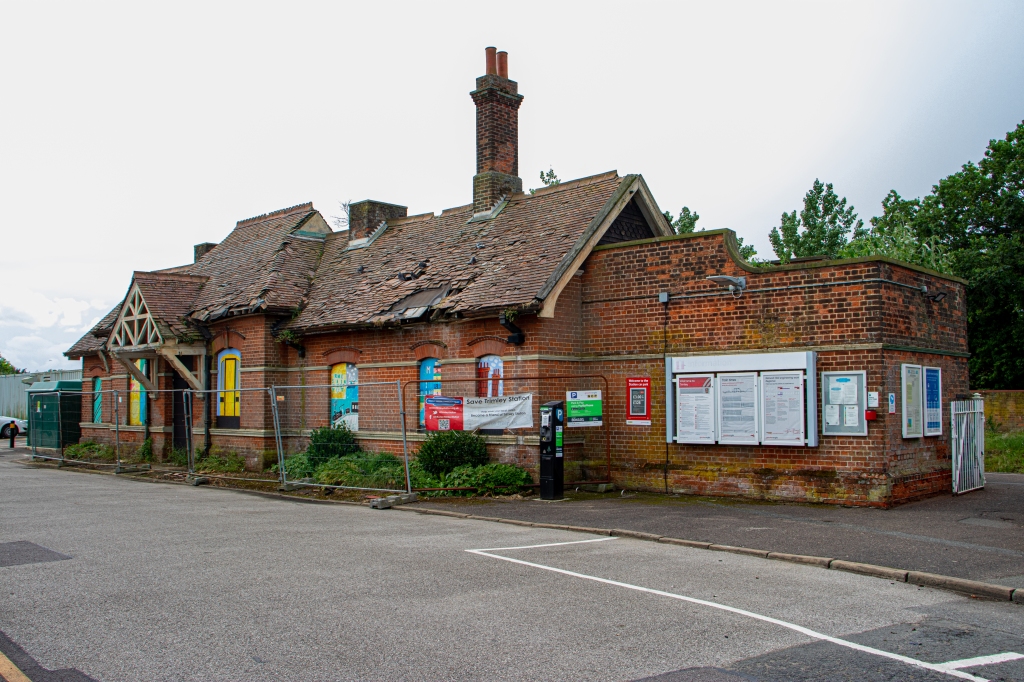
Although at time of filming it is in a very bad state, it is still standing, and is now under control of the Trimly station community trust. They gained control of a long term lease in 2011. Their ambition is similar to that of the station at Wickham Market, to transform the station into a café and meeting room whilst preserving the station fabric.
They have a long way to go, and recent months (2021/2022) have seen Greater Anglia seek improvements to the station which ‘may’ involve the demolition of the building, but nothing has been set in concrete. Hopefully in the coming months both fundraising and grants may become available, however multiple applications to the national lottery heritage trust have not borne fruit. I do hope this situation changes for the better, as it would be a shame to lose such a quaint and historically important station. If you wish to know more, I have provided a link in the video description below.
Facilities include a waiting shelter, help point, electronic ticketing machine and new style service information boards.
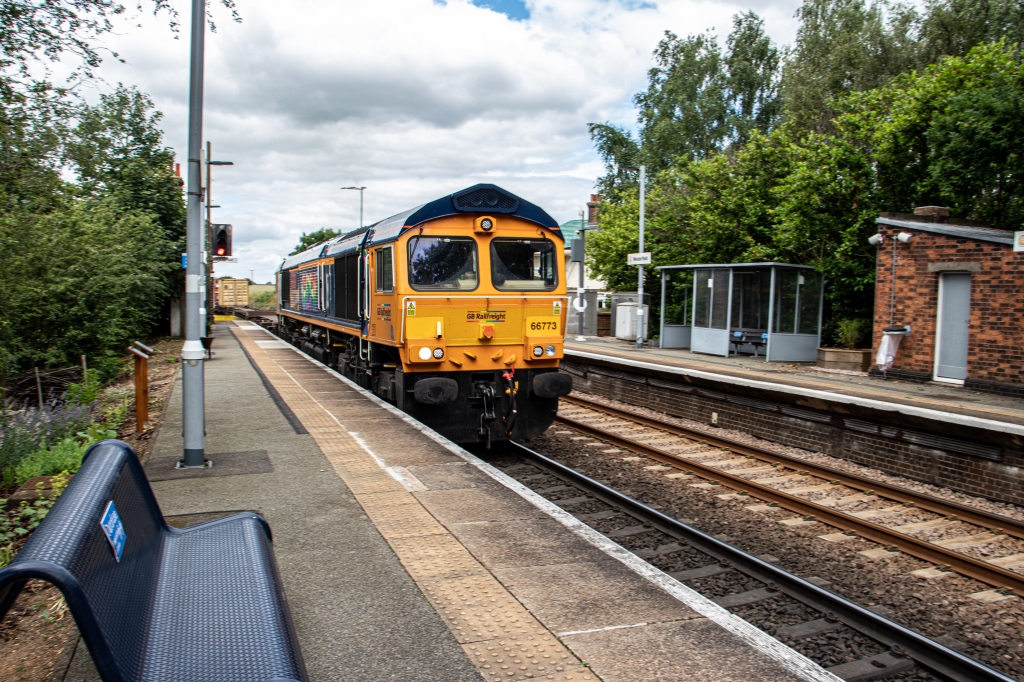
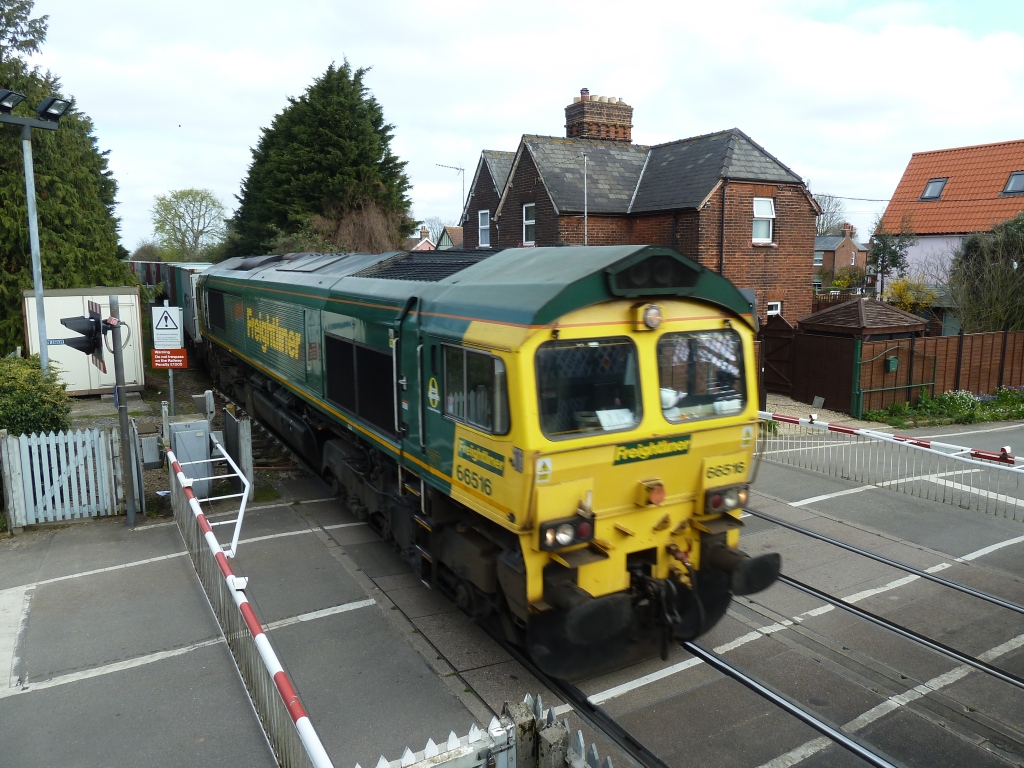
Passenger traffic at time of writing is provided by class 755 Bi-Mode units, and almost all freight is hauled by class 66 Locomotives.
A class 66 heads towards Felixstowe
The entry and exit figures for 2019 / 2020 were 31, 122. These figures are used as the figures for 2020 / 2021 are unreliable due to being very skewed by the pandemic.
Still a functioning station for the village, Trimley could be so much more. I hope that the building gets funding and finally gives the village a focal point it deserves.
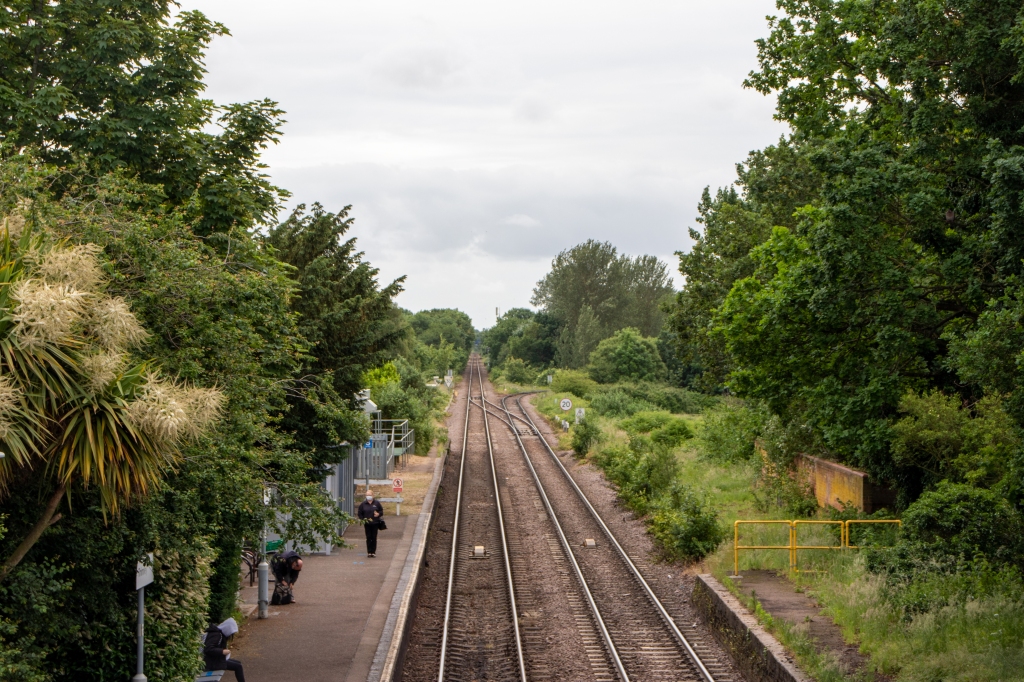
For the enthusiasts, obviously the abundance of freight (albeit only intermodal) plus excellent sightlines, gives plenty of video and photo opportunities.
I recorded a video for this station in 2021, and you can view it below :
Opened in 1859 by the East Suffolk Railway, it was originally named Carlton Colville. The line like most in Suffolk was amalgamated with the Great Eastern Railway shortly after. The station wasn’t renamed to Oulton Broad South until 1927
Just to the east of the station under the road bridge, the line split to the Kirkley branch, with services to sites on Lake Lothing.
These included sidings into Kirkley goods depot. Companies using these would include Boulton and Pauls canning products, and confectionery from Mortons and the co-op group. This line was fully closed in 1972, and no real trace of it remains.
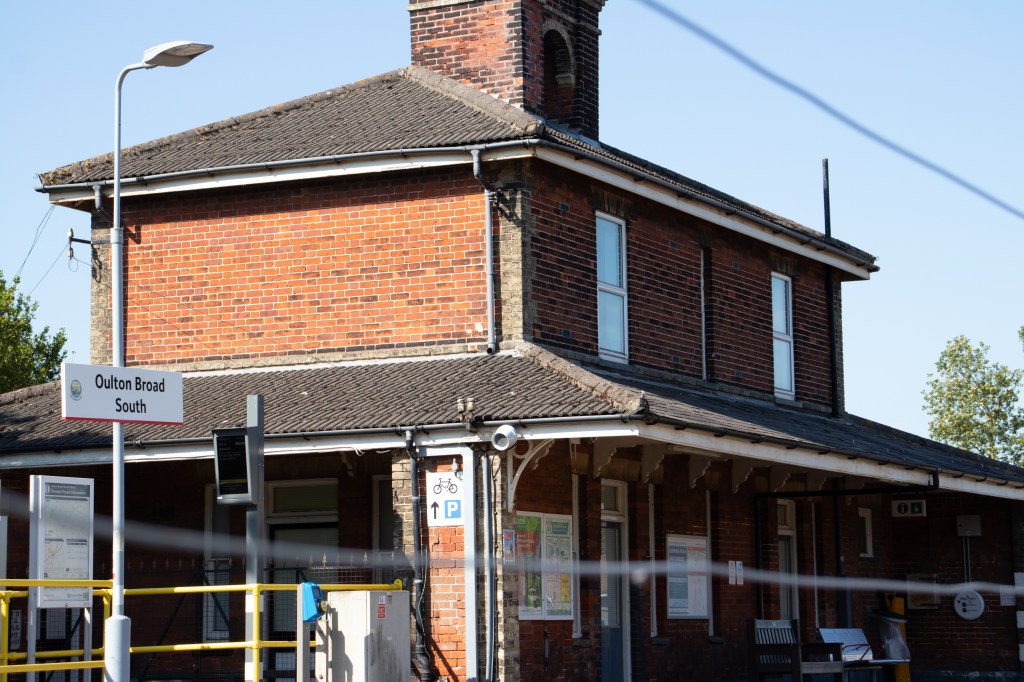
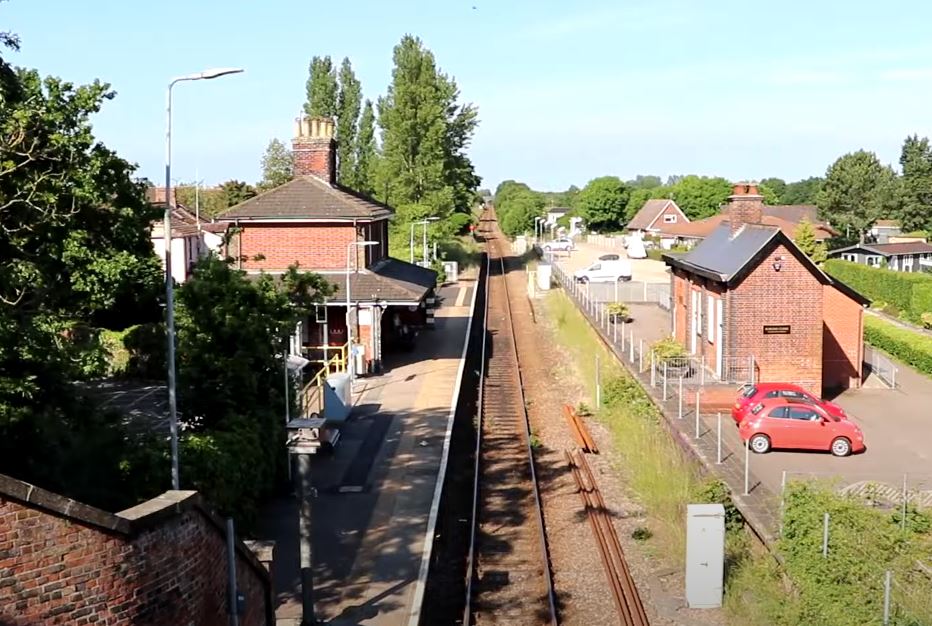
A station building remains on the working platform, the line here being single running at this point since the late 1980’s. However the other platform remains with a building which is used for small businesses. The small goods yard which was adjacent to that platform is now a car park, but its history contains the fact that pullman camping coaches were positioned here between 1952 and the late 1960’s
This view from the road bridge shows clearly that the line used to be double tracked at this point.
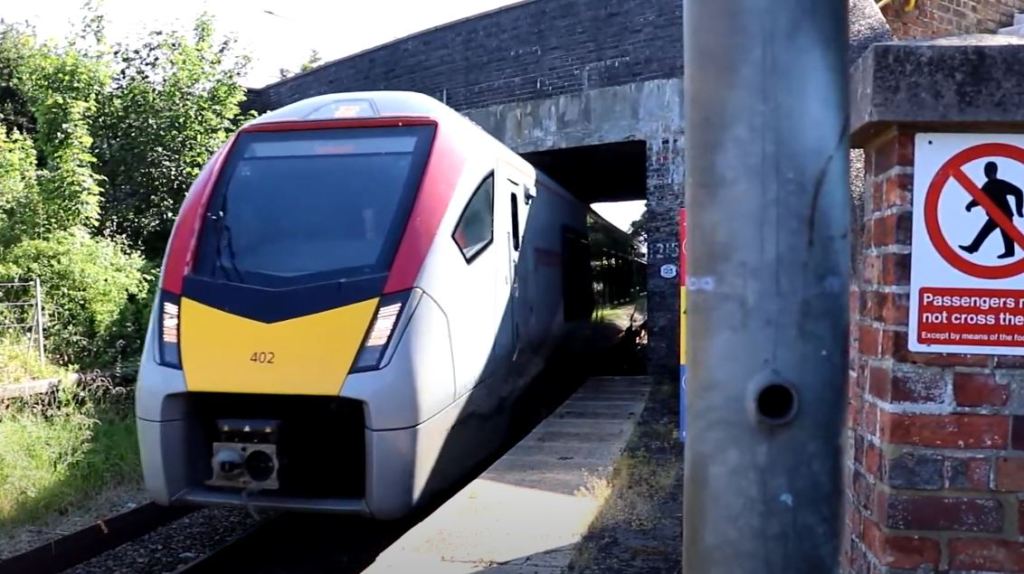
Passenger services at time of writing are provided by class 755 bi mode units.
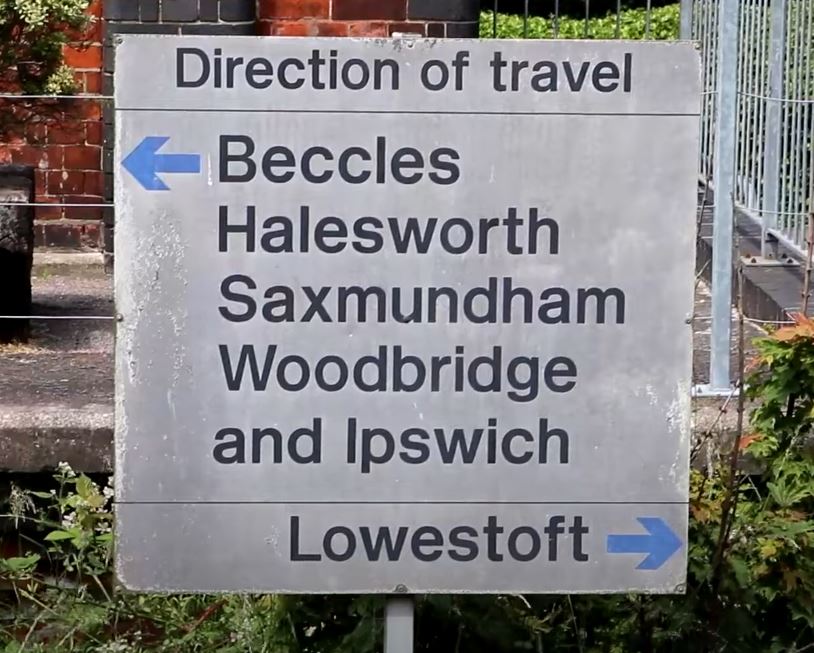
As far as facilities go, the station has an electronic ticketing machine, help points and posters not only for the regional rail network, but also information about the area. There is also this old style ‘direction of travel’ board, which is great to see.
The passenger entry and exit figures for 2019/2020 were 43, 518
Oulton broad south is a quiet station, but is still used fairly frequently. The fact that both platforms remain is great, and the station buildings, although not being used for their original purpose, are still in situ. For the enthusiast, although sight lines are good, the absence of freight means that traffic is very light indeed.
My 2021 Vlog from the station can be viewed below.
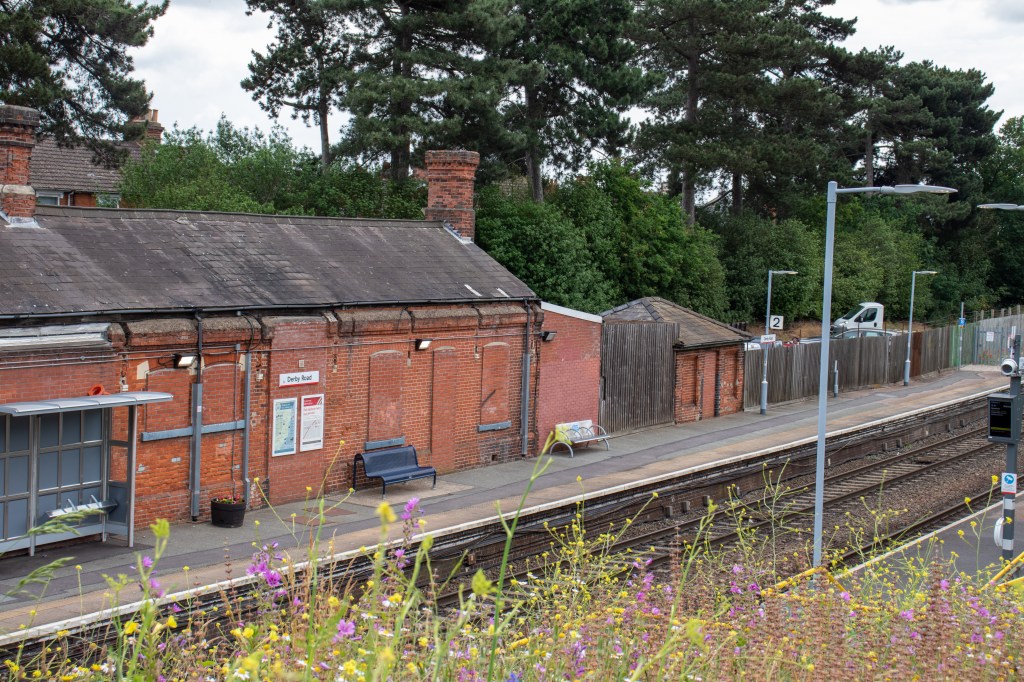
Derby Road was opened in 1877 by the Felixstowe railway, and was amalgamated into the Great Eastern Railway in 1879. It only had one platform originally, but due to popularity gained a second one in 1891
This popularity was due to the Ipswich tramway terminating at this point. Passengers going to Felixstowe for the day would get the tram from Ipswich and get the train from Derby Road. In fact, during the summer many trains would terminate at Derby Road from Felixstowe, instead of going though to Ipswich
The trams continued until 1926 when they were replaced by trolleybuses, but these too were fully phased out by 1962. Some of these can still be seen at the Ipswich transport museum, a link to which is at the end of this blog.
Getting back to the station, it also had two sidings, which were increased during the early 20th century, but like most in the country were phased out by the late 1960’s
The station building still stands, although not used today. Originally it had a fine canopy and a similar structure was to be seen on the other platform. This other building no longer survives, as well as the canopy on the main building. The other notable absentee is the signal box which was on the Felixstowe side of the station.
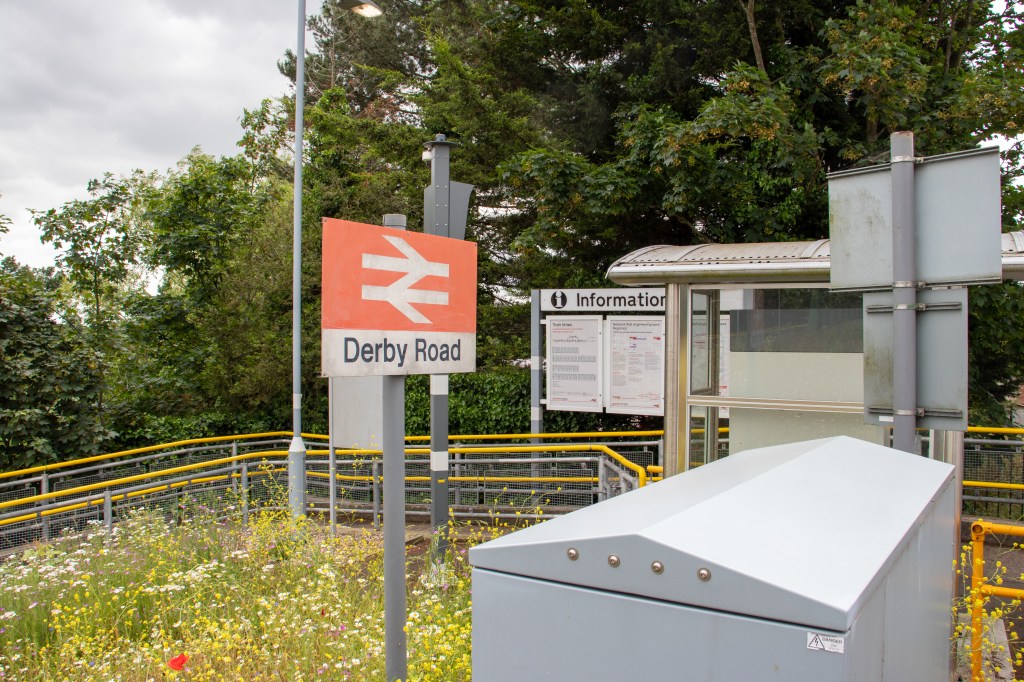
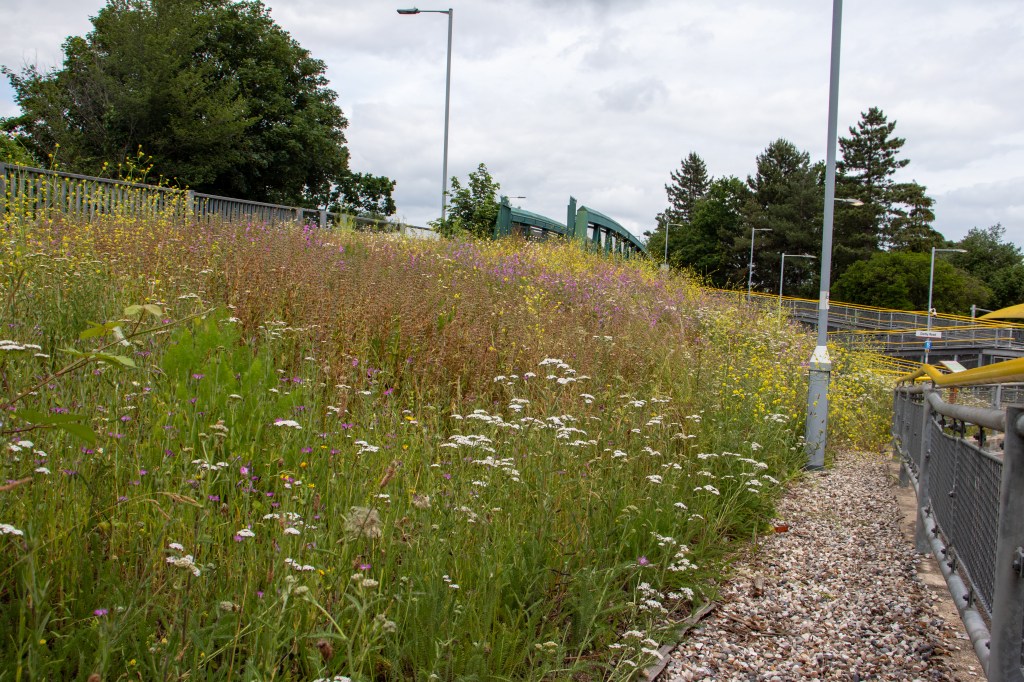
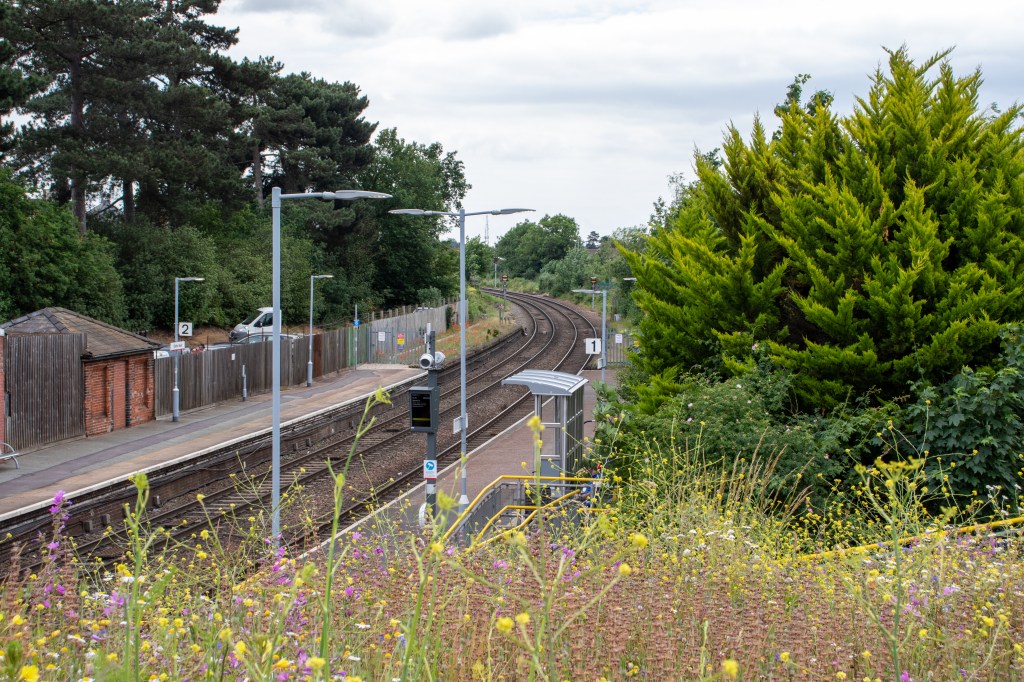
However, this does not mean the station has been left unkept. In fact in late 2020, work was started to create a wildflower garden on the entrance to platform one. Supported by the East Suffolk Community Rail Partnership, Greater Anglia Railway, Ipswich Friends of the Earth and Ipswich Council, it really adds colour to the station and makes it feel very well looked after.
An additional poppy patch is situated on the Felixstowe end of platform two.
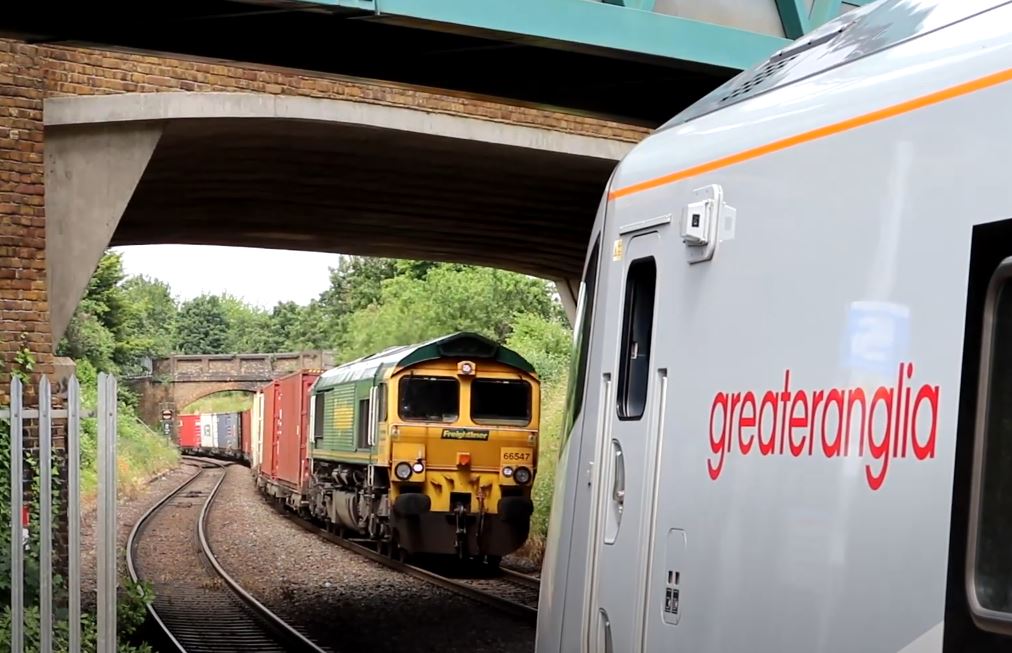
Many of the freight headed towards Felixstowe will stop here, as the line after the station becomes single line running for a few miles. These are at time of writing mostly hauled by class 66 locomotives, and passenger traffic is provided by class 755 Bi-Mode units.
The entry and exit figures for 2019 / 2020 were 46, 808.
In conclusion, Derby road was once an important interchange for the passengers from Ipswich to the coastal town of Felixstowe. However after the 1960’s, most passenger traffic would be confined to the local area. The expansion of Felixstowe port has brought many more freight trains through the station, these quite often stop in the loop. Great views can be had of both freight and passenger traffic, especially through the curves towards Ipswich. The station benefits from the new wildflower garden, and generally speaking is a good place for the intermodal freight enthusiast.
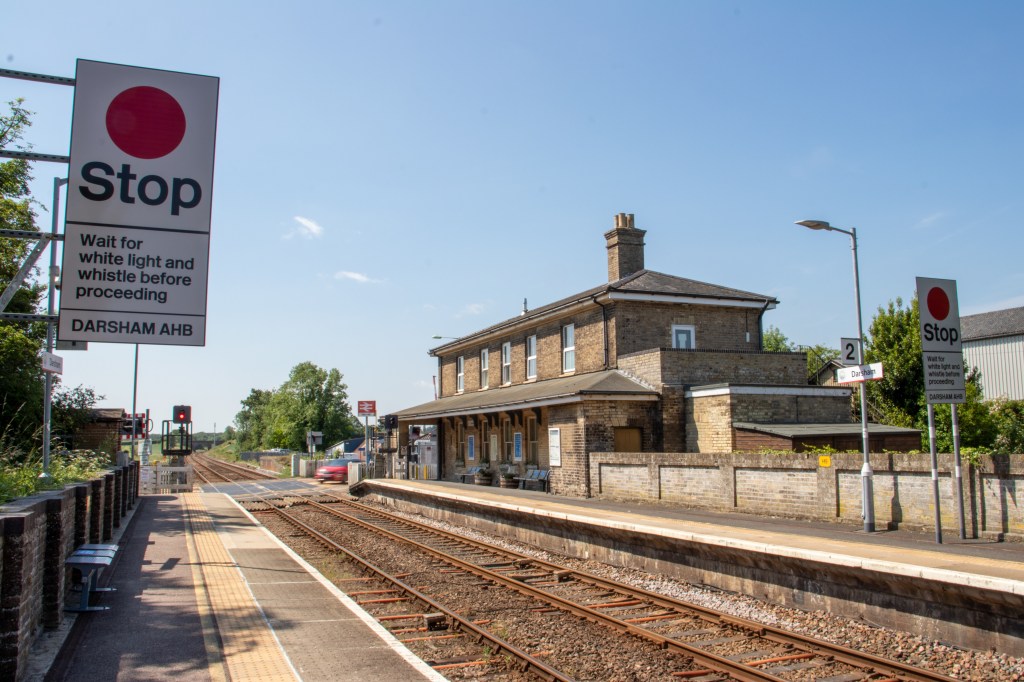
Darsham was opened in 1859 by the East Suffolk Railway Company, which was soon taken over by the Great Eastern Railway.
It boasted several sidings in its time, and these remained until 1966 when they were closed due to lack of traffic. It was also at this time that the station became unmanned, like most adopting the ‘Pay-Train’ system.
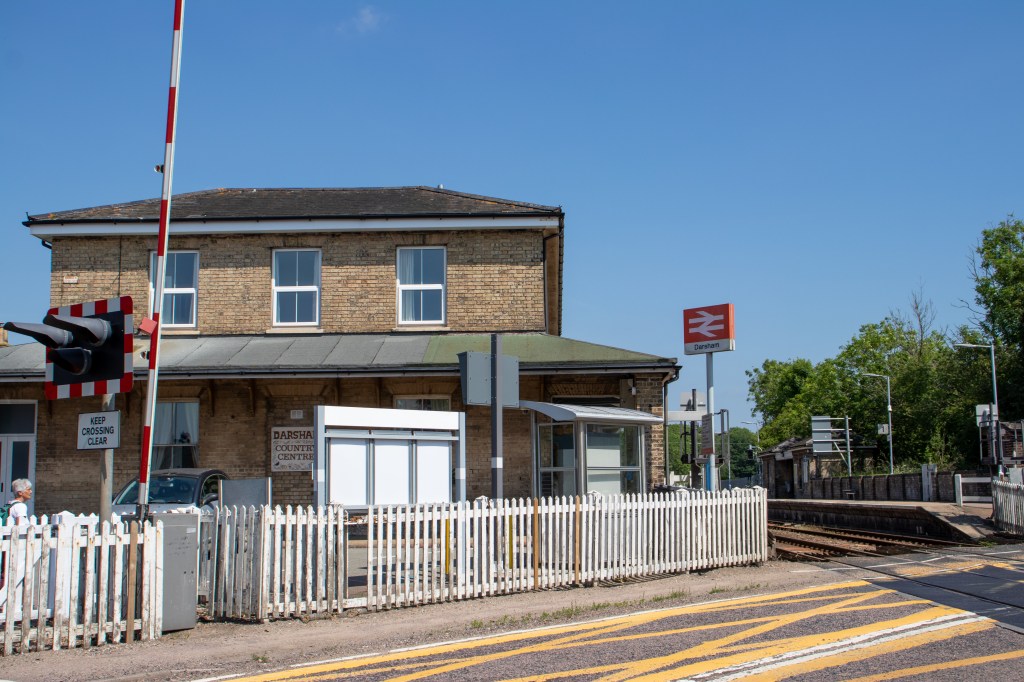
Luckily however the station building still stands today. It is not however in use as a booking office, but is used by the Darsham Country centre, a subsidiary of the Woodcraft folk. It is let out to groups, and has accommodation available. It is however great to see the building still being used, and hopefully this will continue for many years to come.
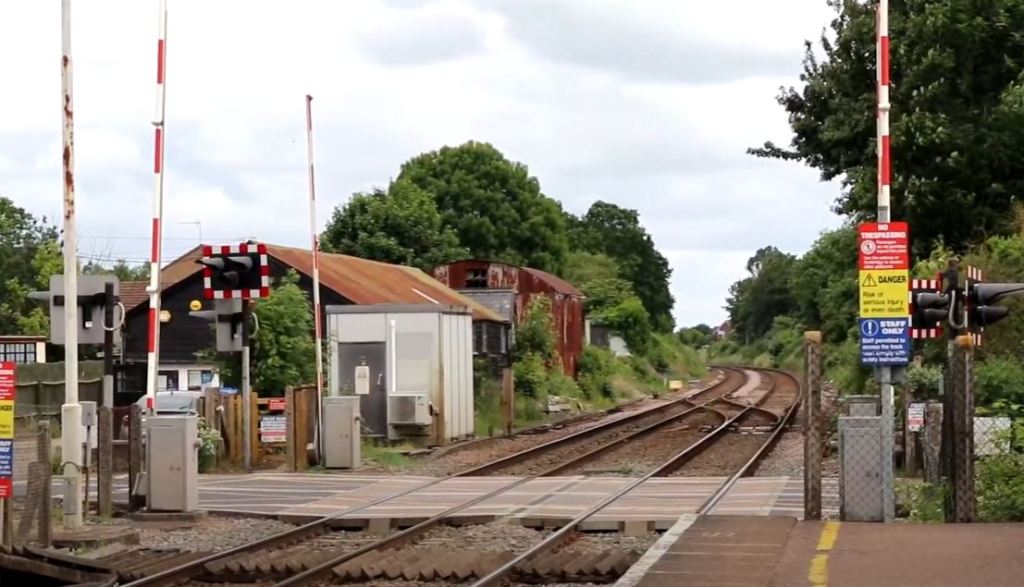
Next to this is the only remaining level crossing on the A12 between London and Great Yarmouth.
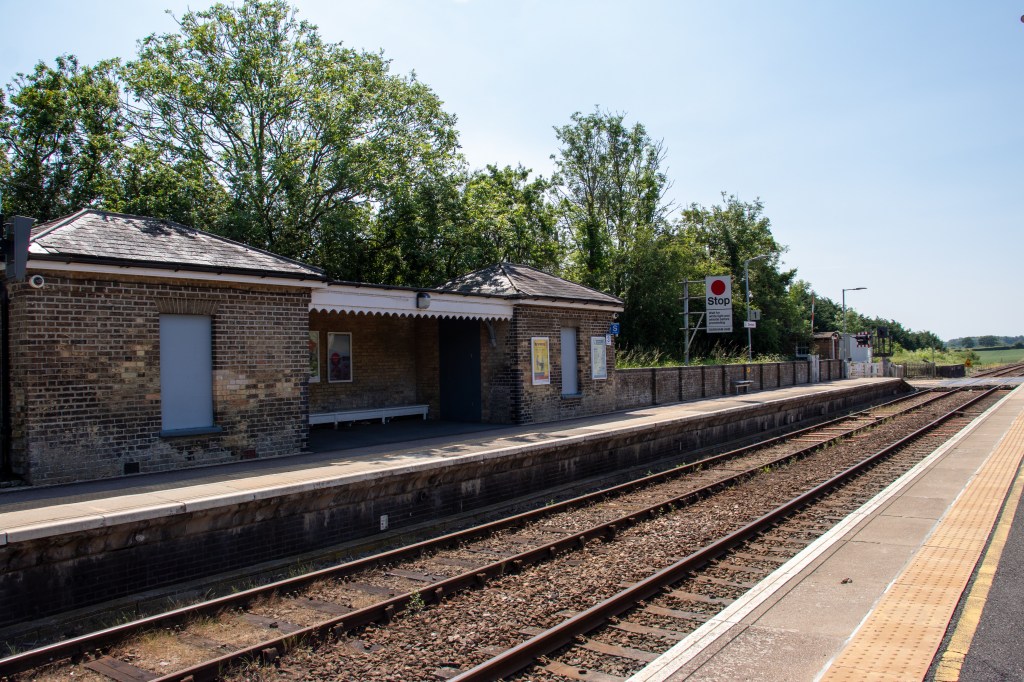
Of interest on platform one is what seems to be either an original or at least early 20th century shelter. It is quite a structure, and as the main station building great to see it still intact, and not demolished for a more modern design.
The station has help points, new electric information displays and an electronic ticketing machine. There are no booking office or toilet facilities.
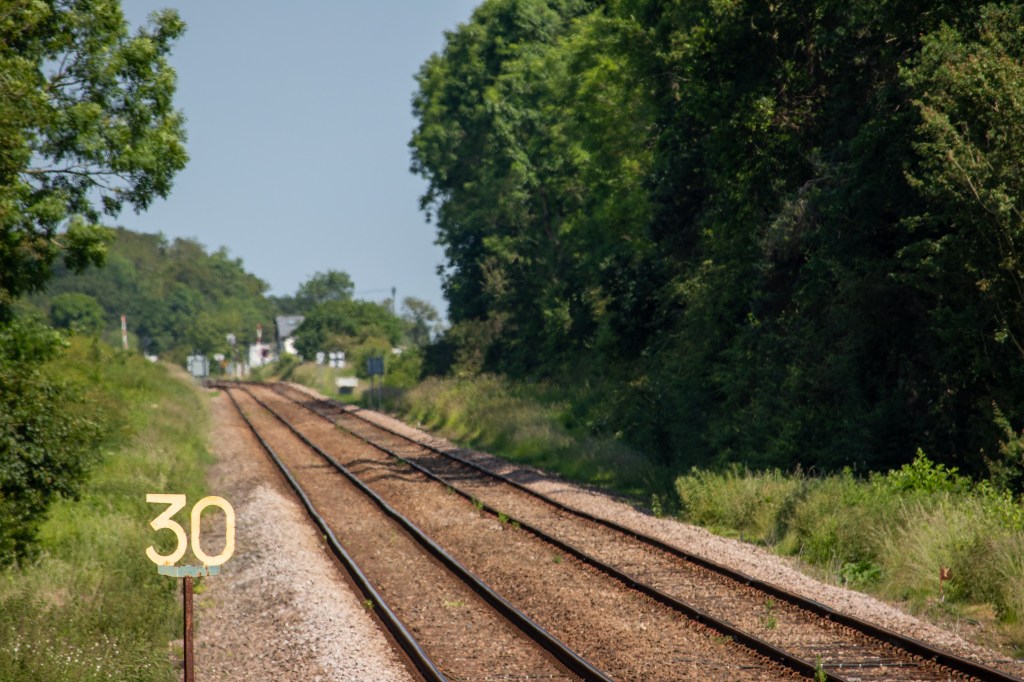
A view here gives us a look at the line as it goes towards Lowestoft.
And here is the view of the line as it curves away in the direction of Ipswich.
Passenger entry and exit figures for 2019 / 2020 were 61, 534 .
Darsham, although not that well used, still retains a lot of the charm of a rural station. Both the main station building and the shelter on platform one are in very good condition, and I do hope this remains the case as it gives this station a lot of character. The sight lines are excellent for the enthusiast, however the noise from the A12 does impair sound for video recording, but if its photography you are after it’s a great setting.
A large village between Stowmarket and Bury St Edmonds, Elmswell is certainly deserving of a station with a rich history of manufacture.
The line was opened by the Ipswich and Bury railway company in 1846, serving the towns of Bury St Edmonds and Ipswich. A lavish station building on the Ipswich side was built and opened at the same time.
The station passed onto the newly formed Great Eastern Railway in 1862, who added a waiting room and toilets on the Bury St Edmonds side of the station.
In the early 1900’s, a line ran from the sidings to the west of the station to the Woolpit Brick Company, which famously produced white bricks. It used three steam locomotives. Other companies which used siding space during the 1900’s were a bacon factory, Beer & Sons and St Edmundsbury Co-op. Due to lack of traffic, the yard closed in 1964.
Elmswell became an unstaffed halt in 1967, and ‘Pay-Train’ working was to be introduced on the line. Unfortunately the main station buildings on the north platform were demolished in 1974 and the signal box succumbed to the same fate in 1986.
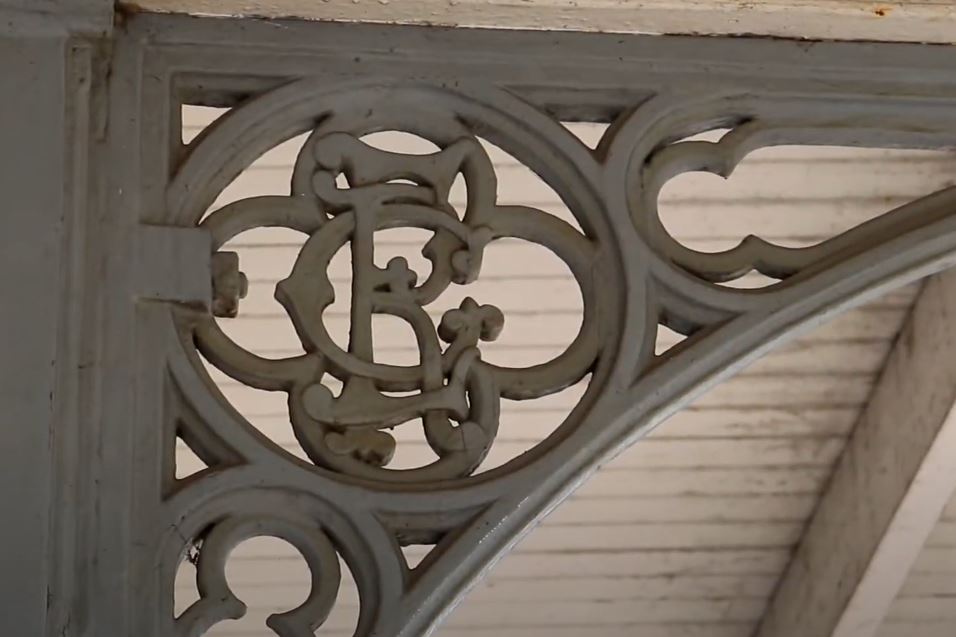
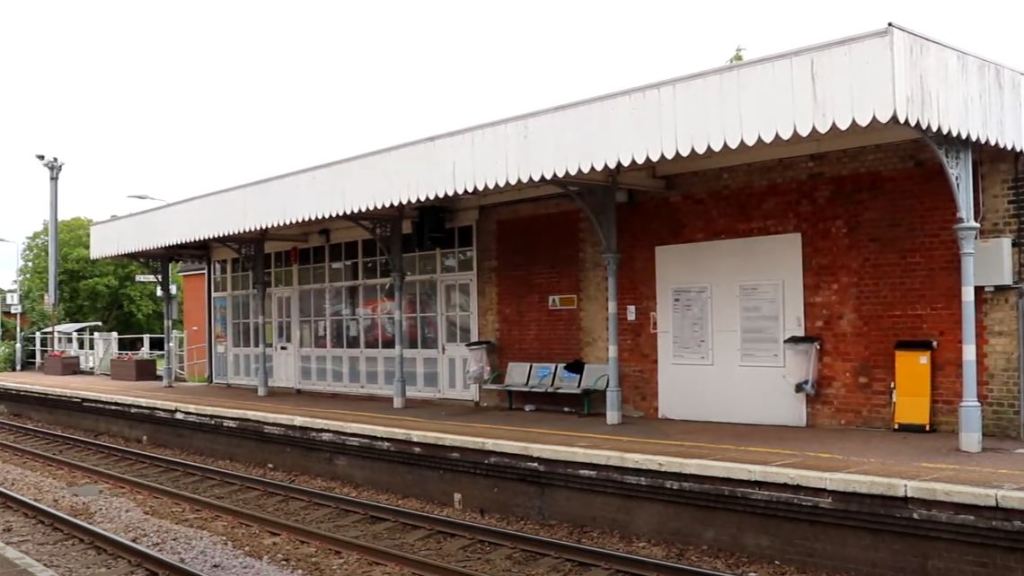
However, the buildings on the other platform remain. These still retain the Great Eastern Railway marking on the canopy steel works, and look to have been freshly painted when I visited in 2021.
The actual building is being let out as business space, and I was pleased to see them being used.
Behind these buildings is a very small car park, perhaps for only 3 or 4 cars. The level crossing has for some time been fully automatic. The rest of the station has small waiting shelters, help points, regional and local maps. There is even an amazon pick up point on platform one. Flower boxes enhance this little station, and it is clean and tidy throughout.
Passenger traffic at time of writing is provided by class 755 Bi-Mode Units. There is quite a lot of freight based traffic to and from Felixstowe also, mainly hauled by class 66 Locomotives.
Entry and exit figures for 2019 / 2020 were 71, 050.
Elmswell is a functional station, and even if the main station building has gone, the other smaller building complete with its nods back to the past helps keep the history alive
Below is the vlog I shot for this series, there is a link at the end to the playlist for the whole series, I hope you enjoy watching it.
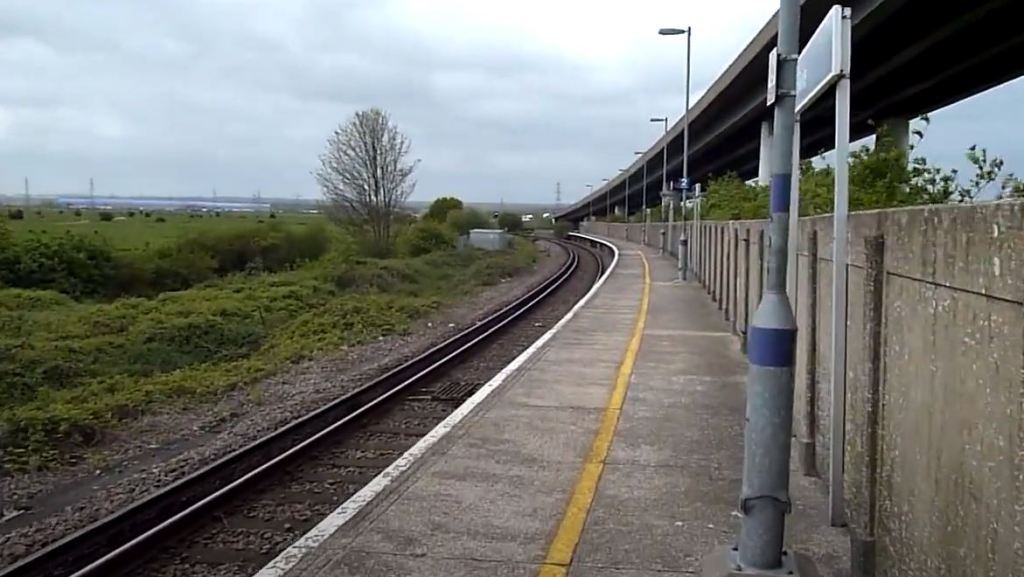
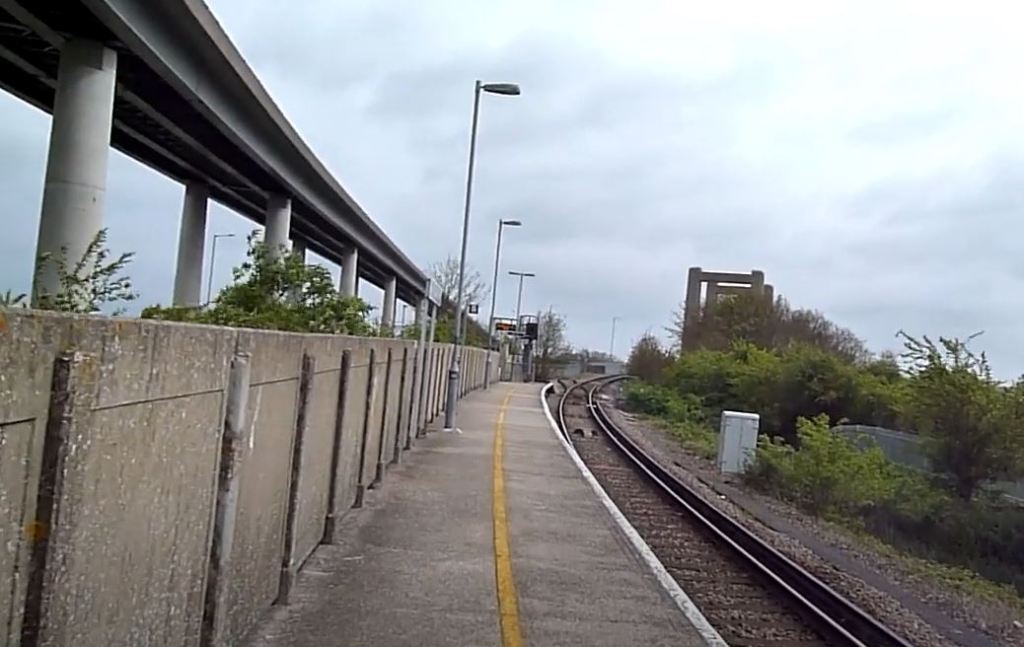
Swale really is remote, no real housing or commercial buildings are nearby, and it is amazing it is still used. However it does have an interesting and important part to play in the history of the line.
The station was opened in 1913 as Kings ferry bridge halt, and as such had no station building, just a couple of small huts for shelter. It traversed the River Medway over a bridge, but after a ship collided with the bridge in 1922, it was deemed unfit for railway traffic.
This meant that passengers were required to exit this station and walk over a temporary bridge to another station which had been provided to continue their journey. This change meant the renaming of the station to Kings ferry bridge south halt.
It was renamed again in 1929 to Swale Halt when the railway bridge reopened after repairs, and continued with this name until a new bridge was opened in 1960, when it became known just as Swale station. The station is very remote, the nearest village being Iwade, which is a 25 min walk away.
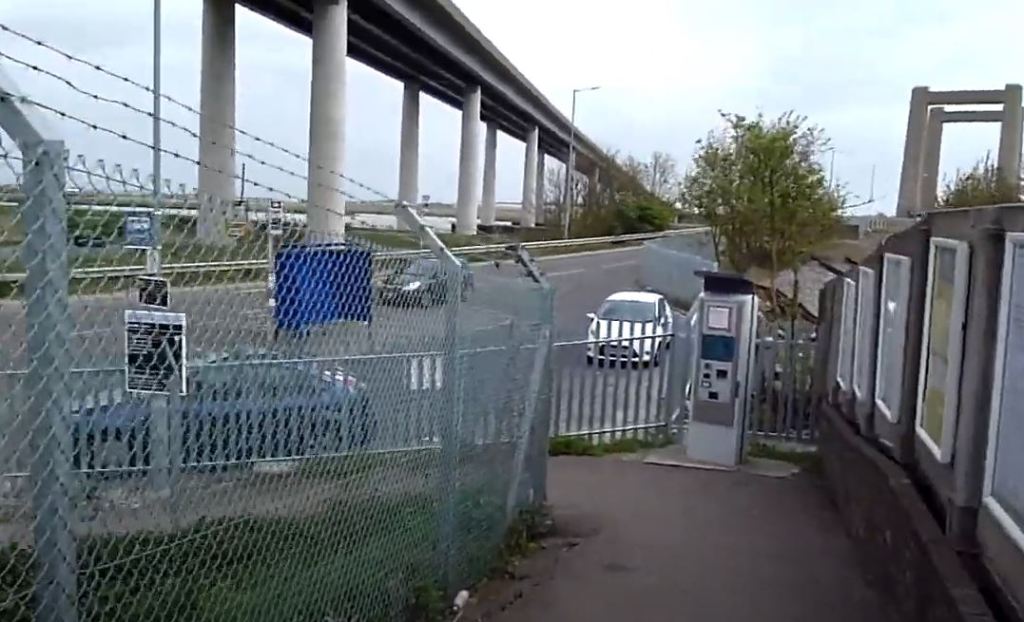
There is one dot matrix display, positioned at the top of the ramp which from the very small car park (which is in fact where the replacement bus service would pick up and set down. At the bottom of this ramp is an electronic ticketing machine. Turning back to walk up the ramp, on your left are various poster boards.
These include timetables, service information, a board for the Kent community rail partnership and of course an onward travel information board. Like others on this list, there are no other facilities here. Trains at time of writing are class 375 electric multiple units.
Passenger entry and exits for 2019 / 2020 were 8, 044. I am using these figures as the figures for 2020 / 2021 are skewed due to the pandemic, and so are unreliable.
The video for Swale, recorded before the Class 375’s took over the line can be seen below.
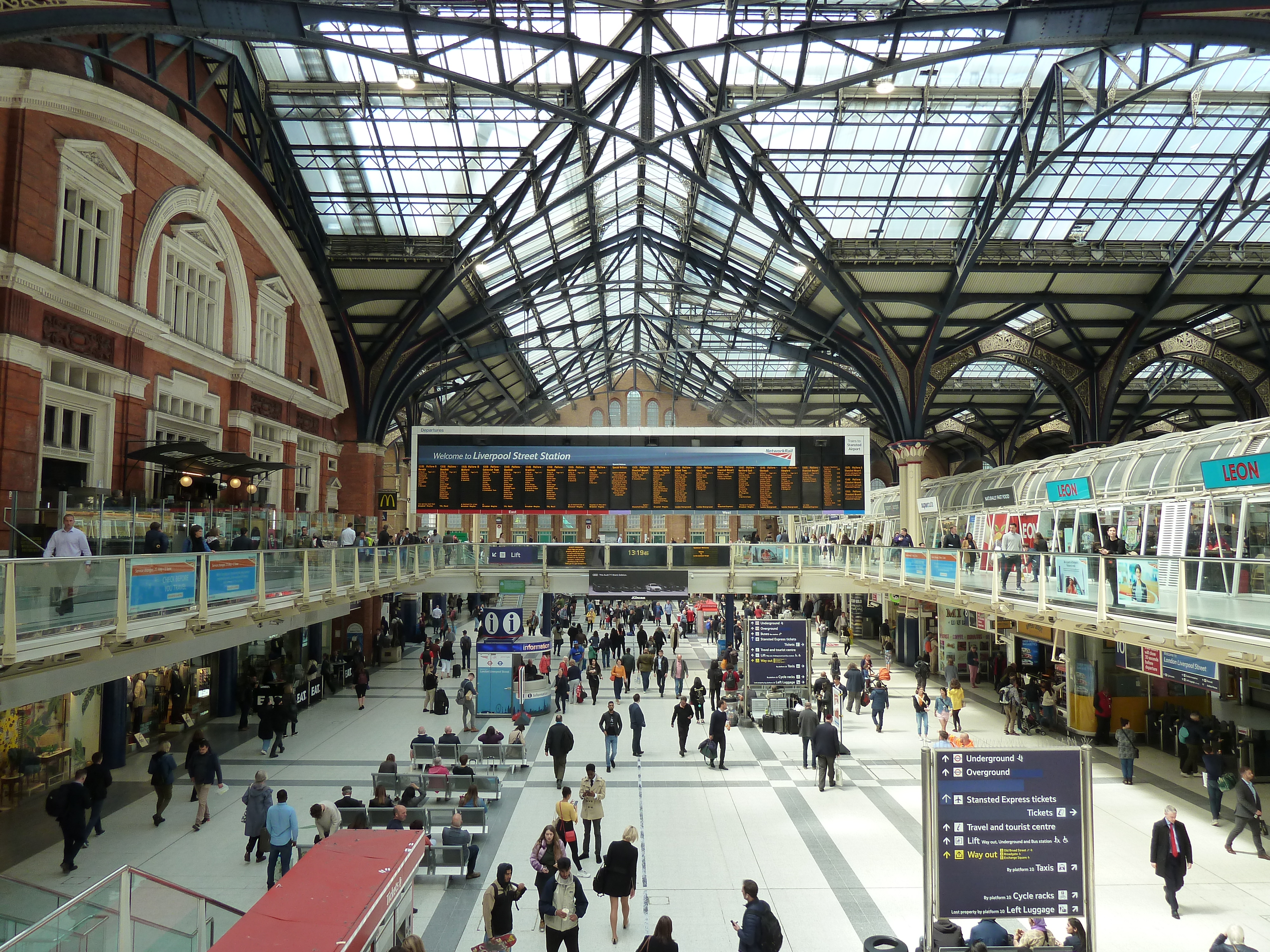
Once one of the busiest stations in London, Liverpool street has a very ornate interior much overlooked by its passengers. Having undergone many refurbishments in the years, the concourse now fills with natural light from the vast roof which spans it. Although now not as busy, the soon addition of the Elizabeth line may make this station a true hive of activity again.
A Brief History
London Liverpool Street was built to be the London terminus of the Eastern Counties Railway. Opened in 1874 with 10 platforms, two of which extended under the station forming a junction with the Metropolitan Railway.
Originally the buildings were 90ft high, with a spired clock tower. A hotel named “The Great Eastern” was built down the entire length of the new frontage. Many expansions came in the early years, which unfortunately created a myriad of entrance and exits. As well as this, the bridge used across the station was not wide enough and on two levels, which caused congestion and confusion for passengers wondering which part of the bridge they should be on.
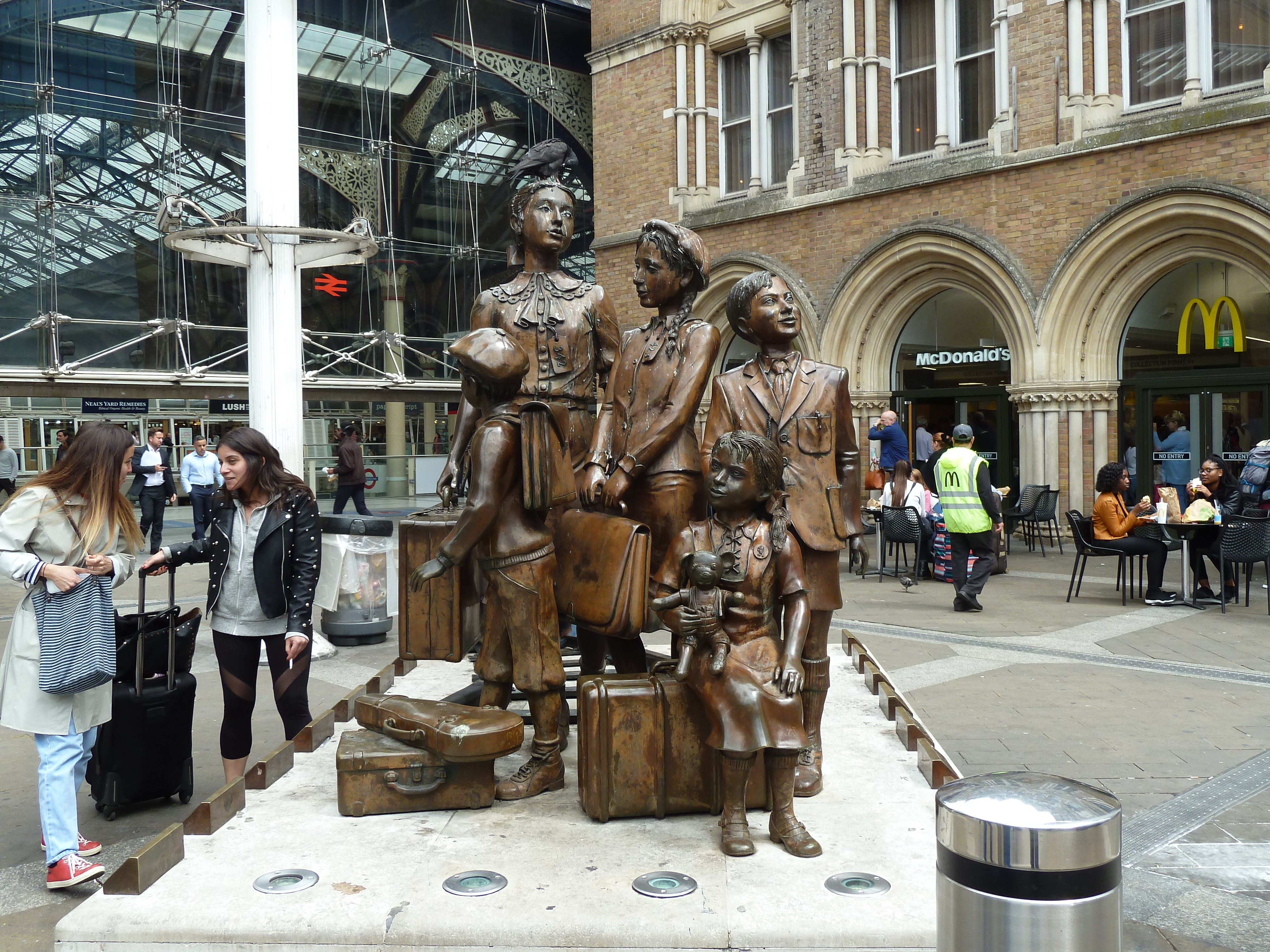
The station is probably most famous for its role in welcoming children of the “Kindertransport”, an operation started in 1938 to bring children from the ever expanding Nazi Germany. The first children arrived on December 2nd 1938, and by September of the following year, almost 10,000 children would arrive into Liverpool Street, many of which landed at Harwich.
After being damaged in the Second World War, the station remained in a poor state until the 1960’s, when British Rail rebuilt and refurbished the station, giving it a new clock tower.
It was therefore a surprise that in 1974, British Rail would earmark the Liverpool Street station building to be demolished, and an underground terminus put in it’s place. Many campaigns were launched by eminent figures of the day, including the comedian Spike Milligan, to stop the bulldozers from destroying such a beautiful example of a London Terminus. Eventually after a few years, the tireless campaigning worked and Liverpool Street was saved.
A full refurbishment was again undertaken in the 1980s, with the train shed roof being fully repaired and restored. The main roof would follow in 1987. At this time a link would be established to the Cambridge line, enabling trains to terminate at Liverpool Street instead of Broad street. The entire work was finished in 1991, and the station was officially re-opened by the Queen.
Since 2013, the site has had many excavations in preparation for the Elizabeth Line. During one of these, a mass grave was found on the site of the “Bedlam” burial ground, dating back to the 17th Century. This lead to a full excavation of the area, recovering what is believed to be 3,000 bodies.
A quick view of the station today
Due to its complex nature, you could start anywhere at Liverpool street and still get great views. Howver for the sake of this quick walkthrough, we will start at the entrance at Hope Square in Liverpool Street.
Going through the gates, you will be greeted by the ‘Kindertransport’ statue in front of the glass fronted entrance. Take time at this statue to read the plaques and appreciate this significant event in history.
The ‘New’ Kindertransport Statue in Hope Square
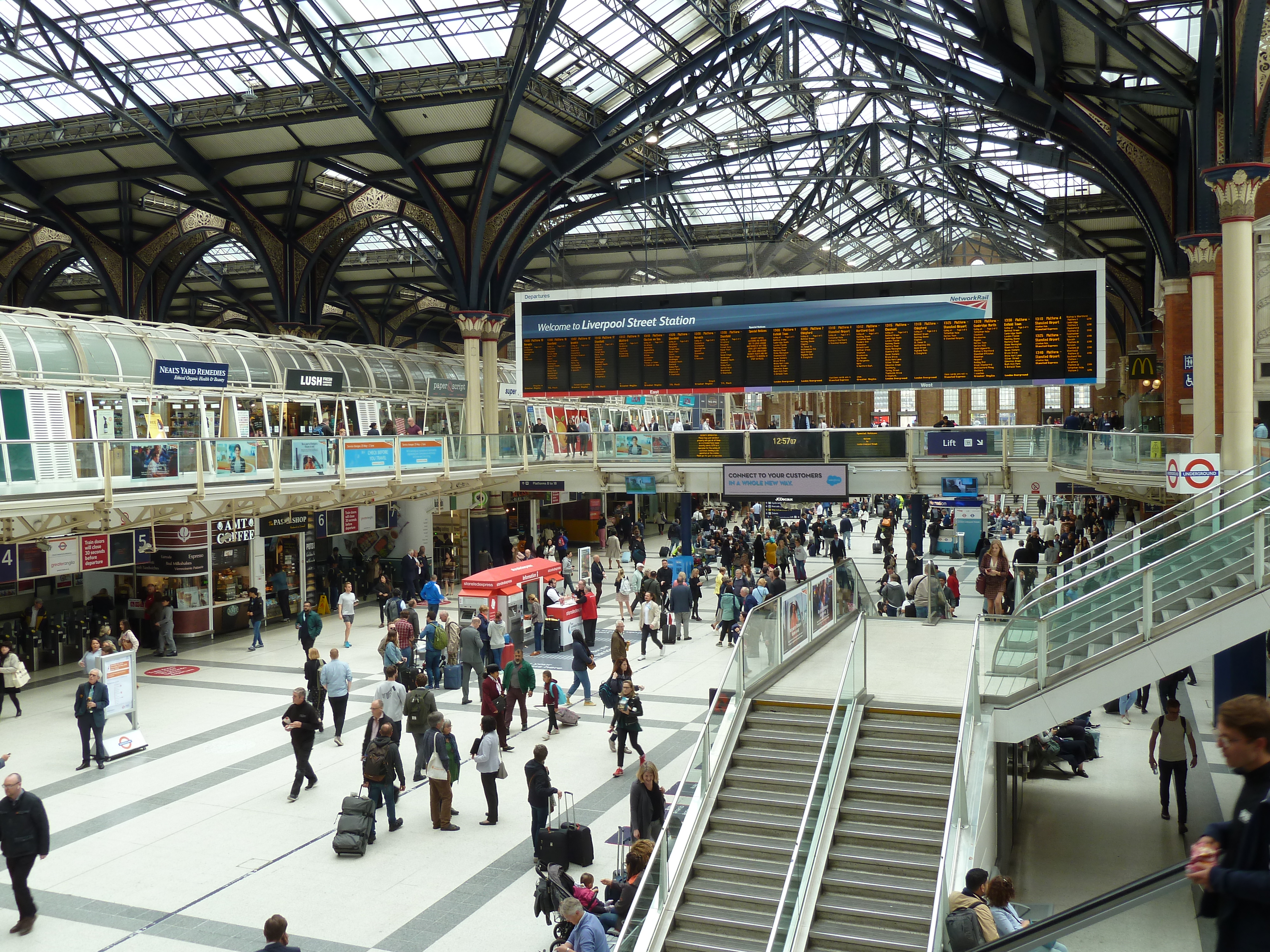
If we now go through the entrance, you will gain the first look at the roof, with the concourse opening out below you. You are on the mezzanine level at this point, so take some time to look around you, admiring the columns which hold up the glass roof which is allowing natural light to flood in.
Looking left, you will see some arched windows, move toward these and then turn towards the concourse, so that you are looking straight down it. It is one of the best views of any London Terminus in my opinion, and a great photo if you can get it.
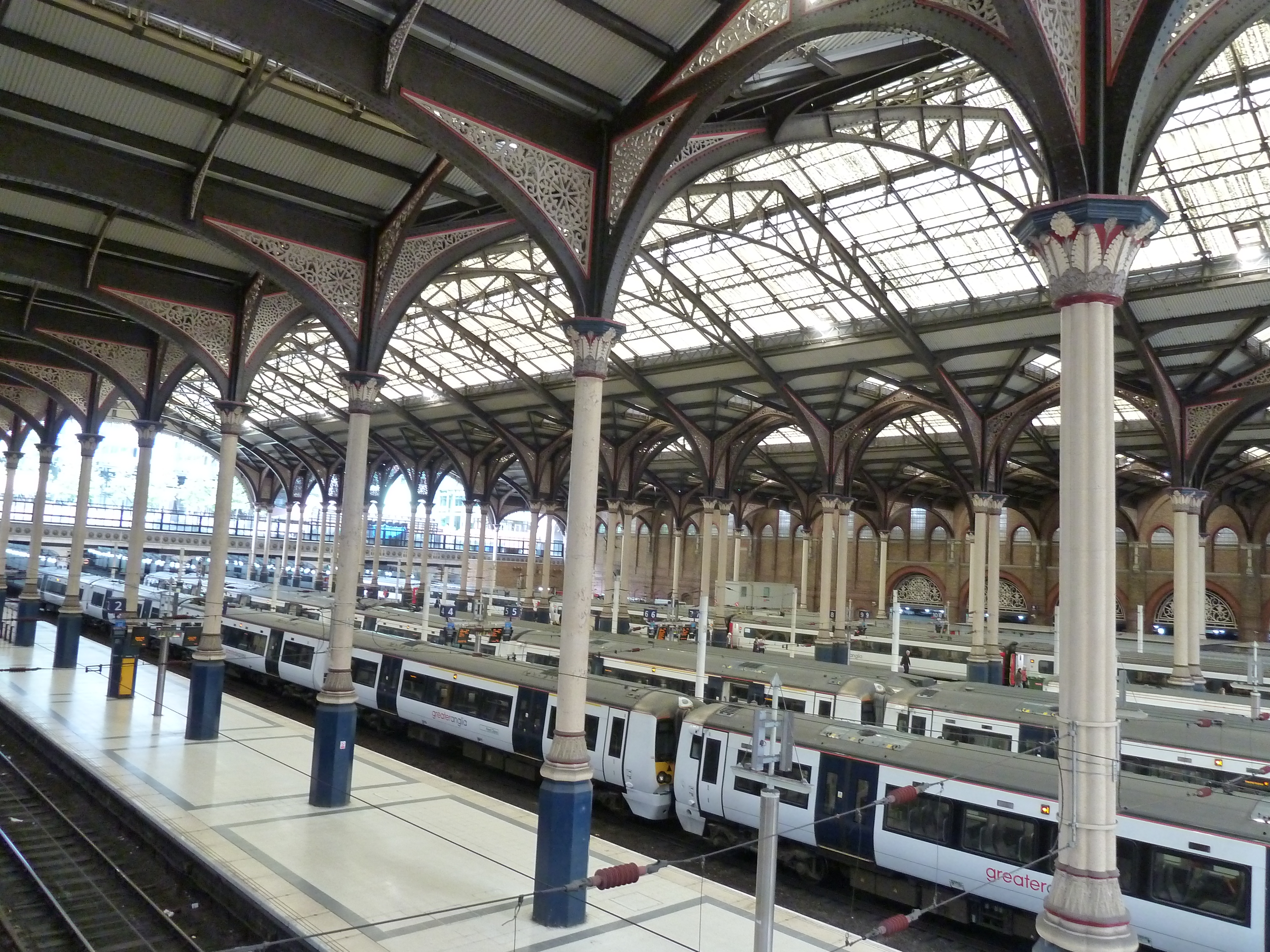
Move back along the mezzanine, a row of retail is ahead and to your right, but if you carry on down into a corridor, the exit to the bus station will eventally be on your left. Keep going down here for a very good view across the platforms.
A view across the platforms, note the abundance of highly decorated columns.
Once, you have seen the the platforms, with the fantastic train shed above, head back to the mezzanine level and turn left, so that you can see the arrival and departure board ahead of you, hanging above the concourse.
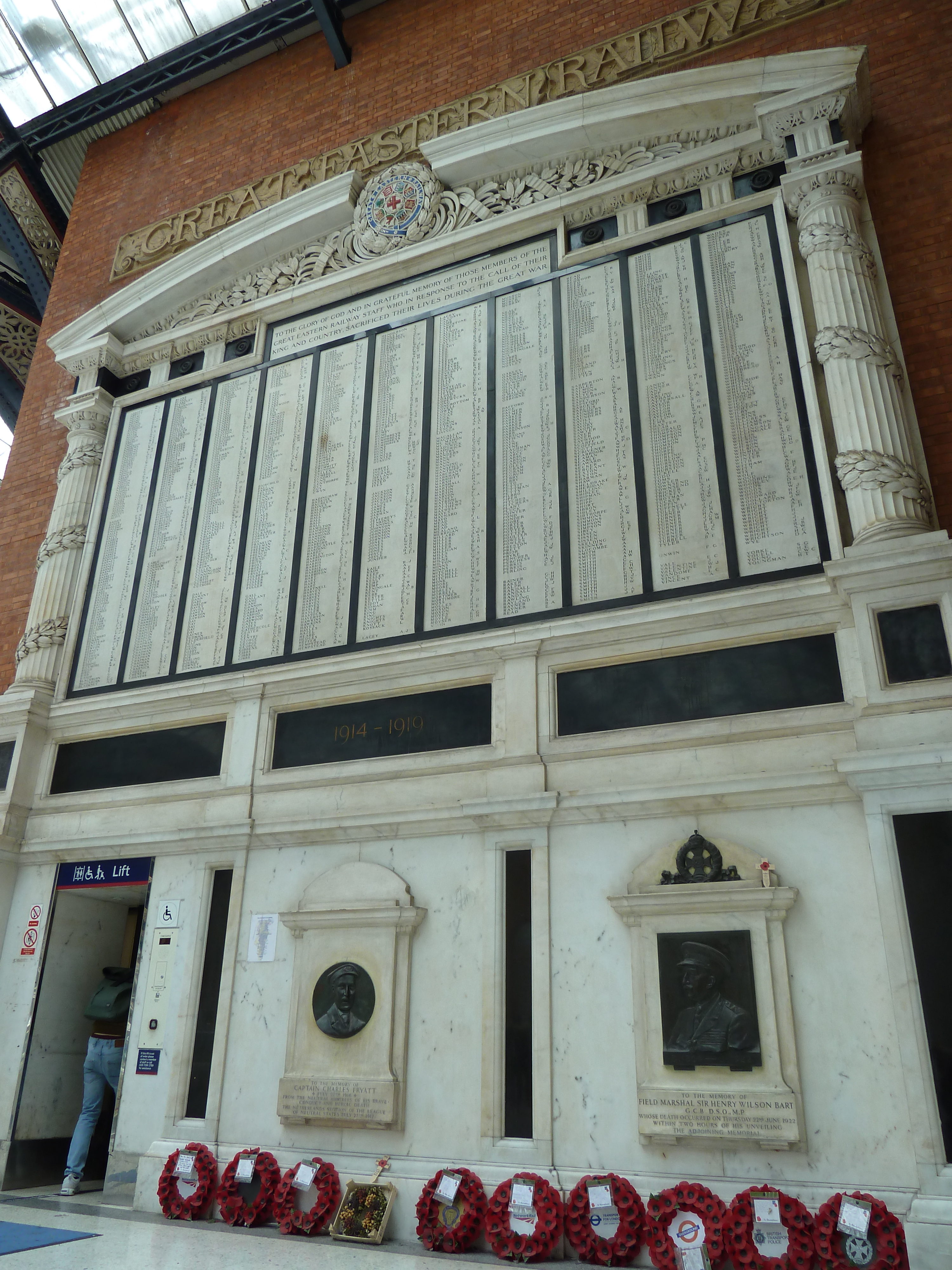
Once you get to the board, turn right and go underneath it, good views can be had of the concourse left and right here. At the other side, turn right and then left, you should see a rather large marble mural which reaches up toward the roof. This great marble structure is one of the best dedications to those who lost their lives during the First World War at any railway station. Below it are dedications to Captain Charles Fryatt and Sir Henry Wilson, both of whom were decorated in the Great War. Many other dedications and wreaths are normally to be found under these.
The First World War Memorial
Go back past the memorial and then past the departure board, and you should find on your right three brick reliefs. These depict a steam train, a ship and a scene involving coal being put into a firebox.
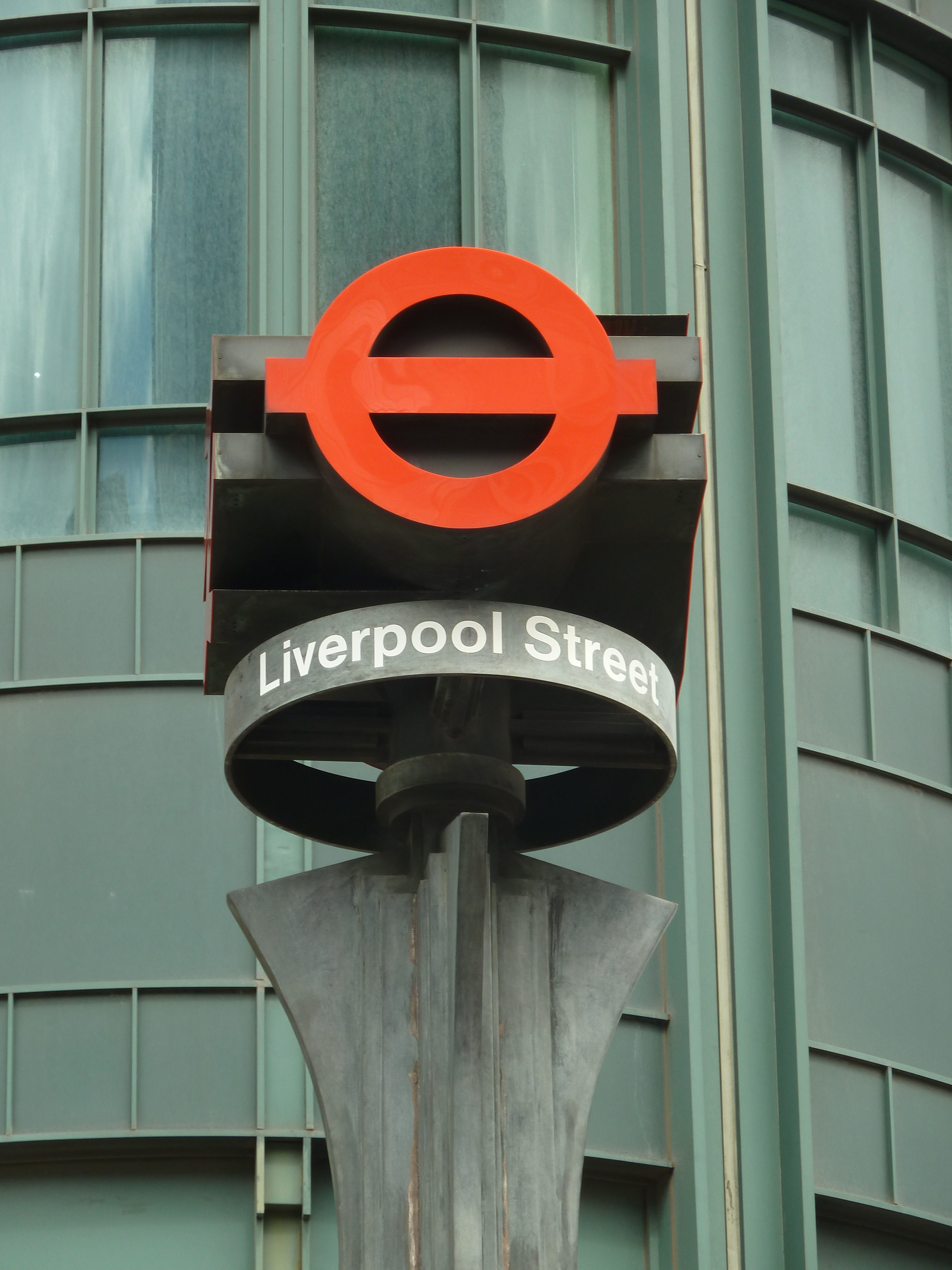
You will now see an exit which takes you out onto Bishopsgate. The former Great Eastern Hotel is to your left, and the original ballroom ceiling can be seen if you enter this building (which is now a major chain pub). Looking back towards the station you will see a glass canopy with escalators down to concourse level. This is framed with two brick columns, one with a clock tower. Also to be found here to your right is a very unusual metal totem with a London Underground roundel and the Liverpool Street name underneath.
Totem in Bishopsgate
Take the escalators down to the main concourse. Walk forward here and again admire the roof structure. Keep to your left here as you walk along. There are lots of places to sit here, and a set of escalators will take you down to the toilets. Go past these, keeping left until you almost reach the entrance to the Underground station.
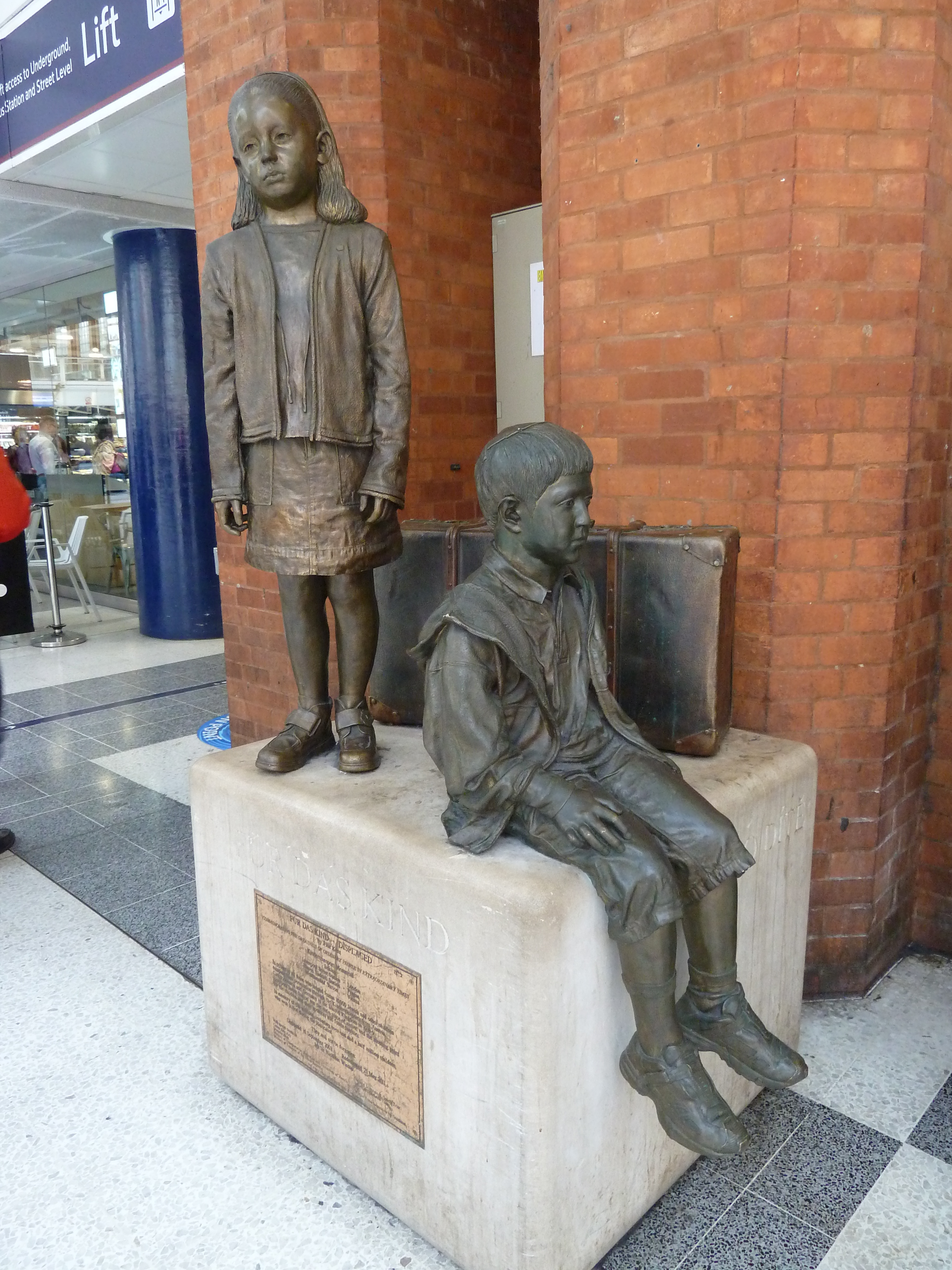
You will then see another statue dedicated to the Kindertransport. This was the original one dedicated in 2003, and used to sit in Hope Square. When it was there it contained a glass box with actual artifacts from some of the children, with the standing girl only. When it was relocated however, a sitting boy was added and the glass box removed.
Kindertransport statue near Underground entrance
Moving past the Underground entrance, there is another exit ahead of you which takes you to an area with a low veiling and retail outlets. Eventually it leads to the Bus station.
London Liverpool Street is not the largest London Terminus, but this and Marylebone do keep the charm of the old railway, and although I have detailed a few hidden gems, but there are more (but that’s for another time…)
A view from the Liverpool Street end
You can see a short video of the trains at Liverpool Street on my YouTube channel below:
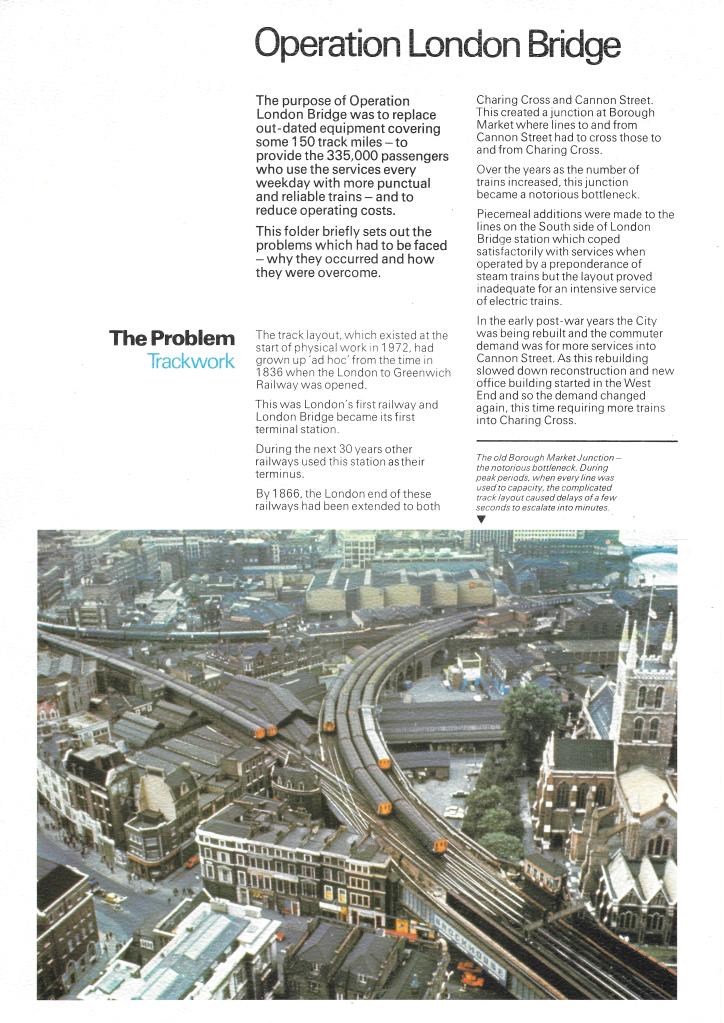
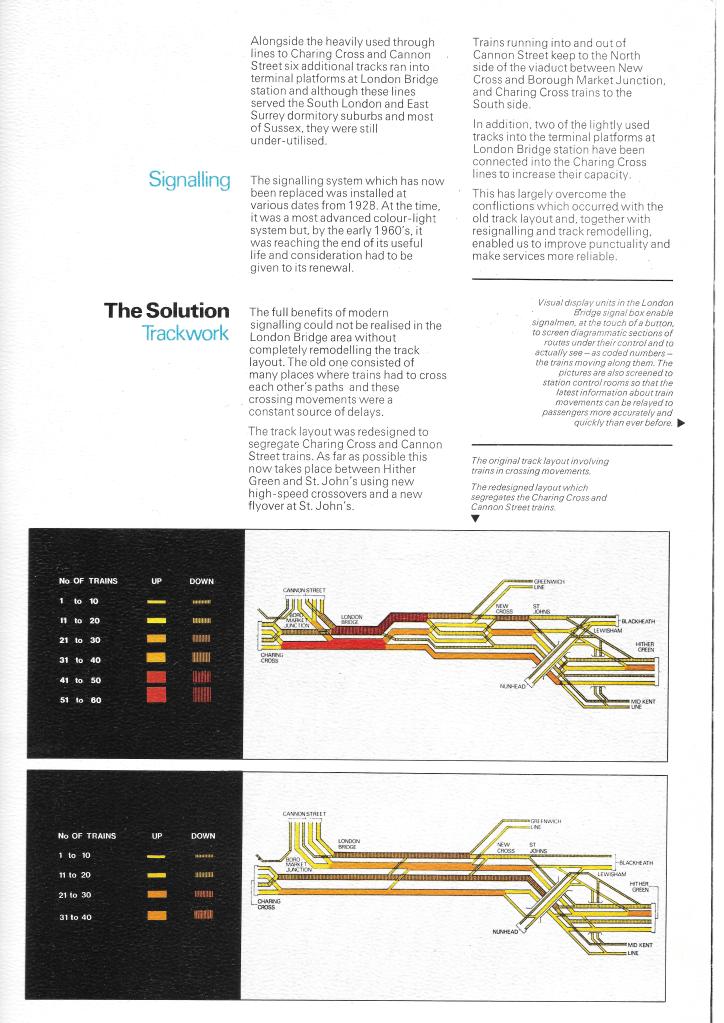
Before the re-imagining of London Bridge station in the 2010’s, it was the subject of a huge re-signaling scheme in the mid 1970’s. The idea was to completely redesign the approach, especially across Borough Market Junction. This was a notorious bottleneck where trains from Charing Cross and Cannon Street, as well as approaching traffic from Kent and Sussex would almost always grind to a halt at peak times.
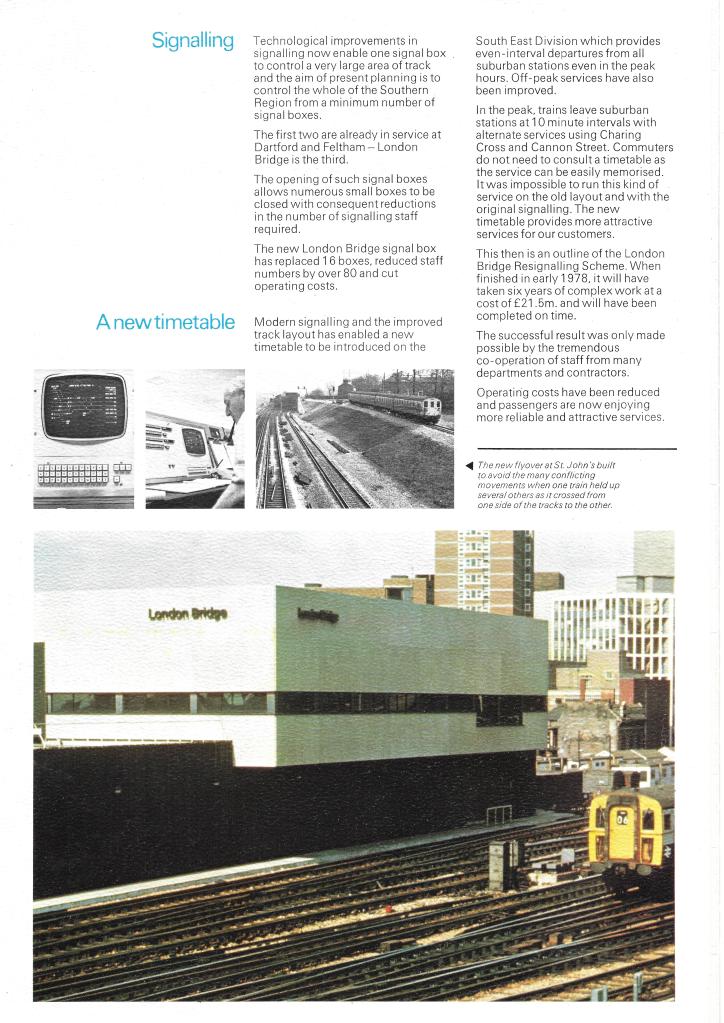
The solution was to create more throughput by using crossovers from Charing Cross and Cannon Street and using a new flyover at St Johns. Some terminal platforms were also connected to the Charing Cross lines in order to facilitate more throughput.
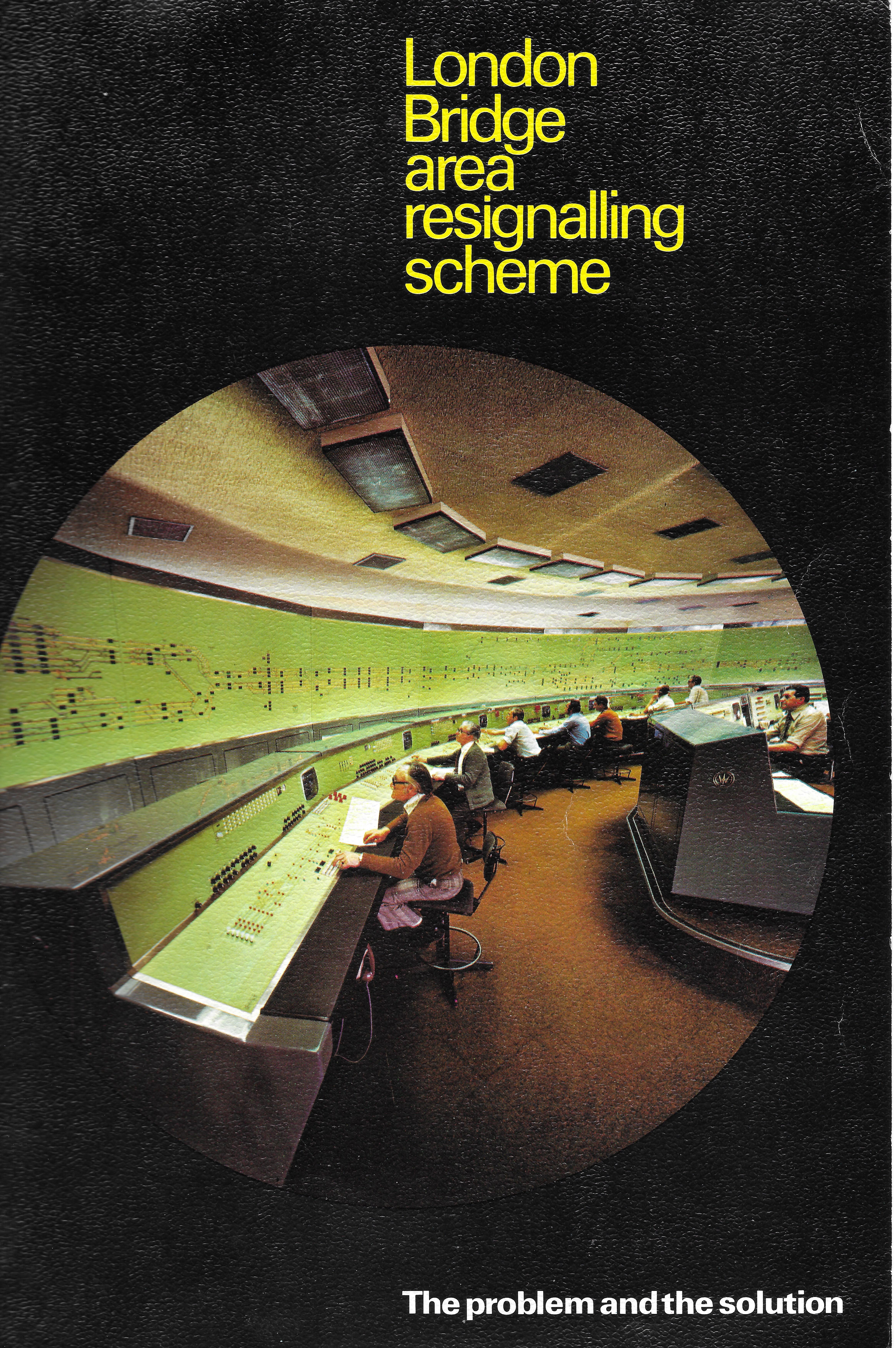
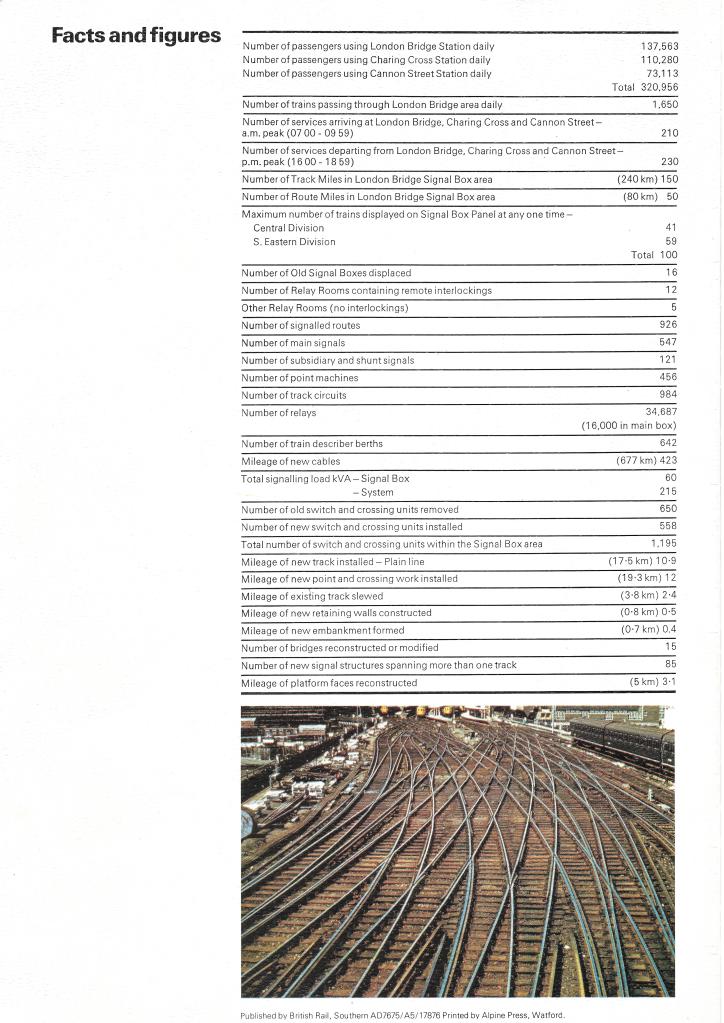
The entire area would be controlled via a massive new signal control room at London Bridge, which would mean the demise of at least 16 smaller signal boxes nearby.
Amazingly for such a large project, it was finished on time, at a cost of £21.5 million pounds in 1978. Below are some scans from a mini booklet produced by British Rail to commemorate the achievement.
I must thank Mr David Bonnett, who very kindly donated this leaflet and other materials to myself.

 Rainham Rail Enthusiast