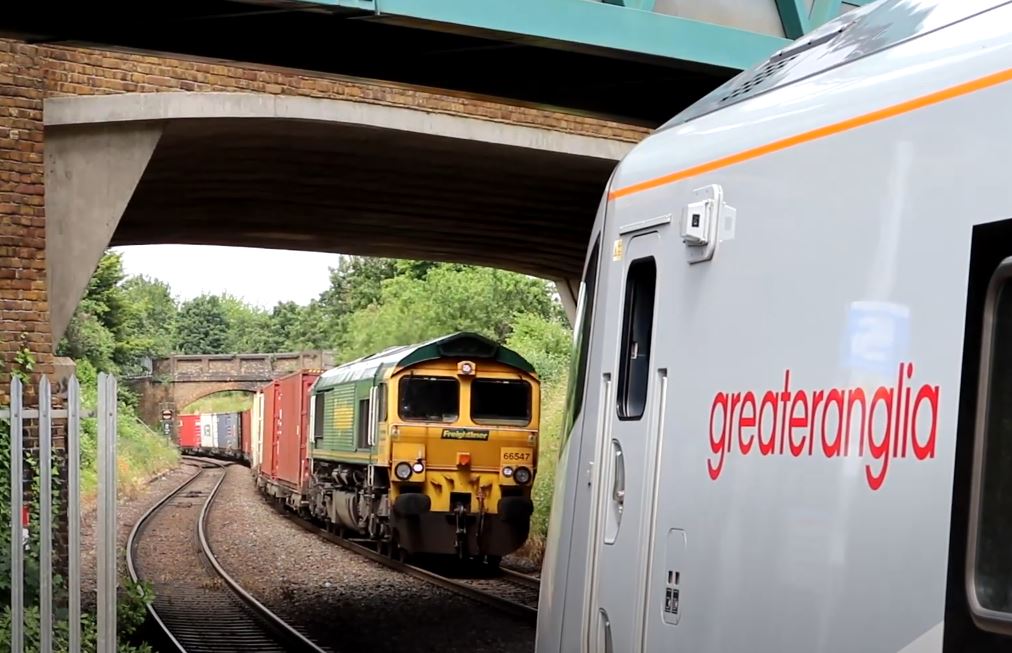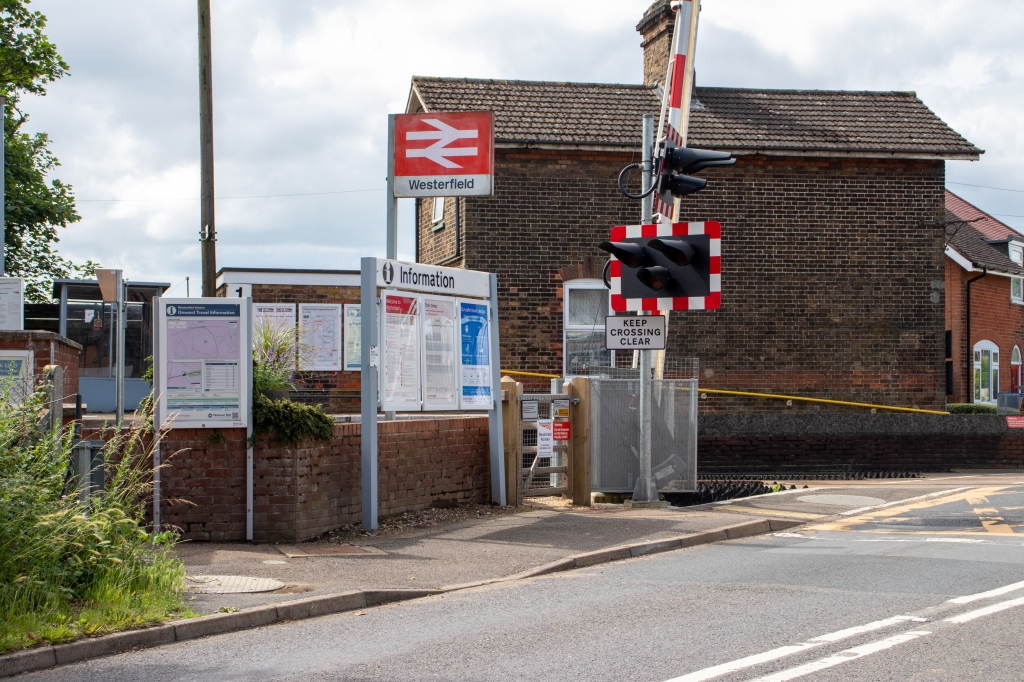
Top Ten Least Used Railway Stations in Suffolk | 4 – Westerfield

Westerfield was opened by the East Suffolk railway in 1859, but a few years later like the rest of the stations on the line, it was taken over by the Great Eastern Railway.

At this time the branch to Felixstowe was not here, but this was added in 1877.

Bay platforms were included for trains running to and from Felixstowe from the opening of the branch line.  This continued until 1879, when most trains continued on towards Ipswich, the bays then being used for storage.

From the 1880’s, the station had sidings which served the Westerfield steam brewery, as well as a coal merchant.  During the second world war, these would also be used for storing engines, including the Polish armour train.

After the war, they were used as stabling for the Pullman camping coaches during the winter, these being moved to Felixstowe for use during the summer months.

Unfortunately like most other stations, these sidings were closed un 1964, and the booking office closed soon after, the station becoming a “Pay-Train” station, where you bought your ticket from the guard on the train.
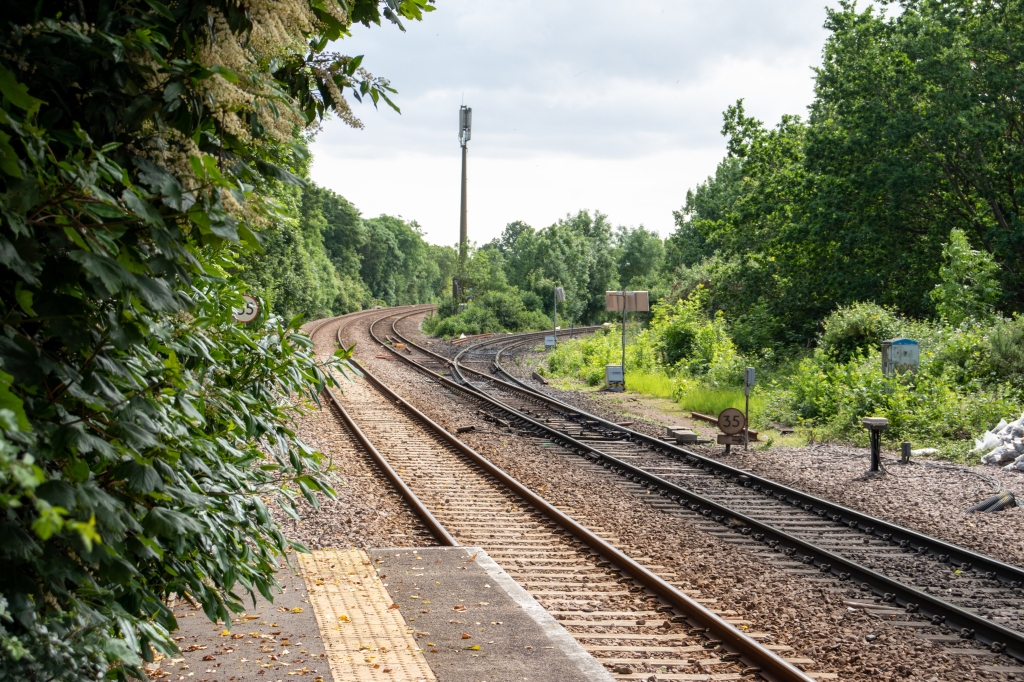
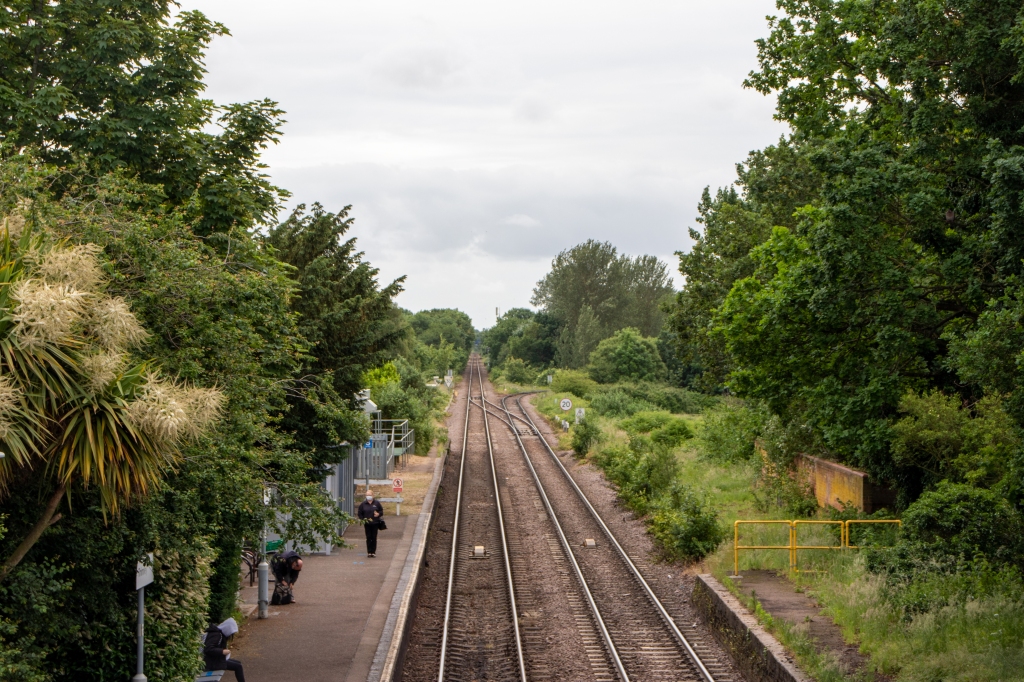
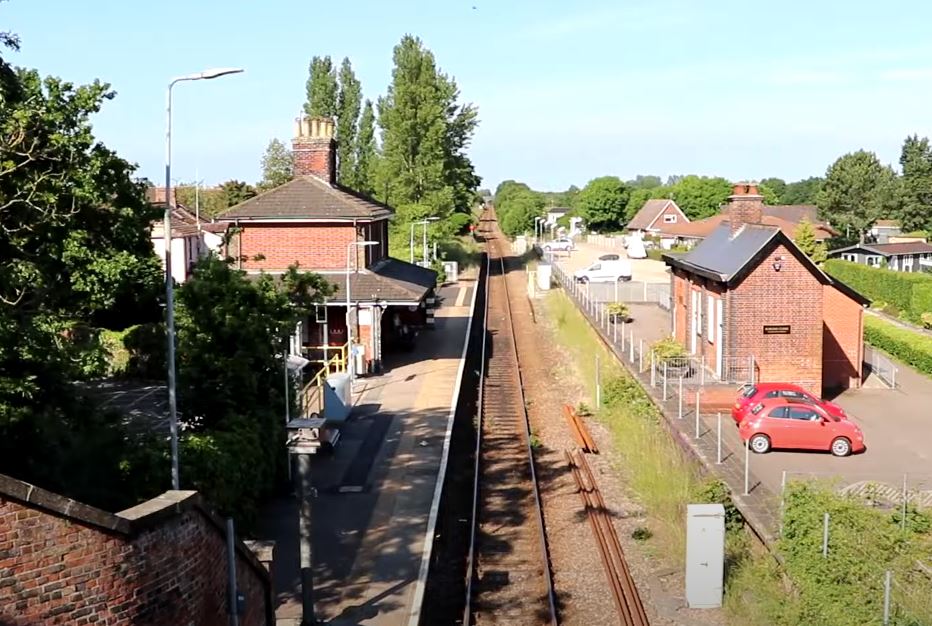
View towards Lowestoft, the spur to the Felixstowe branch is to the right. Freight from Ipswich crosses to the right line just before the level crossing.

Modernisation of the track layout, including the addition of automatic barriers have taken place, and although not terribly busy with passengers, the line here sees much freight to and from the port, as well as the occasional nuclear flask train from Sizewell.

The original station building remains, although this is now a private residence.
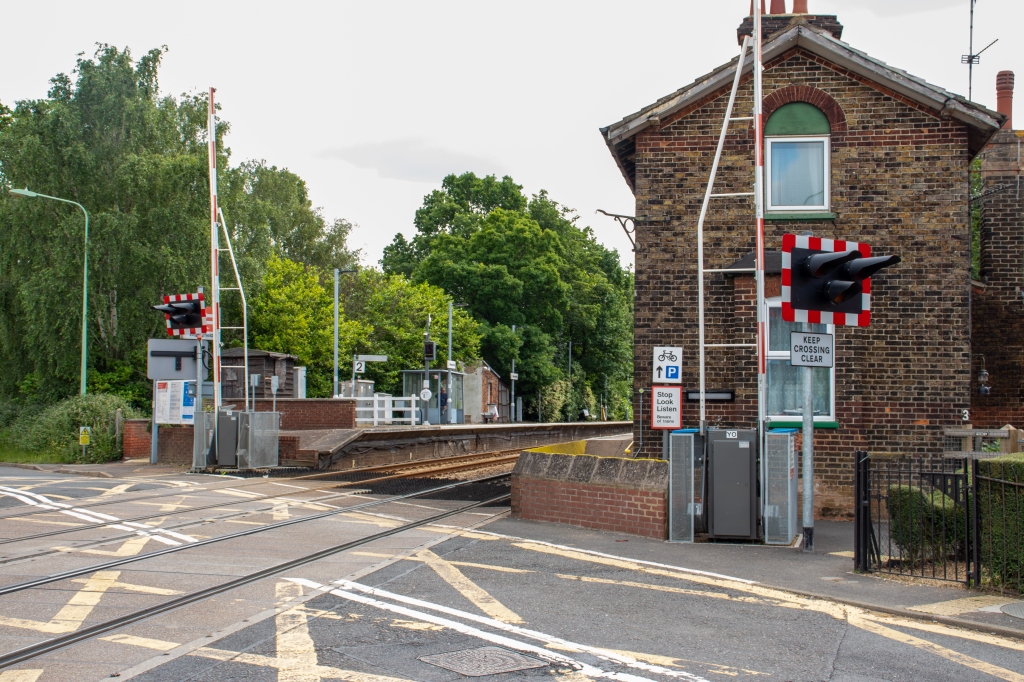
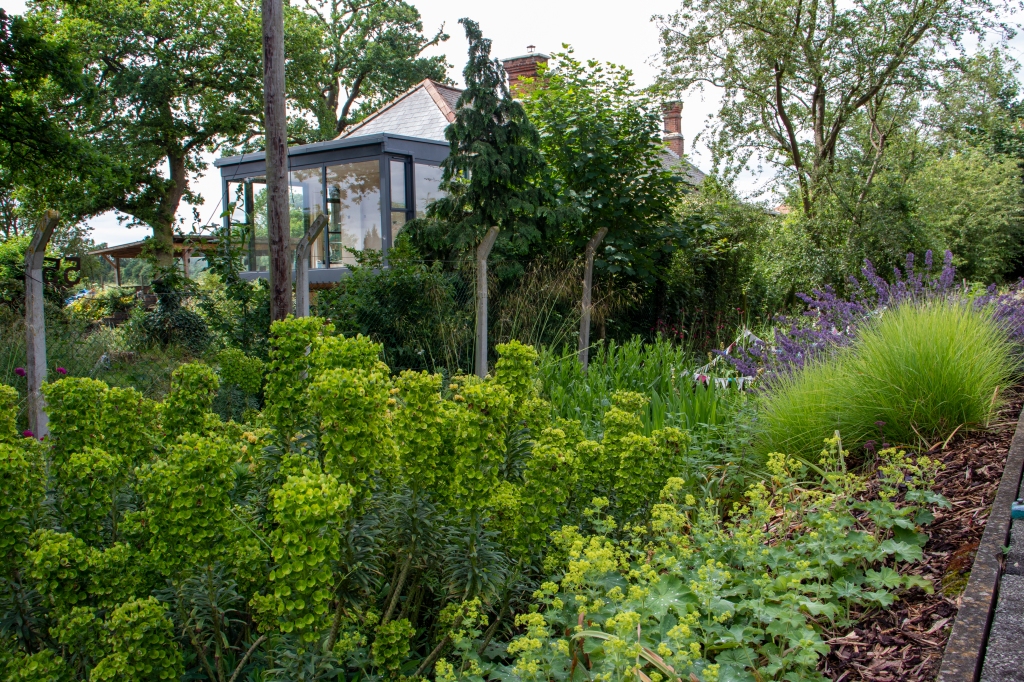
As well as an electronic ticket machine, posters, bike rack and new style service information boards, the station has recently been enhanced with an extensive wildflower garden on platform one. Created by East Suffolk Lines Community Rail Partnership, Suffolk Butterfly Conservation Trust, Friends of the Earth and Greater Anglia, it certainly brightens up the station.
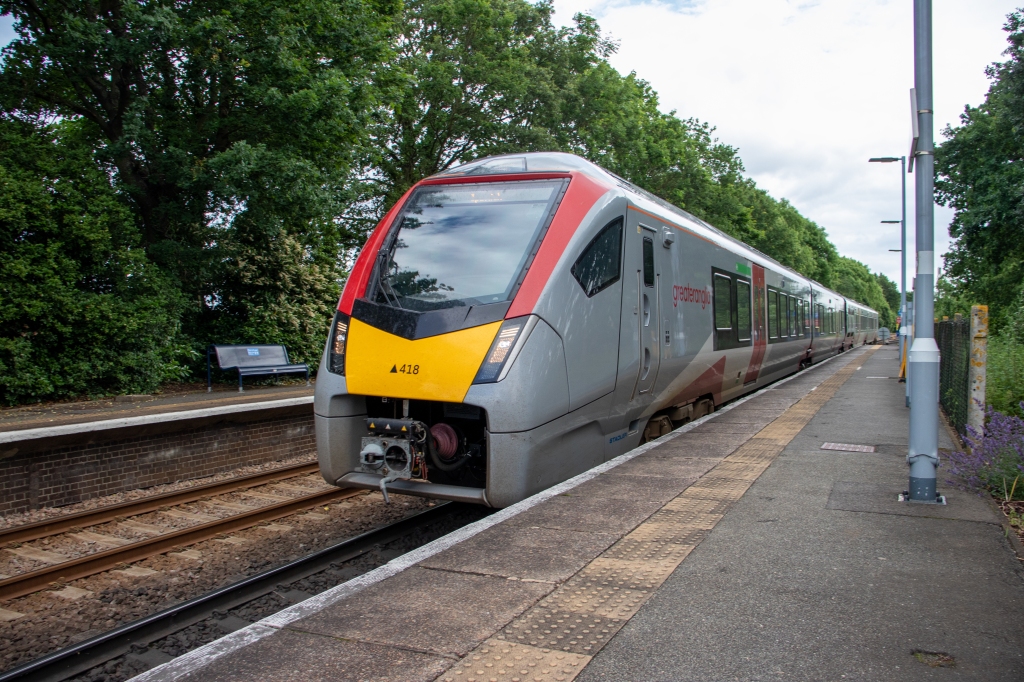
At time of writing, passenger traffic is provided by class 755 Bi-Mode units, with most of the passing freight hauled by class 66 locomotives.
A video is below, taken during a visit in 2021 :

Below is a link to the East Suffolk Lines Community Partnership :
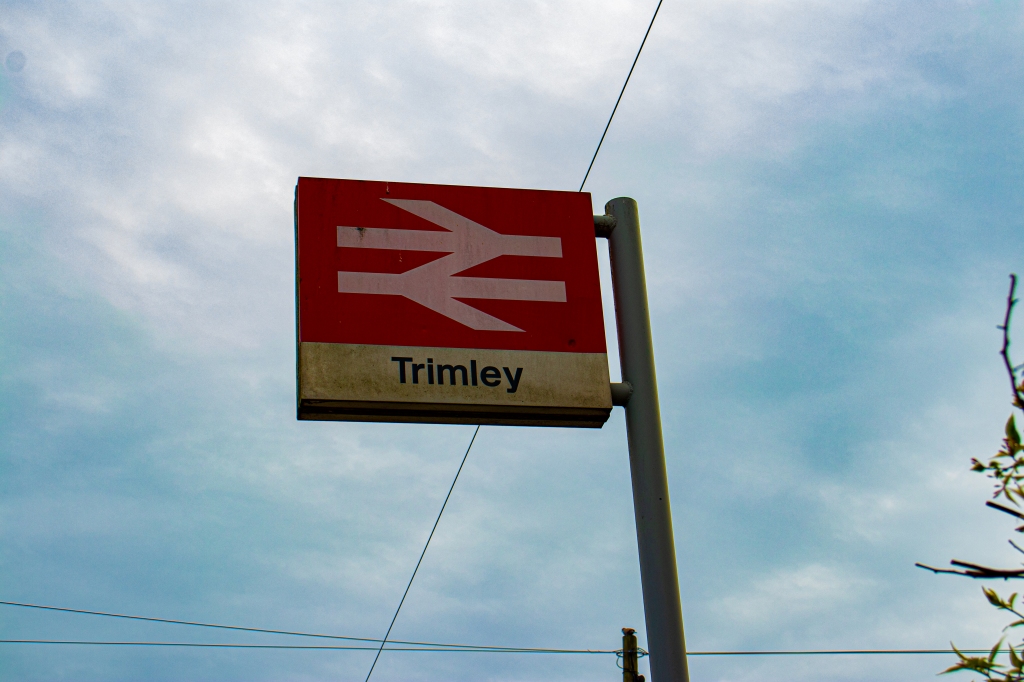
Top Ten Least Used Railway Stations in Suffolk | 5 – Trimley

Trimley was opened in 1891 by the Great Eastern Railway.  Its primary purpose was to fill the gap between the station at Orwell and Felixstowe beach, both of which were substantially far away from the village.

A few freight lines were here, but were withdrawn in 1964, and in 1967 the station building was closed.  This meant that together with the rest of the branch line, the station became a “pay train” station, with the guards collecting fares.  This left only the signalmen at the station, whose purpose was to operate the level crossing and signalling away from the station.

A direct line to the docks at Felixstowe was opened in 1970, and 17 years later in 1987, the spur down to the north freightliner terminal was opened to the south of the station.

The spur to the North terminal is clear to see on the right

The removal of the signal box in 1997 meant the installation of the automatic barriers, and control of these and the points was now undertaken by the Colchester panel signal box.

The station building was a version of a new Essex style, one of only two to be built outside Essex.  Its interior would have included a first class waiting room, porters lodge, booking office and combined booking hall and waiting room.  A ladies room with toilet completed the facilities.

There was also a small building on the other platform, but this was demolished a long time ago.

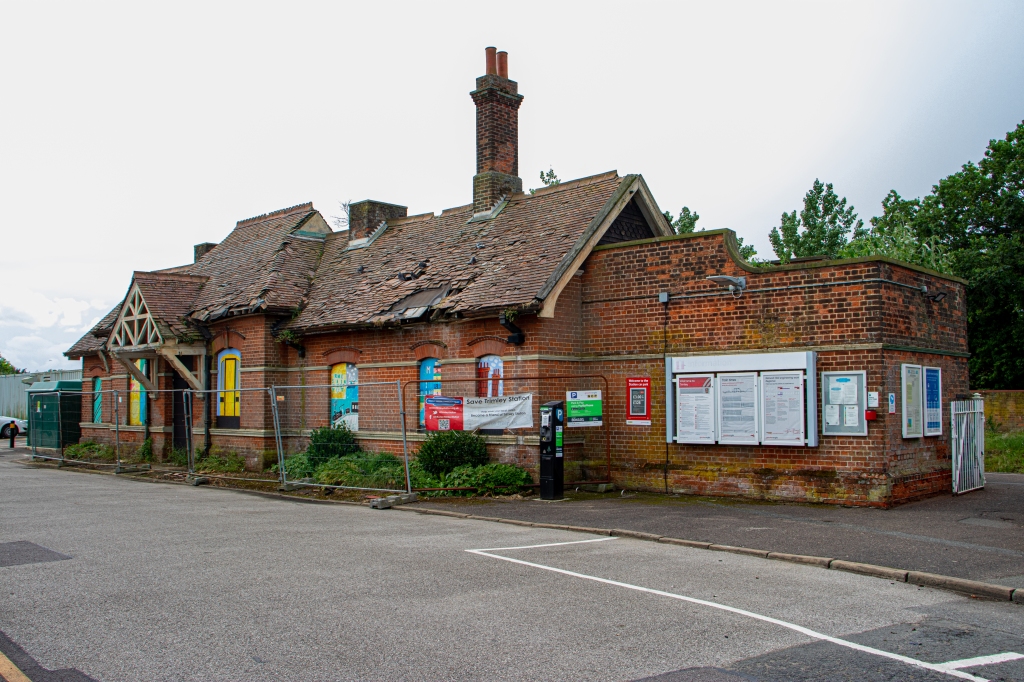
Although at time of filming it is in a very bad state, it is still standing, and is now under control of the Trimly station community trust.  They gained control of a long term lease in 2011.  Their ambition is similar to that of the station at Wickham Market, to transform the station into a café and meeting room whilst preserving the station fabric.

They have a long way to go, and recent months (2021/2022) have seen Greater Anglia seek improvements to the station which ‘may’ involve the demolition of the building, but nothing has been set in concrete. Hopefully in the coming months both fundraising and grants may become available, however multiple applications to the national lottery heritage trust have not borne fruit.  I do hope this situation changes for the better, as it would be a shame to lose such a quaint and historically important station.  If you wish to know more, I have provided a link in the video description below.

Facilities include a waiting shelter, help point, electronic ticketing machine and new style service information boards.

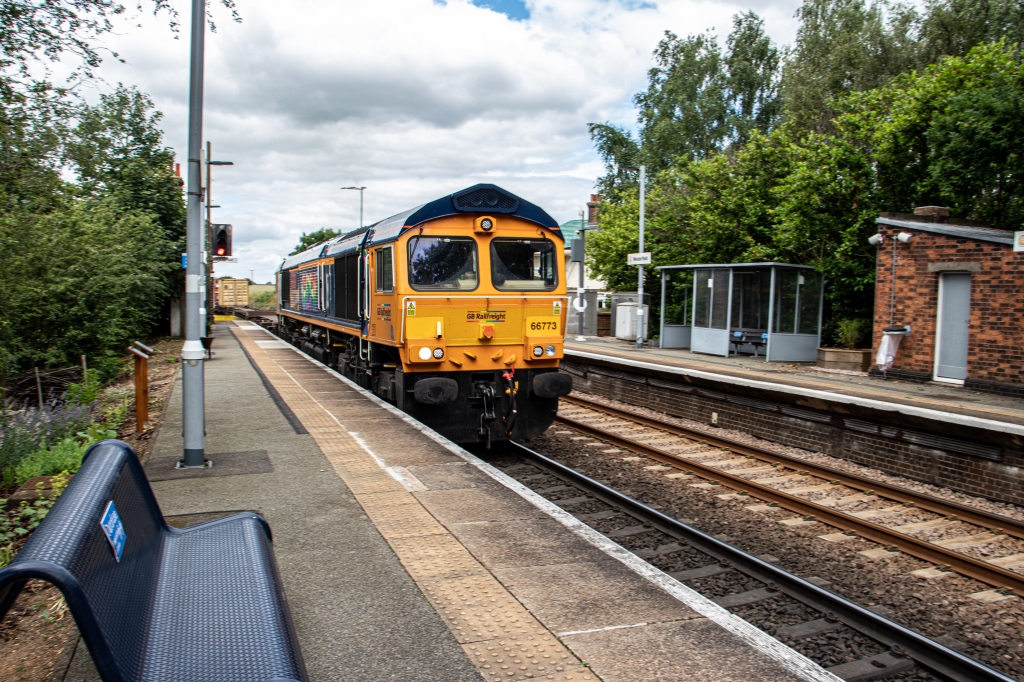
Passenger traffic at time of writing is provided by class 755 Bi-Mode units, and almost all freight is hauled by class 66 Locomotives.

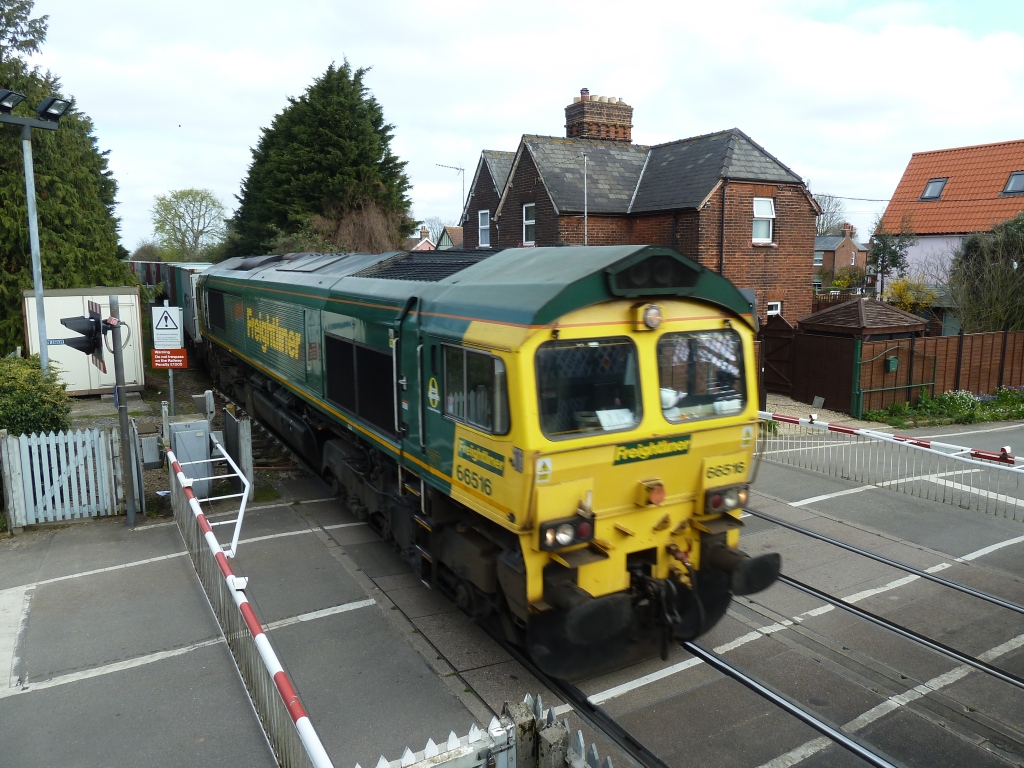
A class 66 heads towards Felixstowe

The entry and exit figures for 2019 / 2020 were 31, 122. These figures are used as the figures for 2020 / 2021 are unreliable due to being very skewed by the pandemic.

Still a functioning station for the village, Trimley could be so much more.  I hope that the building gets funding and finally gives the village a focal point it deserves.

For the enthusiasts, obviously the abundance of freight (albeit only intermodal) plus excellent sightlines, gives plenty of video and photo opportunities.

I recorded a video for this station in 2021, and you can view it below :

Links to the Trimley station community trust :

http://www.trimleystation.org/

https://www.facebook.com/TrimleyStation/

Top Ten Least Used Railway Stations in Suffolk | 6 – Oulton Broad South

Opened in 1859 by the East Suffolk Railway, it was originally named Carlton Colville.  The line like most in Suffolk was amalgamated with the Great Eastern Railway shortly after.  The station wasn’t renamed to Oulton Broad South until 1927

Just to the east of the station under the road bridge, the line split to the Kirkley branch, with services to sites on Lake Lothing.

These included sidings into Kirkley goods depot.  Companies using these would include Boulton and Pauls canning products, and confectionery from Mortons and the co-op group.  This line was fully closed in 1972, and no real trace of it remains.

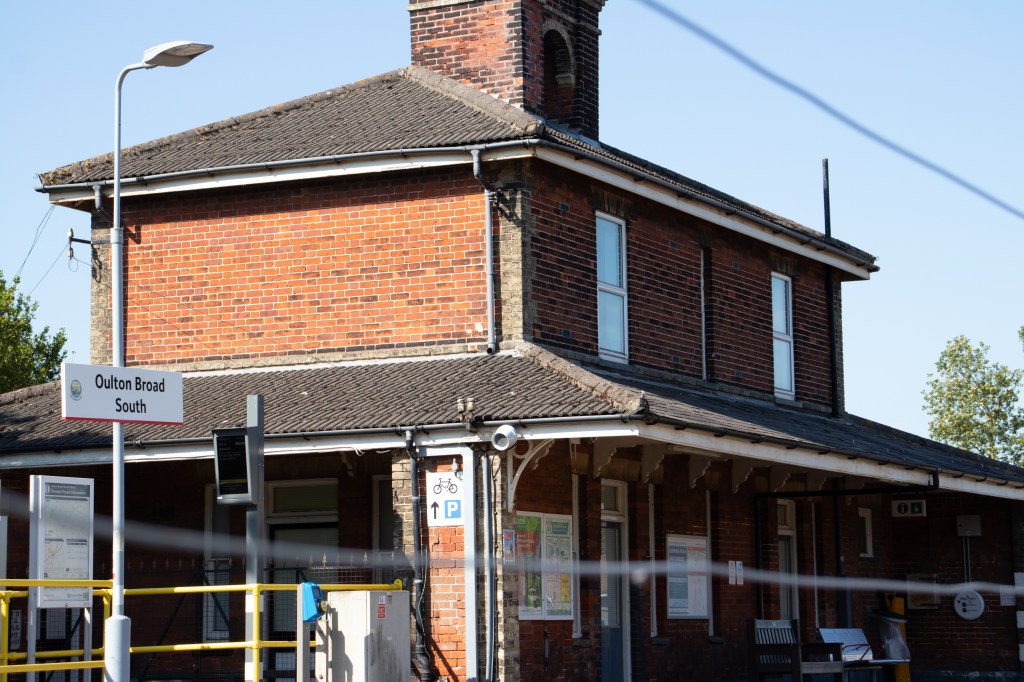
A station building remains on the working platform, the line here being single running at this point since the late 1980’s.  However the other platform remains with a building which is used for small businesses.  The small goods yard which was adjacent to that platform is now a car park, but its history contains the fact that pullman camping coaches were positioned here between 1952 and the late 1960’s

This view from the road bridge shows clearly that the line used to be double tracked at this point.

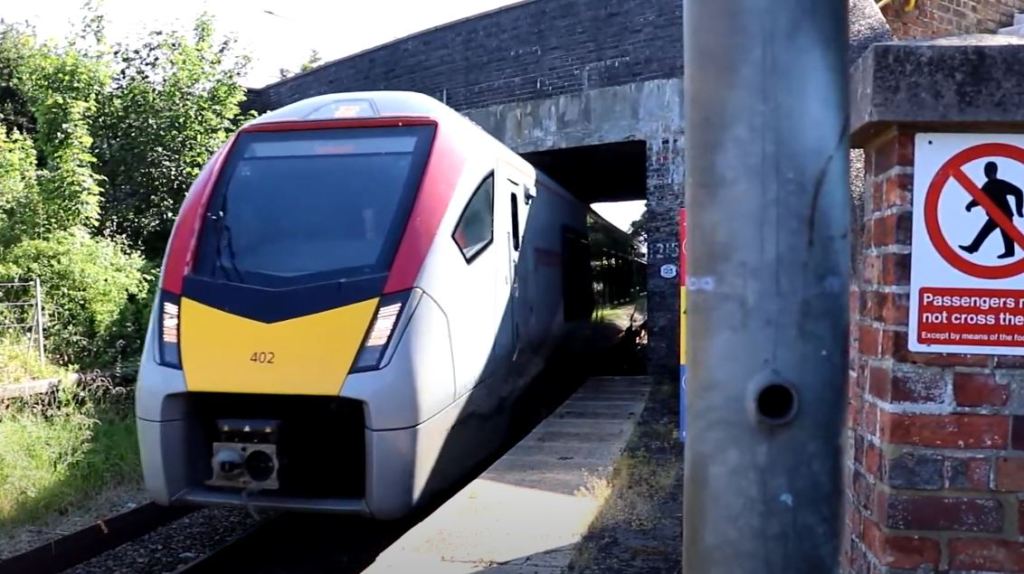
Passenger services at time of writing are provided by class 755 bi mode units.

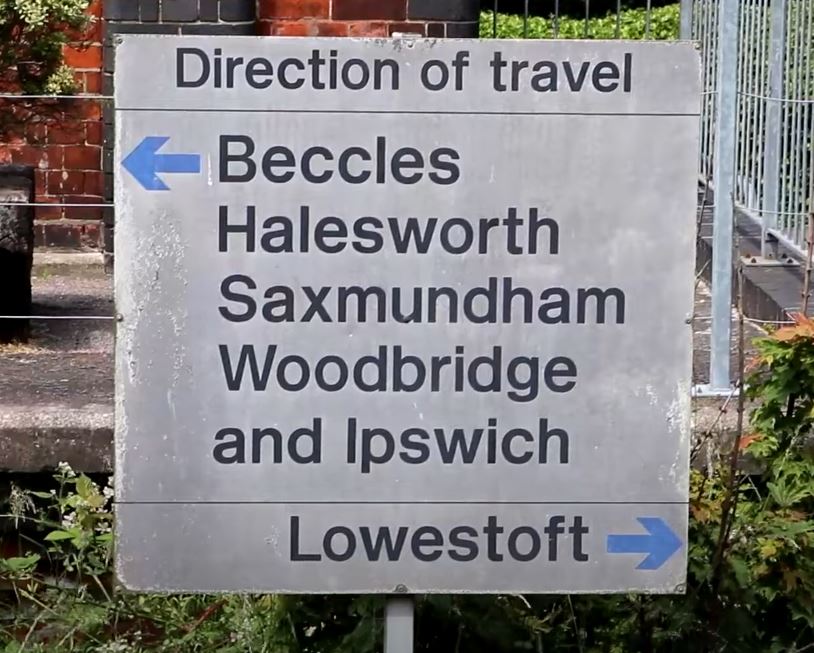
As far as facilities go, the station has an electronic ticketing machine, help points and posters not only for the regional rail network, but also information about the area. There is also this old style ‘direction of travel’ board, which is great to see.

The passenger entry and exit figures for 2019/2020 were 43, 518

Oulton broad south is a quiet station, but is still used fairly frequently.  The fact that both platforms remain is great, and the station buildings, although not being used for their original purpose, are still in situ.  For the enthusiast, although sight lines are good, the absence of freight means that traffic is very light indeed.

My 2021 Vlog from the station can be viewed below.

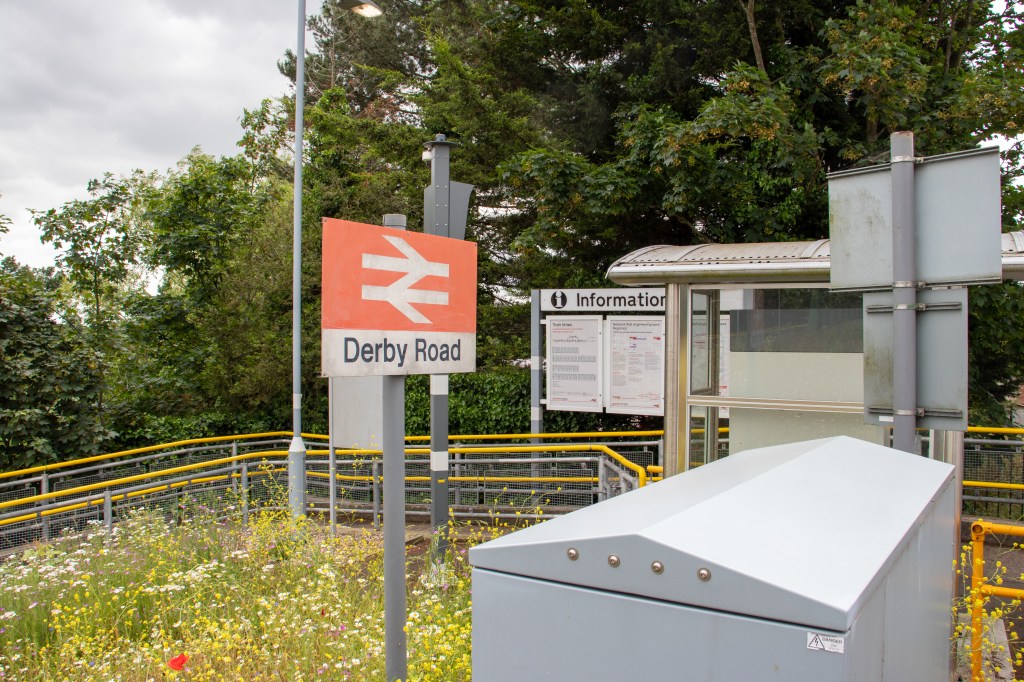
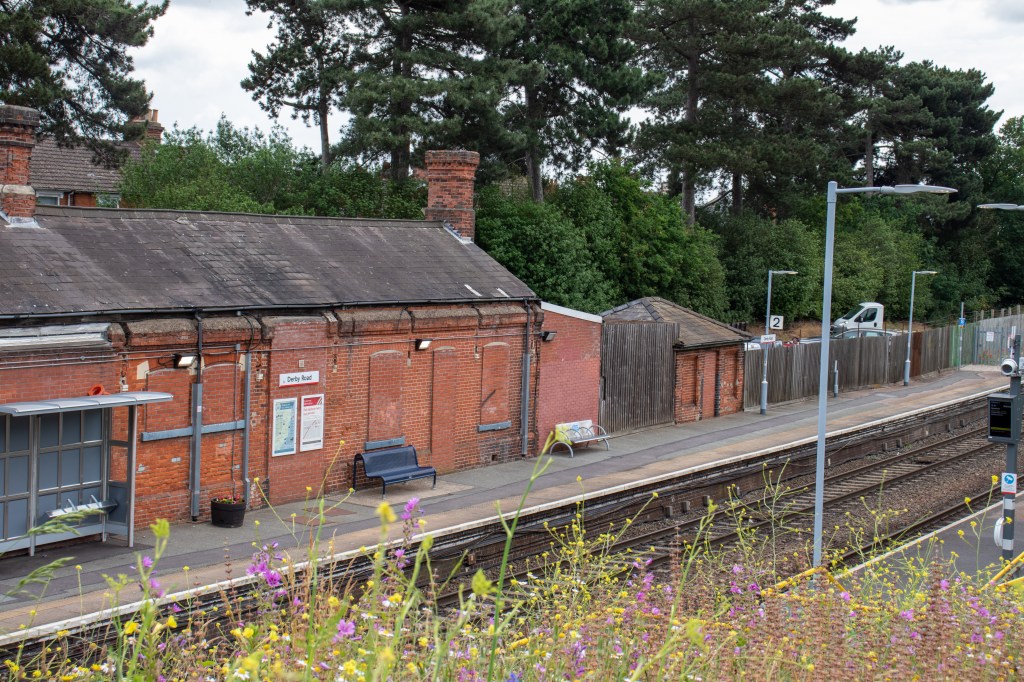
Top Ten Least Used Railway Stations in Suffolk | 7 – Derby Road (Ipswich)

Derby Road was opened in 1877 by the Felixstowe railway, and was amalgamated into the Great Eastern Railway in 1879.  It only had one platform originally, but due to popularity gained a second one in 1891

This popularity was due to the Ipswich tramway terminating at this point.  Passengers going to Felixstowe for the day would get the tram from Ipswich and get the train from Derby Road.  In fact, during the summer many trains would terminate at Derby Road from Felixstowe, instead of going though to Ipswich

The trams continued until 1926 when they were replaced by trolleybuses, but these too were fully phased out by 1962.  Some of these can still be seen at the Ipswich transport museum, a link to which is at the end of this blog.

Getting back to the station, it also had two sidings, which were increased during the early 20th century, but like most in the country were phased out by the late 1960’s

The station building still stands, although not used today.  Originally it had a fine canopy and a similar structure was to be seen on the other platform.  This other building no longer survives, as well as the canopy on the main building.  The other notable absentee is the signal box which was on the Felixstowe side of the station.

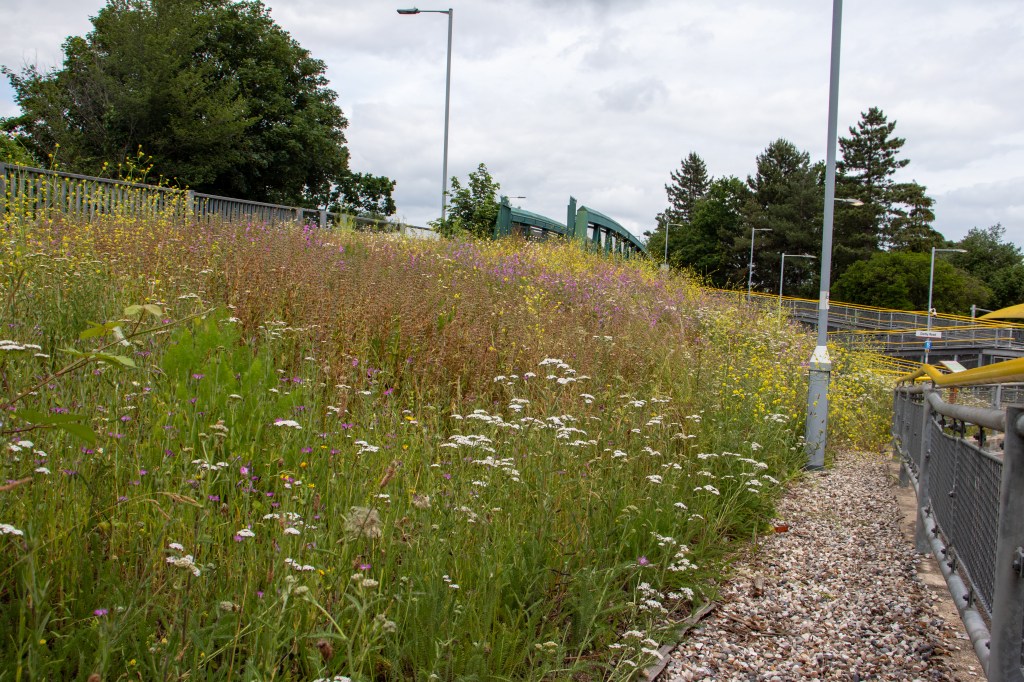
However, this does not mean the station has been left unkept.  In fact in late 2020, work was started to create a wildflower garden on the entrance to platform one.  Supported by the East Suffolk Community Rail Partnership, Greater Anglia Railway, Ipswich Friends of the Earth and Ipswich Council, it really adds colour to the station and makes it feel very well looked after.

An additional poppy patch is situated on the Felixstowe end of platform two.

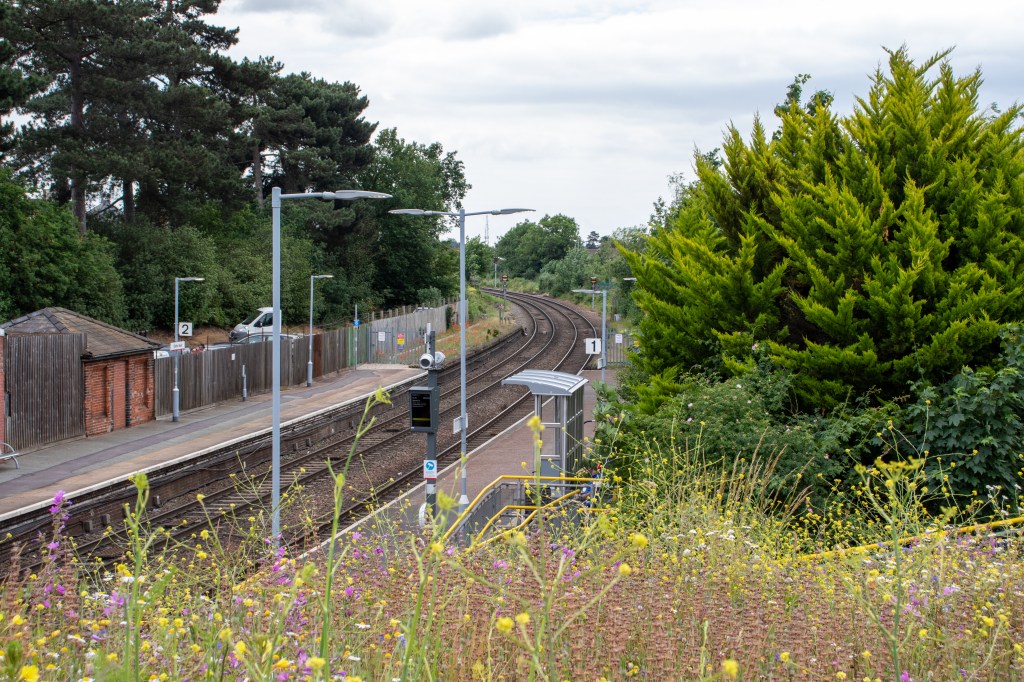
Many of the freight headed towards Felixstowe will stop here, as the line after the station becomes single line running for a few miles. These are at time of writing mostly hauled by class 66 locomotives, and passenger traffic is provided by class 755 Bi-Mode units.

The entry and exit figures for 2019 / 2020 were 46, 808.

In conclusion, Derby road was once an important interchange for the passengers from Ipswich to the coastal town of Felixstowe.  However after the 1960’s, most passenger traffic would be confined to the local area.  The expansion of Felixstowe port has brought many more freight trains through the station, these quite often stop in the loop.  Great views can be had of both freight and passenger traffic, especially through the curves towards Ipswich.  The station benefits from the new wildflower garden, and generally speaking is a good place for the intermodal freight enthusiast.

My Vlog, taken in 2021, can be seen below

The Ipswich Transport Museum can be found here:

https://www.ipswichtransportmuseum.co.uk/index.html