London Termini – London Bridge

London Bridge is the oldest of the Termini in London, and one of the combined termini where terminating platforms are alongside through services. Often derided in the past as gloomy and difficult to navigate, a 21st Century makeover was completed in 2018. It is now a sleek modern building, its angled lines smoothed out with a curvy façade on one side. London’s tallest building, The Shard, towers above it, literally pinpointing the stations position.

A brief history

In 1831 a railway was proposed between Greenwich and Tooley Street. Because it would run through very congested streets, it was agreed that the best course of action was to build a viaduct. This would become a huge 878 arch bridge, made from 60 million bricks which were made in Sittingbourne, Kent. Initially the viaduct had a walkway which people could use for the sum of 1 pence, enabling elevated views of the city. However this was closed during the expansion of 1840.

Partly opened in 1836 as far as Spar Road, the full line to London Bridge was opened in December 1836. The station at this time was very basic, steps or ramps up to the platforms which were totally open to the elements having no sheltering roof or trainshed whatsoever.

Expansion came very quickly, with the London and Croydon Railway Company and The South Eastern Railway company taking routes North and South respectively between 1839 and 1842. The increased traffic gave the station a new building in 1844, the first of many rebuilds London Bridge would have.

The most significant of these was in 1850, where the station was divided in two, the South Eastern taking control of the North side, and the newly formed London, Brighton and South Coast railway company the South side. A huge wall was erected, with both sides having differing rules and regulations, causing services such as horse drawn taxis to pay differing charges as they traversed the station.

This remined in place until 1923, when all the southern rail companies were amalgamated into the Southern Railway Company. A footbridge was built to link the two stations in 1928.

The arches under the station were used in the Second World War as air raid shelters, although conditions were very grim. Inspections declared they were unfit for use and demanded improvements to make them both safer and hygienic. Unfortunately, before any real improvements were made, a bomb hit London Bridge in February 1941, killing 68 and injuring a further 175.

A Major rebuild of the infrastructure and station occurred in the 1970’s. This included new signalling and rerouting of the lines in and out of London Bridge. The building was given a modern design, but people would still complain that it was cramped and uninviting.

It wasn’t until the early 2000’s that another rebuild would take place. The most radical and expensive so far, this time they seem to have got it right , as I shall explain in the rest of the blog.

A quick view of the current station

Although I label this as a quick view, the station is so vast that being quick here is not something i’d recommend if you wish to appreciate this new station.

Entering from the underground station, after going up the escalators you enter a passageway which is Joiner Street. Move into Joiner Street and you should soon see on your left the entrance to the Western Arches.

The Western Arches

Moving into here, the old pillars that are holding up the railway above you, go down this corridor in a pleasant symmetrical fashion. Shops are placed at the side, and the feel of this section is fantastic.

At the end of the passageway is another intersection, this time with Stanier street. Of note here is the plaques along the wall detailing the history of the station layout, well worth a look if you have the time.

Plaque in Stanier Street

Moving back to the end of the Western arches, and head of you is the main concourse – a sleeper in on one of the walls just as you are about to enter the concourse is dedicated to the opening in 2018.

Dedication plaque

Turning right here will take you down past more shops on your right, and the main ticket office on your left. Carry on down to the exit and you will see on your left a memorial to the railway workers who died in the first world war. This exit would take you into St Thomas’ street, next to St Thomas’ hospital, should you go through it.

First World War Memorial

Turning back into the main concourse, head all the way back to the Western Arches and carry on. You will see various gateline entrances to your right, as well as a big escalator and stairs in the middle which will take you up to the upper concourse and the bus station. Lets go up and take a quick look.

Up the escalator ahead of you is the glass frontage of what used to be known as the main entrance to the station. If you were to exit there, the Shard would be immediately to your right, with the bus station immediately in from of you. It is worth going out here just to marvel not only at the Shard, but the impressive all glass frontage to the station here (see the opening picture of this blog post).

Moving around the upper concourse the sense of natural light and space is very evident. Moving to the left you will find gatelines for Platforms 10-15. If you gain access to these platforms, try to take a moment to stand at the end of the terminating platforms, and you will be greeted by a very pleasant sight as the canopy structure over the platforms snakes away from you, yet another good photo opportunity.

A view down platforms 14 and 15

Lets go back downstairs to the main concourse, and turn right towards the exit for Tooley Street. Various gatelines will be on your right, as well as an information centre. Exiting into Tooly Street will give you a look at the new sweeping façade at this entrance. This mixes well with the original arches, which can be seen meandering away towards Greenwich. The view as you enter the station again is below.
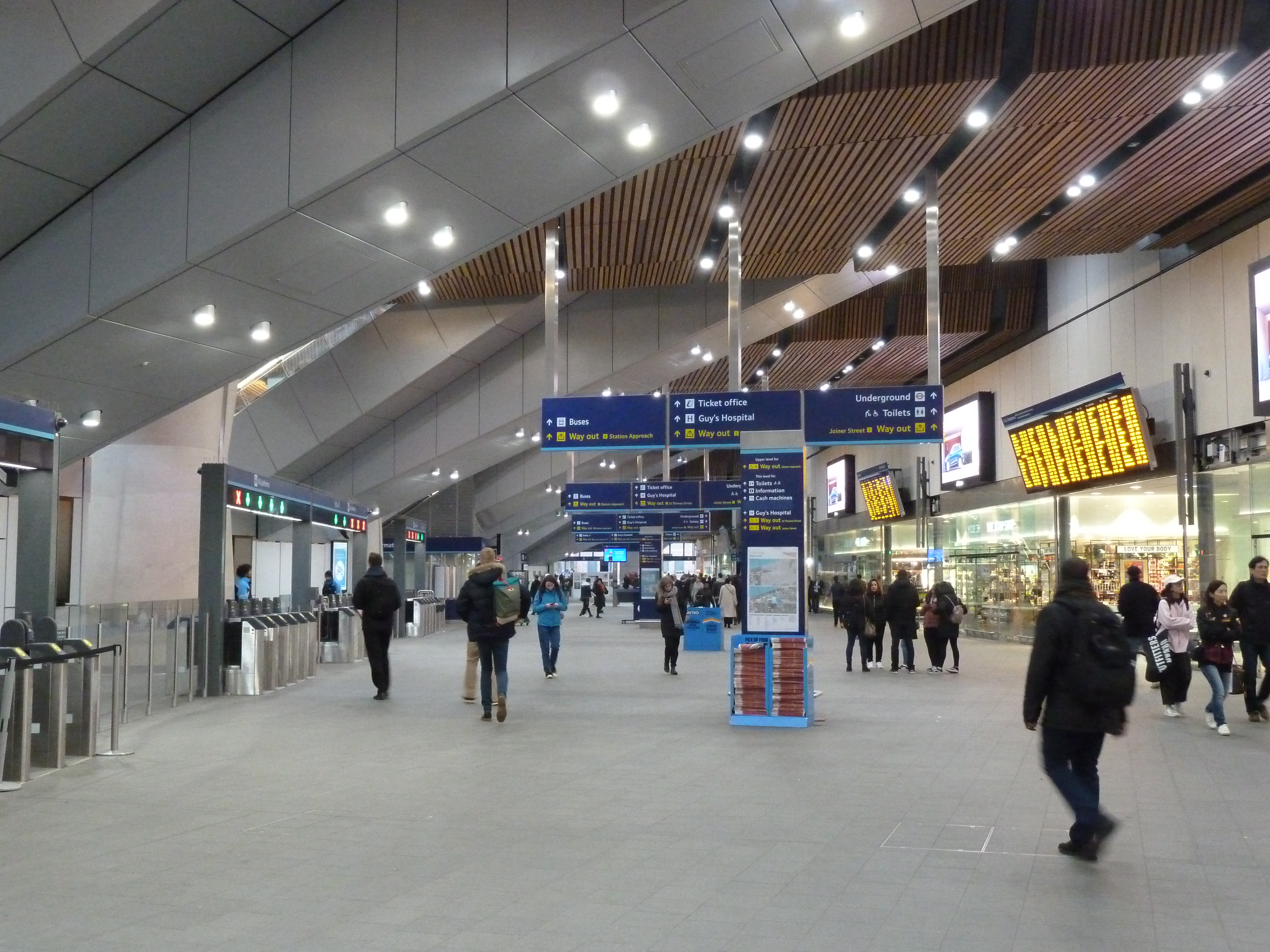
View after entering via Tooley Street, note the huge escalators towering above you.

Moving into the station, we go through a gateline into the inner concourse. Impressive concrete pillars, looking like huge egg timers, are dotted around, with seating around their circumfrence. The space here is very welcoming due to the high ceiling. Various lifts are in the centre too, and ahead of you are the huge escalators which take you to platforms 1-15.

A view across the concourse post gateline, with the lift shafts, pillars and high roof.

Departure boards are placed around the lifts and on the side walls, really the wealth of information about arriving and departing train services is comprehensive.

I visited during rush hour, and yes it was busy, but the station layout as it is now didn’t seem to have any major congestion points. The station and surrounding structure is still being worked on, but all the major components are open, and it seems that at last London Bridge is able to cope with the passenger numbers it receives.

The video below shows London Bridge platforms at evening rush hour.


Please visit my Vlog site on YouTube

Please visit my Facebook page

Please visit my Instagram Page


Many thanks for reading, I’ll blog again soon.
London Termini – Cannon Street

The essence of a true commuter station, very quiet during the day but in the morning and evening a hive of activity. Served only by the SouthEastern Railway and serving only Kent and Sussex, this central London hub has a varied but solid history.

A Brief History

The South Eastern Railway Company started construction in 1863, from a design by Sir John Hawkshaw. The railway entered via a 706ft bridge which at this stage only carried 5 lines. This was increased to 10 during the late 1800’s. The engine shed roof was an impressive 190ft wide and more than 680ft long, with a central lantern section which ran almost the entire length.

On the bridge side, two towers sit either side of the bridge, each adorned with a square domed roof and spire. It was found during restoration in 1986, that the east tower contained a water tank, either for replenishing the locomotives or for use in powering the stations hydraulic lift systems.

A hotel was built on the front entrance of the station. At only 5 stories it was one of the smallest station hotels, but had turrets mirroring those of the main towers. Like most railway hotels however, the popularity waned in the early 1900’s and it closed to customers in 1931.

The station officially opened in September 1866, and provided additional services to and from Charing Cross via a 7 minute shuttle, considerably quicker than the 35 minute walk. However, the advent of the district railway a few years later would render these shuttles almost useless.

The trainshed roof was extensively damaged during an air raid in 1941, and engineers deemed that replacing the glass would not be possible. The structure stood in skeleton form until 1958, when it was demolished in the first re-model of the station.

The new office complex which replaced the hotel was derided by critics, and certainly wasn’t as grand as the original Hotel. It was followed in the 1980’s by a ‘floating’ office block above the station platforms, held up by a 6000 ton metal frame. The block nearest the river has a roof garden, and slightly protrudes the two towers.

A quick view of the station today

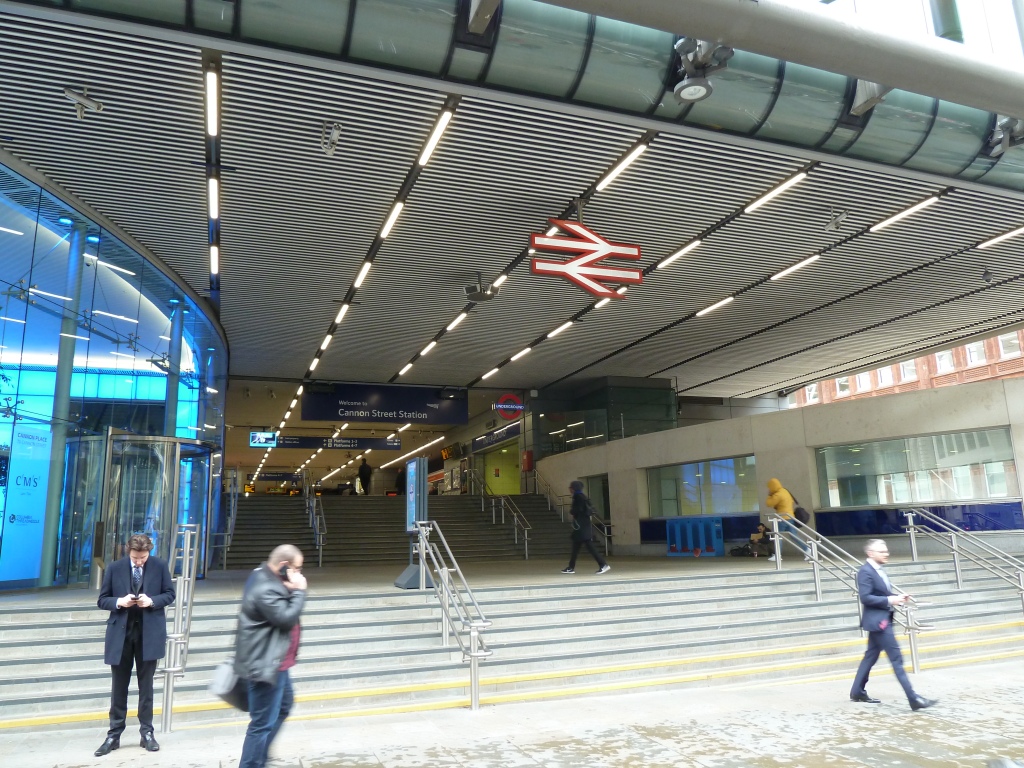
Going in via the right hand steps on Cannon Street itself, you are greeted by a British Rail Sign hanging from the roof and a blue “Welcome to Cannon Street Station” sign. Immediately at the top of the two flights of stairs to your right is the entrance to the Underground station.

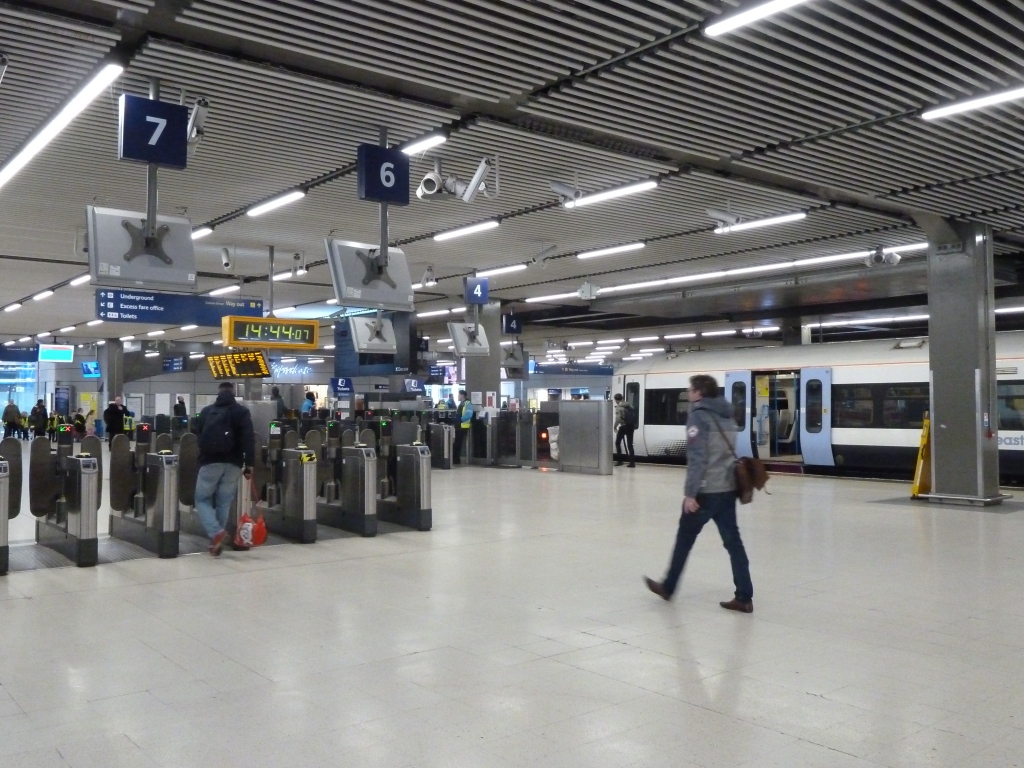
The low ceiling, clad in silver stripes with bright lighting makes you feel penned in. The floor, a cream tile with grey borders almost makes it feel like a department store. This aside, you remember that this is just a “people mover” station, so modern clean almost clinical lines wont be noticed by the thousands using it each day.

View to the station entrance from platform 7

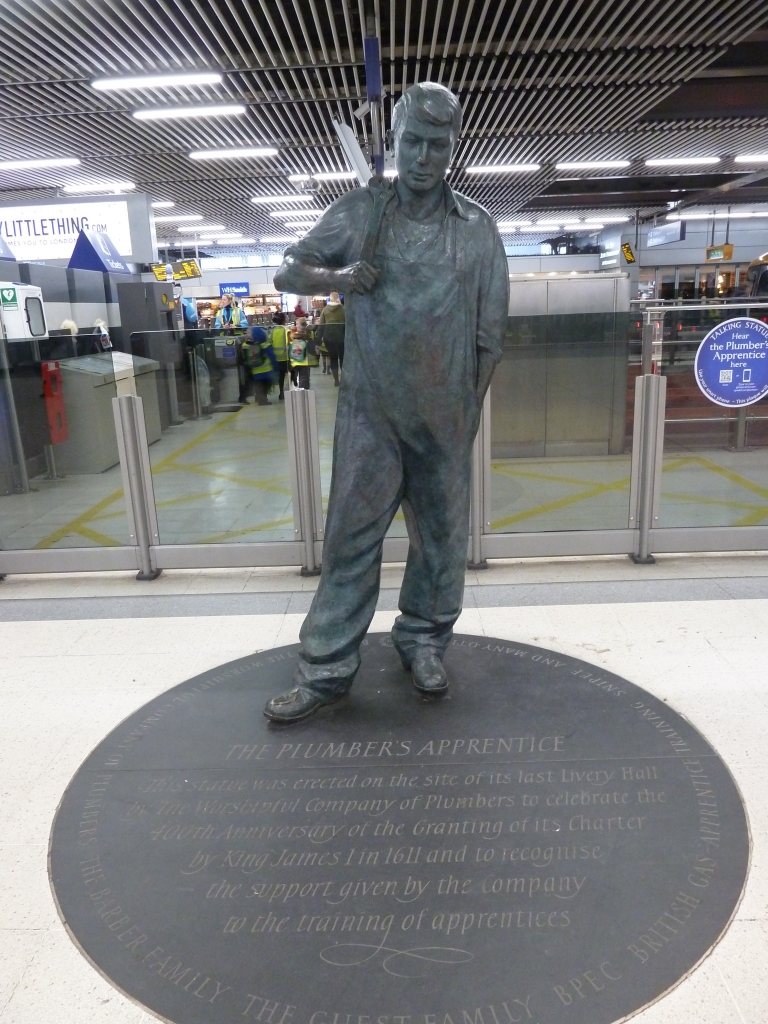
To the right is a coffee shop, then the ticketing office and finally the toilets. Straight ahead are the gatelines to platforms 4-7. Look to your left here and a statue called “The Plumbers Apprentice”, which commemorates 400 years of the Worshipful Company of Plumbers. Their hall was once on the ground of the station.

The Plumbers Apprentice

Carry on past the statue and on your right will be ticketing machines and the gatelines to platforms 1-3. Directly ahead is a retail outlet and a pub/restaurant. Turning back towards the street and by the steps on your right is the lift down to the Underground Station.

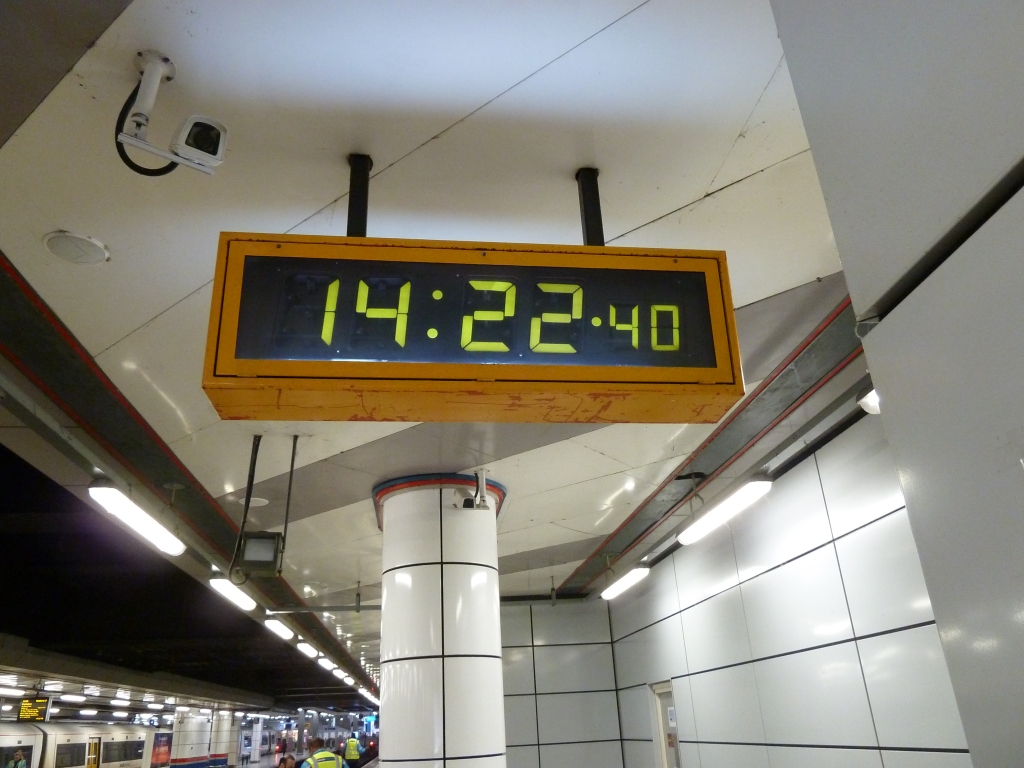
Moving onto the platforms, ex Network South East overhead clocks continue to click away, and the pillars in the centre of the platform still contain the Network South East colour banding at the base.

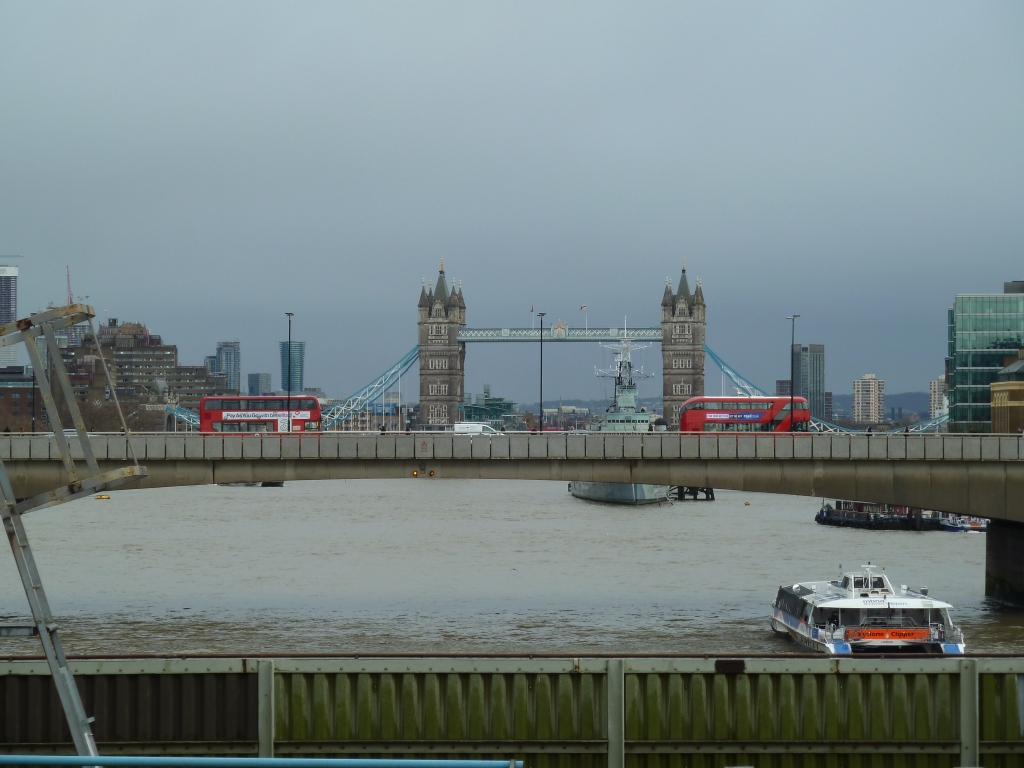
As you move outside, to the left is a view over the River Thames to Tower Bridge, HMS Belfast and The Shard. To the Right you will see both Southwark and Blackfriars bridges, as well as the Tate Modern.

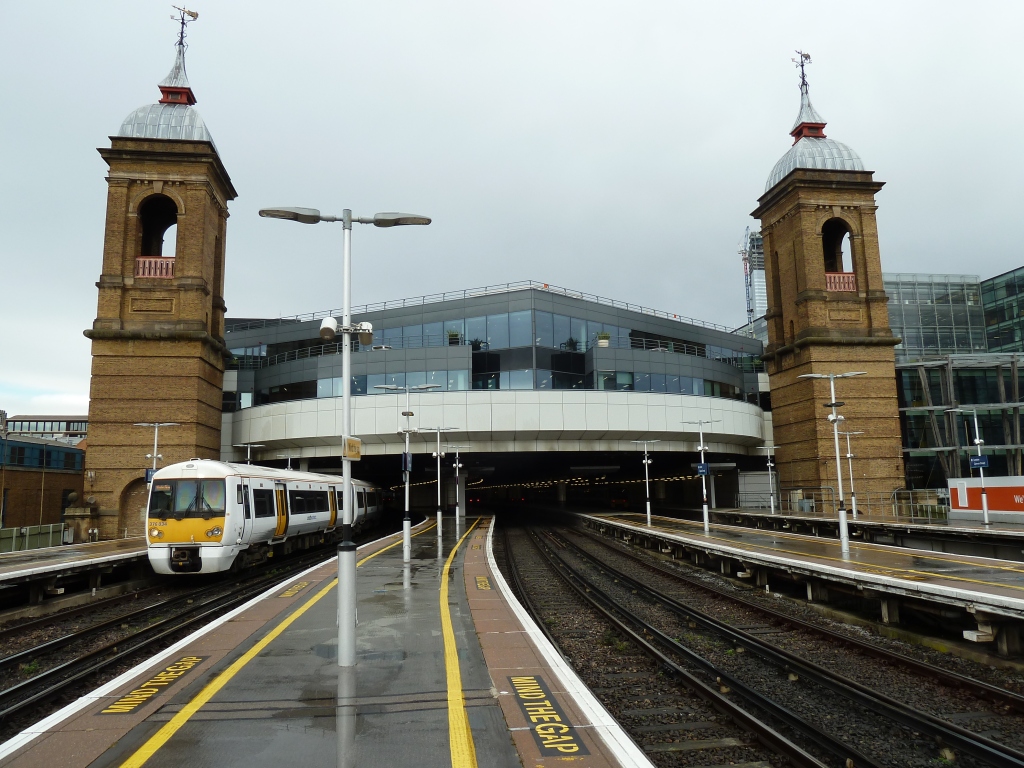
But look back towards the station and the full glory of the two original towers rise before you. A very impressive site, and totally at odds with the office block in the middle, yet somehow it does fit together. In my view it only goes to enhance the old structure.

The two towers of Cannon Street

Cannon Street with all its stark modern looks deceives you, and the small things like the Statue, Network South East reminders and of course the towers are reasons to just spend a little more time looking around you, rather than rushing to get that train home.


Please follow Rainham Rail Enthusiast on YouTube , Facebook and Instagram


Many thanks for reading, I’ll blog again soon.
London Termini – King’s Cross

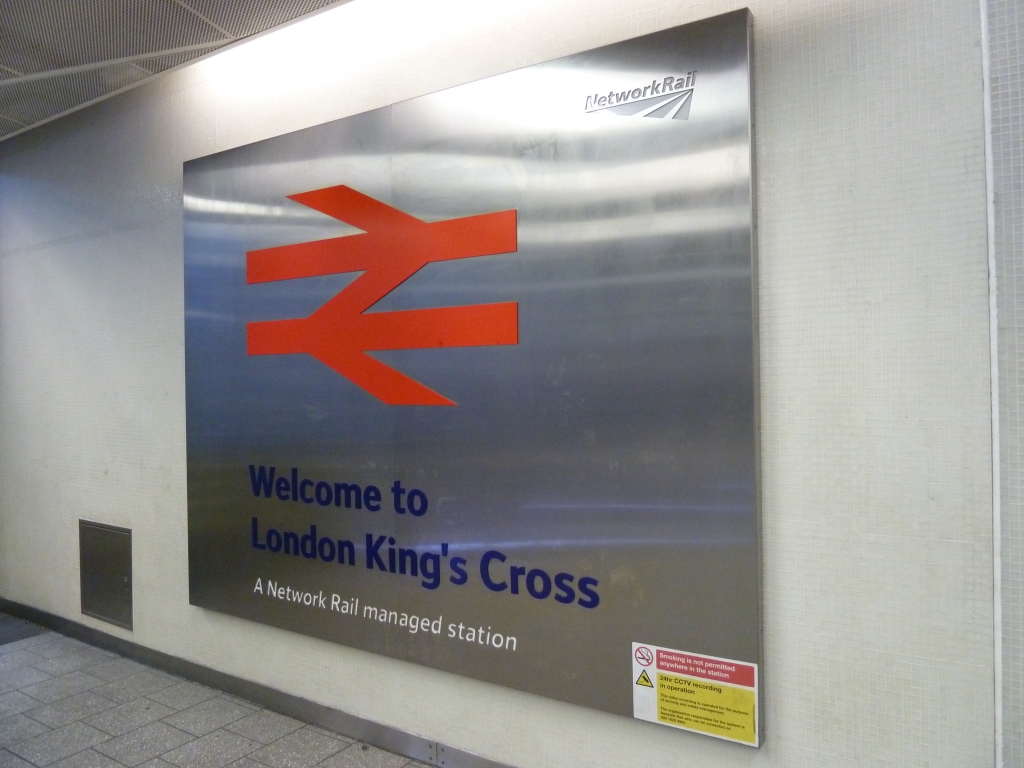
Signage in the underground station

King’s Cross; for a lot of people the station symbolises two very different train services. One steeped in history – The Flying Scotsman – the other pure fantasy – The Hogwarts Express. Whilst one is real and the other fictitious, it is fair to say that if you mention Kings Cross to many of the public, they will utter either or both of them.

A brief history

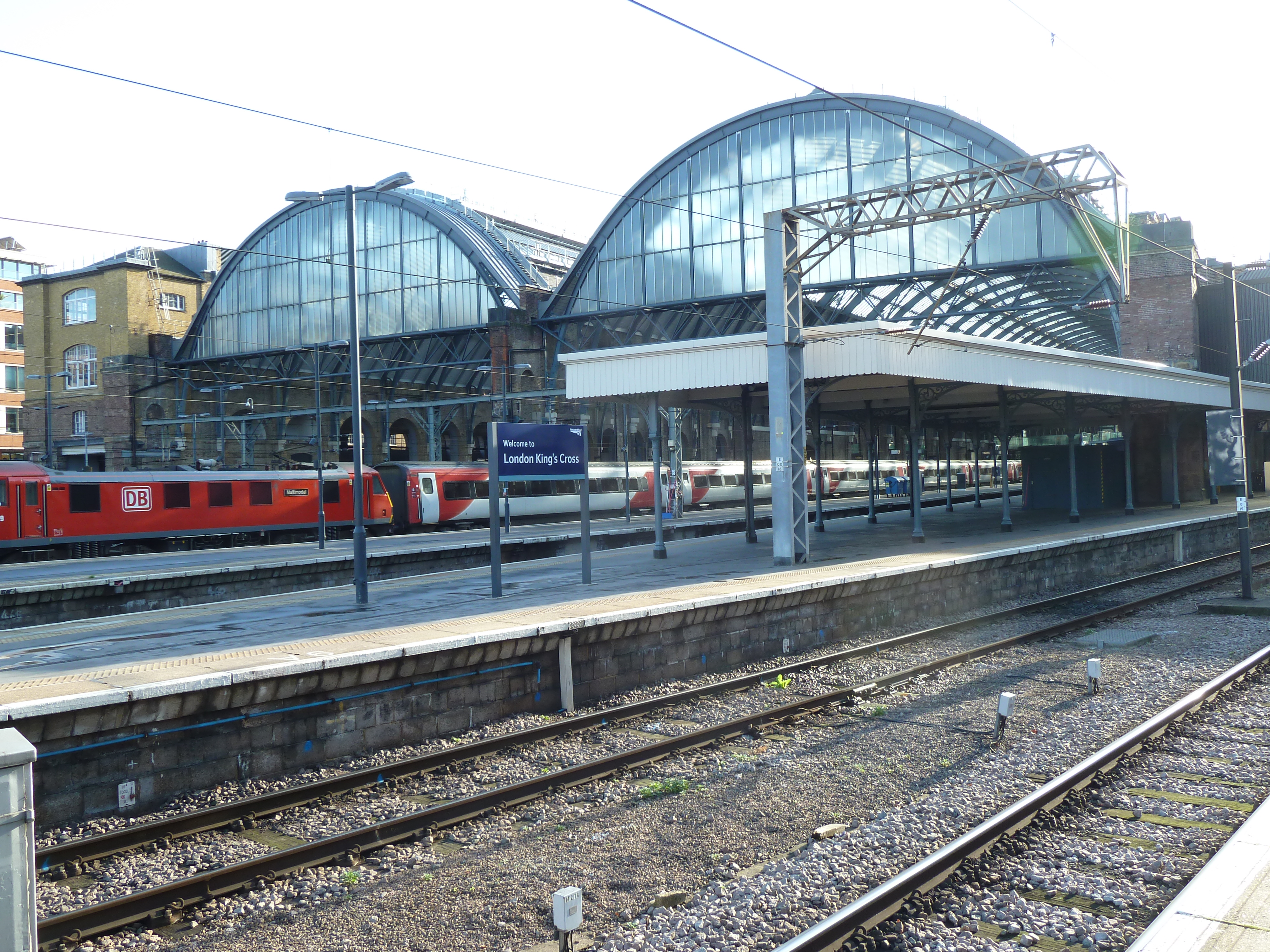
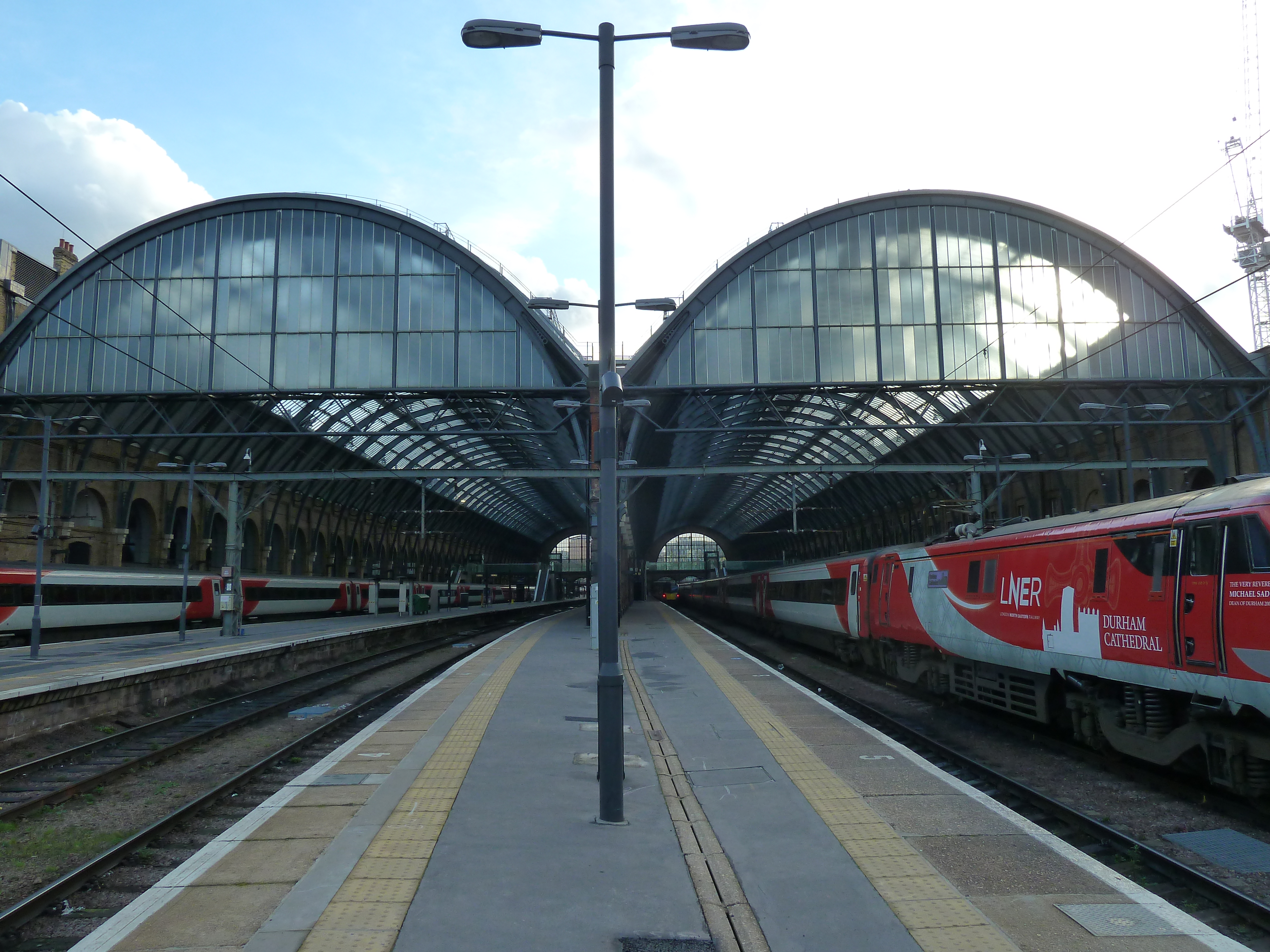
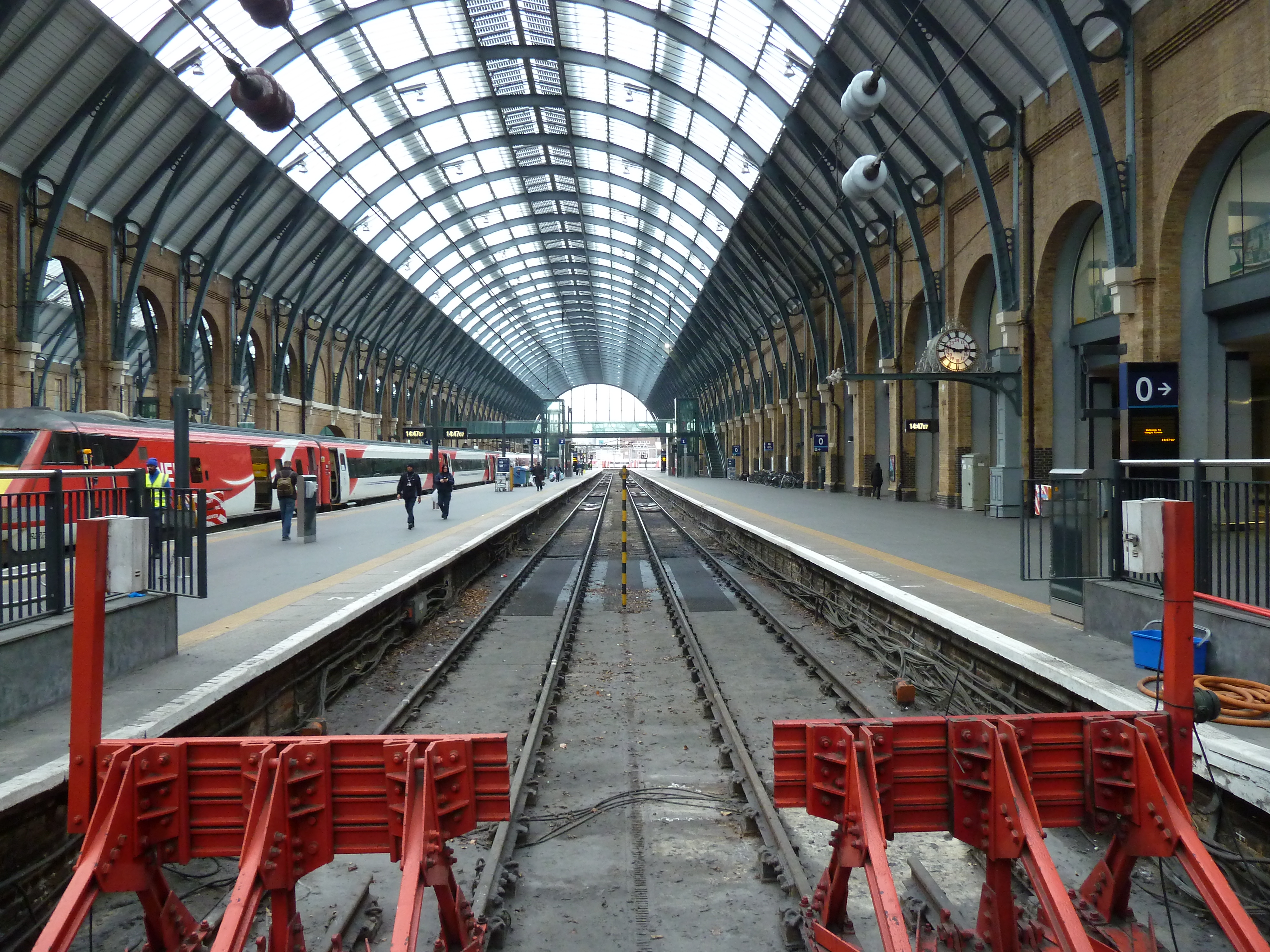
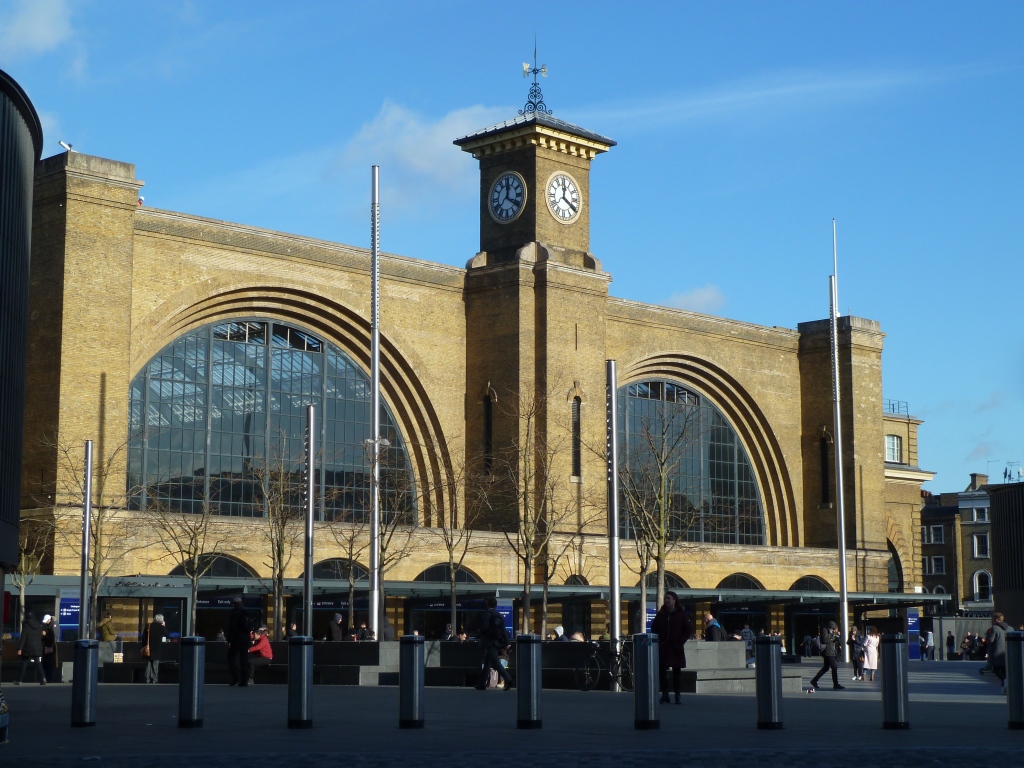
A practical station for a practical railway. That is how the Great Northern Railway saw it when they opened it in 1852. A station with a modest frontage, made from yellow London bricks and a wooden roof, complimented with two 100ft roof spans over the platforms. These roofs being supported by brick pillars, today in the centre of island platform 4 and 5.

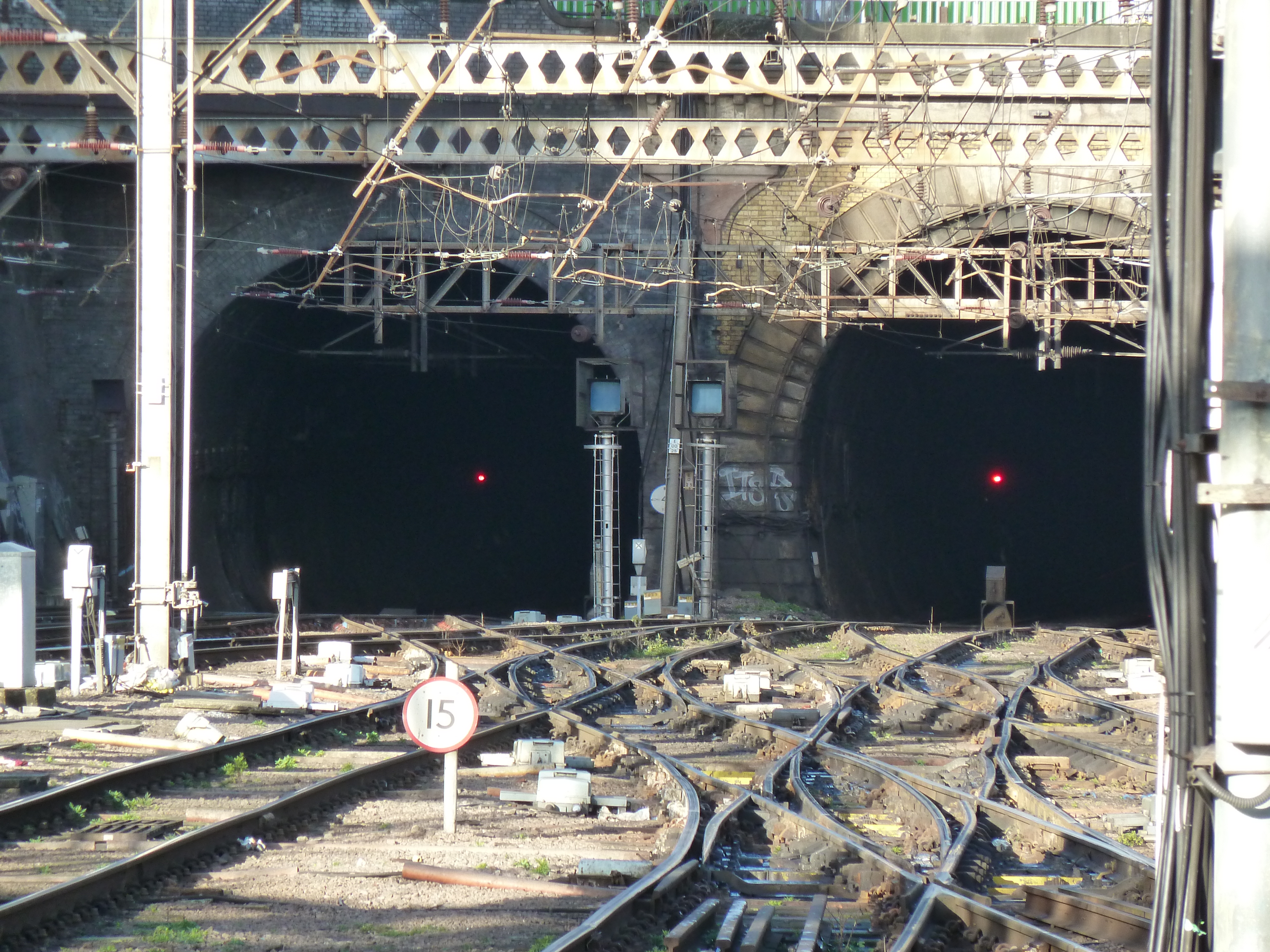
Trains enter and leave the station via the Gas Works tunnel, which passes under the Regent’s Canal. A major goods yard for coal was also contained within the station, although this does not remain.

It looked totally at odds with St Pancras next door; that station when opened 16 years later was oozing with grandeur. A clock adorned the front of the building, and quirkily was rumoured to never have the same time showing as that of its neighbour at St Pancras. King’s Cross as a railway station, however, would for the majority of the next 150 years be the more successful of the two.

For all the footfall though, the station remained unloved for a long time. Indeed in the 1960’s, the square out front was partially covered with a new travel centre for British Rail. This however obscured the lower half of the original frontage, and looked at odds with it.

A quick view of the current station

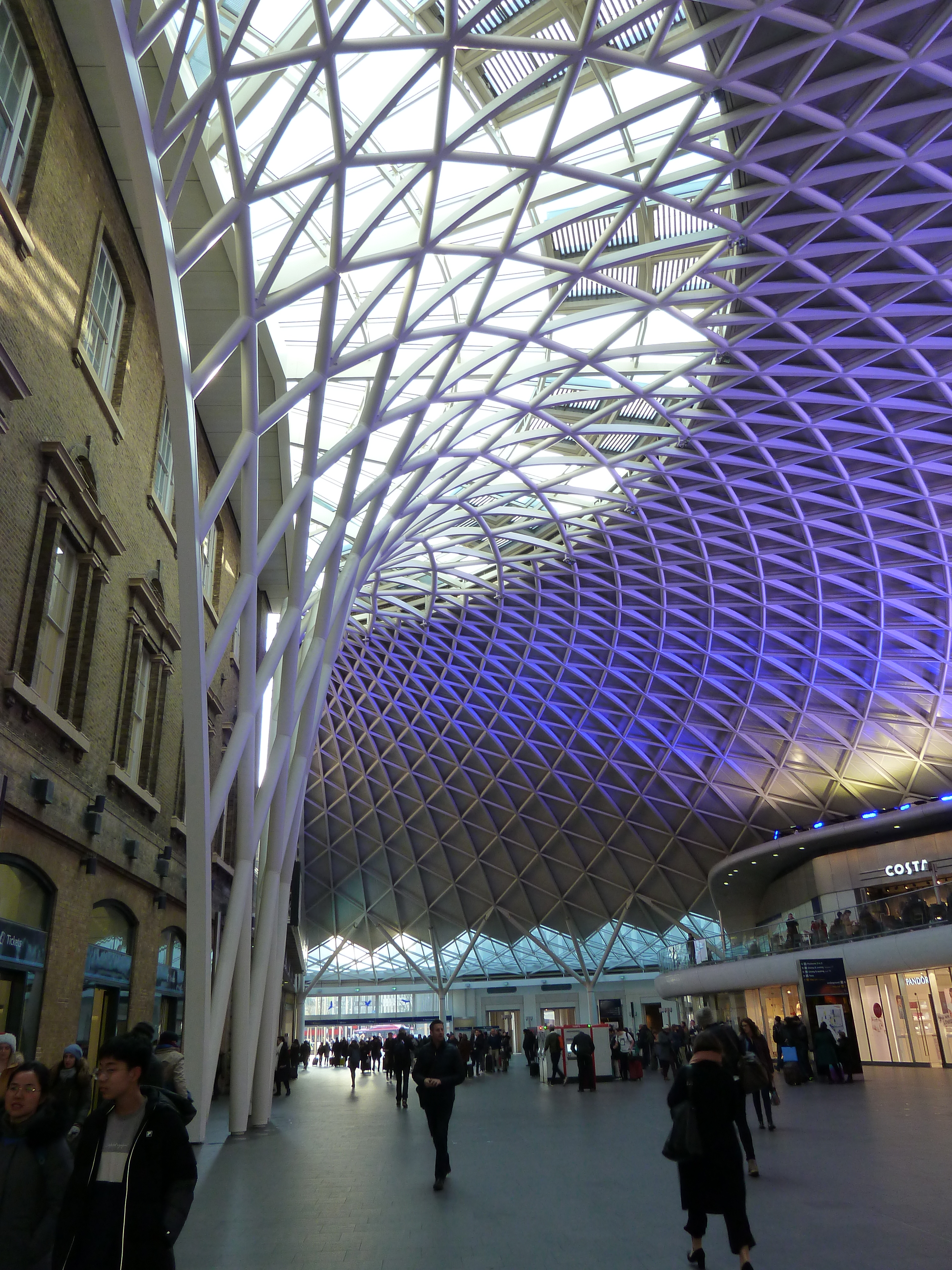
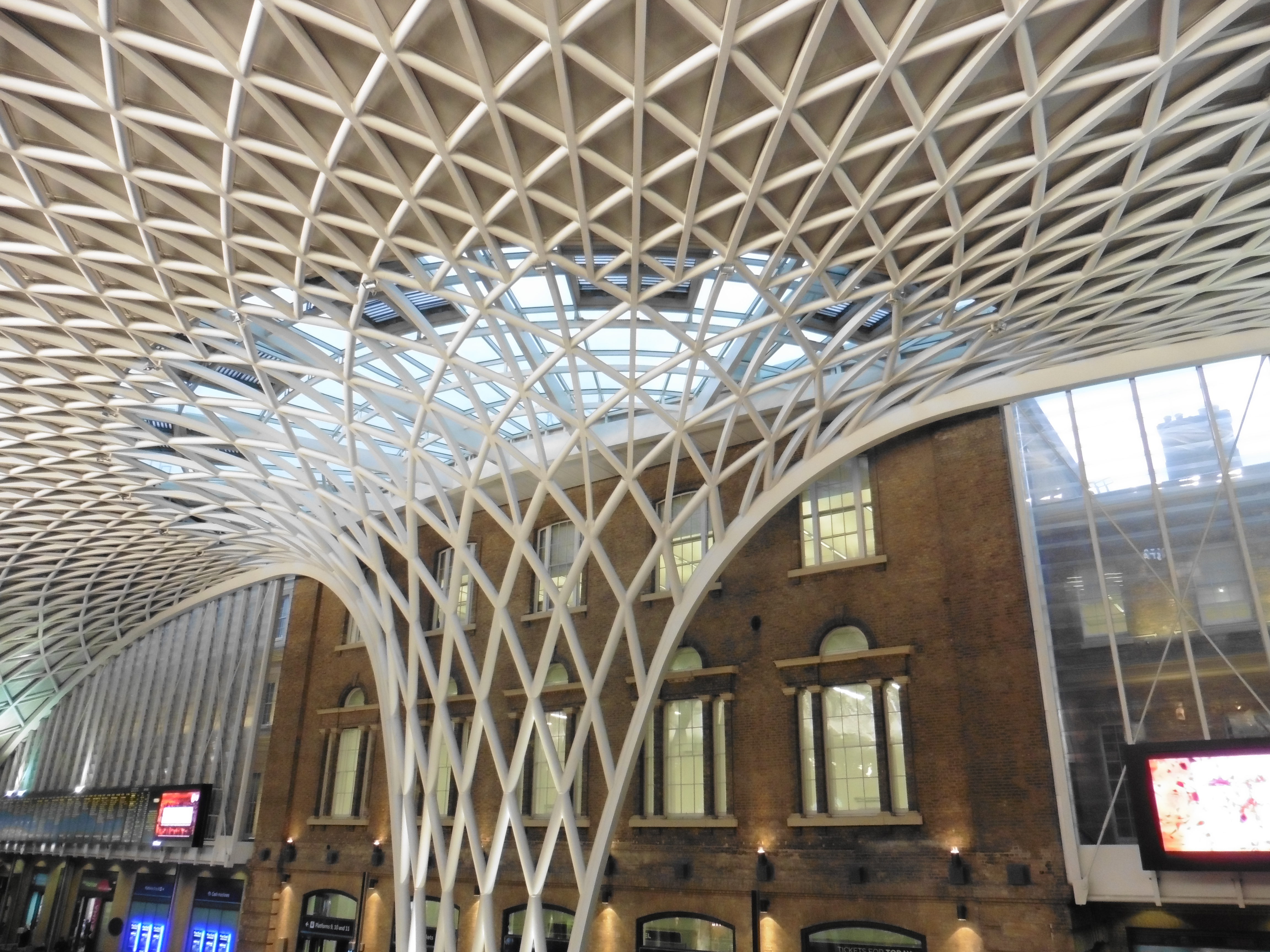
In 2007, work started on a new concourse, and what a unique structure it is. A single rising 150ft “Diagrid” roof, underpinned at its base down 50ft. It spreads out like a metal web, encapsulating the new concourse with its shops and bars. The feeling of space even during the busy periods is amazing, and differing colours are sometimes projected upon it.

The travel centre was removed, enabling the square to be reinstated and the full frontage to again be seen. To the left side of said frontage, an entrance to the new concourse can be seen. Going through this, the superb new roof opens up in all its splendour. Immediately to your right are entrance gates to the platforms, to your left are escalators up to a mezzanine level This contains a seating area and eating and drinking places.

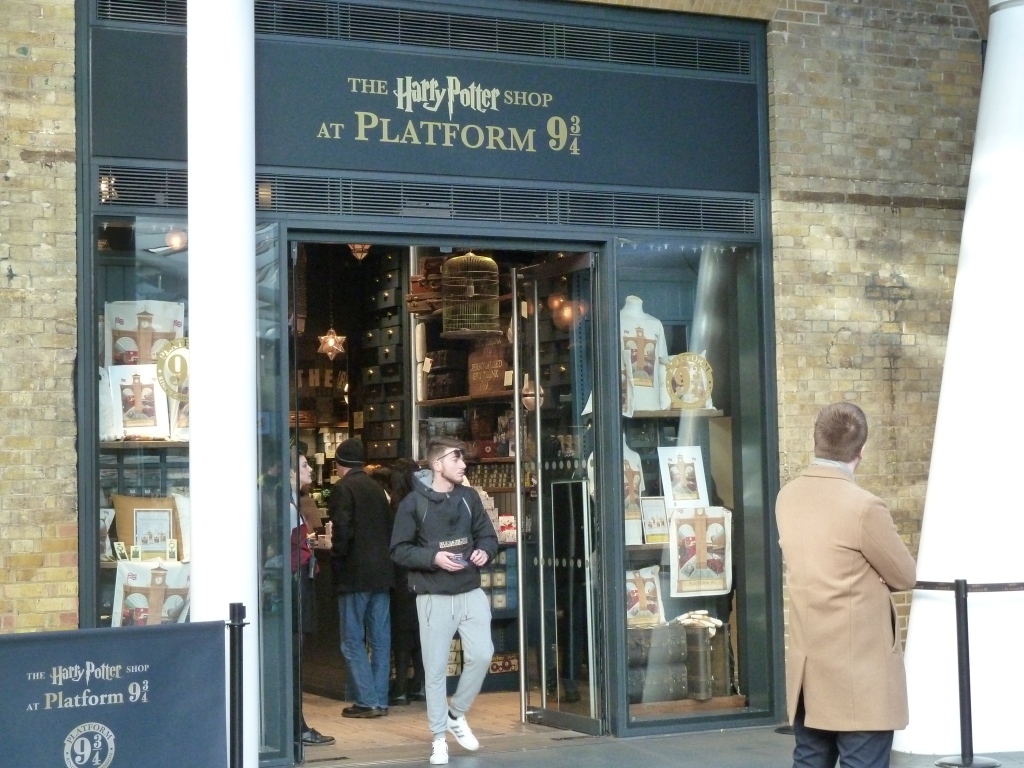
Going back down to floor level via the escalators on the other side of the mezzanine, if you turn right, you will see arrivals and departure boards, and underneath the new travel centre. To the left of the travel centre is the Harry Potter shop, with a photo opportunity platform 9 3/4 area.

Going under the mezzanine, more shops on both sides as you are then greeted with a glazed front, from which you can see St Pancras International. Stairs down to the Underground are also here, one of many access points to the labyrinth of tunnels which form King’s Cross St Pancras underground Station.

Pictures below were taken on 22nd January 2019, and thanks goes to the station manager and Network Rail for enabling me to photograph extensively on that date:

A view to the train sheds from the end of platform 10
The view from island platform 4 and 5, showing the train shed, the centre brick column being obscured by the light fixture.
The gasworks tunnels.
A view down roads 1 and 2, notice platform 0 to the left.
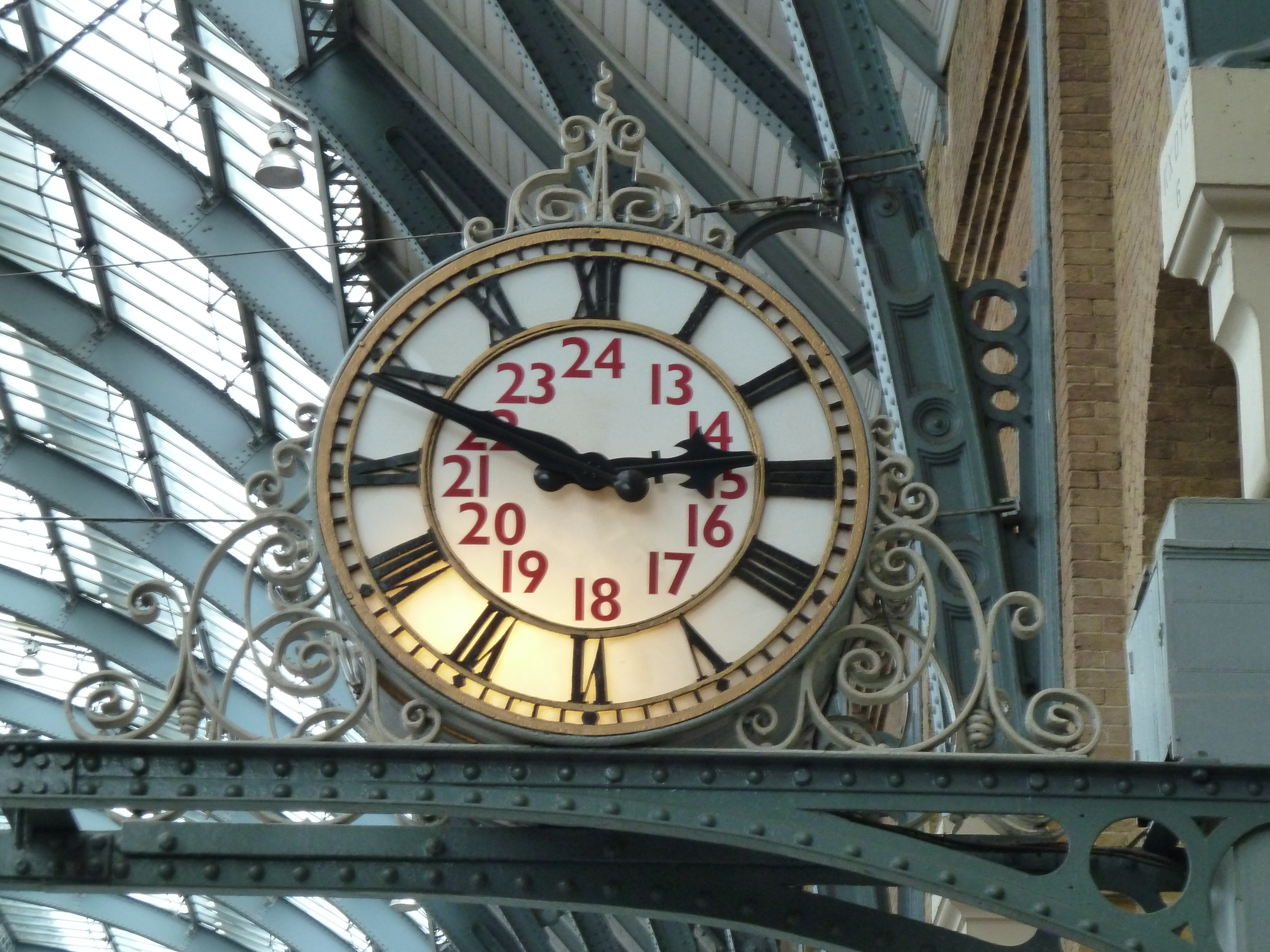
Clock situated on platform 1
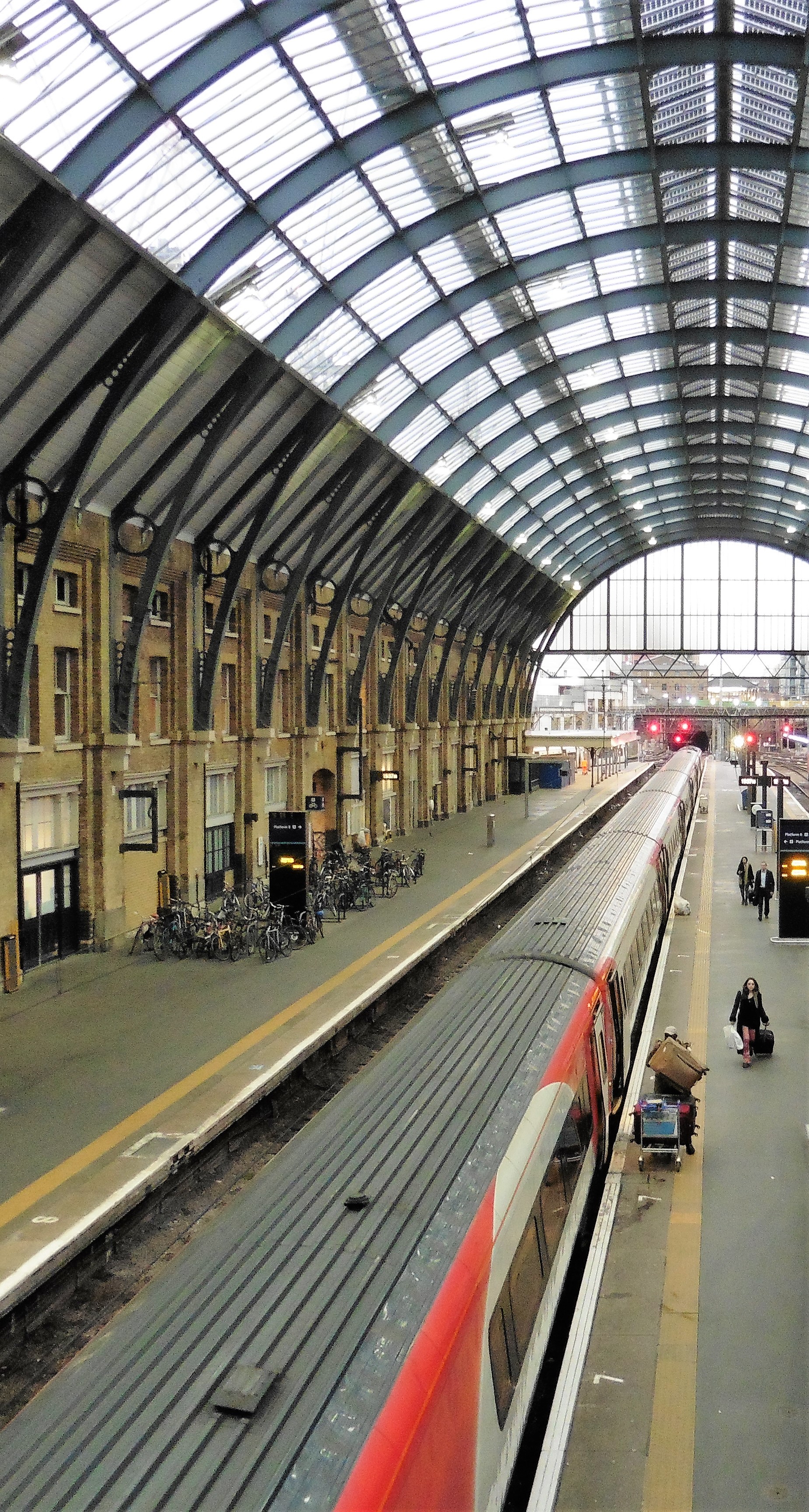
A view down to platform 6
The fantastic canopy over the new concourse
The canopy. Note original station building behind.
The Harry Potter shop – the photo opportunity “Platform 9 3/4” is immediately right of this, and is always busy
The fantastic exterior, with the square in the foreground

Here is a video, also taken on the day, from my YouTube site :


Please also visit Rainham Rail Enthusiast on my Facebook page.

Please also visit Rainham Rail Enthusiast on my Instagram Page.


Many thanks for reading – I’ll Blog again soon.

Didcot Railway Centre

In September 2018, I visitied the Didcot Railway Centre, located adjacent to Didcot Parkway Railway Station.  Access is via the railway station, just tell the barrier personnel if you are visiting the centre and they will let you through.  A wristband will be provided by the museum enabling you to get out.  However if you arrive by train, you can just walk down the stairs from the platform, turn right and the entrance is at the end of the passageway.

IMG_20180911_131053611

There is a very reasonably priced entrance fee (£6.50 per adult on a non running day, rising to £11 – £15 on running days (September 2018)), which has a family ticket option as well as the usual reductions for senior citizens. One thing of note that on non running days, admission is paid inside the museum.

didcot railway centre

The walk down to the first set of buildings takes you past an old coal stage, an impressive sight at track level.  Then you arrive at a collection of buildings, comprising a shop, cafe and a G Gauge model railway.  Next to the cafe is a museum, this contains many GWR artifacts, and although it seems small, quite a lot is packed in here.  Here are a few photos on some of the items on display.  Note that this is just a fraction of what is here, it is quite an impressive collection.

Next to here is the new signalling centre exhibit.  Its main attraction is the Swindon Panel, and was still being worked on when I visited.  It was still fascinating to see the exhibits in here, and nice to see preservation of a different kind for a change, not just with locomovtives and rolling stock.

Moving further up towards the Carriage display, views of the mainline to Oxford can be seen on the right.  There is also a running track which is used on running days, with two stations at either end.  A picnic area and play park is also here.  The carriage display is very comprehensive, and includes a Traverser.

P1020812

Various wagons and a signal box are at this location too, all very well cared for.  Further up still is a section which has some broad gauge engines, an unusual sight.

I decided to end my day at the engine shed, which is opposide the cafe.  I good array of Great Western steam locomotives are found in here, and I would imagine would be a great sight on a running day.  A quick trip into the shop and then I left.


Overall I was very impressed and will try to get back here on a running day.  I spent a good 2 and a half hours here, which included a very nice lunch in the cafe!  I highly recommend a visit, especially if you are an enthusiast who plans to stay a while at the main station, which I did (more on that in a later blog).

I have made a short video of the centre, uploaded to my YouTube channel, which you can view below :


Please visit Rainham Rail Enthusiast on YouTube

Please visit Rainham Rail Enthusiast on Facebook

Please visit MIstydale Model Railway on Facebook


Thats all for now, thanks for reading, I’ll Blog again very soon.

British Rail 411 Unit (4 Cep) and variants “Slam Door”

I make no apologies for this blog.  These are the trains from my area of the country (North Kent) when I was growing up in the 1970’s and 1980’s.  The familiar sound of these “Slam Door” trains were the soundtrack to the rush hour, with the sound of said doors ringing through the major London Termini of Charing Cross and Victoria.  So here is a short history of these workhorses of the North Kent and Chatham Main Line.

The 411 unit, also known as the 4Cep, were built for British Rail between 1956 and 1963, mainly ran on the Chatham/North Kent lines.  A total of 133 units were made, mainly just passenger based, although around 22 had buffet cars installed, these were re-categorised as 4 Bep units.  The 4 referred to the 4 car formation, two driving cars which also had standard seating, the middle two cars having a mix of 1st class corridor and standard class corridor coaches.  They had a maximum speed of 90 Mph.

Each area of seating contained a door, which was inherently dangerous as it could be opened at any time.  This lead to many doors being opened way before stopping, and people would literally jump from a moving train onto the platform.  You really had to stand away from the platform edge when a slam door was coming in, otherwise you may have had a door in the head!

If you had ever ridden in one, or heard one you would not forget it.  They were dangerous, accidents such as the Clapham Rail Crash of 1988 with Vep and Rep variants would prove to be catastrophic.  Replacements such as the Networker and Electrostar would follow, with their automatic doors and safer designs.  But they never quite recaptured the feel and seating comfort of these trains.


Please visit Rainham Rail Enthusiast on YouTube.

Please visit Rainham Rail Enthusiast on Instagram.

Please visit Mistydale Model Railway on Facebook.


That’s all for now, thanks for reading and I’ll blog again soon.

Railway Stations Near Me – 2 – Higham

In the second of this series, I look at Higham Railway Station on the North Kent Line.  The station was 28 miles Down from its previous terminus at Charing Cross, however the Thameslink service no longer goes to Charing Cross, instead stopping at London Bridge before going though the London Core on its way to the its new end at Luton.

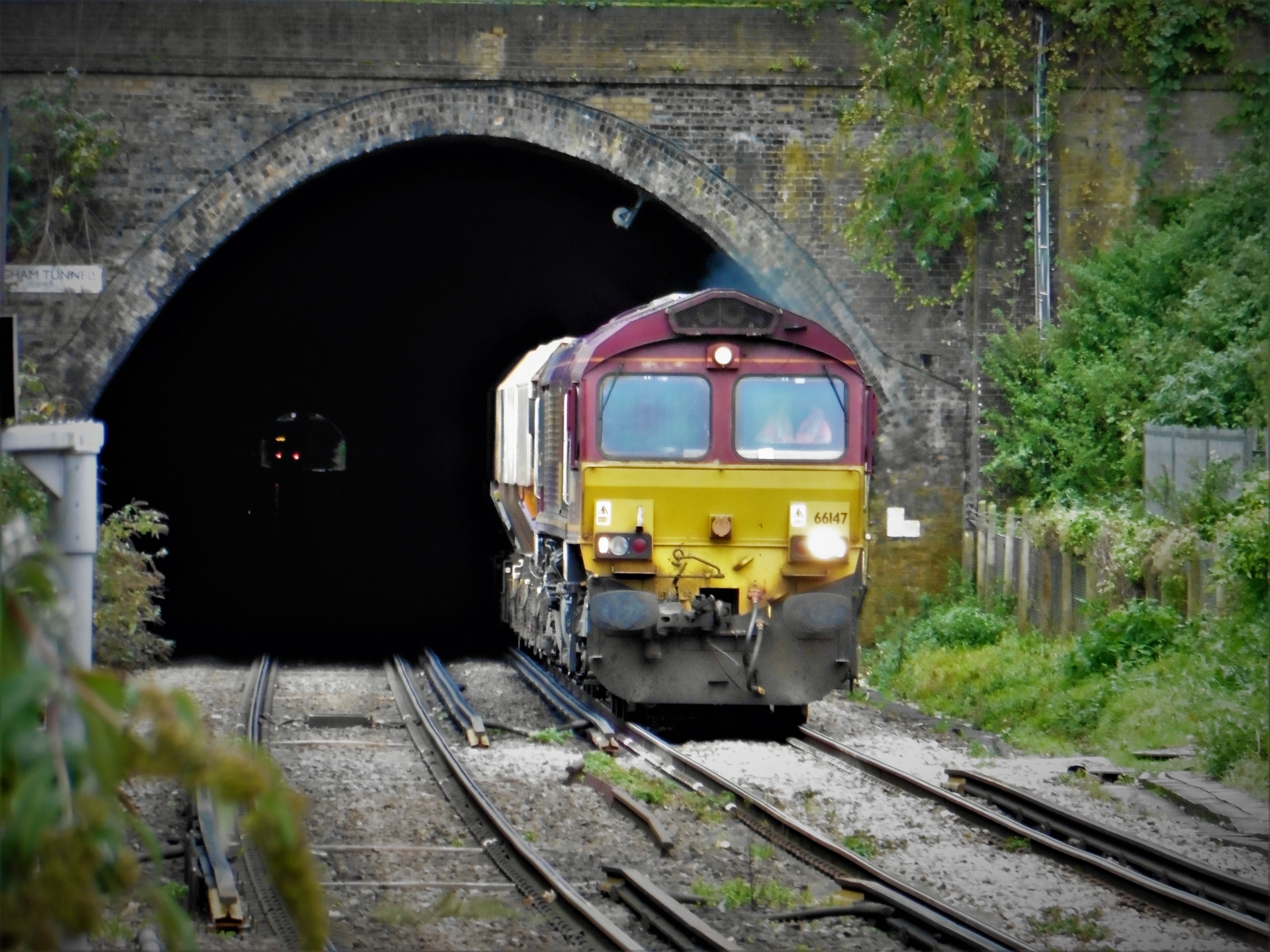
The first thing of note here is Higham Tunnel, at 1531 yards in length.  It originally was constructed in 1801 to serve the Thames and Medway canal, which acted as a passage for military traffic from Woolwich through Gravesend and Higham to the dockside at Chatham.  When traffic on the canal didn’t reach expected levels, the newly formed Gravesend and Rochester railway company acquired the canal and tunnel, putting a single track rail line alongside the canal.  This lead to the opening of Higham Station in 1845.

There are actually 2 tunnels, separated by what is locally known as ” the bomb hole”.  This was an area for the barges to cross.  The second tunnel is the “Strood” tunnel and at 2329 yards in length is the longest of the two.  The tunnels received extensive refurbishment in 2004 due to rock falls, and are now strengthened by steel and concrete.

A year later, the Gravesend and Rochester railway company was itself absorbed into the South Eastern Railway.  It is at this point the canal was drained fully, and a second rail line put in.  At this time the railway did not divert to the Medway towns, instead carrying on to Maidstone via the Medway Valley.  It was not until 1939 that a spur from Strood would carry trains onto the Chatham Main Line to Gillingham.

Higham would have a couple of sidings, both on the Up and Down lines, although both had been removed by the mid 1960s.  The most unusual piece freight unloaded by the station was a Swiss chalet in 1864 as a gift for Charles Dickens, who lived at nearby Gad’s Hill.

Although initially accessed by a foot crossing, platforms are reached via a lattice footbridge, a common sight throughout the Southern Region in the 20th Century.  The station building still survives, and was still heated by the original fireplace as late at the 1980’s.

The ticket office is open for only part of the day, at other times a permit to travel ticket must be purchased from a PERTIS machine, located by the bridge on the Up side. The station was served by SouthEastern until May 2018, when the new Thameslink Class 700 service to Luton/Rainham commenced and took over the 2 tph (each way) Stopping service.  Class 395 SouthEastern “Javelin” trains pass though, as well as various freight though the day, some heading for the nearby “Hoo Junction” Yard, around 2 miles further on the Up line.

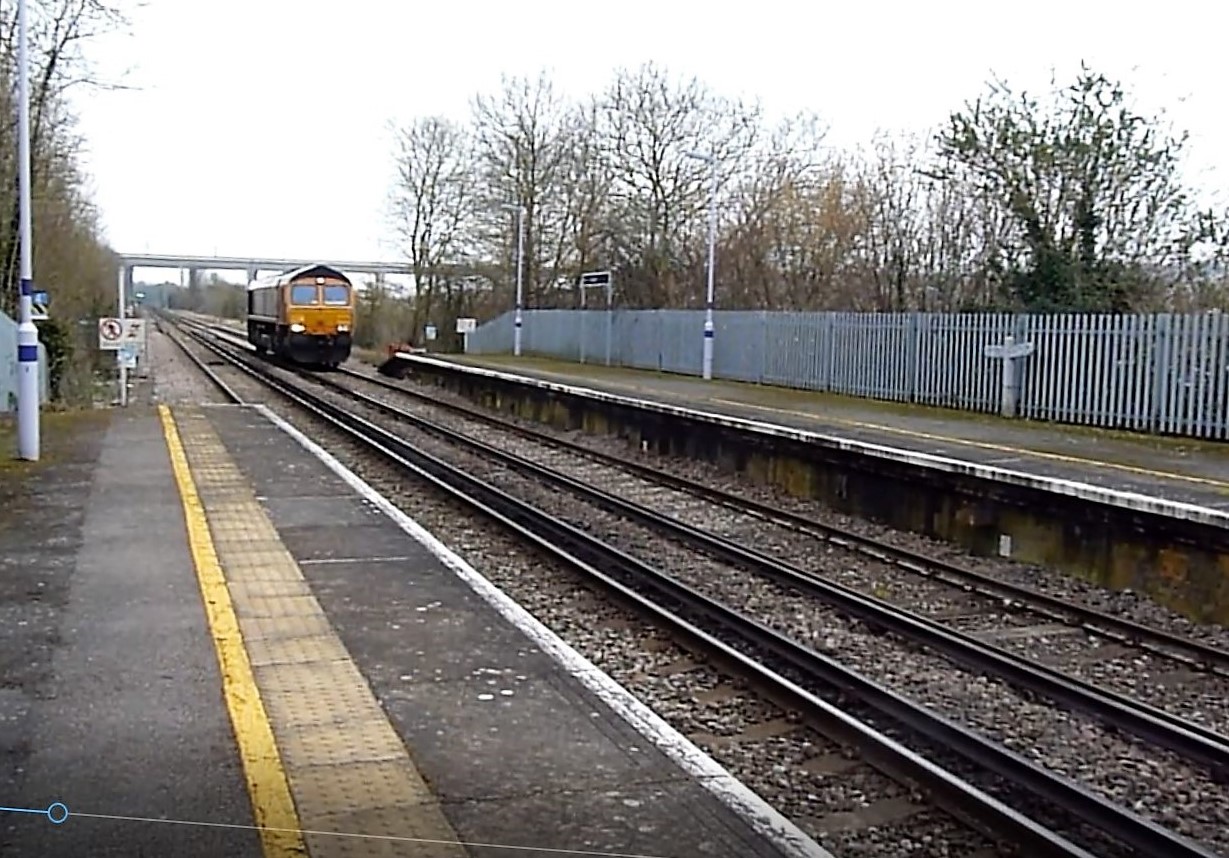
Two pictures follow.  The first by me, shows a Class 66 hauling stone wagons exiting the Higham Tunnel on the Up line.  A train can also be seen passing through “The Bomb Hole” on the Down line heading towards Gillingham.

P1000393

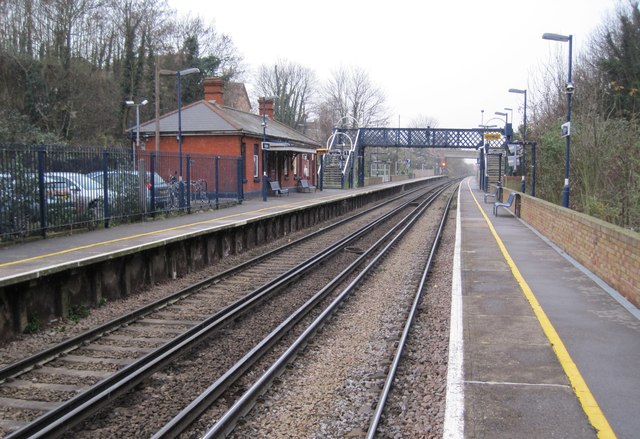
The second is a view towards the station building, taken from the Down platform.  This photo by Nigel Thompson (credit under photo)

3614705_28c3986d

Higham railway station, Kent
cc-by-sa/2.0 – © Nigel Thompson – geograph.org.uk/p/3614705


Please visit Rainham Rail Enthusiast on YouTube.

Please visit Rainham Rail Enthusiast on Instagram.

Please visit Mistydale Model Railway on Facebook.


That’s all for now, thanks for reading and I’ll blog again soon.

Medway Stations 4 – Cuxton

Continuing my look at stations in the Medway area, this time I shall look at a small station on the Medway Valley line – Cuxton.

Cuxton Station was opened in 1856, and from the outset had two lines.  Two platforms served by an level crossing at the south end of the station allowed passengers to travel to Maidstone to the south, and Strood to the North.  In 1862, a signal box was erected adjacent to this level crossing, and is still there today (2018)

In 1931 a small siding was opened to the south of the station, trailing off the “down” line, which served a national business (Besto Co.) making fruit baskets. This was followed in 1939 with a goods loop installed to the north of the station.  Unfortunately, none of these sidings survive today, both having been removed by the end of 1990.

A footbridge was installed at the south end of the station in 1961, adjacent to the level crossing and the Signal box.  A note about the level crossing, as it is still manually closed  by the signalman at the time of this Blog (2018).  A really rare sight, and (unfortunately) I will assume this will become automated at some time in the future.

Two views from Cuxton in 2016 follow.  The first shows a light engine class 66, travelling on the “down” line towards Maidstone.  This view is to the north, and the bridges across the M2 can be seen, the nearest one being the HS1 line.

cuxton a

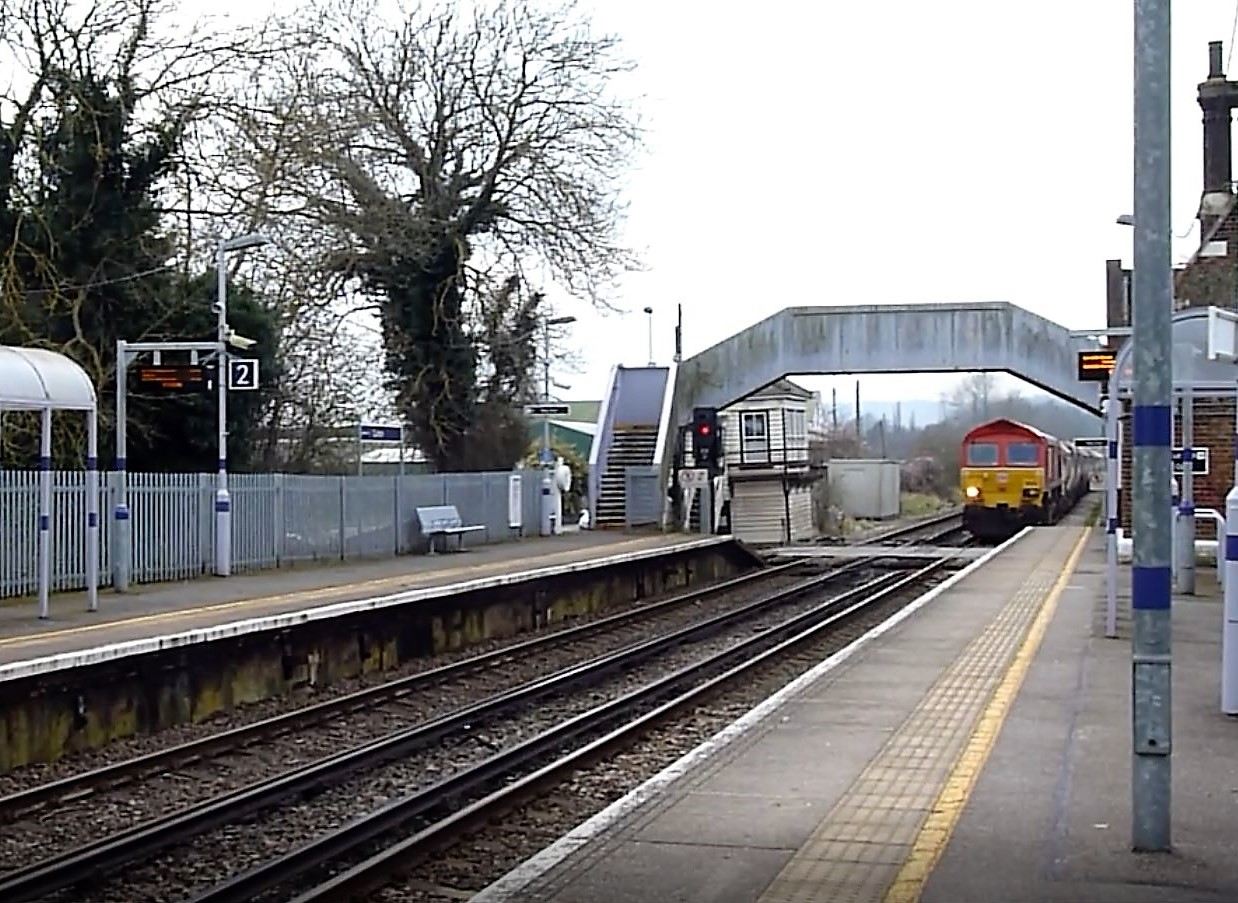
The second view is to the south, showing the signal box, overbridge and level crossing, as well as a stone train travelling on the “up” towards Strood.

cuxton b

Currently at Cuxton, there is only a PERTIS (permit to travel) machine installed here, the majority of the station buildings being disused for many years.  The station is served at this time by Southeastern, with 2 trains per hour (northbound “up” to Strood, southbound “down” to Maidstone (1 Tph continues to Paddock Wood, the other to Tonbridge). (correct as of June 2018)

A few freight trains run though the day, to or via Hoo Junction (to the north) or to the south, some of which come from or go to ARC sidings just outside Allington in Maidstone.  Freight is mainly hauled by class 66 locomotives, although some class 70’s have also been seen on the line.


Please visit Rainham Rail Enthusiast on YouTube

Please visit Rainham Rail Enthusiast On Instagram

Please visit Mistydale Model Railway On Facebook


That’s all for now, thanks for reading and I’ll blog again soon.

Stations Near Me – 1 – Sittingbourne

As a companion to my ongoing series of potted station histories in the Medway area, this blog subsection will concentrate on other stations near to where I live in Rainham (Kent). The first is Sittingbourne.

Sittingbourne station opened on the 25th January 1858, as part of the East Kent Railway (later to be merged with the South Eastern railway to form the South East and Chatham Railway). At this time, trains would terminate at Chatham and a horse and cart would transfer passengers to Strood, where they would join passengers on the South Eastern Railway.

The large and impressive station building is situated on the “up” line, with 2 platforms, the “down” side connected by a subway. Goods sidings at this time were adjacent to the “up” line, to the east of the main station building. In 1860, services to Sheerness-on-Sea commenced via a new line next to the existing down platform, making this platform an island type.

In 1899, a new footbridge linked the two platforms, complementing the existing subway. It was around this time that the station was also re-named “Sittingbourne & Milton Regis”, a name it was to retain until changed back to “Sittingbourne” in 1970.

The Southern Railway took over in 1923, The goods sidings on the “up” line were removed around this time. In its place, a small goods yard was installed to the side of the “down” platform. Serving primarily the paper mills, it also provided stabling for chemical trains going to Sheerness Steel in the late 20th Century.

Electrification at Sittingbourne came quite late in 1958 (the lines further west through Gillingham had been electrified since the late 1930’s). With electrification, the old semaphore signals were removed, with full electric light signals put in their place.

In recent history, a new bridge to the east of the station building was opened in April 2012. This included a lift for passengers. This was a great improvement on the situation before that, which required passengers who needed assistance to be taken across the tracks via a walkway with a member of station staff. A full refurbishment to the toilets and station building was also undertaken at this time, as well as new platform shelters. The subway was blocked in the early 2000s.

The station building is the oldest piece of railway architecture surviving in the area.

Incidents:

Three major incidents have occurred either in or near the station:

1861 : A derailment just outside the station causing 1 death.

1878 : A collision within the station as a passenger train ran into static goods vans. The fault for this was attributed to the goods shunter. 5 People died.

1966 : 18 vans of a freight train de-railed just past western junction on the “Down” approach to the station. This caused extensive damage to the infrastructure and closure of the entire line for two days. Thankfully there were no casualties.


Some information contained is this blog was obtained from the KentRail Sittingbourne Page .

Photographs (c) David Glasspool and Stacey Harris


Videos I have taken can be found on the RainhamRailEnthusiast YouTube Page.

My model railway has a Facebook page, click to view Mistydale Model Railway .

You can also follow me on Instagram : @RainhamRailEnthusiast

and Twitter : @RainhamRail


Many thanks for reading this Blog instalment – goodbye and I’ll Blog soon.

Sheerness-On-Sea Railway Disaster 1971

In this blog, I will write about the railway accident which occurred on 26th February 1971 at Sheerness-on-Sea railway station.  All relevant links to content are at the foot of this blog.

On the evening of 26th February, the 17:16, 10 car train from Victoria to Sheerness entered the station but failed to stop and the first carriage ended up careering into the station, demolishing most of the booking hall.  Unfortunately 1 person died and 13 injured, including the driver.  A more detailed look at the accident is contained below.

The train itself was a 2-HAP built for the Kent Coast line between 1958 and 1963.  This particular train comprised of 5, 2-car trainsets, all steel construction on standard BR bogies.  The power to these trains was via a controller in the cab which requires it to be depressed at all times in order to take power.  If this handle is not depressed, the brakes will apply automatically, with around a 2-3 second delay.  This so called “dead man switch” still applies today, in various forms.

As noted by various eye witnesses, many of whom were railway staff, the train appeared to slow correctly when entering platform one, but was seen to be going too fast as it ran along the platform.  Indeed one eyewitness – railwayman M.Gordon remarked to a colleague “that train is not going to stop”.

A few seconds later, the leading cab ploughed into the platform 1 buffer assembly, at what is believed to be around 10-15mph.  The upper portion of the front coach detached from the bogie assembly and carried on over the concourse, demolishing most of the ticket office and taking out a centre beam before crashing though the front of the building and coming to rest.

The fatality was a Mrs Joyce Carr, who had just bought a ticket from the office.  The 13 other injured were taken to Medway hospital, including a near term pregnant woman who gave birth 2 hours later.

The Official Report states the following conclusions to the accident.

The driver – Mr Rothwell, had suffered a head injury at Holborn Viaduct a year earlier, in which he was unconscious for around 8 minutes.  After extensive testing and evaluation, he was passed fit to drive again July 1970, and re-examined in October the same year.  Another test was planned for April 1971.

Mr Rothwell when interviewed stated that he remembered applying a slow brake to the train when entering the station, but that the next thing he remembered was being slumped over the cab after the accident.  This was in agreement with at least two other witnesses who found Mr Rothwell in the cab afterwards

The overall conclusion is that the driver had blacked out, slumping over the controls, thus still providing the connection with the controllers Dead-Man switch.  The train carried on at 10-15 Mph, before connecting with the buffers. This caused immediate application of the emergency brake, slowing the rest of the train.  Indeed, only the second carriage was further damaged, most of that ending up on the detached bogie of the leading carriage.

Following the disaster, the station building was demolished, and a new one built to the side.

The following are links to the original source for this blog:

KentOnline – Sheerness train crash remembered

Sheppey Website – Sheerness train crash

KentRail – Sheerness-on-Sea

Runaway Train – YouTube Video (c) Graham White

Official MOT Report 1971


If you are interested in Sheerness on Sea railway station, I created a vlog there in 2021 :

Please visit my YouTube channel – Rainham Rail Enthusiast for videos of modern and vintage railway action.

Many thanks for reading – I’ll blog again soon.

Medway Stations 3 – Chatham

Part 3 of my small potted history of my local stations contained within the Medway area.

Chatham station on its current site opened on the 25th January 1858 by the London, Chatham & Dover Railway.  This only took the line towards Faversham initially.  The station at this time comprised of 3 running platforms, one serving the ‘down’ line towards Faversham.  The other was an island platform serving 1 ‘up’ line and the other serving trio of loop sidings.  Above the lines, a road bridge crossed, which has stairs down to the platforms and the station building, at this stage at platform level.

The station is situated in a tight cutting, and flanked either end by the Chatham and Fort Pitt tunnels.

Full running from Victoria to Ramsgate was realised from 5th October 1863.  Around this time a major remodelling of the station took place.  The main change was the addition of a main booking hall over the tracks on the road bridge, and the demolition of the original booking hall on the platform.  The sidings were mostly removed at this time, however two still remained adjacent to the ‘up’ and ‘down’ platforms respectively.

Electrification arrived in July 1939, including electric lighting to the platforms.  The mechanical signals were removed in 1959, replaced by 3 colour aspect signals, controlled from the new power box at Rochester.  Two years later, new buildings on the ‘up’ platform were completed and the station has not really changed since, except the replacement of the signals during 2013-2017.

For more detailed information on Chatham Station, head to Kent Rail Website.

To view my railway videos please visit Rainham Rail Enthusiast on YouTube.

I also have an Instagram account.

Many thanks for reading, I’ll blog again soon.