Halewood – Top Ten Least Used Railway Stations – Merseyside

Located on the Liverpool to Manchester line, the station is very close to Liverpool South Parkway to the west, and lies on the line which serves Warrington central.  This is more commonly known as the Southern route or Cheshire line.

Halewood is a relatively new station, having been only opened in 1988.  Another station was situated to slightly west, which was closed in 1951.  That station utilised a triangle junction where goods trains operated.  Despite being on a popular line, services at that station decreased significantly after the war, and so a decision was made to close it.
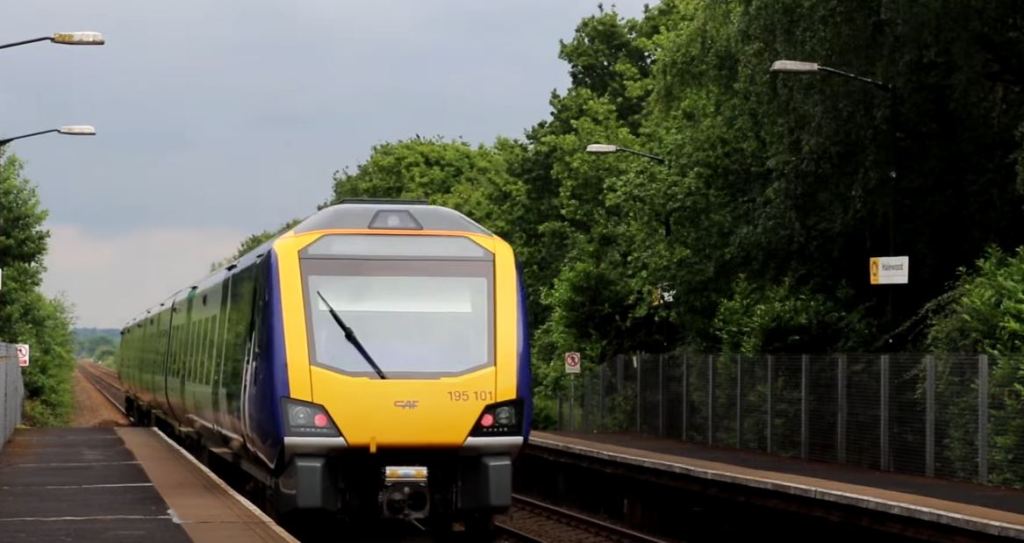
This current station is perched above an embankment, and is reached by a combination of winding ramps and steps, ,more on these later.  I cannot find any press cuttings or web pages relating to the opening of this station, so yet again if you know any further detail, please write in the comments below.
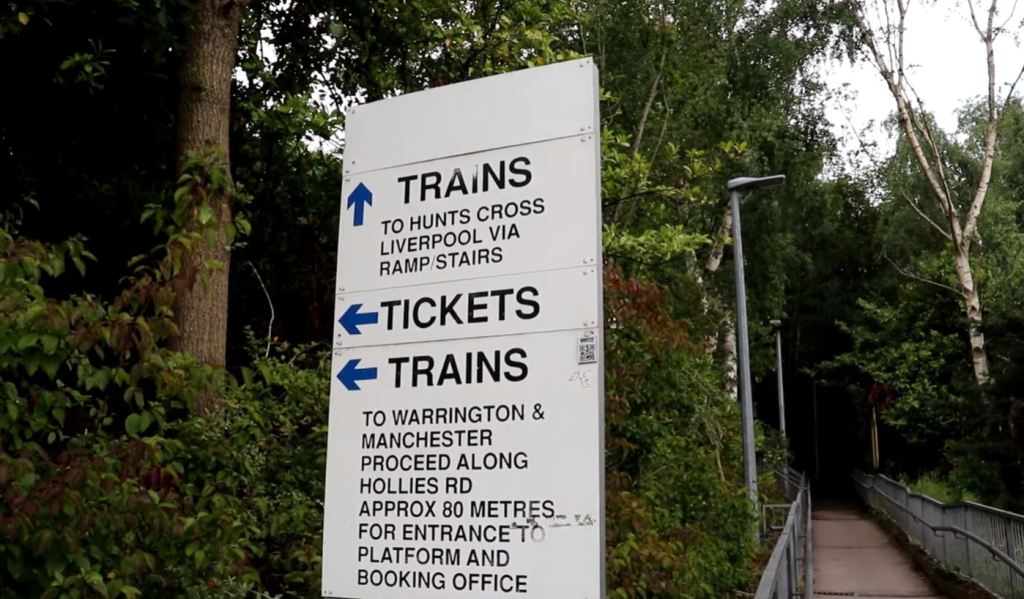
Platform information board at Halewood railway station Merseyside. Information for passengers wishing to go either to Warrington or Liverpool

Access to the Manchester bound platform is by a series of four ramps. The first two are 25 metres, then 15 metres, then 25 metres with a rest platform between each or, via the first slope and then up two separate flights of steps with 25 steps in total.
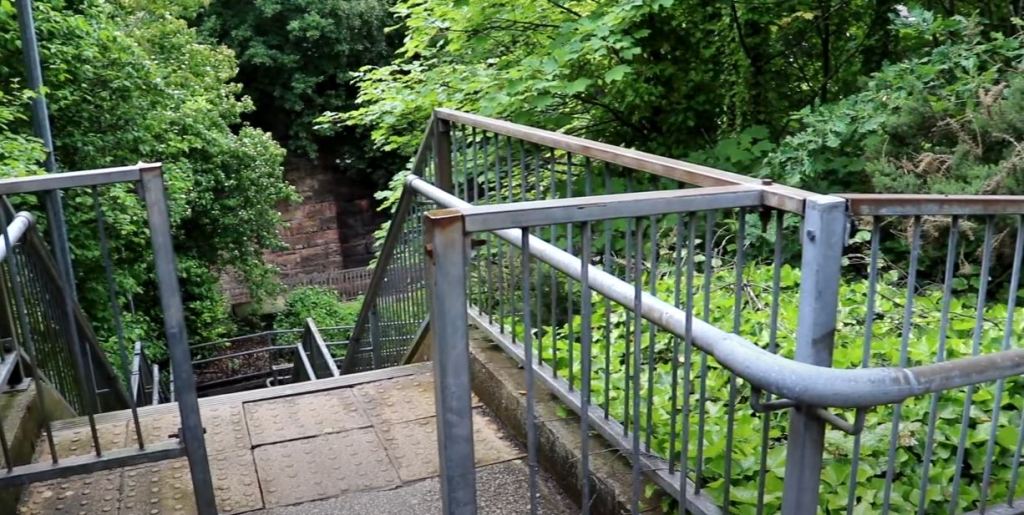
Stairs up to the platforms at Halewood Railway Station.

Access to the Liverpool bound platform is off Hollies Road via three slopes each 50 metres long with rest platforms. Or by two flights of stairs with 18 steps with an intermediate rest platform.

There is a small ticket office at road level, at time of writing staffed during morning peak hours.
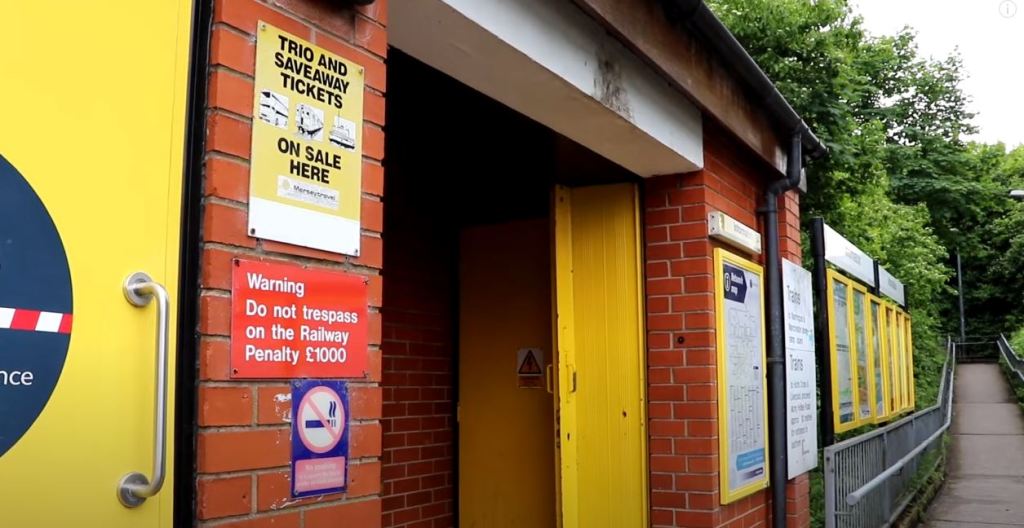
A video featuring the station when I visited in 2022 is below :

Meols Cop – Top Ten Least Used Railway Stations – Merseyside

Meols Cop Railway Station Merseyside

The station was opened in 1887, as part of the Liverpool Southport and Preston junction railway.  However this was integrated in to the Lancashire and Yorkshire railway in 1897 due to financial difficulties.

The line here was an early adopter of electrification in 1909, and in 1911 more train services were introduced when the Pool Hey Junction was opened, allowing services from Wigan to Southport.

Although no goods facilities were here, freight passed through the station until 1952.

Station buildings were in the form of a large timber building, situated on the island platform, which had canopies on either side.  It was a large structure, being as it would be expected to serve a large number of passengers from the Southport suburbs.  It contained not only a booking hall, but toilet facilities and a waiting room.

The line to Preston was earmarked for closure by the Beeching report of 1963, and so by 1964 that particular line closed.  This lead to reduced services, and was the first decision that led to the decline of the station during the next thirty years.

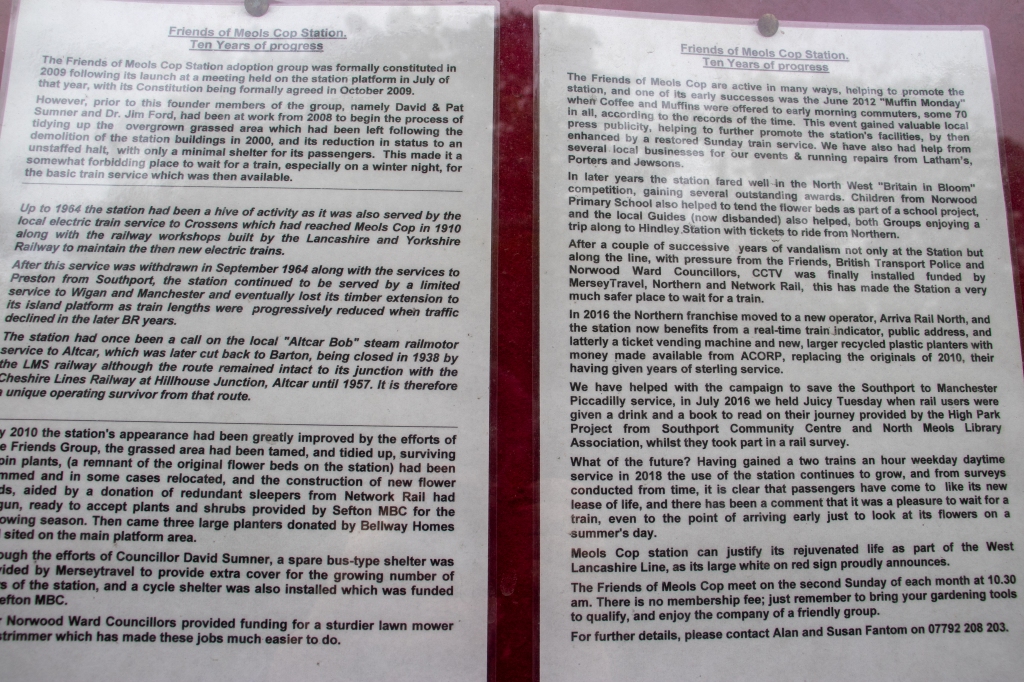
The station building was demolished in the year 2000, being replaced with simple shelters.  However, the reintroduction of a Sunday timetable in 2009, gave the station a much needed upturn in passenger numbers.  A ‘friends of Meols Cop station’ group formed in 2010, and led to the station gaining floral displays, and the general upkeep of the station has continued ever since.

Below are images taken in 2022 of the station notice board :

Meols cop is an interesting station.  Certainly it is well looked after by the station group, and new shelters and information boards show that it has not been a forgotten station.  The lack of lift however restricts its use, and so will never be busy.  The curve makes it interesting for photography, however the lack of services make interest low for the enthusiast.

The video below was filmed in 2022 :

Heswall – Top Ten Least Used Railway Stations In Merseyside

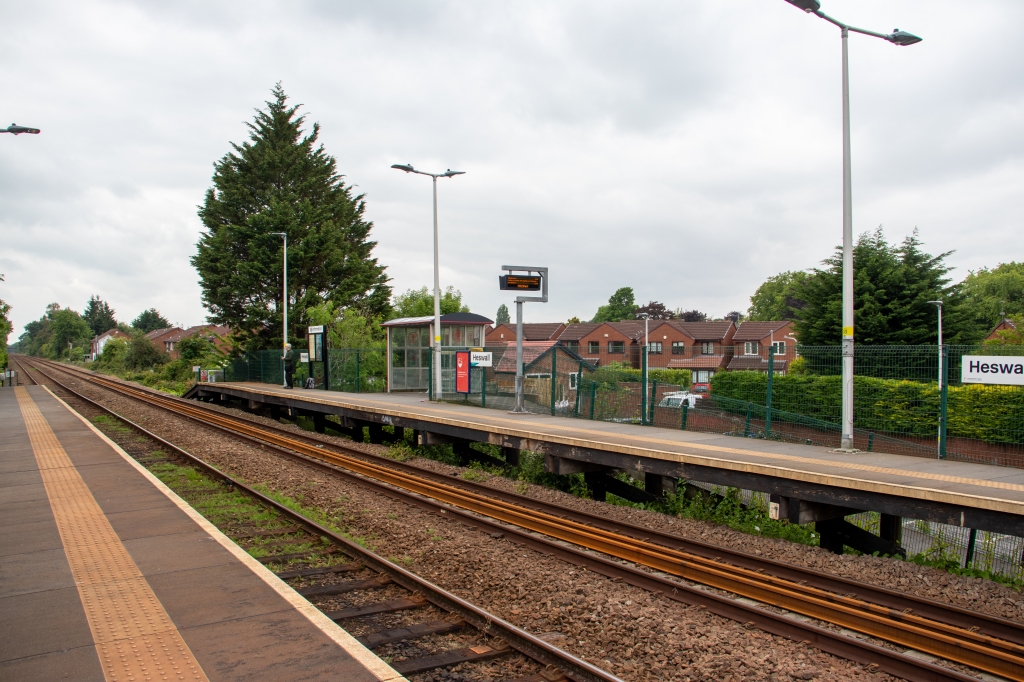
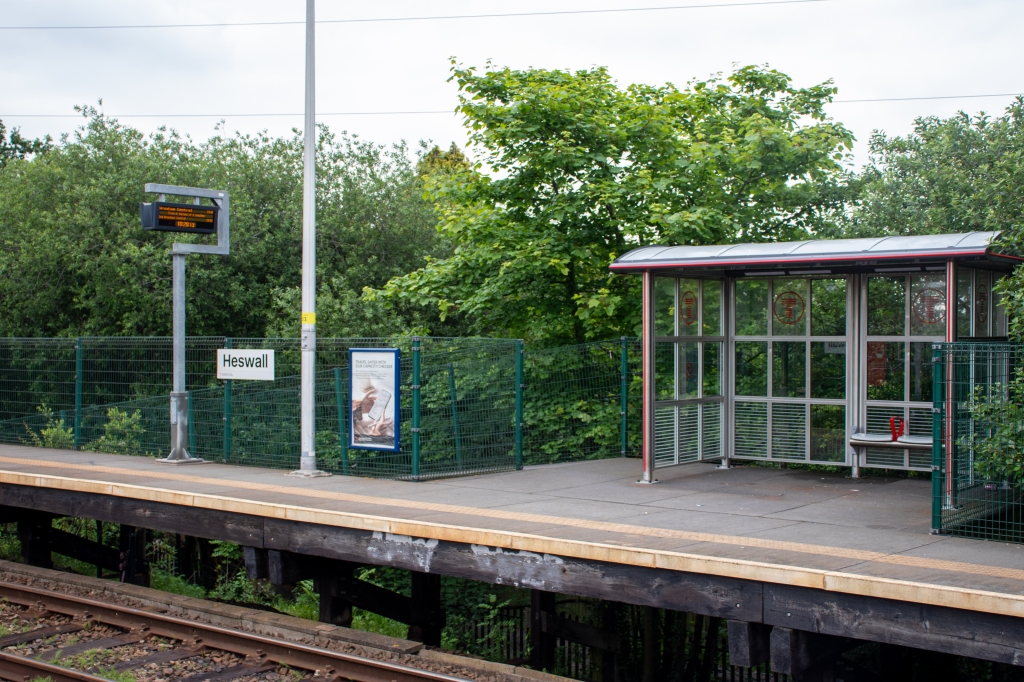
Heswall Railway Station Merseyside

The station I am covering here is the present day station on the borderlands line, and is between Neston and Upton.  Heswall used to have another station on the now extinct Birkenhead railway, and this closed in 1962.

Originally named Heswall Hills and opened in 1898, it was part of a railway between Bidston and Hawarden Bridge, and was owned by the Wirral railway and the Manchester Sheffield and Lincolnshire railway.  Eventually the line would be called North Wales and Liverpool joint railway.

Heswall Railway Station Merseyside

An extensive goods yard was provided, with sidings to the South West. This was used extensively, until the diesel railcars started operation on the line in 1960. However the yard was still used until 5 years later.  Many freight operations would continue to pass through the station however, these coming to and from Bidston dock, heavily laden with steel for the steelworks at Shotten.

It is said that these freight trains could be heard from miles away as they made their way up the nearby Storeton Bank.  This freight service did cease though around 1980.

Heswall Railway Station Merseyside

Heswall Hills was renamed Heswall in 1973, to reflect the fact that it was now the only station in the area.  It received a refurbishment in 2008.  There have been proposals to electrify the line, which would enable Merseyrail services to use it, and this would increase the service to 2 trains per hour each way, with one going to Liverpool.  This sadly has not been realised at time of writing, but hopefully will happen in the future.

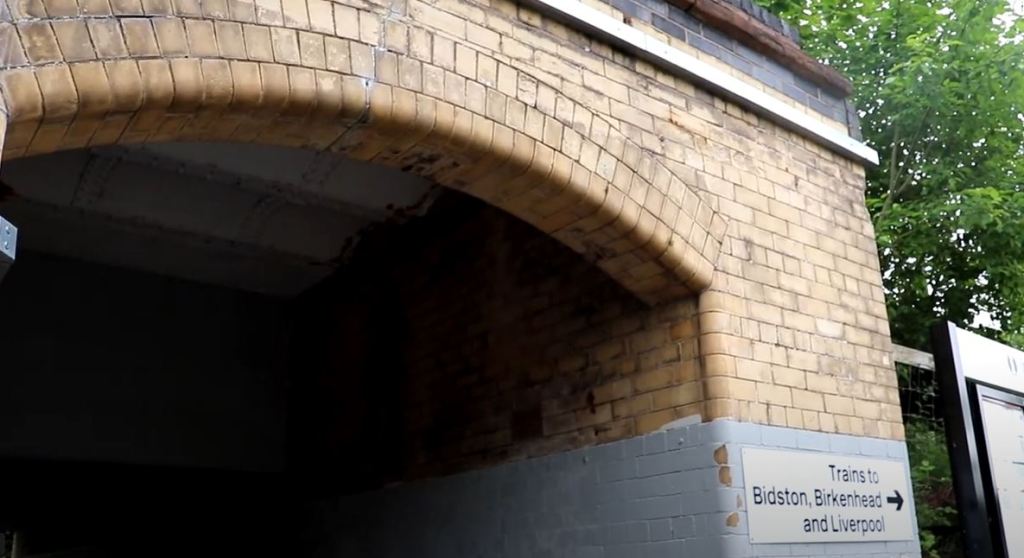
A small and quaint station, Heswall may seem a little boring at first glance, but the original features shine out like the underpass and what seems to be original wood holding the platforms.  It also benefits from being totally accessible.  Sightlines are good for the enthusiast, and generally it is quiet.

Currently (2024) passenger services are provided by a mixture of class 197 and 230 units. These replaced the Class 150 units which were filmed in 2022 in the video below :

Thatto Heath – Top Ten Least Used Stations in Merseyside

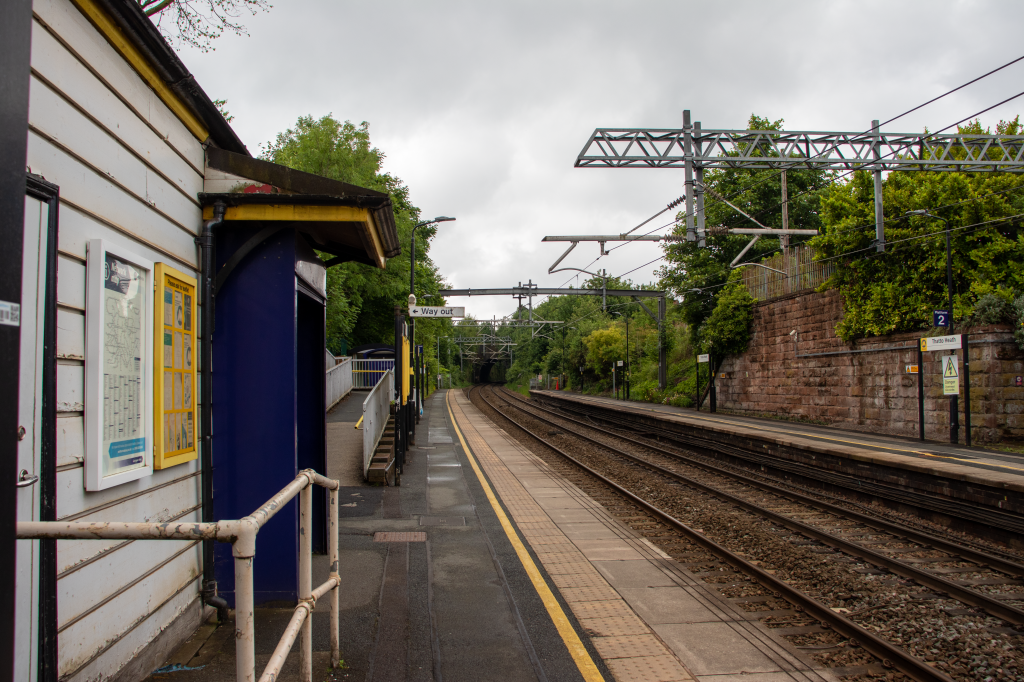
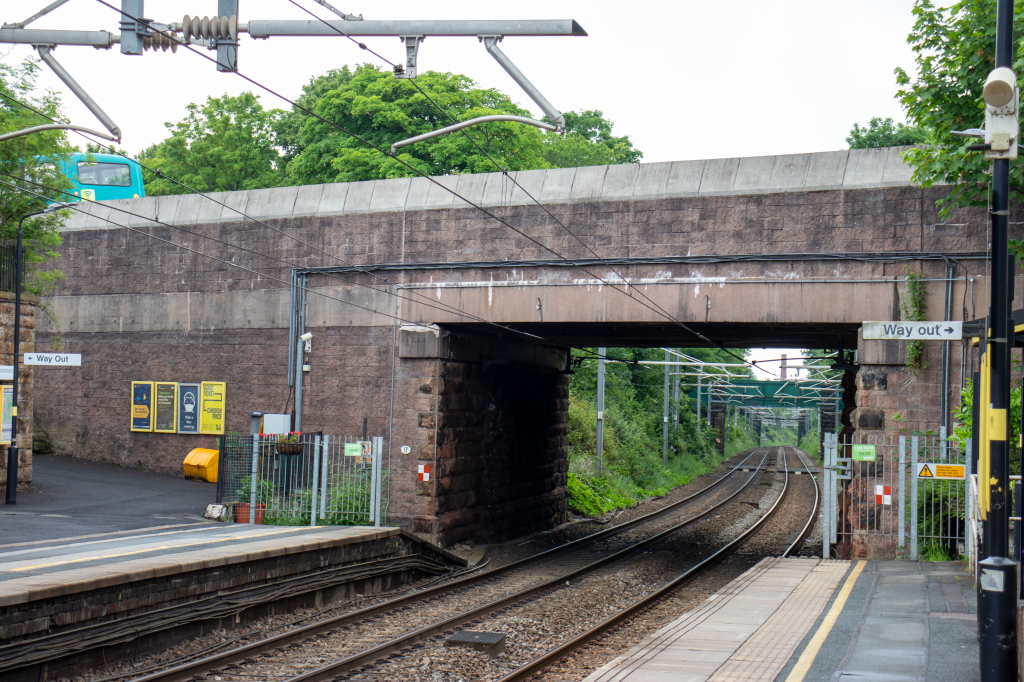
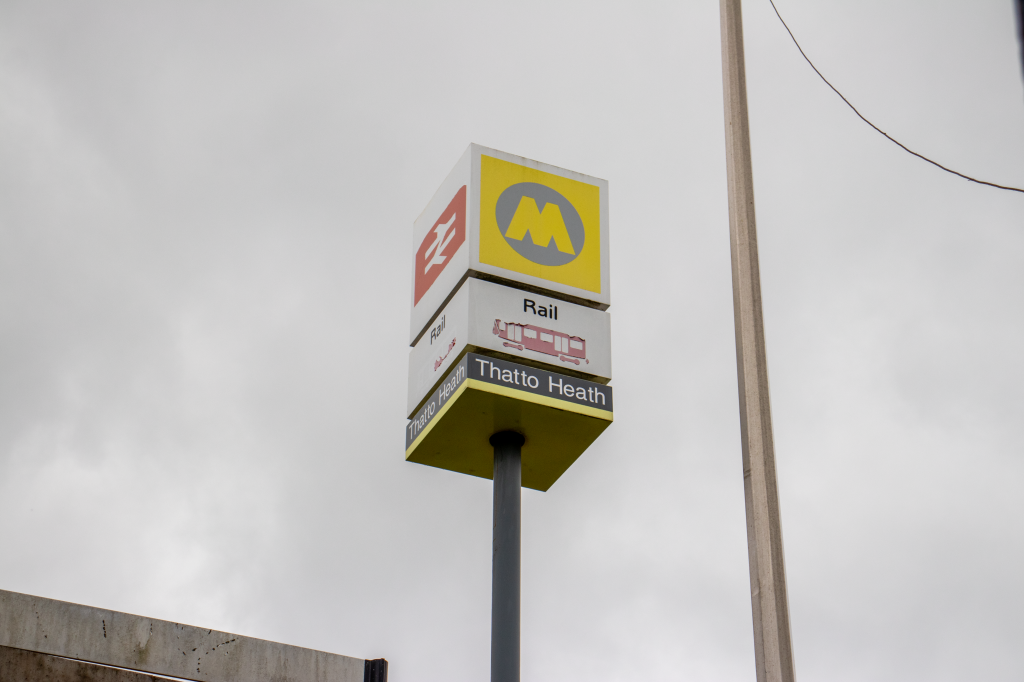
Thatto Heath Railway Station

Thatto Heath is on the Liverpool to Wigan city line, the stations of St Helens Central and Eccleston Park being to the east and west respectively.

The station was opened in 1871, the same time as the line, and is set within a very slight cutting.  Extensive research as as yet to yield no other significant history surrounding the station, so if you know any different please e-mail myself so that I can update this blog, I and others would be very interested to read about the history of the station.

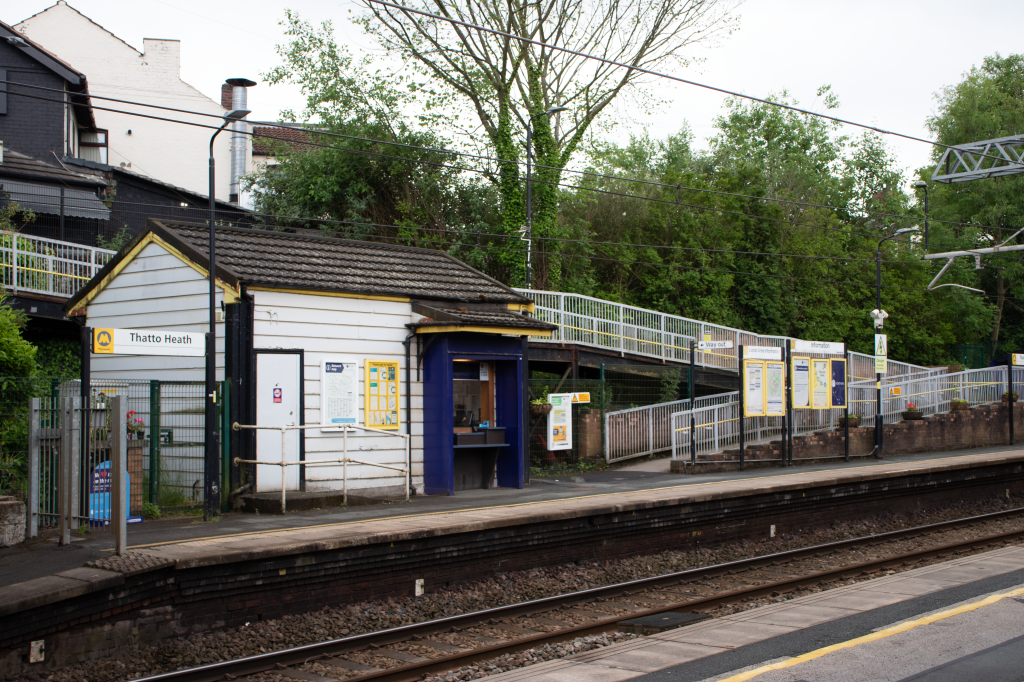
Thatto Heath Railway Station

It is located in the area of St Helens, and a notable claim to fame is that Thatto Heath is the birthplace of British comic actor Johnny Vegas.  As far as the station is concerned you can see it is very picturesque, with stone walling which does seem to be very well looked after.  A small ticket office exists, and this does seem quite old, but again I cannot find out whether this was the original location or not.

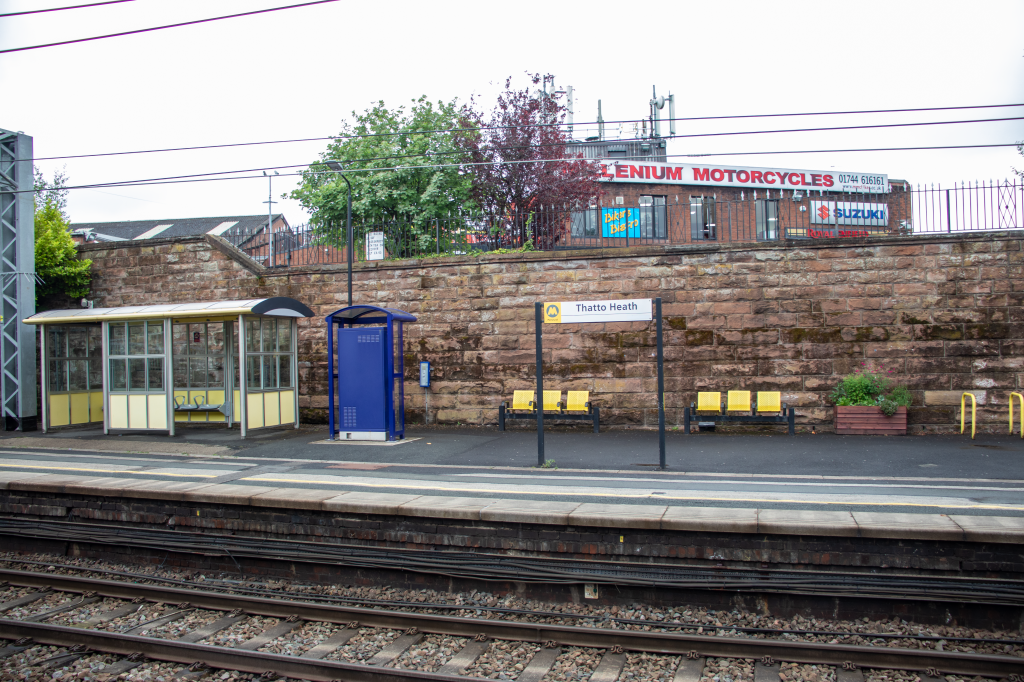
Thatto Heath Railway Station

Although Northern supplies the passenger services, the station is significantly Merseyrail branded.

Thatto Heath Railway Station

I visited the station in 2022 and below is a video of the visit.

Cuxton Railway Station | Along The Railway Line | Medway Valley Line

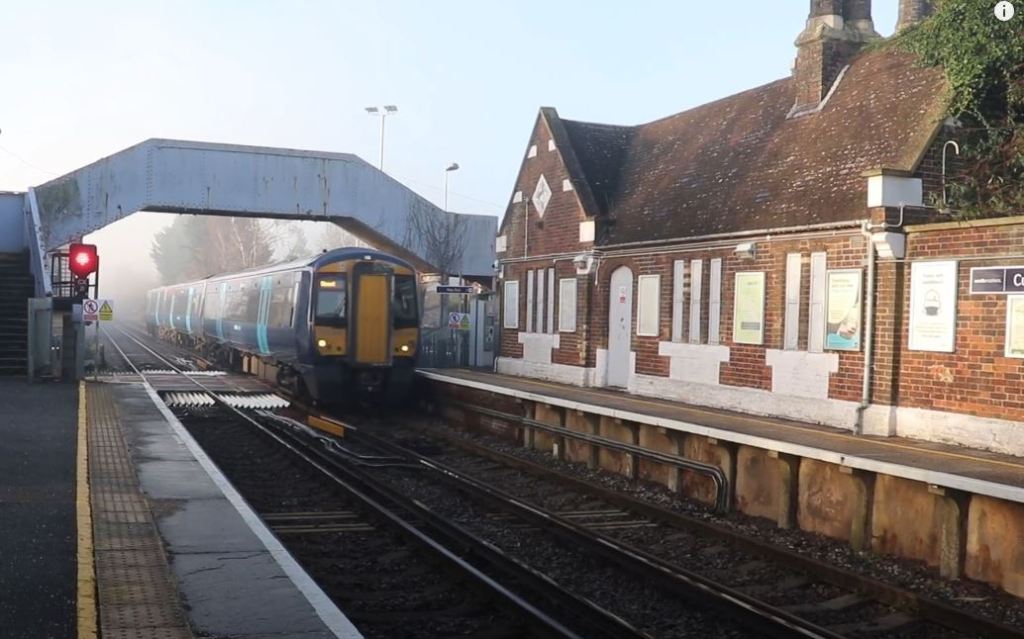
Opened in 1856 by the South Eastern Railway, Cuxton was one of 5 stations on the northern half of the Medway Valley Line.  Initially, It only had a single siding beside the line towards Strood.

The station building like many on the line was fairly unique.  A mock Tudor design was chosen, similar but much smaller to that at Wateringbury.  You can still see the hexagonal chimneys, and the stone window surrounds.  The facilities on the Maidstone bound side were less opulent, being just a small wooden waiting shelter.

In 1931 a siding appeared beside the Maidstone bound line beyond the crossing, and a goods loop appeared just north of the station on the Strood bound side.  This would be turned into a freight loop in 1961, but was eventually decommissioned in 1990, and no evidence of it remains.

Cuxton Railway Station Building

The station building above sadly closed in 1989, but in recent years has been maintained and still is a fantastic building to look at, especially from platform 2.

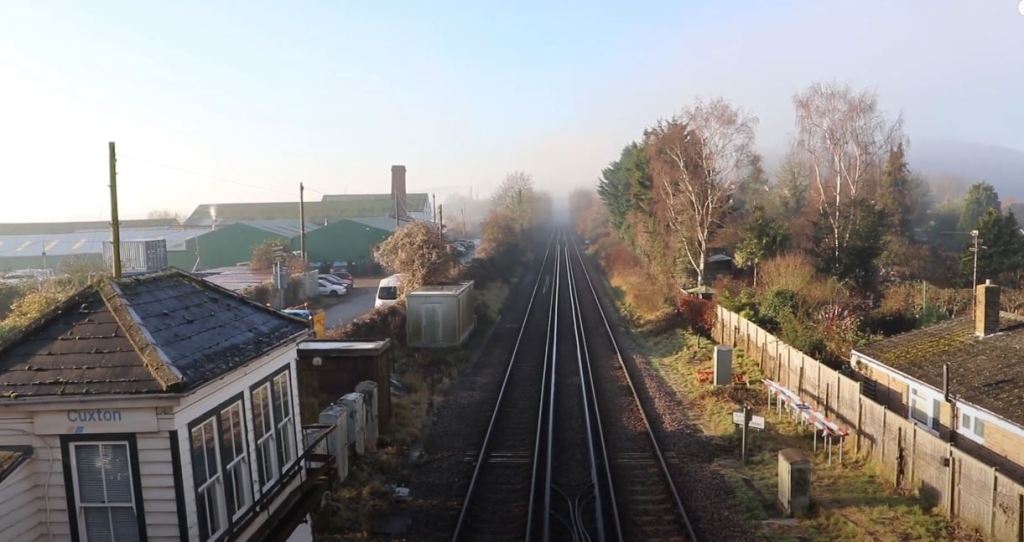
This view from the 1961 footbridge shows the line towards Maidstone.

Cuxton Railway Station Kent

The lovely signal box above was opened in 1892, and is great to see still standing.  However the manual barriers were replaced by automatic ones in the late 2010’s.

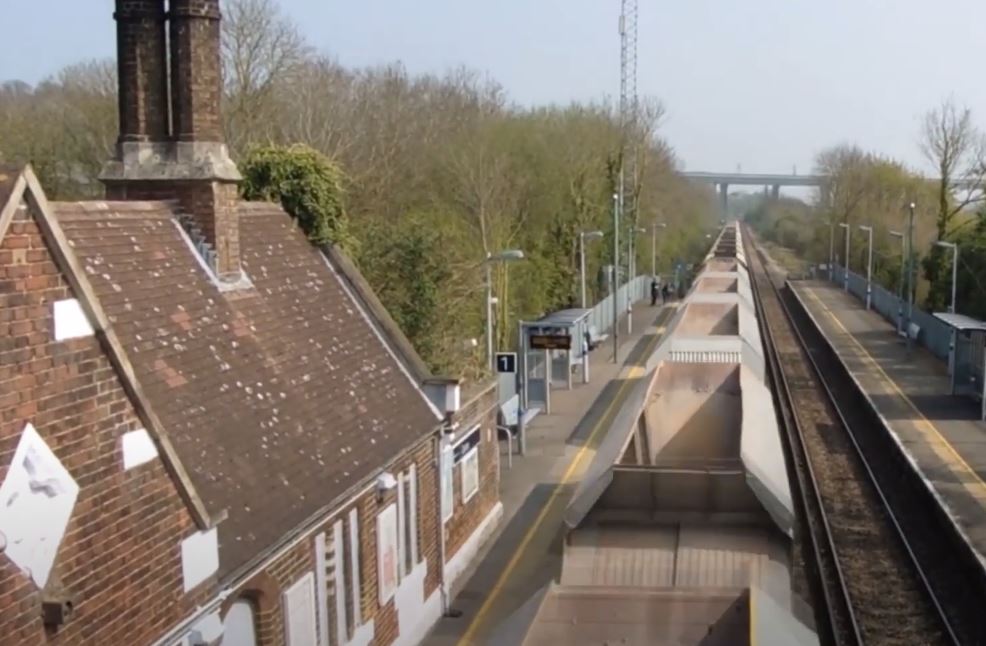
Freight is a regular sight on this line, mainly hauled by class 66 or 59 diesel locomotives, but you can see other classes on occasion. Railtours will also pass though at various times during the year.

Cuxton Railway Station Kent Freight

I really enjoy vising Cuxton, although it is fairly quiet, the overall ambience of the station is very pleasant, and the addition of new waiting shelters and the planters give it a fresh look.  For the enthusiast, sight lines are very good and usually there is good mix of freight to be enjoyed.

A video taken in 2021 is below :
Click for the Kent Community Rail Partnership

Many thanks for reading, and remember if you can

“Get out there, Get on the railway and see where it takes you” (c)

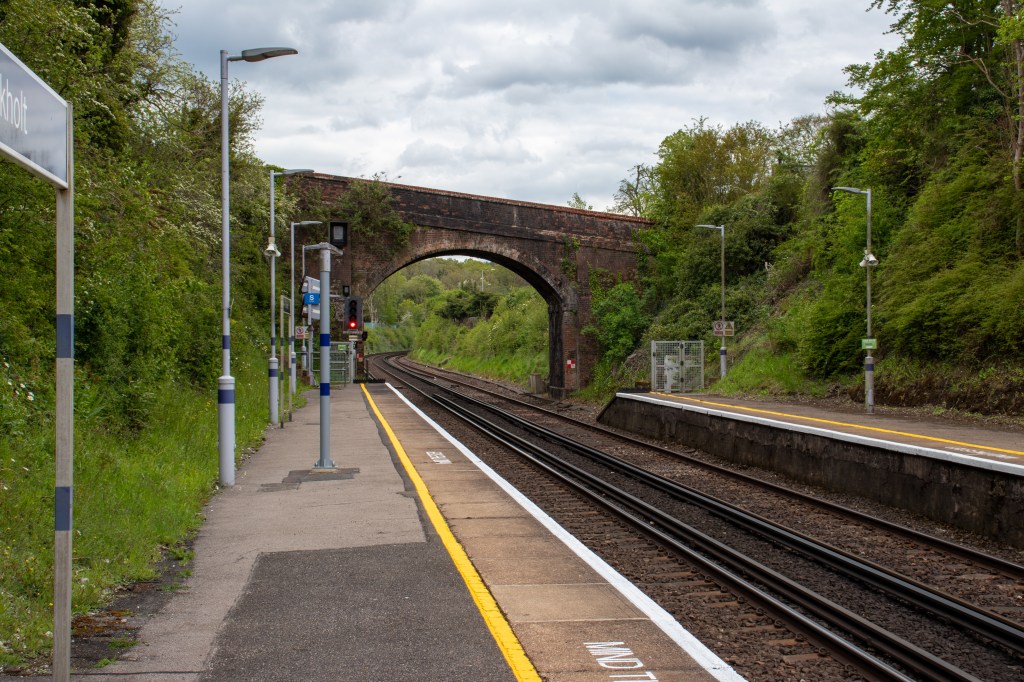
Along The Railway Line | South East Mainline | Knockholt Railway Station

Knockholt was opened in 1876 as “Halsted for Knockholt” by the South East Railway Company.  The name was chosen as it was closer to the village of Halsted.

However, this soon changed when the railway company merged with the South Eastern and Chatham railway in 1899.  By 1900, the station had been renamed Knockholt, even though the village was 3 miles away.  The official reason is that it was to avoid confusion with Halsted in Essex.  But a more popular view is that it changed because the deputy chairman of the new company lived in Knockholt, and he wanted the prestige of a station named after where he lived.

Knockholt railway station road bridge
View from platform 2

Knockholts’ main claim to fame is that it is one of the inspirations for the book “ The Railway Children”.  The author Edith Nesbit lived close by at Halsted Hall and was able to see the station house from the balconies.

This canopy on platform two is probably the only remaining original structure here, but is in good order and is very nice to see it is still standing.

Knockholt railway station shelter
Platform two shelter at Knockholt

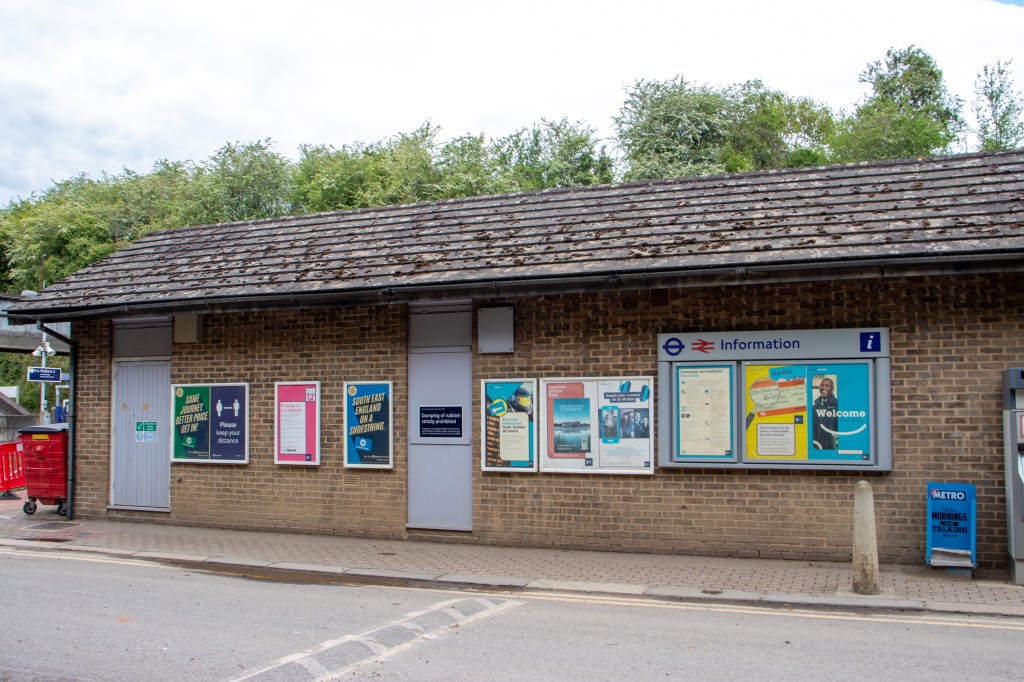
This station building replaces the original, and as far as it goes, I think it is of 1980’s origin, please correct me in the comments if you know better!!  It is of nice design, and serves its purpose, however at time of writing is only open in the mornings.

Knockholt Railway Station

The station has two trains per hour in both directions off-peak Monday to Saturday. Extra trains run during the peak hours, and it only has one train per hour in each direction on Sundays.

The 2019 / 2020 entry and exit figures were 250 766.

Knockholt is a nice station to visit, although a lot of construction was taking place during my visit in 2022, which did rather spoil videography. The original shelter on platform two is worth seeing however and is certainly a grand design even by today’s standards. It is a shame that the original station building no longer exists, but at least it does have one!!

Knockholt railway station
Knockholt Railway Station

Below is a video taken in 2021

Thanks for reading, I’ll leave you with my tagline :
If you can, get out there, get on the railway, and see where it takes you.” ©

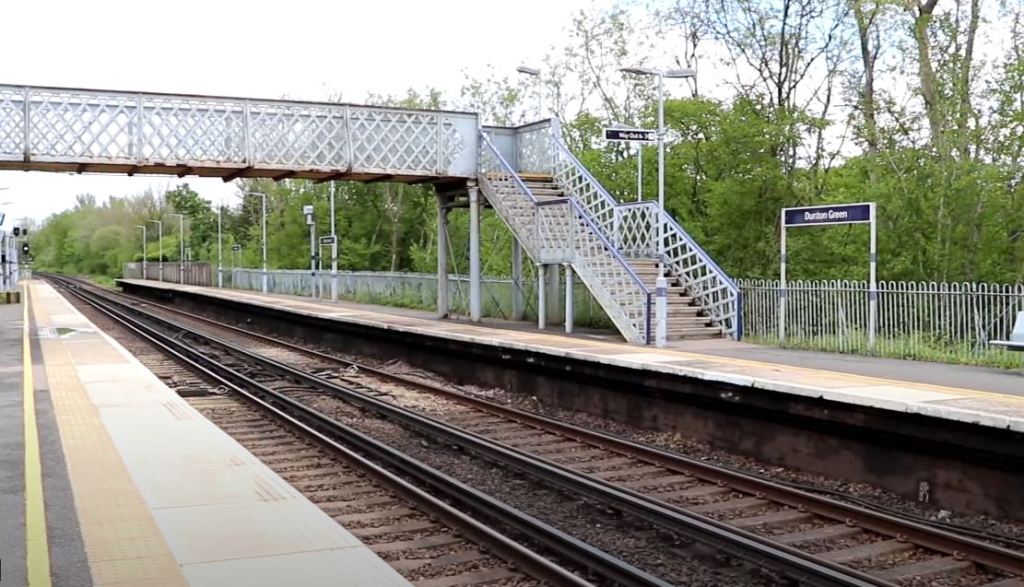
Along The Railway Line | South East Mainline | Dunton Green Railway Station

Dunton Green was opened in 1868 by the South Eastern Railway Company, and it had a familiar clapboard station building similar to that of the one at Hildenborough.  It also had a single siding on the London bound side, and this was incorporated into a proper running line when a branch line to Westerham was opened in 1881.

This branch line had its own station building as well as a three-story high signal box. As this new branch line cut through access to the village, a subway was constructed to gain access, but more on this later.

Three new goods sidings were also constructed at this time on the branch line section. The signal box had a short life however, as a signal modernization scheme in the early 1900s had it demolished in favour of a two-story design. By 1934 the newly formed southern region began the electrification program and Dunton Green had its platforms lengthened, with the first electric train running through the station from 1935.

Dunton Green railway station

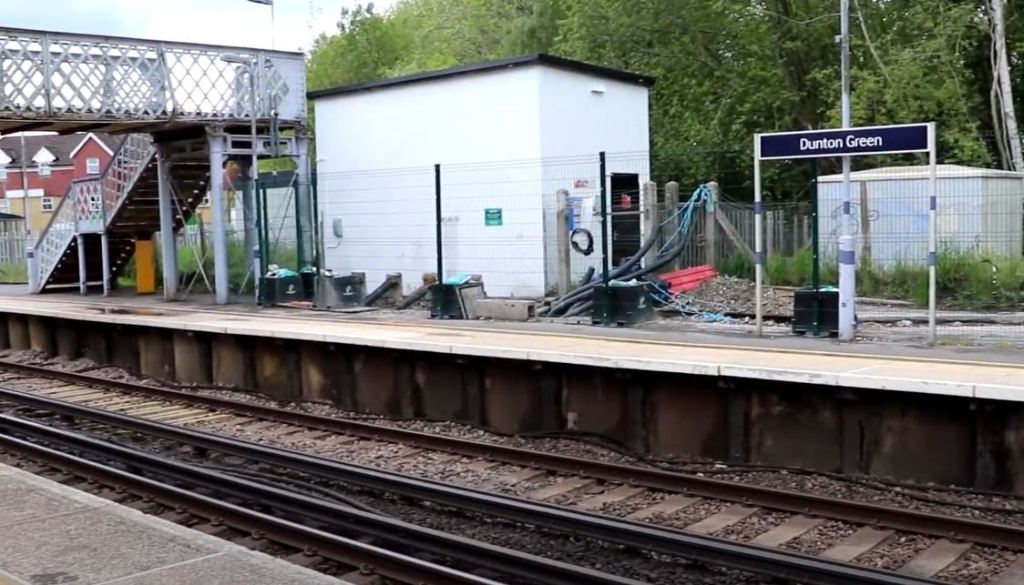
Unfortunately Dunton Green’s recent history is less illustrious. In 1961 the branch line closed, and over the next 35 years the station went into rapid decline, culminating in the complete removal of the station in the mid-1990s and at time of writing, a new station building has never been rebuilt at this location.

Dunton Green railway station

This picture is of the subway which still connects the station to Dunton Green village (credit for these are below as I was unable to photograph on the day of my visit)

Dunton Green station underpass

(c)Lamberhurst (Ravenseft)

commons.wikimedia.org/wiki/File:Dunton_Green_Railway_Station_3.jpg

At time of writing passenger traffic is provided by class 465 or class 376 electric multiple units.

Class 465
Class 465
Class 376
Class 376

The statistics for Dunton Green are that it opened in 1868, it has two trains per hour in both directions off-peak and Saturdays, with additional trains at peak times (this is reduced to only one train per hour in both directions on Sundays).

The entry and exit figures for 2019-2020 were 258 682.

The absence of a station building (at time of writing) really makes a visit to this station unappealing if you are a casual enthusiast. However, the location and relatively good frequency of service makes the stations survival a must. Photography and videography are ok, but I would advise that perhaps a visit to another railway station on the line nearby could wield better and more atmospheric results.

Below is a video filmed in 2021:
Thanks for reading, I’ll leave you with my tagline :

If you can, get out there, get on the railway, and see where it takes you.” ©

Along The Railway Line | South East Mainline | Headcorn Railway Station

Headcorn railway station

Headcorn was opened in 1842 by the South East Railway Company, initially as a terminus for the line as the extension to Dover had yet to be completed. The original station building was made of tongue and groove timber, similar to that at Pluckley, and a goods facility was also provided here.

This goods facility was provided by a single track which intercepted both running lines and led to sidings and a turntable on the Ashford bound side. In 1905, the Kent and East Sussex railway extended to Headcorn, and its platform ran parallel with the London-bound side. The link to Headcorn remained until 1954 when it was closed due to unprofitability.

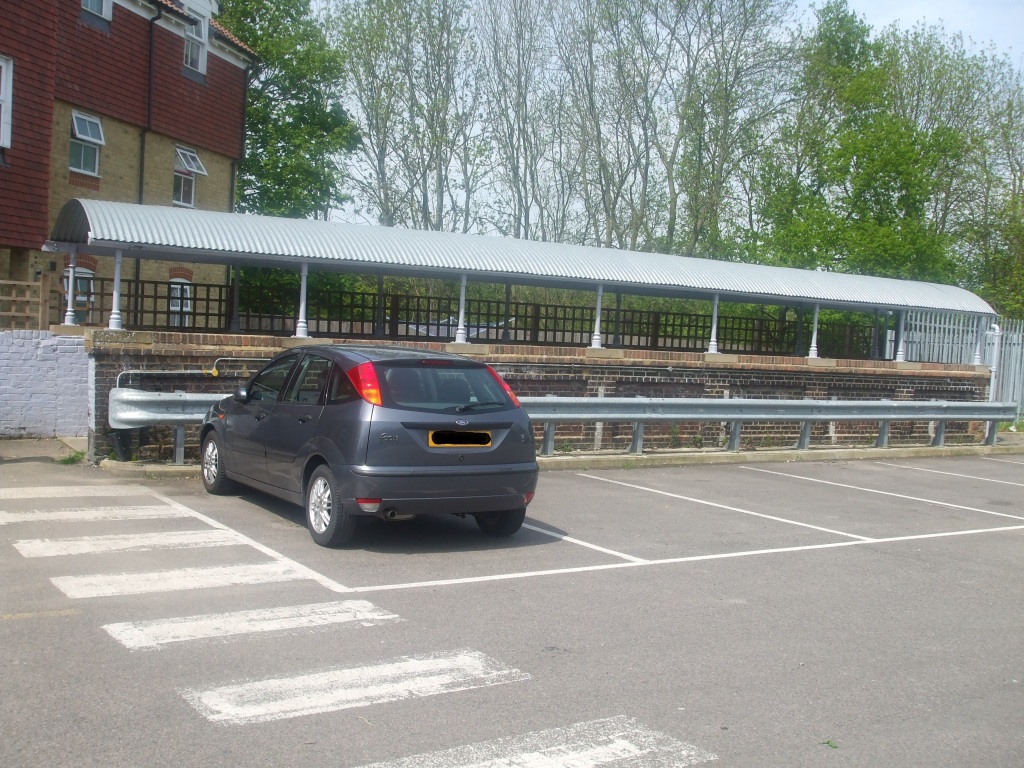
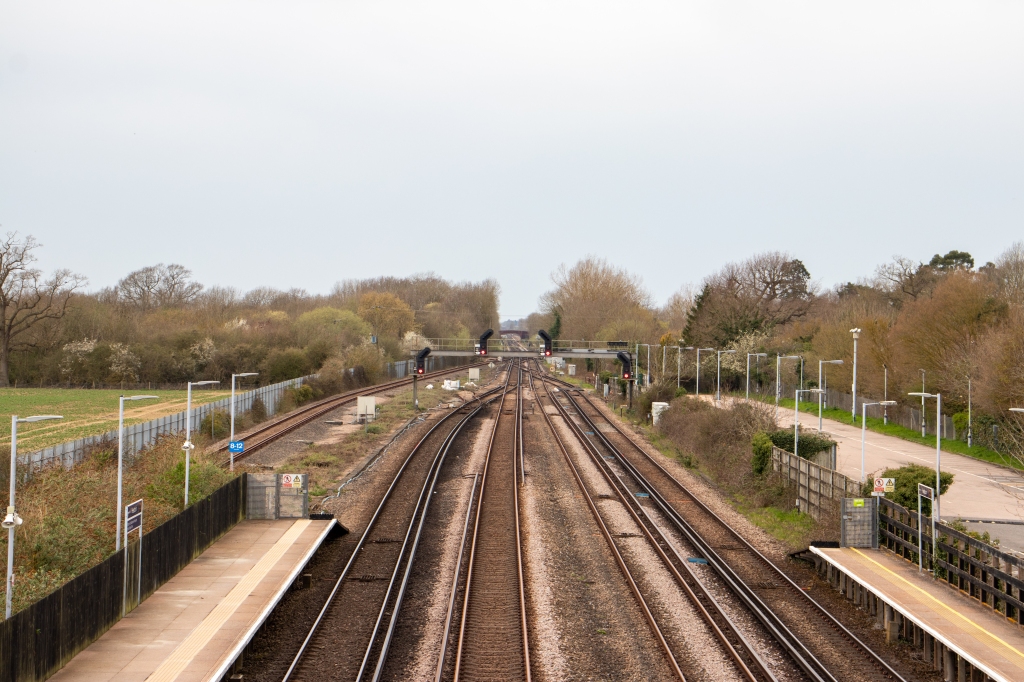
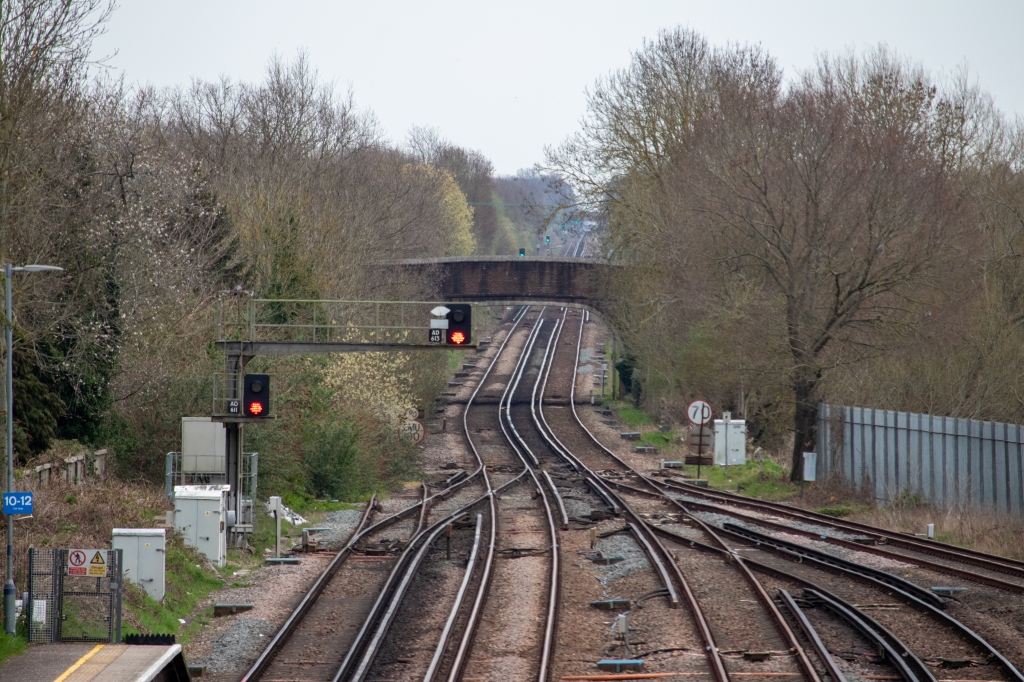
The fast central tracks you see here were actually the original running lines. They were put into this configuration in the 1920s when the station was rebuilt, with two new platforms and two new slow lines. The other track you see on your left, behind the London bound platform, is a goods loop installed for the channel tunnel freight trains. This view looking coast bound will enable you to see clearly see the divergence to the slow lines.

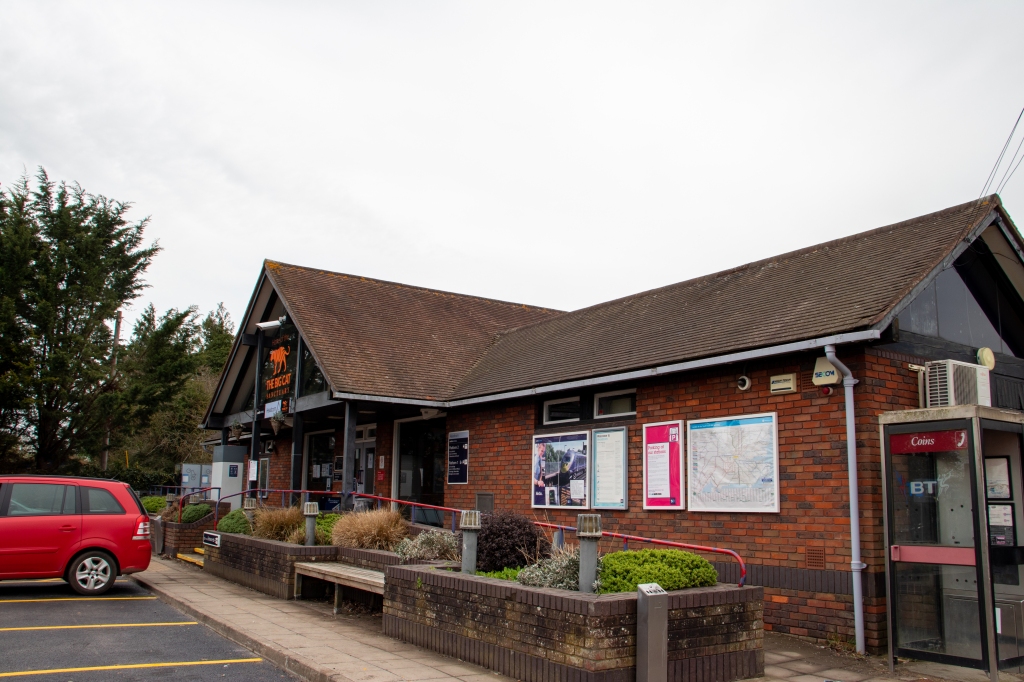
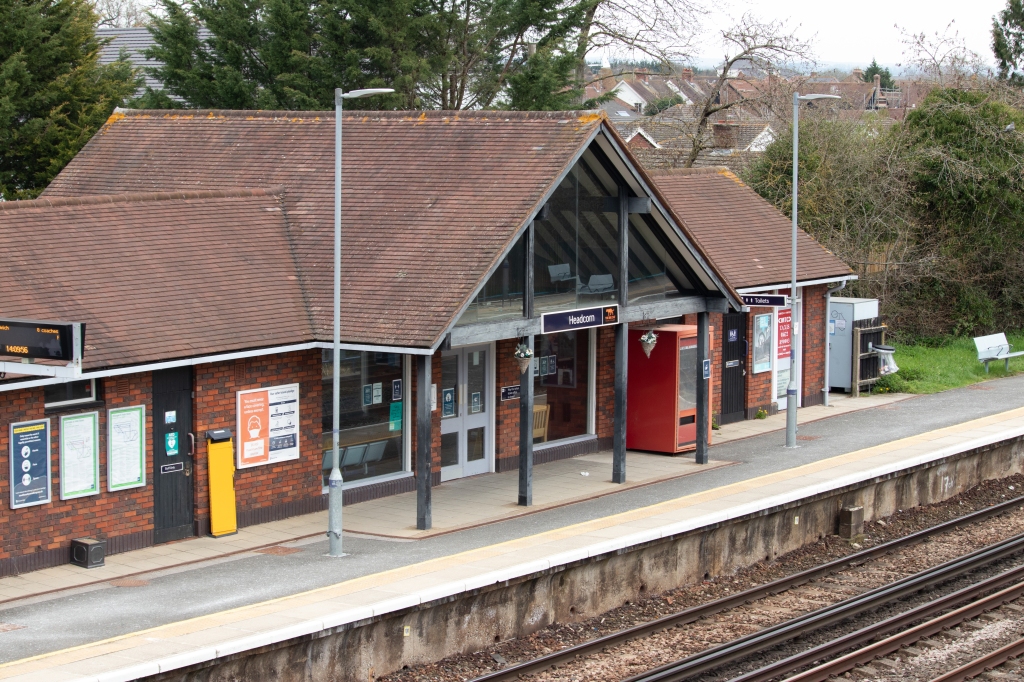
As well as the goods loop on the right, the new station building was opened in 1989. A neat red brick design, it is very pleasant, and is kept in good order by the station staff . The taxi rank and bus stop are located just outside the building, like the exterior the interior is very clean and functional

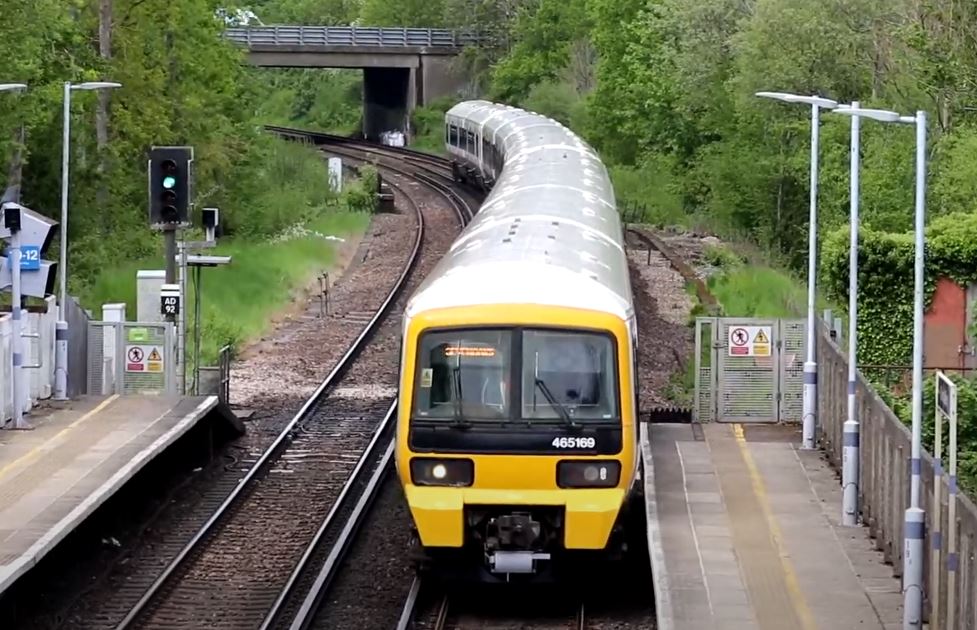
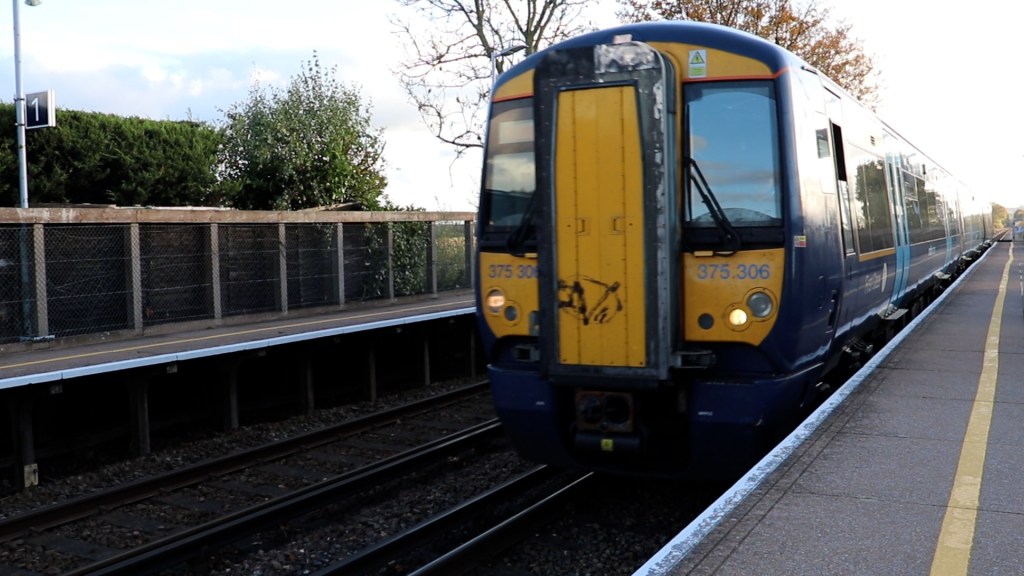
At time of writing passenger traffic is provided by class 375 electric multiple units

Station signage at Headcorn is great, detailing all there is to do around the area. This includes the “Big Cat Sanctuary” and “Biddenden vineyards”, which are a short bus ride away. As already noted, bus and taxi ranks outside the station building will help you do this.

The entry and exit figures for 2019-2020 were 610 226.

Headcorn has some excellent views for the enthusiast, as well as many other sites of interest away from the station. The newish station building is functional, and although not the original, does not look out of place.

Below is a link to a small video I filmed here in 2021.

Thanks for reading, and if you can :

“Get out there, get on the railway and see where it takes you” ©

Top Ten Least Used Railway Stations In Kent : 3 | Beltring

Beltring was opened in 1909 by the South Eastern and Chatham Railway as Beltring and Banbridge halt. These small stations were put along the line mainly to serve small rural locations, which would only be served otherwise by local trams.

railway station

Station buildings on such halts did not exist, but they did provide waiting shelters on both platforms, and their modern equivalents are still provided today.

railway station

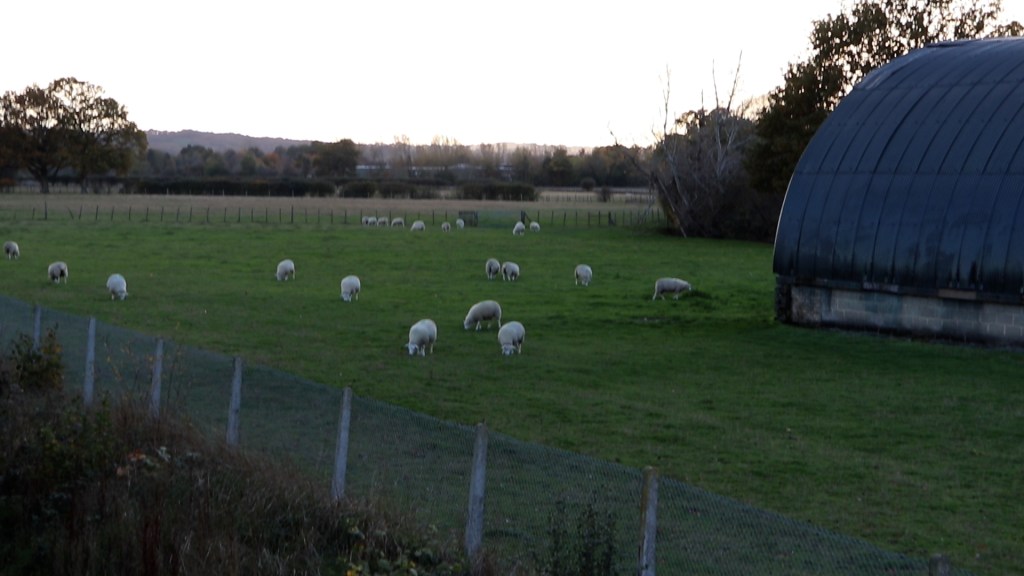
A small siding for local goods produced by farmers was placed behind the London bound platform, and existed right up until 1961 when the line was electrified. Where the siding once stood, a farm exists today.

sheep in fields

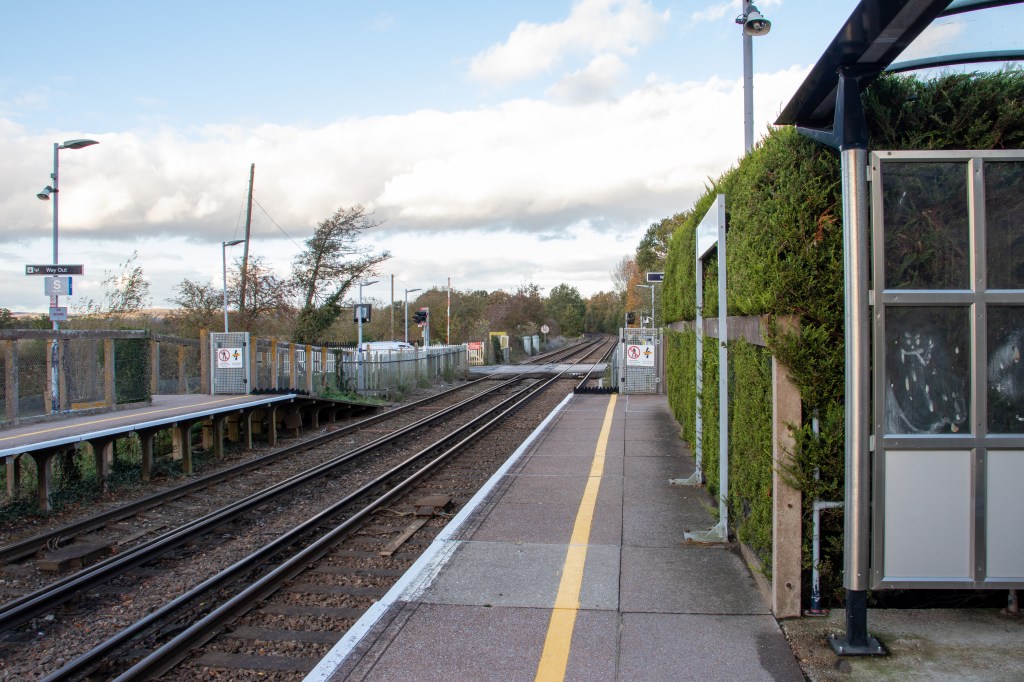
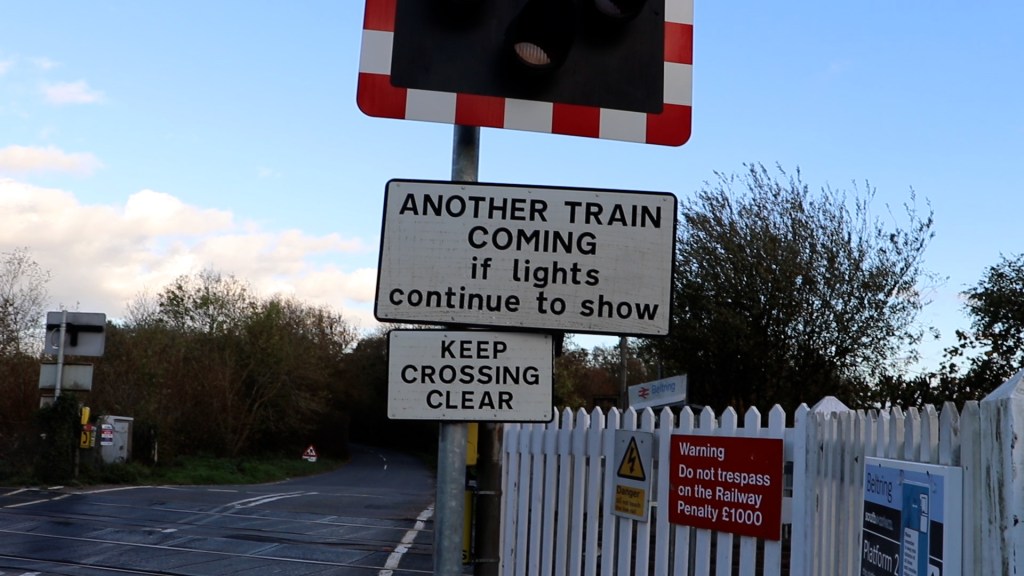
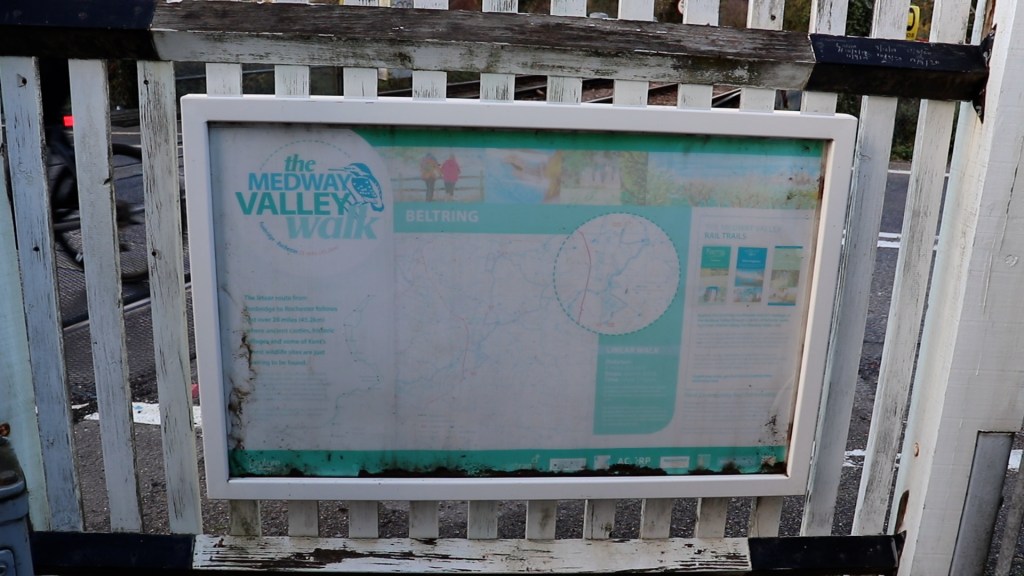
The only way to cross to either platform is by the road level crossing. Along the platforms, many posters can be seen and some detail the Kent Rail Partnership and walks which can be taken from this station.

level crossing
notice board railway

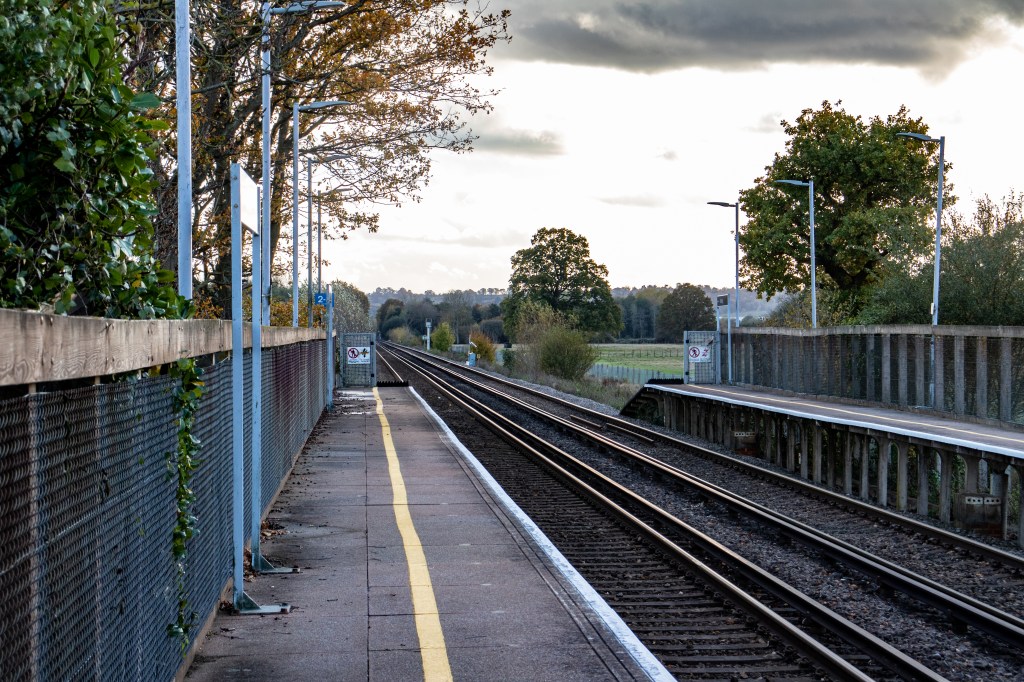
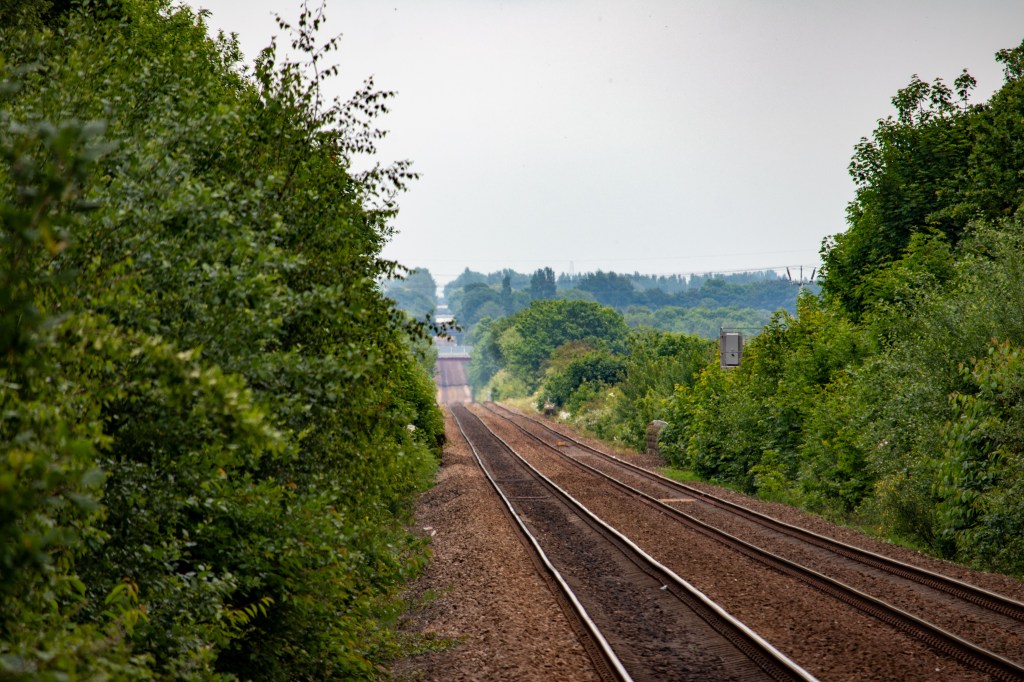
Being one of the most rural stations on this list, the nearest housing estate being 20 minutes away, Beltring is certainly a niche station. However, it does provide fantastic straight line views both up and down the line, allowing enthusiasts good photographic opportunities of both passenger and freight services which frequent the line. Just remember that as with the majority of these smaller stations, there are no toilet facilities.

uk train

Here is a video of Beltring, made as part of the “Least used stations in Kent” series I produced on my YouTube channel.

Many thanks for reading, and if this has interested you, please feel free to view other sections of my Blog, or even give my YouTube channel a visit. Thank You.

London Waterloo Station Walkthrough

On my other YouTube channel, John Explores, I take a small walk through Waterloo Station.


Please visit Rainham Rail Enthusiast on YouTube

Please visit Rainham Rail Enthusiast on Facebook

Please visit Rainham Rail Enthusiast on Instagram


Many thanks for visiting, I’ll blog again soon